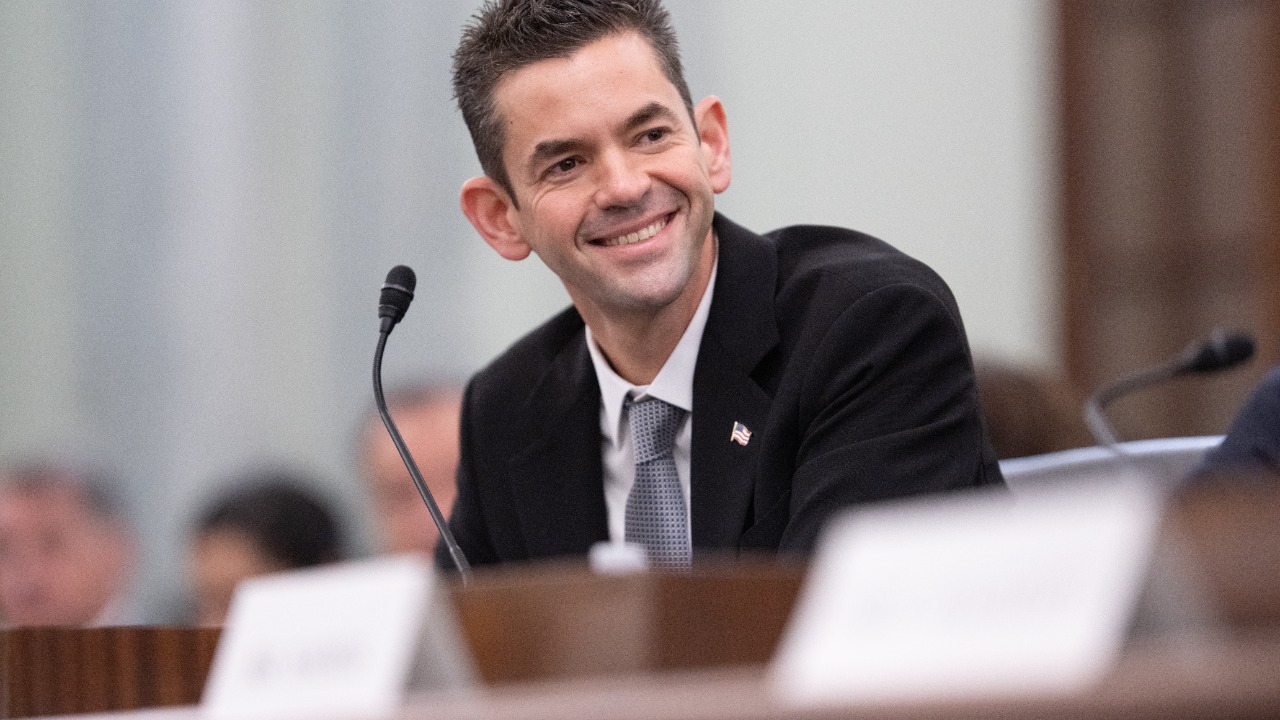

Private astronaut Jared Isaacman stepped into the Senate spotlight this week not as a tourist or benefactor, but as the would-be architect of a sweeping overhaul of NASA. Facing pointed questions about leaked internal plans, his ties to Elon Musk, and the future of science at the agency, he framed his nomination as a test of whether the United States is willing to move fast enough to stay ahead of rivals in space.
His performance before Congress mixed confident promises of a more agile, commercially savvy NASA with careful reassurances that core missions like climate research and planetary science would not be sacrificed. I watched a nominee trying to convince skeptical lawmakers that a billionaire entrepreneur can be trusted to steward a public institution that belongs, in the end, to the entire country.
The stakes of Isaacman’s second Senate showdown
Jared Isaacman’s return to Capitol Hill for a second confirmation hearing underscored how much political weight now rests on his vision for NASA. Senators on the relevant committee signaled that they are prepared to advance his nomination to the full Senate, and the leadership has indicated that the chamber could take it up before it wraps its work for the year in Dec, a timeline that would put him in charge of the agency just as key decisions on the Moon and Mars are coming due. That procedural momentum, described as a mostly friendly path through committee, reflects a calculation that his mix of private-sector experience and astronaut credentials might be exactly what NASA needs in a more contested space era, even as some lawmakers remain wary of his close alignment with commercial partners.
The calendar pressure is real. The Senate is scheduled to complete its work for 2025 by December 19, which means Isaacman’s confirmation window is narrow but clearly defined, and his supporters are treating it as a now-or-never moment to lock in a new direction for NASA. In that context, the hearing was less a routine vetting than a referendum on whether the agency should lean harder into partnerships with companies like SpaceX and accept a more risk-tolerant culture. The committee’s willingness to move his nomination forward, as described in detailed accounts of the mostly cordial session in Dec committee deliberations, suggests that a critical mass of senators is ready to test that proposition.
A private astronaut with a public mandate
Isaacman’s biography is central to both his appeal and the unease surrounding his nomination. As a Private astronaut who has already flown to orbit, he is not a traditional bureaucrat or career civil servant, and he leaned into that outsider status as he appeared before Congress on Wednesday for his latest round of questioning. He presented himself as someone who has personally experienced the strengths and weaknesses of the current NASA-commercial ecosystem, arguing that his time in space gives him a visceral understanding of what it will take to keep American crews flying safely and frequently in the years ahead.
That pitch resonated with some senators who see value in having a leader who has strapped into a capsule rather than just signed contracts. At the same time, his unusual path to the nomination raised questions about whether a Private entrepreneur can fully internalize the obligations of a taxpayer-funded agency that must answer to Congress, not shareholders. Isaacman tried to bridge that gap by stressing that his goal is to translate the speed and innovation he has seen in the commercial sector into a more responsive NASA, while still honoring the agency’s scientific and exploratory heritage, a balance he described in detail when he appeared as a NASA nominee before Congress.
Renominated by Trump, with a SpaceX pedigree
The political context around Isaacman’s candidacy is impossible to ignore. He was Renominated by Trump in November after an earlier attempt to install him at the top of NASA stalled, a decision that signaled the White House’s determination to put a trusted ally in charge of the agency’s next chapter. At age 42, he is younger than most previous NASA administrators, and he has already flown to space via the company SpaceX on two separate missions, including a high-profile private flight that showcased the capabilities of commercial crew vehicles. Those experiences have given him a direct working relationship with Elon Musk’s company and a front-row seat to how quickly a nimble contractor can iterate hardware and operations.
That SpaceX pedigree is both an asset and a liability. Supporters argue that someone who has flown on commercial spacecraft is well positioned to judge which partnerships are delivering value and which are lagging, and they see his age, 42, as an advantage in an era when NASA must compete with fast-moving rivals. Critics, however, worry that his deep ties to a single contractor could skew procurement decisions or weaken NASA’s ability to act as an independent arbiter of safety and mission priorities. Isaacman insisted that his loyalty would be to the agency and its workforce, not to any one company, and he framed his SpaceX history as proof that he understands how to manage complex, high-risk operations, a point he emphasized while fielding questions in a Senate grilling about his background.
Project questions, politics, and Kim’s demand for clarity
For all the bipartisan warmth Isaacman received, the hearing also exposed sharp concerns about what his leadership would mean for NASA’s scientific integrity and political neutrality. One of the most pointed exchanges came when Senator Kim pressed him on a leaked internal blueprint, widely referred to as “Project” in the hearing room, that appeared to outline potential changes to NASA’s science portfolio and internal structure. Kim said he required “further follow up here to understand what your positions are,” signaling that some lawmakers fear the document could foreshadow cuts or ideological interference in areas like climate research and Earth observation.
Isaacman responded by trying to separate his personal views from the swirl of speculation around the leaked plan. He has sought to quash suggestions that he would politicize NASA’s work or sideline inconvenient findings, and he repeatedly emphasized that any reforms would be driven by mission needs and congressional mandates rather than partisan agendas. Some senators remained unconvinced, particularly those who worry that the same entrepreneurial instincts that make him attractive to the administration could also lead to aggressive restructuring of long-standing programs. The tension was evident as Kim and others pressed him on how he would handle controversial topics, with the nominee insisting that he would protect the agency’s scientific independence even as he pursues efficiency, a pledge that framed the broader debate over Isaacman’s politics and Musk ties.
Moon first, Mars in sight: a sharpened exploration agenda
On exploration, Isaacman left little doubt about his priorities. He told senators that returning humans to the lunar surface is an urgent national objective, not a distant aspiration, and he aligned himself with lawmakers who argue that the United States must move faster to secure a sustained presence on and around the Moon. Isaacman and several senators emphasized the urgency in returning humans to the moon, casting it as both a scientific opportunity and a strategic necessity in light of growing competition from China and other spacefaring nations. That framing suggests he would push NASA to streamline decision-making and lean more heavily on commercial landers and transport systems to accelerate the Artemis timeline.
At the same time, Isaacman was careful to present the Moon as a stepping stone rather than an endpoint. He described both the moon and Mars as priorities for exploration by U.S. crews, arguing that the technologies and operations developed in cislunar space will underpin future human voyages deeper into the solar system. In response to questioning by senators, Issacman spoke about Mars not as a distant dream but as a concrete objective that should shape NASA’s investments in propulsion, life support, and surface systems today. His comments suggested a long-term roadmap in which lunar missions serve as a proving ground for the more demanding challenge of Mars, a vision he outlined while discussing how Isaacman and senators emphasize urgency in pushing human exploration outward.
Keeping NASA ahead of China and other rivals
Behind the technical talk about rockets and landers, Isaacman’s core argument was that NASA must move faster if it wants to stay ahead of geopolitical competitors. He warned that the agency risks ceding leadership to China if it cannot execute major programs on tighter timelines and with more disciplined budgets, a concern that has been building in Congress as Beijing ramps up its own lunar and planetary ambitions. In his telling, the choice is not between safety and speed, but between a nimble NASA that can adapt to a more crowded space environment and a slower one that watches others set the rules.
To make that case, he pointed to his own experience working with commercial partners that iterate hardware and software in months rather than years, and he argued that NASA should adopt similar practices where appropriate without compromising its oversight role. He framed the competition with China as a race for standards and influence, not just flags and footprints, suggesting that whoever establishes the first sustained presence on the Moon will shape norms around resource use, traffic management, and scientific access. That strategic lens ran through his testimony as he described why now is the time for action to keep the agency ahead of China, a theme he developed in detail when he appeared as a nominee whose plans could clear the Senate soon.
Science, climate, and fears of a narrowed mission
If Isaacman’s exploration agenda energized some senators, his potential impact on NASA’s science programs generated more anxiety. Lawmakers pressed him on whether a stronger focus on human spaceflight and commercial partnerships would come at the expense of Earth science, astrophysics, and planetary research that do not always lend themselves to quick commercial returns. The leaked “Project” document loomed over this part of the hearing, with critics warning that any move to downplay climate monitoring or fundamental research would undercut NASA’s role as a neutral provider of data on issues like global warming, severe weather, and sea-level rise.
Isaacman tried to reassure them by insisting that he sees science as a core pillar of NASA’s identity, not a side project. He argued that a more efficient, commercially integrated agency could actually free up resources for research by lowering the cost of access to space and reducing duplication across programs. Still, the skepticism was palpable, particularly from senators who have watched previous administrations attempt to reshape or reinterpret climate science. The nominee’s challenge now is to convince those skeptics that his drive for reform will not translate into quiet cuts or subtle pressure on scientists, a concern that surfaced repeatedly as lawmakers weighed how his entrepreneurial instincts might intersect with the agency’s most politically sensitive missions, concerns that were echoed in coverage of the billionaire spacewalker back before the Senate.
From billionaire spacewalker to government reformer
Isaacman’s personal story has always been part of his public brand, and senators leaned into that narrative as they tried to gauge how he would lead a sprawling federal agency. As a billionaire entrepreneur who has already walked in space, he embodies a new breed of space figure, one who straddles the line between private adventurer and public official. In the hearing, he cast his journey from founding a payments company to flying orbital missions as proof that he knows how to build teams, manage risk, and deliver complex projects on tight schedules, skills he argued are directly transferable to running NASA.
Yet the transition from commanding a small, tightly controlled mission to overseeing tens of thousands of civil servants and contractors is not trivial. Isaacman acknowledged that he would need to rely heavily on NASA’s existing leadership and workforce, and he pledged to listen to career experts even as he pushes for change. The senators’ questions suggested they are still weighing whether his track record as a spacewalker and philanthropist will translate into the kind of patient, consensus-driven management that large public institutions often require. His answers, grounded in his own flights and his work with commercial partners, painted a picture of a nominee who sees NASA less as a static bureaucracy and more as a platform for continuous experimentation, a perspective that both excites reformers and unsettles traditionalists.
What a revamped NASA could look like under Isaacman
Taken together, Isaacman’s testimony sketched out a NASA that is leaner, more commercially integrated, and more explicitly oriented around strategic competition. He spoke of streamlining procurement, expanding fixed-price contracts, and using public-private partnerships to share risk on big-ticket projects, all while keeping the agency in the driver’s seat on safety and mission definition. In his view, NASA should act as an anchor customer and technical authority, setting ambitious goals and then letting industry innovate on how to meet them, rather than trying to design and own every piece of hardware itself.
That model is not entirely new, but Isaacman signaled that he would push it further and faster, especially in human spaceflight and exploration. The open question is how far Congress will let him go, and how he will balance that push with the need to maintain broad political support for NASA’s diverse portfolio. If confirmed, he will inherit an agency that is already juggling Artemis, Mars planning, Earth science, and a crowded low Earth orbit marketplace. His hearing suggested that he intends to treat that complexity as an opportunity to rewire how NASA works, not as an excuse for delay, and that his success or failure will hinge on whether he can convince both lawmakers and the workforce that a more entrepreneurial NASA can still serve the public interest as faithfully as the one they have known for decades.
More from MorningOverview