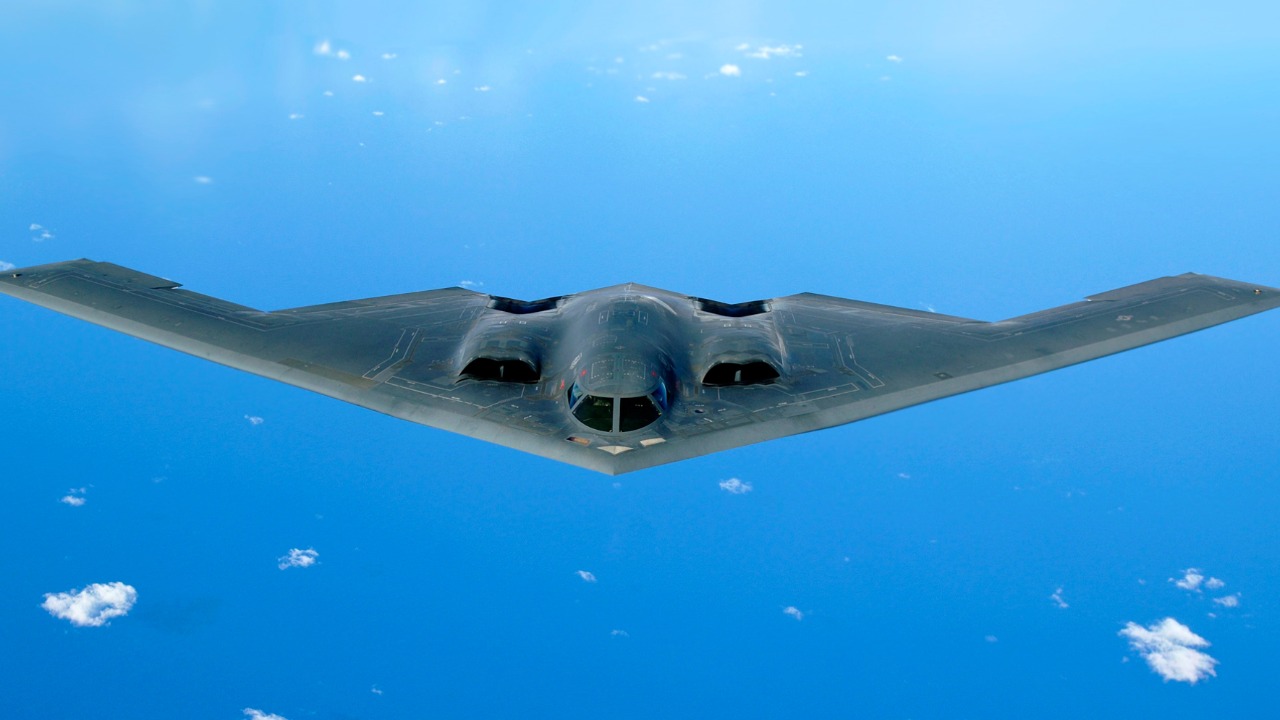

The B-2 Spirit fleet has regained a critical asset after a single bomber spent four years in intensive structural recovery, a reminder of how fragile and how valuable the United States’ stealth arsenal really is. The aircraft’s return to operational status after a costly and complex rebuild restores a piece of the nation’s nuclear and conventional strike capacity at a moment when long-range airpower is under renewed scrutiny.
Bringing this B-2 back from the brink required a level of engineering persistence, financial investment, and institutional patience that few air forces in the world could match. I see its revival not just as a maintenance success story, but as a window into how the United States is trying to stretch a small, exquisite fleet until the next generation of bombers is ready.
The landing mishap that sidelined a stealth icon
The B-2 at the center of this story did not leave the front line because of age or obsolescence, but because of a violent landing accident that nearly wrote it off. The aircraft was Damaged in a Landing Mishap Returns scenario that tore into its structure so deeply that planners had to weigh whether repair was even rational. In a fleet that numbers only a couple of dozen aircraft, however, every tail number carries strategic weight, and the decision was made to attempt a full structural restoration rather than accept a permanent loss.
That choice set in motion what would become Service After Four Years of Major Structural Repairs, a project that transformed a broken stealth bomber into a test case for how far the Air Force can go to preserve its rarest assets. The mishap did more than bend metal, it exposed how a single incident can ripple through nuclear planning, training schedules, and deterrence messaging. By committing to a multi‑year rebuild instead of scrapping the airframe, the service signaled that even a severely damaged B-2 is too valuable to abandon.
Why the Spirit of Georgia mattered enough to save
The aircraft in question is the B-2 Spirit bomber known as Spirit of Georgia, a name that carries both symbolic and operational significance inside the small stealth community. The US Air Force, often shortened to USAF, returned the B-2 Spirit bomber Spirit of Georgia to operational status after a long absence, underscoring how each individual Spirit represents a sizable fraction of the entire stealth bomber inventory. In a force where every tail is named and tracked, losing Spirit of Georgia would have meant permanently shrinking a fleet that already operates at boutique scale.
Spirit of Georgia’s restoration also came with a very real price tag. The US Air Force invested $23.7 million in structural repairs to bring the aircraft back to life, a figure that reflects both the complexity of stealth airframes and the scarcity of replacement options. I see that sum not as an outlier, but as a benchmark for what it now costs to keep legacy low‑observable platforms viable until successors like the B-21 can assume the load.
Four years of major structural work
Turning a battered bomber into a mission‑ready aircraft again required a timeline measured in years, not months. After the landing accident, the B-2 entered a long period of disassembly, inspection, and rebuild that stretched to roughly four years of major structural work, a duration that would be unthinkable for a conventional fighter or transport. The depth of the damage meant technicians had to peel back layers of composite skin and internal framing, treating the airframe almost like an archaeological site where every hidden crack had to be found before it could be fixed.
That extended schedule is captured in the description of the aircraft’s journey as Service After Four Years of Major Structural Repairs, a phrase that hints at how much of the bomber’s skeleton had to be re‑engineered. The project became a rolling classroom for structural engineers, maintainers, and program managers who had to relearn how to rebuild a stealth bomber from the inside out. In practical terms, those four years were an investment in knowledge as much as in hardware, creating a playbook that can be applied if another B-2 ever suffers comparable damage.
A four-phased repair journey from wreck to ready
To manage the complexity, the Air Force and its partners broke the effort into a Four Phased Repair Journey that moved the aircraft step by step from wreckage to readiness. In the early phases, teams focused on stabilizing the airframe and mapping every structural compromise, using non‑destructive inspection tools to understand exactly how far the damage had spread. Only after that forensic work could they begin cutting out compromised sections and fabricating replacements that would restore the bomber’s original strength and stealth profile.
Later phases shifted from heavy structural surgery to systems integration and flight preparation. Getting the Spirit of Georgia ready for that flight required extensive inspections and a meticulous review of every system that had been disturbed during the rebuild, from hydraulics and avionics to the delicate coatings that give the B-2 its low radar signature. As one account of the Four Phased Repair Journey notes, the team had to generate a thick stack of artifacts to certify the repairs, documenting every step so airworthiness authorities could sign off on a bomber that had effectively been rebuilt in place.
Leveraging new technologies and technique
What makes this repair saga more than a one‑off rescue is the way the Air Force used it to experiment with new methods. Program leaders described the effort under the banner of Leveraging New Technologies The repair process provided an opportunity to incorporate new technologies and techniques, turning a crisis into a laboratory for advanced sustainment. Instead of simply recreating the original structure, engineers looked for ways to improve inspection regimes, refine composite repair methods, and borrow best practices from other stealth programs.
Those advances were not abstract. The teams working on the bomber applied each new technique to real structural problems, validating tools and processes that can now be used across the rest of the fleet. According to an official account of how the Air Force overcame the odds to revive a damaged B-2, the maintainers drew on innovations and lessons from other Northrop Grumman programs, folding them into the Leveraging New Technologies The approach that guided the rebuild. I see that cross‑pollination as one of the quiet dividends of the project, a way to spread cutting‑edge sustainment practices beyond a single tail number.
From depot floor to flying status
After years on the ground, the moment of truth came when the bomber had to leave the depot floor and prove it could fly like a Spirit again. The transition from static airframe to operational aircraft involved a carefully staged series of ground runs, taxi tests, and initial flights that validated both the structural repairs and the reassembled systems. Each step was designed to catch any lingering flaws before the B-2 returned to the demanding profiles that define its nuclear and conventional missions.
Once those hurdles were cleared, the aircraft was formally returned to flying status, rejoining the small cadre of stealth bombers available for global tasking. Reporting on the project notes that a U.S. Air Force B-2 bomber returned to operational status after completing a four‑year repair project, a milestone that marked the end of its long exile from the flight line. The description of the damaged B-2 returned to flying status captures how unusual it is for an aircraft so badly hurt to make it back into the rotation, rather than being quietly retired.
A $23.7 million bet on structural integrity
Spending $23.7 million on a single repair project is not a casual decision, even in a defense budget that runs into the hundreds of billions. That figure reflects the reality that stealth bombers are not just aircraft, they are national assets whose replacement cost and lead time dwarf the price of even extensive depot work. In effect, the Air Force made a $23.7 million bet that Spirit of Georgia would deliver enough additional years of service to justify the outlay, a calculation that depends on both the bomber’s reliability and the pace at which new platforms arrive.
There is also a safety and confidence dimension to that investment. Structural integrity is not something that can be half‑fixed on a nuclear‑capable bomber, and the repair team had to prove that the rebuilt sections met or exceeded original standards. The detailed documentation and certification process described in the Spirit of Georgia restoration narrative shows how every dollar of that Spirit of Georgia repair budget was tied to specific engineering tasks, inspections, and sign‑offs. I read that as a reminder that in high‑end aviation, money buys not just parts and labor, but assurance that crews can trust the machine beneath them.
Boosting the United States nuclear bomber fleet
At the strategic level, the return of a single B-2 has outsized consequences because of how small and specialized the stealth bomber force is. The United States relies on its B-2 fleet as a key leg of its nuclear triad and as a precision conventional strike tool, so every aircraft that moves from the hangar back to the alert roster expands the menu of options available to planners. When one of those bombers is sidelined for years, the impact is felt in training rotations, deployment schedules, and the credibility of long‑range deterrence.
That is why the aircraft’s comeback has been framed as a boost to the nuclear‑capable bomber fleet, not just a maintenance milestone. Reporting on the broader context notes that the United States nuclear‑capable bomber fleet saw its capabilities bolstered when a B-2 stealth aircraft returned to service, a development that strengthens both day‑to‑day readiness and crisis response planning. In that sense, the revived Spirit of Georgia is more than a repaired airframe, it is a restored piece of the United States nuclear bomber fleet that had been missing for four years.
What the repair teaches about future bomber sustainment
Looking ahead, I see the Spirit of Georgia story as a preview of the sustainment challenges that will shape the bomber force for decades. As the B-2 ages and the B-21 enters service, the Air Force will have to decide repeatedly whether to pour resources into repairing individual stealth aircraft or accept attrition in small fleets. The four‑year, $23.7 million journey from landing mishap to operational status suggests that, at least for now, the bias is toward saving every airframe that can be saved, even when the path is long and technically demanding.
The techniques, documentation practices, and cross‑program lessons captured during this project will likely inform how maintainers approach future structural crises, whether on legacy Spirits or on newer platforms. By treating the damaged bomber as a testbed for new technologies and technique, the service turned a near‑loss into a catalyst for smarter sustainment. In a world where adversaries are fielding their own advanced air defenses and long‑range weapons, that kind of institutional learning may prove as important as any single aircraft’s return to the sky.
More from MorningOverview