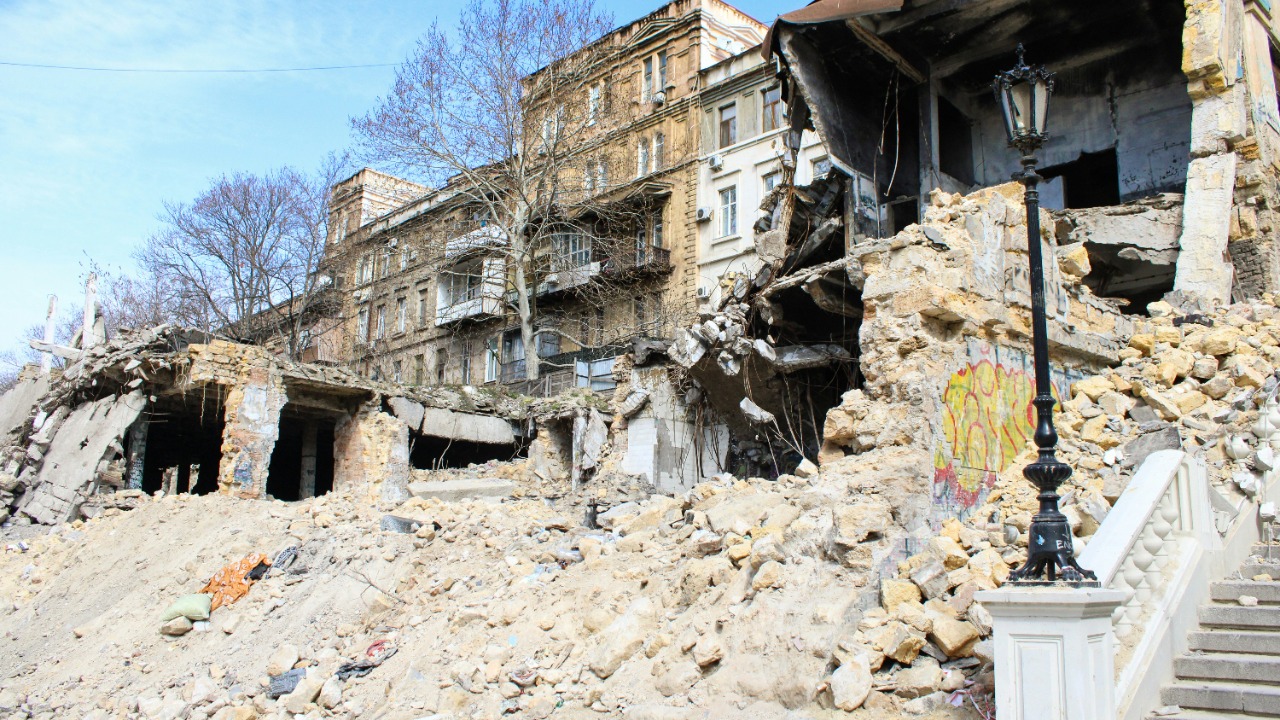

Earthquakes are often treated as acts of nature that strike without warning along famous plate boundaries, yet a growing body of evidence shows that human activity can also trigger damaging shaking. In regions long considered geologically quiet, industrial projects are now nudging ancient faults toward failure, revealing that “stable” ground can hide dangerous stresses. I want to unpack how that happens, why the risk is rising, and what it means for communities that never expected to feel the earth move.
Why human-caused earthquakes are no longer fringe science
For decades, the idea that people could set off earthquakes sounded like science fiction, but the data now point in a different direction. Seismologists have documented clusters of quakes that line up in space and time with specific industrial activities, from deep fluid injection to large reservoirs filling behind dams, and the patterns are too consistent to dismiss as coincidence. The physics is straightforward: when human projects change the stress or fluid pressure in the crust, they can push faults that are already close to failure past their breaking point.
Researchers now use the term Induced seismicity for earthquakes and tremors that are caused by human activity that alters the stress conditions in the subsurface. According to a detailed review of 6 facts about human-caused earthquakes, scientists have linked seismic swarms in places like Youngstown, Ohio and Guy, Arkansas to nearby injection wells, where operators pumped large volumes of wastewater underground. When I look across the literature, from global compilations of According human-induced events to national hazard assessments, the conclusion is consistent: human-caused quakes are real, measurable, and increasingly important for risk planning.
How natural earthquakes work, and where humans fit in
To understand how people can trigger shaking, I start with how natural earthquakes happen. Tectonic plates are constantly moving, and as stress builds up along their boundaries, faults eventually slip, releasing energy that travels as seismic waves. Most of the world’s largest quakes occur along these plate edges, where stress accumulates quickly and faults are already primed to rupture.
Yet the same basic mechanism can operate far from plate boundaries if a fault is close enough to its breaking point. As stress builds up, the plate boundary faults can open or slide, and the vast majority of events are tectonic, but a smaller share are linked to human activity that changes subsurface conditions, a pattern highlighted in an overview of Apr human-induced earthquakes. The United States Geological Survey explains that Earthquakes induced by human activity have been documented in the United States and many other countries, even though most quakes remain natural. In that context, human projects do not create stress from nothing, they simply add the final increment that lets a fault slip.
What “stable” regions really look like deep underground
On the surface, continental interiors can feel unshakable, with no visible faults and little seismic history in living memory. Deep underground, however, these regions are crisscrossed by ancient fractures that formed when continents collided or rifted apart hundreds of millions of years ago. Over time, these faults can “heal,” their rough surfaces welded together by mineral growth and chemical processes, which allows them to store enormous elastic strain without slipping.
That hidden strength is exactly what makes them dangerous when disturbed. Many human-induced earthquakes occur on faults that have remained still for millions of years, and over that time the rocks around them have become stronger and more brittle, a pattern described in research on why Many inactive faults heal slowly. When industrial projects change the stress field or fluid pressure in these “stable” zones, they can tap into that stored energy, producing quakes in places where buildings and infrastructure were not designed to withstand shaking. That mismatch between deep geology and surface expectations is at the heart of the risk.
The physics of how human projects push faults over the edge
At the core of induced seismicity is a simple balance between resisting strength and driving stress. Faults fail when the shear stress trying to make them slip exceeds the frictional resistance holding them in place, a relationship often described using Coulomb Theory. In practical terms, anything that increases shear stress on a fault plane, or reduces the effective normal stress that clamps it shut, can bring it closer to failure.
In a global review of human-induced earthquakes, scientists explain that Coulomb Theory provides a framework for calculating how different activities change that stress balance. A separate analysis of the physical mechanisms of induced earthquakes notes that the primary mechanisms of injection-induced events include changes in pore pressure that reduce effective normal stress and stress transfer from volume changes in the rock, as detailed in a technical review from Dec. When I look at case studies, the pattern is consistent: whether the trigger is a reservoir, a mine, or a wastewater well, the quake occurs where these stress perturbations intersect a fault that was already close to its tipping point.
Industrial activities that can trigger shaking
Not every industrial project is a seismic hazard, but several types of activity have repeatedly been linked to induced quakes. Large-scale fossil fuel extraction, deep mining, fluid injection and withdrawal, and the filling of massive reservoirs all change the stress state of the crust in ways that can activate nearby faults. The key ingredients are scale, depth, and proximity to preexisting fractures that are already stressed.
A comprehensive overview of Induced seismicity notes that large-scale fossil fuel extraction and other subsurface operations have been associated with sudden increases in seismicity in several regions. Energy technology activities known to have produced induced seismicity include fluid injection or withdrawal for oil and gas, geothermal operations, and storage projects, as summarized in a chapter on Energy technology activities. When I compare these findings with broader educational explainers that stress how humans can also induce earthquakes through Industrial activities such as geothermal energy and reservoir impoundment, like the overview that begins with However, the message is clear: a wide range of modern infrastructure can, under the right conditions, act as a trigger.
Why fluid injection and hydraulic fracturing loom so large
Among all the industrial drivers, deep fluid injection stands out as a particularly efficient way to disturb faults. When operators pump large volumes of wastewater or other fluids underground, the injected liquid can migrate along permeable pathways, raising pore pressure on nearby faults and effectively prying them open. That pressure reduces the frictional grip that keeps the fault locked, making it easier for tectonic stresses to push it into motion.
According to the United States Geological Survey, injecting fluid underground can induce earthquakes that are large enough to be felt, especially when volumes and pressures are high and wells intersect or approach existing faults, a point underscored in a focused discussion of how Injecting fluid underground can induce seismicity. The same set of Jun facts about human-caused earthquakes points to Youngstown, Ohio and Guy, Arkansas as examples where disposal wells coincided with earthquake sequences, illustrating how local geology and operational choices interact. Guidance on According hydraulic fracturing and induced seismicity notes that there are many different ways oil and gas operations such as hydraulic fracturing can influence seismicity, from the fracturing itself to the long-term disposal of produced water. When I weigh these findings, it is clear that managing injection volumes, pressures, and well placement is one of the most direct levers regulators have to reduce human-triggered shaking.
Case studies: from quiet towns to shaking streets
The abstract physics of induced seismicity becomes tangible when I look at specific communities that have felt the ground move. In several midcontinent regions, residents who had never experienced a quake in their lifetimes suddenly reported swarms of small to moderate events, often clustered near new industrial projects. These sequences have forced local officials, regulators, and companies to confront the reality that their operations can have seismic side effects.
One detailed account describes how, on August 16, 2012, residents in a region far from plate boundaries felt shaking that was later linked to human activity, illustrating how Such faults store strength over millennia of inactivity and can be pushed over the edge by relatively modest stress changes, as reported in an analysis of Dec human-caused earthquakes in stable regions. Educational explainers on human-induced earthquakes emphasize that while the vast majority of quakes are natural, the number of documented induced events has grown as industrial activity has expanded and monitoring has improved. When I connect these narratives with the broader definition of induced seismicity, the pattern is unmistakable: quiet towns can find themselves on the seismic map when nearby projects alter the stress landscape underground.
Why some human projects cause quakes and others do not
Not every dam, mine, or injection well produces earthquakes, and that variability can make induced seismicity seem unpredictable. In reality, several key factors control whether a given project will trigger felt shaking: the presence and orientation of nearby faults, the existing stress state in the crust, the volume and rate of any fluid injection or withdrawal, and the time over which those changes occur. Projects that intersect critically stressed faults, or that rapidly change pressures over large areas, are more likely to produce noticeable events.
Global analyses of Mar human-induced earthquakes list a wide range of activities that have been proposed as triggers, but also note that the evidence for some, such as small explosions, is weak compared with the strong links to large-scale fluid injection and extraction. A broad educational overview that begins with Industrial activities such as geothermal energy and reservoir impoundment underscores that the risk depends heavily on local geology and operational choices. When I synthesize these findings, the message is nuanced: human projects do not automatically cause quakes, but certain combinations of geology, stress, and engineering decisions can make them far more likely.
How scientists are using data and AI to anticipate induced quakes
As induced seismicity has become more prominent, researchers have turned to dense monitoring networks and advanced analytics to understand and anticipate it. Modern seismic arrays can detect tiny tremors that were previously invisible, revealing how small events cluster around industrial sites and sometimes foreshadow larger quakes. By combining these observations with detailed models of subsurface geology and fluid flow, scientists are starting to map out which faults are most sensitive to human activity.
One cross-disciplinary review of earthquake forecasting highlights how integrating artificial intelligence with geophysical insights can improve hazard assessment, noting that More information can be found on More GNS Science resources and that The United States Geological Survey (USGS) provides extensive earthquake-related data and tools. These efforts build on decades of careful fieldwork and lab experiments, including controlled studies of injection-induced seismicity such as those summarized in the physical mechanisms review from Dec. When I look at how these tools are being deployed, from real-time traffic-light systems that adjust injection rates to probabilistic forecasts that inform regulators, it is clear that data-driven approaches are becoming central to managing human-triggered shaking.
What this means for policy, planning, and everyday life
The recognition that human activity can trigger earthquakes has practical consequences far beyond academic debates. Regulators now face pressure to weigh seismic risk when approving projects, especially in regions with known faults or a history of induced events. Engineers must design wells, reservoirs, and underground storage systems with an eye toward how they will change subsurface stresses over years or decades, not just during construction.
Public-facing explainers on How Humans Are Causing Deadly Earthquakes emphasize that mining, dam building, and fracking are among the causes of induced quakes, and that in some cases earthquakes are the response to the way we extract and store resources. Guidance on United States Geological Survey findings about hydraulic fracturing and induced seismicity underscores that careful monitoring and adaptive management can reduce, though not eliminate, the risk. For people living in regions once considered seismically quiet, the takeaway is sobering but actionable: human choices about energy, water, and infrastructure can influence whether their “stable” ground stays still, and informed policy can make those choices safer.
More from MorningOverview