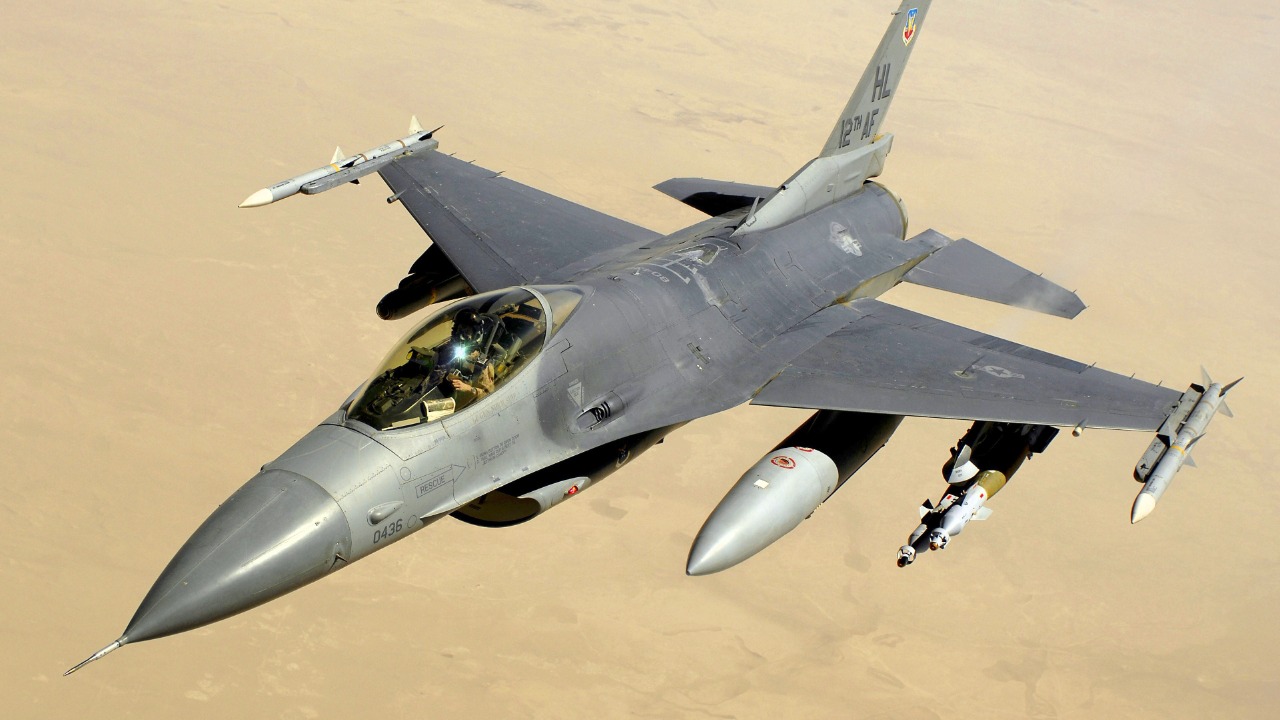

A U.S. Air Force Thunderbirds F-16C Fighting Falcon crashed in the California desert, turning a routine training flight into a stark reminder of the risks that come with high-performance military aviation. The pilot ejected before impact and survived with non life-threatening injuries, but the loss of the jet and the fiery wreckage left scattered near a remote highway have raised fresh questions about safety, training, and the demands placed on elite demonstration teams.
As investigators move in and the Air Force Thunderbirds weigh what comes next, the crash near the small community of Trona has become a focal point for concerns that extend far beyond one aircraft. I see it as a moment that exposes both the fragility and the resilience built into a system that asks pilots to fly at the edge of the envelope, in front of crowds and over unforgiving terrain, while still keeping risk as low as humanly possible.
The crash in the desert: what happened near Trona
The Thunderbirds jet went down in a sparsely populated stretch of California, where the desert floor meets the lower reaches of the eastern Sierra and the approach to Death Valley. According to early reports, a U.S. Air Force Thunderbirds F-16C Fighting Falcon crashed near the town of Trona during a training mission, turning a clear morning into a scene of smoke and twisted metal along a lonely road. The aircraft, part of the Air Force’s premier demonstration squadron, was flying in California airspace when something went wrong and the pilot was forced to eject.
Local accounts describe a fiery impact that left debris near Trona Road and prompted an immediate emergency response from regional authorities. The crash site, close to Trona Airport and within reach of the broader Death Valley region, underscored how often high-performance jets operate over remote terrain where there are few witnesses but significant environmental and safety stakes. The fact that this involved a Thunderbirds F-16C Fighting Falcon, a jet normally associated with precision flying over packed airshows, only sharpened public attention on what unfolded in the desert.
A pilot’s narrow escape and medical evacuation
For all the destruction on the ground, the most important fact is that the pilot survived. The Air Force has confirmed that the Thunderbirds aviator ejected from the F-16C Fighting Falcon before impact, separating from the stricken jet and descending under a parachute into the harsh California landscape. After landing, the pilot was recovered and transported from the area for treatment, a rapid chain of events that reflected both training and the emergency infrastructure that surrounds every military flight.
Officials have described the pilot’s injuries as non life-threatening, a phrase that carries enormous weight when set against images of a destroyed fighter jet and scorched desert. The aviator was taken to a medical facility and is receiving follow-on care, a standard step after any high-speed ejection that can subject the body to violent forces. That outcome, a living pilot and no reported casualties on the ground, is the best possible result in a scenario that began with a catastrophic failure in flight.
Trona Road, Death Valley and a history of desert crashes
The location of the crash is not incidental. The fiery impact was reported shortly before 11 a.m. along Trona Road in Trona, a small community that sits about three miles from Trona Airport and within driving distance of Death Valley. This corridor of desert, stretching across San Bernardino County toward the national park, has long been a corridor for military training flights because of its open airspace and sparse population, but that same remoteness can complicate rescue and investigation efforts when something goes wrong.
Witnesses described a U.S. Air Force Thunderbirds jet going down near Death Valley, with emergency crews converging on the area around Trona Airport as smoke rose from the crash site. The geography matters, because it highlights how the Air Force often balances operational needs with public safety by routing high-speed training over isolated terrain. Yet the sight of a Thunderbirds aircraft in pieces near a highway that locals use every day is a reminder that even in carefully chosen airspace, the line between routine and disaster can be thin.
Inside the Thunderbirds’ high-risk mission
The Air Force Thunderbirds occupy a unique place in American military aviation, serving as both ambassadors and testaments to the skill of frontline fighter pilots. Flying the F-16C Fighting Falcon, they perform tight formations, high-G turns and low-altitude passes that push aircraft and aircrew close to their limits, all in the name of public outreach and recruiting. That mission profile means that even a minor mechanical issue or momentary loss of situational awareness can have outsized consequences, especially when the team is practicing for or flying in front of large crowds.
Background information on the Thunderbirds describes a unit that draws from some of the Air Force’s most experienced aviators, supported by a deep bench of maintainers and specialists who keep the jets airworthy and the schedule on track. The team’s official materials, available through an Air Force portal that offers detailed background information on the Thunderbirds, emphasize precision, discipline and safety as core values. Yet the very nature of their performances, often flown just feet apart at hundreds of miles per hour, means that risk can never be fully eliminated, only managed.
How the F-16C Fighting Falcon is built to save its pilot
The F-16C Fighting Falcon is a combat aircraft first and a demonstration platform second, and its design reflects that priority in ways that likely helped the Thunderbirds pilot survive. The jet is equipped with an advanced ejection seat system that allows a pilot to punch out at high speed and low altitude, a capability that becomes critical when an emergency unfolds close to the ground. In this case, the pilot’s successful ejection from the Thunderbirds F-16C Fighting Falcon in California showed how that technology, combined with training, can turn a catastrophic airframe loss into a survivable incident.
Once the pilot pulled the handle, the sequence would have unfolded in fractions of a second, with the canopy blowing, the seat firing and the parachute deploying as the aircraft continued on a doomed trajectory toward Trona Road. Reports that the aviator was recovered with non life-threatening injuries and moved quickly to medical care suggest that the system functioned as intended, even if the forces involved were still severe. The fact that the pilot could later be described as in stable condition is a testament to both the engineering behind the F-16C and the emergency response network that surrounds every Thunderbirds sortie.
Echoes of past crashes and the thin margin for survival
Crashes in Southern California’s skies are not new, and the Thunderbirds accident near Trona fits into a longer history of aircraft going down over rugged terrain. Decades earlier, a separate incident in Simi Valley saw a different aircraft destroyed by fire after impact, a reminder that once a plane hits the ground with fuel on board, the outcome for the machine is almost always total loss. In that earlier case, the aircraft was destroyed by the fire, and the impact touched off a small grass fire that Ventura County firefighters had to bring under control within minutes, according to accounts that cited an official named Austin describing the response.
Those details, preserved in a brief local report that noted how quickly the blaze was contained in Ventura County, underline how often survival hinges on a chain of events that begins long before impact. In Simi Valley, all three people aboard survived a fiery crash, just as the Thunderbirds pilot survived an ejection that could easily have gone another way. When I look at these episodes together, what stands out is not just the danger but the way training, equipment and local emergency services combine to keep a bad day from becoming a mass-casualty disaster.
Why the Thunderbirds fly over California’s deserts
California’s wide-open deserts have long been a magnet for military aviation, and the Thunderbirds are no exception. The airspace around Trona, stretching toward Death Valley and across San Bernardino County, offers the kind of low-density environment that allows high-speed maneuvers with reduced risk to people on the ground. That is one reason a U.S. Air Force Thunderbirds jet could be flying near Death Valley in the first place, practicing or transiting in an area where the nearest town is small and the nearest major city is hours away by car.
Reports on the crash note that the fiery impact occurred along Trona Road in Trona, about three miles from Trona Airport, and that the scene involved a U.S. Air Force Thunderbirds jet near Death Valley that left the pilot alive but the aircraft in ruins. Those details, captured in coverage that described how the Air Force Thunderbirds jet went down near Death Valley and how the pilot was later reported in stable condition, show how geography shapes both risk and response. The same remoteness that protects large populations from debris also means that first responders must cover long distances on desert roads to reach a crash site.
What investigators will be looking for next
With the immediate emergency over, the focus now shifts to understanding why the Thunderbirds F-16C Fighting Falcon crashed in California in the first place. Investigators will examine the wreckage along Trona Road, review maintenance logs, and debrief the pilot to reconstruct the final minutes of the flight. They will be looking for signs of mechanical failure, such as engine problems or control system anomalies, as well as any evidence that weather, bird strikes or human factors played a role in the loss of the aircraft.
Early accounts emphasize that the pilot ejected safely and that there were no reported injuries on the ground, but they also note that no further details were immediately available about the cause of the crash. Coverage of the incident in San Bernardino County describes how the Pilot ejected safely and how the fiery crash was reported shortly before 11 a.m. along Trona Road in Trona, but stops short of assigning blame or pinpointing a specific malfunction. Until the investigation runs its course, any theory about what went wrong remains unverified based on available sources.
The public face of risk: airshows, recruiting and trust
Every time the Thunderbirds take to the sky, they are not just flying for themselves or for the Air Force, they are flying for the public that watches from below. Their performances are meant to inspire, to showcase the capabilities of the Air Force and to encourage young people to consider military service. When a Thunderbirds F-16C Fighting Falcon crashes in California, even during a training mission far from an airshow crowd, it inevitably raises questions about how safe these displays really are and what level of risk is acceptable in the name of outreach and recruiting.
Reports that the jet’s pilot safely ejected and was transported from the area with non life-threatening injuries help maintain public confidence that the Air Force takes safety seriously, even when something goes wrong. Coverage of the incident notes that the F-16C Fighting Falcon Crashes event involved a Thunderbirds jet in California whose pilot survived and was moved to care, a narrative that contrasts sharply with past tragedies in military aviation. As I see it, the way the Air Force communicates about this crash, and the transparency it brings to the investigation, will play a major role in whether families feel comfortable watching the Thunderbirds roar overhead at the next airshow.
A pattern of survival in the face of catastrophe
One thread runs through the Thunderbirds crash near Trona, the earlier Simi Valley incident and other desert aviation accidents: survival is increasingly common even when aircraft are destroyed. In the California desert, a U.S. Air Force Thunderbirds F-16C Fighting Falcon went down and the pilot lived. In Simi Valley, an aircraft was destroyed by fire, a grass fire ignited, and yet all three people aboard survived. These outcomes are not accidents of fate alone, they are the product of decades of incremental improvements in ejection seats, crashworthy design, emergency response and pilot training.
Reports on the Thunderbirds crash highlight that a U.S. Air Force Thunderbirds F-16C Fighting Falcon went down in California and that the pilot ejected and is receiving follow-on care, a detail captured in coverage that describes how a US Air Force Thunderbirds jet crashed near Trona. When I line up these facts, what emerges is a picture of a system that still experiences catastrophic failures but is far better at preserving human life than it once was. The wreckage along Trona Road is a sobering sight, yet the pilot’s survival is a powerful counterweight, a sign that even in the most unforgiving environments, the balance between risk and protection is slowly shifting in favor of those who strap into the cockpit.
More from MorningOverview