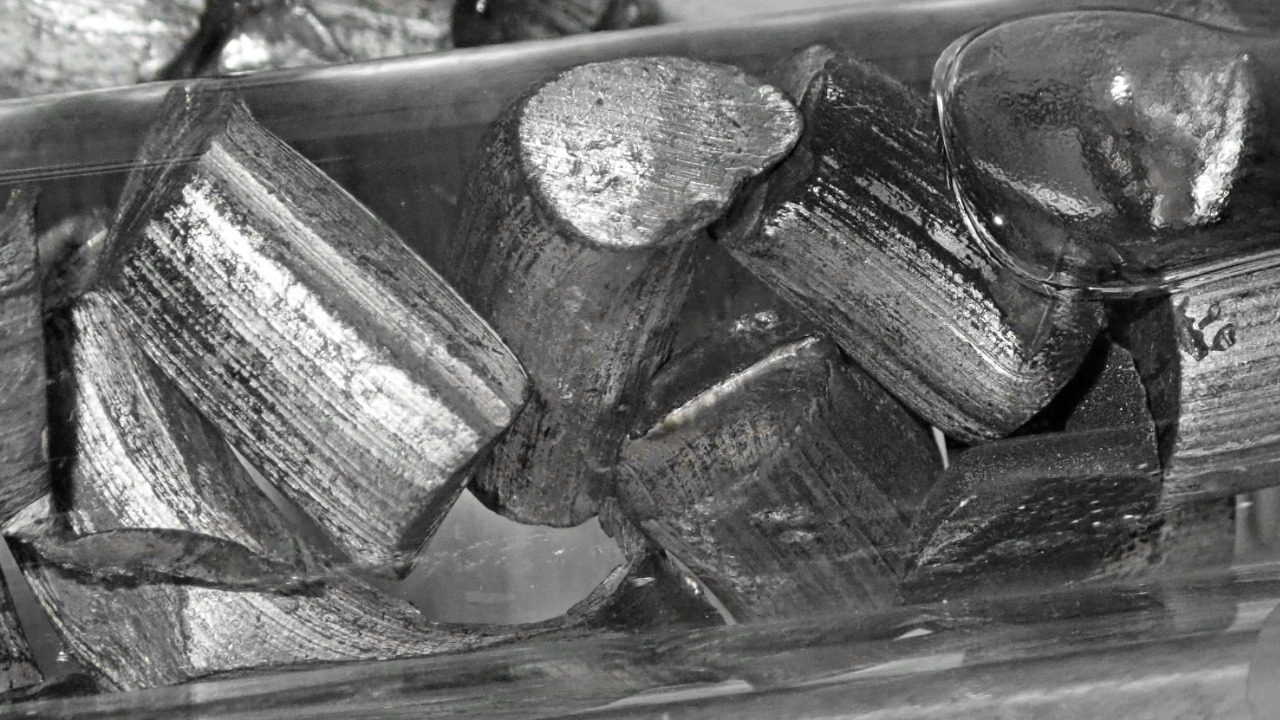

The remote high desert where Nevada meets Oregon is suddenly at the center of the global battery race. Geologists say a vast trove of lithium locked inside an ancient volcanic crater along the state line could be large enough to reshape supply chains, supercharge electric vehicle ambitions, and ignite a new era of resource politics in the American West. The discovery is already colliding with long running fights over land, water, and tribal rights, turning a quiet stretch of sagebrush into a test case for what a just energy transition really looks like.
At the heart of the story is the McDermitt Caldera, a supervolcano crater that straddles the border and may hold the world’s largest known deposit of the silvery metal that powers everything from smartphones to Teslas. As federal agencies, mining companies, ranchers, conservationists, and Native communities line up on different sides of the project, the question is no longer whether this lithium exists, but how, and on whose terms, it will be brought to the surface.
Inside the McDermitt Caldera, the supervolcano now worth trillions
The McDermitt Caldera is not just another mineral prospect, it is a massive volcanic scar roughly 21 miles long and 27 miles wide that erupted around 19 million years ago, leaving behind a basin now believed to be saturated with lithium rich clays. Federal descriptions of the site emphasize that this ancient Caldera underpins a new wave of exploration on the Nevada Oregon border, where the geology that once produced catastrophic eruptions has quietly concentrated one of the most sought after resources of the clean energy era. The crater’s unusual chemistry, shaped by volcanic heat and long vanished lakes, appears to have created a thick sequence of sediments unusually rich in lithium bearing minerals.
Researchers who have mapped the basin argue that the deposit is not only vast but unusually accessible, with lithium concentrated in shallow layers that could be mined at industrial scale. Scientific reporting on the site notes that the McDermitt structure is an ancient supervolcano crater where mineral rich fluids once moved upwards into lake sediments, leaving behind a thick blanket of clay that now reads like a treasure map for battery makers. That combination of scale and relative shallowness is what has turned a remote volcanic relic into a strategic asset watched from Detroit to Beijing.
How big is “biggest”? The $1.5 trillion question
What has truly electrified policymakers and investors is the scale of the find. Geologists cited in multiple technical and financial assessments say the lithium resource in the McDermitt basin could be worth about $1.5 trillion at current prices, a figure that would put this single deposit in the same league as the largest oil fields of the twentieth century in terms of economic impact. One analysis notes that the volume of lithium here could supply the global battery market for decades, a staggering prospect in a world where electric vehicles, grid storage, and consumer electronics are all competing for the same finite pool of critical minerals.
Other reporting on the same basin reaches similar conclusions, describing a U.S. government and private sector now setting its sights on an “extraordinary” deposit valued at $1.5 trillion that stretches across two states. Environmental features on the discovery echo that valuation, describing a massive lithium source hiding under a volcano on the Nevada Oregon border that is valued at nearly $1.5 trillion and could power the world’s batteries for decades. When independent analyses converge on the same eye watering number, it underscores why this remote caldera has become a focal point of national industrial strategy.
From obscure basin to “world’s largest” lithium deposit
Until recently, the McDermitt Caldera was known mainly to geologists and a handful of ranchers and tribal communities who live around its rim. That changed when researchers reported that a lithium deposit discovered in the U.S. McDermitt Caldera may be the world’s largest, a claim that quickly rippled through markets and policy circles. Coverage of that research highlighted how the deposit’s unique clay minerals and high concentrations distinguish it from more conventional hard rock or brine operations, suggesting that the basin could hold a new class of lithium resource. Even the visual presentation of that reporting, with references to “Font Color” and “White” and “Font Opacity” at “100%,” underscored how suddenly this once obscure crater had been thrust into the spotlight.
Subsequent analysis framed the discovery in global terms, noting that the U.S. may now have the largest known lithium deposit in the world within the McDermitt Caldera, which straddles the border of Oregon and Nevada. Broadcast style coverage echoed that framing, reporting that Geologists believe they have uncovered the world’s largest lithium deposit within an ancient supervolcano that crosses two states. Taken together, these accounts have cemented McDermitt’s status not just as a big find, but as a potential pivot point in the global contest over critical minerals.
Federal acceleration and the race to permit the border projects
Once the scale of the resource became clear, federal agencies moved to accelerate planning for lithium projects along the Nevada Oregon line. Reporting on the government’s posture describes how officials have fast tracked reviews in the McDermitt Caldera region, even as critics warn that the process is proceeding with inadequate public input. The same accounts emphasize that the basin’s dimensions and volcanic history make it uniquely attractive for large scale extraction, which in turn has intensified pressure on regulators to move quickly in the face of global competition for battery materials.
At the national level, the U.S. government has also begun taking direct financial stakes in companies positioned to exploit northern Nevada’s lithium. One high profile example is the decision to take a minority stake in Lithium Americas, a company developing one of the world’s largest lithium mines in northern Nevada, a move that signals Washington’s willingness to use public capital to secure domestic supply. In parallel, federal analyses of the McDermitt basin’s value, pegged at around $1.5 trillion, have only sharpened the sense that the United States is in a race to lock in control of this resource before rivals do.
Local resistance, “sloppy” permitting, and frontline fears
On the ground, the rush to develop the caldera has collided with deep skepticism from conservationists and local communities who feel sidelined by the pace of permitting. One widely cited Report of a giant lithium find in the region has been used by critics to argue that federal and state agencies must avoid “sloppy” permitting that shortcuts environmental review and public consultation. Conservation voices quoted in that coverage warn that the scale of the proposed mines, combined with the sensitivity of the high desert ecosystem, demands a more cautious approach than the one they see unfolding.
Local news accounts have amplified those concerns, quoting residents who say they are worried that the excitement around the discovery will be used to justify more lithium mining in the region and to pressure frontline communities to accept projects without adequate safeguards. One such report notes a conservationist who explicitly said, “I am concerned that this report will be used to advance more lithium mining in the region, and pressure the frontline communities,” while criticizing what they see as a pattern of “hard rock” deposits being pushed through without full consideration of their impacts. Those voices frame the McDermitt rush as part of a broader pattern in which rural and tribal communities bear the costs of extraction while distant cities reap the benefits of electrification.
Thacker Pass and the human cost of lithium extraction
Nowhere are those tensions more visible than at Thacker Pass, a major lithium project in northern Nevada that has become a flashpoint for debates over the social and environmental costs of the energy transition. Research on the mine’s impacts notes that the project has faced significant local resistance from environmentalists, ranchers, and Indigenous communities, who argue that the mine threatens water resources, wildlife, and cultural sites. A detailed assessment of the effects of lithium extraction in the region describes how local tribes have criticized what they see as an inadequate environmental review and a failure to fully consult communities whose ancestral lands would be directly affected.
International reporting has echoed those concerns, describing how the construction of the planned Thacker Pass lithium mine has drawn strong protests from environmental groups as well as Native American tribes. That coverage, datelined from LOS ANGELES and citing Xinhua and XINHUANET, underscores that opposition to the project is not just a local story but part of a global conversation about how Indigenous rights intersect with climate policy. For residents near McDermitt, Thacker Pass is a cautionary tale about what can happen when large scale extraction moves faster than community consent.
National interests vs local impacts in Nevada’s lithium boom
The clash between national climate goals and local costs has been analyzed in depth by scholars who frame Nevada’s lithium boom as a textbook case of competing priorities. One academic blog on The Thacker Pass Lithium Mine explicitly casts the debate as “National Interests Vs” “Local Impacts Thacker Pass,” arguing that the mine in northern Nevada (referred to as “Neva” in the piece) encapsulates the trade offs inherent in the energy transition. The analysis notes that while the project promises to supply critical materials for electric vehicles and grid storage, it also risks degrading landscapes that hold deep cultural and ecological value for nearby communities.
That framing resonates across the broader McDermitt region, where residents see federal enthusiasm for lithium as both an opportunity and a threat. For some, the prospect of jobs, infrastructure, and investment is welcome in a part of the country long neglected by policymakers. For others, the experience of projects like Thacker Pass and the perception of “sloppy” permitting described in the earlier Report of giant lithium finds suggest that national interests too often override local voices. The McDermitt discovery, in this view, risks becoming another chapter in a long history of resource frontiers where benefits flow outward and burdens stay behind.
Lessons from the Dakota Access Pipeline fight
For many tribal leaders and activists watching the McDermitt developments, the parallels with the Dakota Access Pipeline Project are impossible to ignore. That pipeline, which was routed near the Standing Rock Sioux reservation in North Dakota, became a symbol of how large infrastructure projects can threaten sacred sites and water sources while marginalizing Indigenous voices. A detailed case study on the Dakota Access Pipeline Project notes that the project is particularly opposed by Native Americans, who claim that the pipeline would devastate sacred sites as well as the drinking water of the Standing Rock Sioux reservation in North Dakota.
Those experiences have shaped how Native communities in Nevada and Oregon approach new extraction proposals, including lithium mines in and around the McDermitt basin. Activists point to the DAPL fight as evidence that once construction begins, it becomes far harder to halt or reroute a project, which is why they are pressing for robust consultation and consent processes before any new pits are dug. The same case study underscores how reputational and legal risks can escalate when companies and regulators underestimate Indigenous opposition, a lesson that lithium developers on the Nevada Oregon border ignore at their peril.
Global battery ambitions and the geopolitics of a supervolcano
Beyond the local and national stakes, the McDermitt discovery is reshaping the geopolitics of the battery supply chain. Environmental reporting on the find emphasizes that the World’s largest lithium deposit, valued at $1.5 trillion, lies under a Supervolcano in the U.S., and that this single resource could influence the global battery market for decades. That kind of leverage matters in a world where China currently dominates much of the lithium processing and battery manufacturing chain, and where the United States is racing to catch up through subsidies, industrial policy, and strategic investments.
At the same time, the McDermitt basin is not just a dot on a map but a real place with a physical footprint that can be seen and visited. Mapping tools show the caldera’s outline and surrounding communities in detail, with one interactive place viewer highlighting how close proposed mining areas sit to ranches, roads, and tribal lands. That juxtaposition of global ambition and local geography is what makes the story of the Nevada Oregon border so charged: the same crater that could help decarbonize the world’s vehicle fleet also risks becoming another sacrifice zone if development is not handled with care.
Can the energy transition avoid repeating old mistakes?
The debate over McDermitt is ultimately a test of whether the clean energy transition can break with the extractive patterns of the fossil fuel era. Environmental justice advocates argue that simply swapping oil wells for lithium pits without changing how decisions are made will reproduce the same inequities, only with different commodities. The experience at Thacker Pass, where protests by environmental groups and Native American tribes have already delayed construction, and the warnings in the effects of lithium extraction research about inadequate environmental review, suggest that communities are no longer willing to accept “green” projects on faith alone.
For policymakers, the challenge is to reconcile urgent climate timelines with the slower work of building trust, conducting rigorous science, and honoring tribal sovereignty. That means learning from past conflicts like the Dakota Access Pipeline Project, listening to conservationists who warn against “sloppy” permitting, and recognizing that the world’s appetite for electric vehicles and grid storage does not erase the rights of people who live atop the minerals. The McDermitt Caldera, with its trillion dollar promise and fragile desert rim, is where those abstract principles are being forced into concrete choices, one drill pad and one permit at a time.
More from MorningOverview