
The death of a neighborhood cat in San Francisco has become an unlikely flashpoint in the fight over autonomous vehicles, after Tesla CEO Elon Musk weighed in with remarks that many critics saw as cold and self-serving. What might have remained a local tragedy at a corner store instead turned into a national argument about safety, accountability and how tech leaders talk about the human (and animal) cost of their products.
At the center of the controversy is KitKat, a “one-of-a-kind” bodega cat killed by a Waymo robotaxi, and Musk’s decision to use that loss to argue that self-driving cars will ultimately save “many pets.” His response, and the backlash that followed, reveals how fragile public trust remains around driverless technology and how quickly a single incident can reshape the narrative around an entire industry.
The bodega cat that became a symbol
KitKat was not a statistic to the people who knew her, but a fixture of daily life at a small San Francisco liquor store called Randa’s Market. Reporting describes the cat as a resident companion at the Mission District shop, with the owner of Randa’s Market confirming that KitKat was fatally injured and rushed to a vet after a collision with a driverless car, a moment that turned an ordinary corner store into the center of a debate about whether autonomous vehicles belong on crowded city streets, a debate that has sparked concerns about safety. Just hours after remarks by local officials about robotaxis, KitKat was reportedly struck outside Randa’s Market, a sequence that made the incident feel like an immediate and painful rebuttal to assurances that the technology was ready for dense neighborhoods in San Francisco.
Witness accounts and local reporting paint a vivid picture of the aftermath. One detailed account notes that KitKat was a “one-of-a-kind” bodega cat whose death left a convenience store owner and patrons grieving, with the crash described as causing a commotion on the sidewalk as neighbors realized what had happened and tried to help, a scene captured in coverage of how a Waymo robotaxi kills ‘one-of-a-kind’ bodega cat. Another report notes that the owner of Randa’s Market, identified as Randa, confirmed KitKat’s death to KTVU and described rushing the cat to emergency care, underscoring how quickly a routine day at the Market turned into a tragedy that would soon reverberate far beyond the Mission District once the story reached social media and national outlets.
What witnesses say happened in the street
Accounts from people who saw the collision suggest that KitKat’s death was not an unavoidable fluke but a failure of the robotaxi to respond to a visible hazard. One of the witnesses said that missing in Waymo’s initial statement was the fact that KitKat was “positioned for a while directly in front of the car” before the autonomous vehicle pulled out, a detail that raises questions about how the system interpreted a small animal in its path and is central to local reporting that Waymo confirms its car killed KitKat. Friends, neighbors and KitKat’s owner have described the cat as a familiar presence near the curb, and their frustration has focused not only on the loss but on the perception that the robotaxi failed to do what any attentive human driver would have done, namely stop and wait.
Other coverage adds further texture to the scene and how it was documented. One resident said he was able to capture video of the aftermath, including the driverless Waymo stopped in the street and the distressed reaction of people outside the store, footage that fed into a broader narrative about a “Problem That’s Driving People Bananas” as driverless cars mix with pedestrians, cyclists and pets in dense urban corridors, a phrase used in a report on how a driverless Waymo killed cat. Together, the witness statements and video evidence have become a focal point for critics who argue that the technology is being tested on public streets before it can reliably handle the unpredictable realities of city life, from darting animals to people stepping off curbs mid-block.
Waymo’s response and the growing memorial
Waymo, a subsidiary of Google’s parent, Alphabet, has acknowledged that one of its vehicles struck and killed KitKat, but its carefully worded statements have done little to calm the anger in the neighborhood. The company confirmed that its car was involved and expressed sympathy, yet witnesses have stressed that the cat was visible in front of the vehicle before it moved, a discrepancy that has fueled skepticism about how fully the company is disclosing what its sensors and software actually registered in the moments before impact, a tension reflected in the account that Friends, neighbors and KitKat’s owner believe key context was missing. For residents, the gap between corporate language and lived experience has become part of the story, reinforcing a sense that the people most affected by the technology have the least say in how it is deployed.
On the sidewalk outside Randa’s Market, grief has taken a physical form. A mound of brilliant marigolds, colorful handwritten notes, candles, treats and cat toys now overflows onto the pavement under the store’s awning, a spontaneous memorial that has turned the corner into a kind of informal protest site as well as a place to mourn, a scene described in detail in coverage of how a mound of brilliant marigolds has come to symbolize the community’s anger. Residents have left messages not only for KitKat but for city leaders and tech companies, demanding stricter oversight of robotaxis and questioning why their streets have become, in effect, a live test track for corporate experiments in autonomy.
How the story exploded online
The collision might have remained a local controversy if not for the speed with which it spread across social media, where images of KitKat and the stopped Waymo car were shared alongside calls for tighter regulation. Commenting on the incident, the tech- and AI-focused account Whole Mars Catalog wrote on X that “5.4 million cat deaths per year in the US” are caused by cars, a statistic deployed to argue that autonomous vehicles could ultimately reduce the number of feline deaths, a framing that quickly drew both support and outrage once it was amplified in coverage of how Commenting on the incident, Whole Mars Catalog tried to put KitKat’s death in statistical context. The reference to “5.4 million cat deaths per year in the US” was meant to be reassuring, but for many viewers it came across as minimizing a specific loss in favor of an abstract future benefit.
As the clip and commentary ricocheted across X and other platforms, the narrative shifted from a single crash to a referendum on the entire robotaxi experiment. Users shared stories of their own close calls with driverless cars, while others echoed the argument that autonomous systems, if perfected, could eventually outperform distracted human drivers. Into this volatile mix stepped Elon Musk, whose own companies have a direct stake in how the public perceives self-driving technology, and whose comments would soon become the most polarizing part of the story.
Elon Musk’s remarks and why they hit a nerve
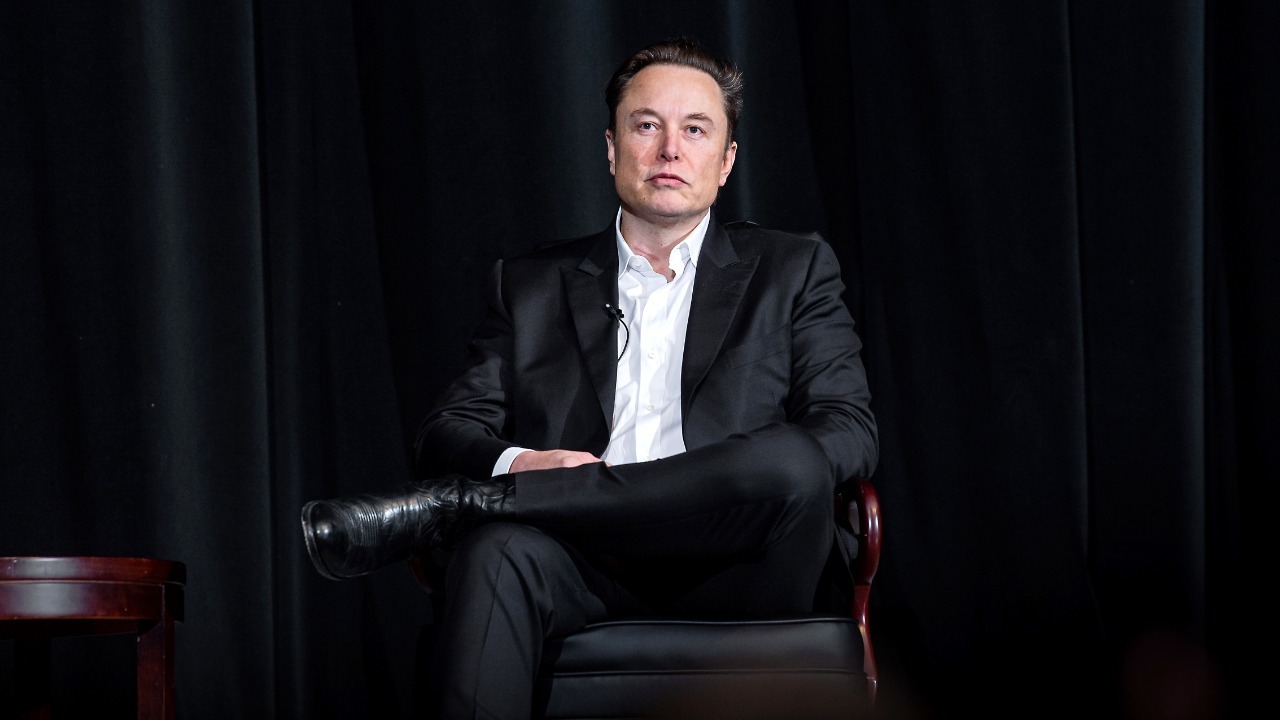
When Tesla CEO Elon Musk finally weighed in, he did so in a way that many critics saw as prioritizing the reputation of autonomous vehicles over the grief of a neighborhood that had just lost a beloved animal. In response to posts about KitKat, Musk argued that “many pets will be saved” by autonomous vehicles, framing the incident as a tragic but statistically insignificant event on the path to a safer future, a stance summarized in reporting that notes how Elon Musk said that “many pets will be saved” even as news of the beloved bodega cat’s death was still spreading. To residents and animal lovers, the timing and tone felt jarringly clinical, as if the life of a specific cat could be weighed and dismissed on a spreadsheet of hypothetical future outcomes.
Other coverage of Musk’s reaction underscores how sharply his comments diverged from the mood on the ground. One account notes that Musk showed little mercy for critics of self-driving cars and suggested that human drivers also hit animals, implying that the outrage was misplaced and that people were holding robotaxis to an unfair standard, a line of argument captured in a report that Musk showed little mercy
Backlash and the charge of insensitivity
The reaction to Musk’s comments was swift and pointed, with critics accusing him of using KitKat’s death as a talking point in a broader PR battle over self-driving cars. One detailed account of the online fallout notes that Elon Musk sparked backlash with comments after a self-driving car killed a beloved pet, with users responding to his posts by asking, “Did you not read the headline?” and accusing him of ignoring the emotional weight of the story, a dynamic captured in coverage that describes how KitKat’s death served as a launching point for a debate about the rollout of robotaxis in five major cities and counting. For many, the issue was not whether autonomous vehicles might someday be safer overall, but whether it was appropriate to make that case in the immediate aftermath of a specific, preventable-seeming loss.
Another report on the same controversy highlights how Musk’s tone fed the perception that he is more interested in defending technology than in acknowledging its failures. In one exchange, when confronted with criticism, Musk reportedly responded with a dismissive “Not really,” before insisting that no one cares more about safety than he does, a posture that only intensified the sense that he was talking past the people most affected by the crash, a posture summarized in coverage that notes how Not really, more about safety than me became emblematic of his stance. The backlash was not just about one cat, but about a pattern in which critics say Musk responds to legitimate fears with defensiveness and abstraction rather than humility and concrete commitments to change.
Why Musk’s stance matters in the robotaxi wars
Musk’s intervention did not occur in a vacuum. As the most prominent champion of autonomous driving and the head of Tesla, his comments carry weight in an industry that is racing to convince regulators and the public that robotaxis are ready for prime time. One analysis notes that Elon waded into the debate over robotaxis killing cats and, predictably, took the side that emphasizes long-term reductions in accidents over individual tragedies, with critics pointing out that it is “great that Elon could take time out of his busy schedule to participate in the discourse around KitKat” while still framing the issue primarily in terms of aggregate safety and the number of feline deaths, a framing described in a piece that observes how It’s great that Elon could join the conversation yet still center the technology. By aligning himself so clearly with the statistical defense of autonomy, Musk effectively turned KitKat’s death into a proxy battle between competing visions of the future of transportation.
Other coverage underscores that Musk’s comments are part of a broader pattern of defending self-driving systems whenever they come under scrutiny. One report notes that Tesla founder Elon Musk defended self-driving cars after an accident sparked a major debate on social media about their safety, reiterating his belief that autonomous systems will ultimately cause fewer crashes than human drivers, a belief that has become central to Tesla’s branding and to Musk’s own public persona, as reflected in coverage that describes how Tesla founder Elon Musk defended the technology even in the face of emotional backlash. In the context of KitKat’s death, that reflexive defense has sharpened the divide between those who see robotaxis as an inevitable and necessary evolution and those who feel they are being forced to accept real-world harms in the name of a promised, but not yet realized, safety dividend.
Local grief, national debate
For the people who knew KitKat, the national argument about statistics and future safety can feel like a distraction from the simple fact that a familiar presence is gone. Zeidan, identified as the person jolted out of bed after receiving a report that KitKat had been involved in an accident, rushed to the scene only to find that the cat could not be saved, a detail that underscores how sudden and personal the loss was for those closest to the Market, as described in a report noting that Zeidan was jolted out of bed by the news. For Zeidan and other locals, the debate over robotaxis is not an abstract policy question but a matter of whether the systems moving through their streets can be trusted with the lives that make up their community, from children and seniors to the animals that give small businesses their character.
At the same time, the story has clearly tapped into broader anxieties about how quickly autonomous vehicles are being rolled out in cities across the United States. One analysis notes that KitKat’s death served as a launching point for a debate about the expansion of robotaxis in five major cities and counting, with critics arguing that regulators have allowed companies like Waymo to scale up operations before fully resolving questions about safety, transparency and accountability, a concern captured in coverage that describes how KitKat’s death served as a launching point for that wider conversation. In that sense, the backlash to Musk’s comments is not only about his tone, but about a growing sense that the people most affected by these technologies are being asked to absorb the risks while tech executives and investors reap the rewards.
What the controversy reveals about trust in autonomy
Stepping back from the immediate outrage, the clash over Musk’s remarks and KitKat’s death exposes a deeper tension at the heart of the autonomous vehicle project. Proponents like Musk and accounts such as Whole Mars Catalog emphasize aggregate numbers, pointing to figures like “5.4 million cat deaths per year in the US” and arguing that even if robotaxis cause some harm, they will ultimately reduce the total number of accidents, a logic that underpins arguments that 5.4 million cat deaths per year justify continued deployment. Critics, however, point out that trust in new technology is not built on spreadsheets alone, but on whether people feel that companies and their leaders respond to failures with genuine accountability, empathy and a willingness to change course when things go wrong.
In that light, Musk’s decision to respond to KitKat’s death by doubling down on the long-term promise of autonomy, rather than engaging directly with the specific failures that may have led to the crash, looks less like leadership and more like brand defense. For communities like the one around Randa’s Market, the path to accepting robotaxis on their streets will likely depend less on assurances that “many pets will be saved” someday and more on concrete steps to ensure that no other “one-of-a-kind” bodega cat, or child, or cyclist is left “positioned for a while directly in front of the car” before an autonomous vehicle pulls out. Until tech leaders show they understand that distinction, the backlash that greeted Musk’s remarks is likely to be a preview of many more such confrontations to come.
More from MorningOverview