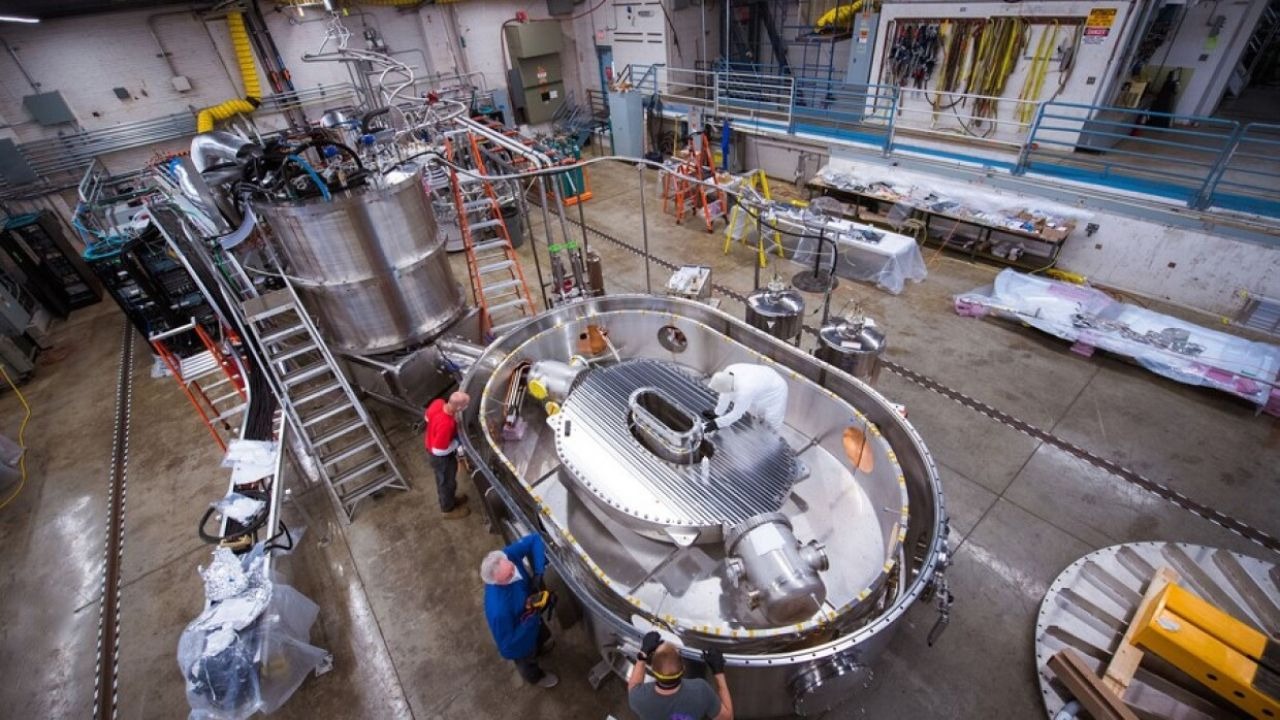

For decades, nuclear fusion has been shorthand for a dream that never quite arrives, a limitless energy source that always seemed to recede into the future. A cluster of new experiments and industrial advances now suggests that this time may be different, with scientists reporting concrete progress toward reactors that could power cities without carbon emissions or long‑lived radioactive waste. I see a pattern emerging that looks less like science fiction and more like the early stages of a new energy system.
Across government labs, university facilities, and private startups, researchers are closing in on the conditions needed to sustain fusion reactions long enough, and efficiently enough, to matter for the grid. The latest breakthroughs do not yet deliver commercial power, but they are chipping away at the core technical barriers that have defined fusion’s reputation as “always 30 years away,” and they are doing it in ways that are starting to align with real‑world economics and infrastructure.
Why fusion is suddenly back in the spotlight
The renewed attention around fusion is not just a matter of hype, it reflects a series of experimental results that have pushed performance metrics into territory that energy planners can no longer ignore. I see this shift most clearly in how fusion is now discussed alongside wind, solar, and advanced fission as a serious candidate for baseload power rather than a perpetual research project. That change in tone is driven by concrete gains in how long plasmas can be confined, how much energy they can produce, and how reliably those conditions can be reproduced.
In one widely cited example, scientists reported that they are now 43 seconds closer to the kind of sustained reaction that would make fusion a practical power source, a small but telling increment in a field where every additional second of stability has historically required years of work. That progress is part of a broader wave of experiments that show fusion can generate enormous amounts of heat while producing no toxic waste, a combination that is forcing utilities and policymakers to take the technology seriously as a long‑term solution to both climate change and energy security.
What “limitless energy” really means in fusion science
When researchers talk about limitless energy in this context, they are not promising a literal infinite supply, but rather an energy source so abundant and low impact that it effectively removes scarcity from the equation. At the heart of that promise is a simple physical process: when two light nuclei combine into a heavier one, a small amount of mass disappears and reemerges as energy. I find that this basic mechanism, which powers the sun and stars, is what makes fusion uniquely compelling compared with any other technology on the table.
The classic example is what happens when two hydrogen atoms fuse to create helium, with the resulting mass slightly less than the original atoms and the missing fraction converted into energy according to Einstein’s E = mc². Because the fuel for such reactions can be derived from isotopes of hydrogen found in seawater and lithium, the potential resource base is enormous, and the reaction itself produces no carbon dioxide and avoids the long‑lived waste associated with conventional nuclear fission. That is the scientific foundation behind the phrase “limitless energy,” and it is what makes each new experimental gain so consequential.
The stubborn challenge of net energy gain
For all the excitement, I have to keep one hard truth in view: fusion will not matter for the grid until reactors can reliably produce more energy than they consume. The physics of fusing light nuclei demands extreme temperatures and pressures, which in practice means pouring huge amounts of power into magnets, lasers, or other confinement systems just to get the reaction started and keep it going. The central technical question is whether the energy that comes out of the plasma can exceed the energy that goes in once all the engineering overhead is counted.
That is why it matters that, while experimental reactors like ITER are making steady progress, achieving a true net positive energy balance (where more power is produced than consumed) remains a major challenge. The world’s largest fusion experiment is designed to demonstrate that such a balance is possible at scale, but even its backers acknowledge that turning that proof of principle into a commercial plant will require further breakthroughs in materials, control systems, and power conversion. The recent advances are important precisely because they chip away at this net‑gain barrier rather than just improving isolated performance metrics.
From “always 30 years away” to concrete roadmaps
One of the most telling shifts I see is in how fusion researchers and companies now talk about timelines. For years, the field was haunted by a running joke that commercial fusion was perpetually three decades in the future, a moving target that eroded public confidence. Today, that cynicism is giving way to more detailed roadmaps that tie specific experimental milestones to pilot plants, grid connections, and regulatory approvals.
Reporting on new facilities in Australia and the United States captures this change, noting that There may be a running industry joke about fusion always being 30 years away, but the latest reactors are being designed with clear pathways to integration into existing power systems. I read those plans as a sign that fusion is moving from open‑ended research toward engineering programs with budgets, deadlines, and performance targets that can be audited. That does not guarantee success, but it does mark a cultural shift from speculative optimism to accountable progress.
Inside the latest “stunning” scientific breakthroughs
Behind the headlines about limitless energy are specific experiments that have pushed the boundaries of what fusion devices can do. I see a pattern in which each new result tackles a different piece of the puzzle, from plasma stability to fuel handling to the materials that must withstand intense neutron bombardment. Together, these advances are starting to look less like isolated victories and more like components of a future power plant.
One recent report describes how Scientists achieve stunning gains in experimental setups that bring a potential limitless energy source closer to reality, with Geri Mile highlighting the work as a landmark achievement. Another account emphasizes that Fusion is a holy grail for the energy sector, theoretically offering abundant, essentially zero‑pollution power in a small footprint, and notes that public enthusiasm is reflected in a poll that underscores how strongly people want clean, reliable energy. I read these breakthroughs not as a single turning point but as a cumulative acceleration that is reshaping expectations about what fusion can deliver within a generation.
California’s bid to become fusion’s proving ground
While fusion research is global, some regions are moving faster than others to position themselves as hubs for the emerging industry. California stands out in that race, not only because of its research universities and tech capital, but also because of its aggressive climate policies and appetite for large‑scale clean energy projects. I see the state’s strategy as an attempt to turn its existing innovation ecosystem into a launchpad for commercial fusion.
In a detailed look at this effort, one report notes that A fusion energy power plant would harness the same reaction that powers the sun and stars to provide a virtually limitless source of clean energy, and it highlights how a cluster of fusion startup companies in California is working to turn that vision into hardware. From my perspective, the concentration of talent and capital in one place matters because it can shorten feedback loops between lab discoveries, prototype devices, and regulatory learning, all of which are essential if fusion is to move from experimental halls to the state’s actual grid.
The rise of fusion startups and their “has been demonstrated” moment
For much of fusion’s history, the field was dominated by government labs and large international collaborations, but that balance is changing fast. A new generation of startups is betting that smaller, more agile devices can reach commercial viability faster than traditional megaprojects, often by using novel magnet designs, alternative fuels, or advanced computing to optimize plasma behavior. I see this entrepreneurial wave as a crucial complement to the big public experiments, injecting competition and urgency into a space that once moved at the pace of public budgeting cycles.
One such company has drawn attention with claims that a Startup makes major breakthrough in pursuit of a limitless energy source, with Leslie Sattler reporting that a key aspect of the technology “has been demonstrated” in experiments that reduce the amount of gas required for fusion reactions. The fact that this work was highlighted on a Fri news cycle underscores how closely investors and policymakers are now tracking private‑sector fusion efforts. I interpret these milestones as early signs that at least some startups are moving beyond slide decks and into the realm of reproducible, peer‑scrutinized results.
How public opinion and policy are converging around fusion
Scientific progress alone will not bring fusion to market; it also needs political support, regulatory clarity, and public trust. I have watched attitudes shift as climate impacts intensify and as people see the limits of existing clean technologies in meeting round‑the‑clock demand. Fusion’s promise of abundant, low‑carbon power with minimal waste is increasingly resonating with voters and officials who are under pressure to decarbonize without sacrificing reliability or affordability.
The description of fusion as a holy grail in the energy sector is not just rhetoric, it reflects how policymakers now frame the technology in speeches, hearings, and strategy documents. The same report that notes Fusion is a holy grail also references a poll that captures strong public interest in clean, reliable power sources, a sentiment that can translate into funding for research and streamlined permitting for pilot plants. I see that convergence of opinion and policy as one of the most important, if less visible, advances of the past few years, because it sets the stage for fusion projects to move from the lab to real sites with community backing.
Why this moment feels different, and what still stands in the way
Looking across these developments, I am struck by how many pieces of the fusion puzzle are now moving at once. Experimentalists are extending confinement times and improving energy yields, startups are demonstrating key subsystems that once existed only on whiteboards, and regions like California are preparing to host the first generation of commercial‑scale plants. The old joke about fusion always being decades away feels increasingly out of step with a landscape where concrete milestones are being met and new ones are being set.
Yet the remaining obstacles are real and cannot be wished away. As While experimental reactors continue to push toward net energy gain, engineers still have to solve problems like how to extract heat efficiently, how to breed and handle tritium fuel, and how to build materials that can survive years of neutron bombardment without degrading. I see the current moment as a hinge point: the science has advanced far enough to make limitless‑style energy a plausible goal, but the engineering and economic work that follows will determine whether fusion becomes a central pillar of the global energy system or remains a remarkable, but niche, technological achievement.
More from MorningOverview