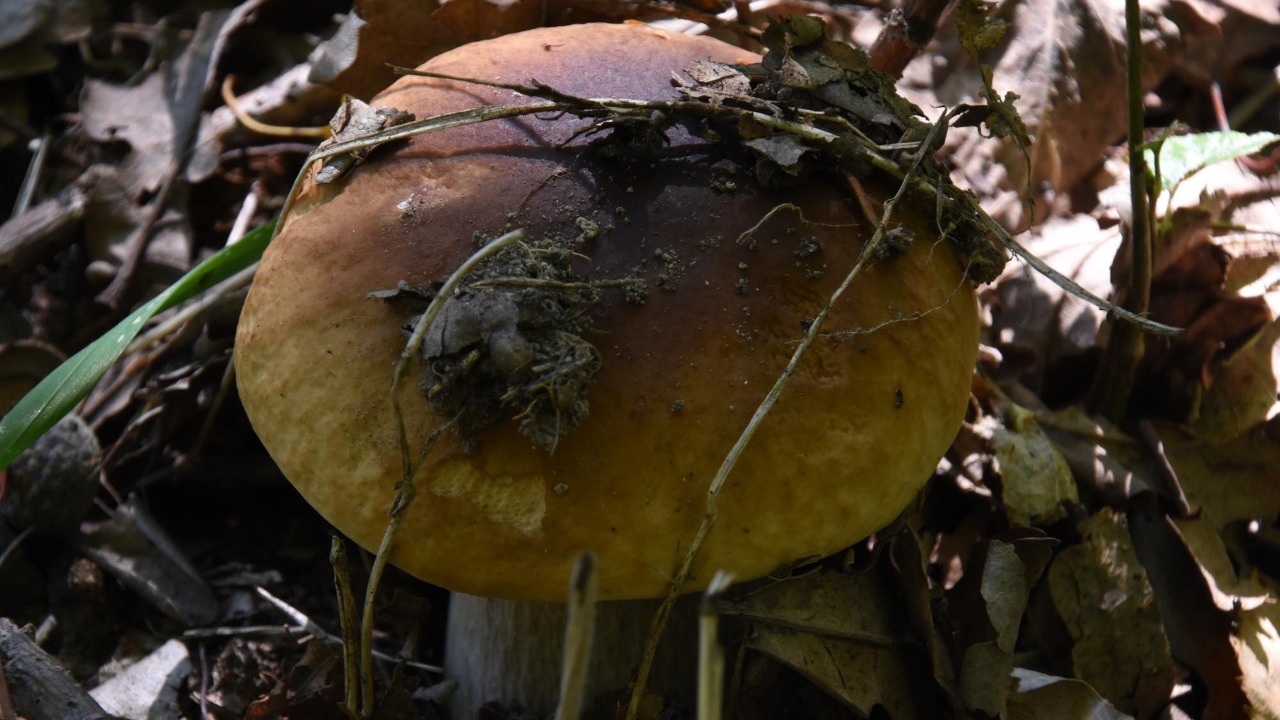

Inside the ruined shell of reactor 4 at Chernobyl, where gamma radiation still spikes far above normal background levels, a strange life form has quietly taken hold. Thick, dark mats of fungus cling to concrete and steel, and instead of shrinking from the radiation that drove humans away, this organism appears to use that energy to grow faster and stronger.
What began as a curiosity on the walls of a destroyed nuclear plant is now forcing scientists to rethink what life can do with extreme environments. The Chernobyl fungus, rich in the pigment melanin, seems to turn ionizing radiation into usable energy, hinting at a biological trick that could reshape how we think about nuclear clean-up, cancer protection and even long-distance space travel.
The unlikely discovery inside reactor 4
The first reports from inside the Chernobyl exclusion zone described something that sounded almost fictional: a mysterious black growth spreading across surfaces that should have been lethally contaminated. When researchers examined the material more closely, they found a dense, melanized fungus that not only tolerated the radiation but appeared to flourish in the most irradiated corners of the site, a pattern that set it apart from other organisms that merely endure such conditions. Subsequent work showed that this black mould was not a passive survivor but an active colonizer of the damaged reactor environment, turning one of the most hostile industrial ruins on Earth into a niche it could exploit.
Accounts from the zone describe how this mysterious black fungus was first noticed on the inner walls of the reactor and nearby structures, where radiation levels were highest and other life was sparse. Over time, the same dark growths were documented spreading through parts of the exclusion zone that remained off limits to residents, even as vegetation and wildlife slowly returned to the surrounding forests and wetlands. The fact that the fungus seemed thickest where the radiation was most intense immediately raised a provocative question for scientists: was this organism simply resistant, or was it somehow using the radiation to its advantage?
From black mould to named species
Once the initial surprise faded, researchers began the slower work of figuring out exactly what this organism was. Genetic and microscopic analyses identified the main culprit as a melanized fungus called Cladosporium sphaerospermum, a species already known to science but not previously famous for thriving in nuclear ruins. The organism’s dark color comes from melanin, the same broad class of pigment that helps protect human skin from ultraviolet light, but in this case packed into fungal cell walls that were now bathing in gamma radiation.
Researchers tracing the history of the site have noted that while people were forced out of the area, the black mould quietly expanded its territory, colonizing surfaces that remained too contaminated for safe human access. Earlier work by Ukrainian scientists, followed by teams led by figures such as Professor Ekaterina Dadachova and her colleagues, helped establish that this was not a one-off curiosity but part of a broader pattern of melanized fungi that can tolerate, and possibly exploit, high radiation. As the story of Chernobyl’s black mould spread, it drew in ecologists like Germán Orizaola and Pablo Burraco, who were already documenting how the wider ecosystem was adapting to the long shadow of the disaster.
What “radiotrophic” really means
To understand why this fungus is so intriguing, it helps to unpack a term that sounds like science fiction: radiotrophic. In simple terms, radiotrophic fungi are organisms that appear to use ionizing radiation as an energy source, in a way that loosely parallels how plants use sunlight. Instead of chlorophyll capturing visible light, these fungi rely on melanin to interact with high-energy photons, particularly gamma rays, and then channel that interaction into biochemical processes that support growth.
Laboratory work on radiotrophic fungi has shown that several melanized species grow faster when exposed to radiation than they do in its absence, suggesting that the radiation is not simply tolerated but somehow harnessed. In the case of the Chernobyl mould, scientists have proposed a process dubbed “radiosynthesis,” in which melanin absorbs gamma radiation and alters its electronic structure in a way that boosts the fungus’s ability to carry out metabolic reactions. While the exact biochemical pathways are still being mapped, the pattern is consistent: where radiation is high, the melanized fungus tends to be more vigorous, hinting at a new category of energy use in biology that sits alongside photosynthesis and chemosynthesis.
How melanin turns radiation into energy
The key to this apparent energy trick lies in the structure of melanin itself. Unlike chlorophyll, which is tuned to specific wavelengths of visible light, melanin is a broad-spectrum absorber that can soak up a wide range of electromagnetic energy, including the gamma radiation that saturates parts of the Chernobyl site. When those high-energy photons hit the pigment, they can change the oxidation state of melanin, effectively shifting how electrons are arranged within the molecule and how easily they can move through the fungal cell wall.
In experiments on Chernobyl-derived fungi, researchers have observed that melanized cells exposed to gamma radiation show increased metabolic activity compared with non-melanized controls, a pattern consistent with the idea that melanin is helping convert radiation into usable chemical energy. One report describes how, in this species, melanin absorbs gamma radiation and feeds a radiosynthesis-like process that supports growth, even in conditions that would be lethal to most other organisms. The result is a fungus that does not merely endure radiation as background noise but appears to fold it into its energy budget, turning a hazard into a resource.
Evidence from Chernobyl and the lab
Field observations inside the exclusion zone have consistently shown that the black fungus clusters where radiation is strongest, including on the inner surfaces of reactor 4 and in hot spots where radioactive debris remains concentrated. When scientists sampled these areas and brought the fungi into controlled environments, they found that growth rates often increased when the organisms were exposed to gamma sources that mimicked the conditions inside the plant. That pattern, repeated across different experiments, strengthened the case that the fungus was not just coincidentally present in irradiated zones but was actively benefiting from them.
In one set of studies, researchers placed the Chernobyl fungus in high-radiation fields and measured how quickly it colonized new surfaces compared with identical cultures kept away from radiation. The irradiated samples expanded more rapidly, and their melanin-rich structures appeared particularly robust, echoing earlier work by Ukrainian teams and international collaborators who had documented similar behavior in other melanized fungi. Over time, these findings have been reinforced by broader ecological surveys that show the black mould spreading through parts of the exclusion zone even as radiation levels remain high, a pattern that would be difficult to explain if the organism were simply tolerating the exposure rather than exploiting it.
Healing a nuclear wound, at least a little
Beyond the sheer novelty of a fungus that seems to “eat” radiation, there is a more practical question: what is it doing to the contaminated environment itself? Some researchers argue that by colonizing radioactive surfaces and incorporating radionuclides into its biomass, the fungus may be helping to immobilize certain contaminants, at least temporarily. The dense mats of growth on concrete and metal can act as a living coating, slightly reducing the amount of loose radioactive dust that might otherwise be resuspended by wind or water.
Analyses of the exclusion zone suggest that within this heavily contaminated area, a resilient black fungus called Cladosporiu has adapted to some of the most hostile places on the planet, including areas where radiation was highest. While no one suggests that the fungus can “clean up” Chernobyl on its own, its presence hints at a form of biological triage, in which living systems begin to stabilize a damaged landscape long before human engineering can fully contain it. That possibility is part of what has driven interest in whether similar organisms could be deliberately deployed at other nuclear sites, from decommissioned reactors to waste storage facilities.
Risks, limits and unanswered questions
For all the excitement around radiotrophic fungi, scientists are careful to stress how much remains uncertain. The evidence that Chernobyl’s black mould uses radiation to boost its metabolism is strong, but the exact biochemical pathways are still being mapped, and definitive proof of full radiosynthesis, in the sense of a complete energy-harvesting cycle analogous to photosynthesis, is still a work in progress. Researchers caution that while the fungus appears to grow faster under radiation, that does not automatically mean it can significantly reduce environmental radioactivity on human timescales.
There are also open questions about how this adaptation might interact with human health. Some reports note that the same melanin-based mechanisms that help the fungus cope with radiation could, in theory, inform new ways to protect human tissues from damage, including damage linked to certain forms of cancer. At the same time, scientists point out that Scientists still lack definitive proof of radiosynthesis in the strictest sense, and they warn against assuming that any single organism can neutralize the complex mix of isotopes that linger after a nuclear accident. For now, the fungus is best understood as a remarkable adapter, not a magic eraser for radiation.
From war zone to research frontier
The story of Chernobyl’s fungus is intertwined with the broader history of the exclusion zone, which has shifted from a symbol of nuclear catastrophe to a living laboratory for evolution under stress. As human activity retreated, organisms that could tolerate radiation, chemical contamination and physical disruption found new niches. Amphibians, birds and mammals have all been studied in this context, but the black mould stands out because it appears to do more than simply survive. Its spread across abandoned buildings and equipment suggests an active reshaping of the built environment, turning dead infrastructure into a scaffold for new biological communities.
Researchers such as Zhdanova, Germ and Orizaola have documented how, while humans were kept away, the black mould slowly colonised the area, often in parallel with other species that were adapting in their own ways. Their work underscores a broader lesson: once human pressure eases, ecosystems can reorganize around new constraints, even constraints as severe as chronic radiation. In that sense, the fungus is both a symbol of nature’s resilience and a reminder of how profoundly we have altered the conditions under which that resilience is tested.
Radiation shields and spaceflight dreams
One of the most eye-catching ideas to emerge from this research is that the same properties that let the fungus thrive at Chernobyl might help protect humans in other extreme environments. If a thin layer of melanized biomass can absorb and partially convert gamma radiation, then in principle similar materials could be used as living shields for electronics, habitats or even people. That prospect has drawn particular interest from space agencies and private spaceflight companies, which are grappling with how to keep astronauts safe from cosmic rays and solar storms during long missions beyond Earth’s magnetic field.
Some scientists have suggested that a coating of Chernobyl-like fungus on spacecraft walls or habitat modules could supplement traditional shielding, providing a self-repairing layer that grows in response to radiation rather than degrading under it. Reports on the Bizarre Chernobyl fungus describe how its ability to feed on radiation could be key to future space travel, particularly for missions to Mars or deep space where resupply is limited and every kilogram of shielding counts. While these concepts remain largely experimental, they illustrate how a discovery rooted in a nuclear disaster zone is now shaping conversations about humanity’s next steps beyond Earth.
Could this fungus protect astronauts and patients?
Beyond structural shielding, the melanin-based strategies used by the fungus are inspiring more speculative ideas about protecting living tissues. If fungal melanin can safely absorb and dissipate high-energy radiation, then engineered versions of similar pigments or biomaterials might one day help shield human cells during radiotherapy or long-term spaceflight. Some researchers have floated the possibility of melanin-infused gels, films or even wearable layers that could reduce the dose reaching sensitive organs without adding heavy metal-based shielding.
Reports on Chernobyl’s black mould note that Chernobyl’s black fungus could eat radiation and potentially help keep astronauts safe in space, a claim that has caught the attention of both space medicine specialists and oncologists. At the same time, experts emphasize that translating a fungal survival strategy into a human therapy is a long and uncertain process, requiring careful testing to avoid unintended side effects. The fungus may point the way toward new forms of radioprotection, but it is not a ready-made solution, and any clinical applications will have to navigate the same rigorous path as other biomedical innovations.
What this means for nuclear safety and our view of life
The emergence of a fungus that appears to feed on radiation complicates the narrative of nuclear disasters as purely dead zones. Chernobyl remains a site of profound human and environmental damage, yet within its boundaries, life has not only persisted but, in some cases, found novel ways to exploit the very forces that once seemed purely destructive. That does not diminish the scale of the original catastrophe, but it does suggest that biological systems are more flexible than our early models of radiation damage assumed.
Long-term studies of the exclusion zone have shown that, despite elevated rates of certain health problems and deaths among humans and animals, some species have adapted in ways that were difficult to predict in the immediate aftermath of the accident. Research over the years has documented how the strange Chernobyl black fungus fits into this broader pattern, standing as one of the most striking examples of life bending a hostile environment to its own ends. As scientists continue to probe how melanin-rich fungi interact with radiation, they are not only exploring potential tools for nuclear safety and space exploration, they are also expanding our understanding of what it means for life to adapt at the edge of what seems survivable.
A new kind of energy story
At its core, the Chernobyl fungus story is about energy. For more than a century, nuclear physics has framed radiation as a byproduct of fission and decay, something to be harnessed in reactors or feared in fallout, but always as a physical phenomenon outside the realm of everyday biology. The discovery that a humble mould can treat gamma rays as part of its energy landscape, even if only partially and imperfectly, blurs that boundary. It suggests that evolution can, given enough time and pressure, find ways to plug into energy sources that humans typically regard as purely destructive.
Visual accounts of the site show Black fungus in Chernobyl thriving on radiation and converting it into energy through a process described as radiosynthesis, a term that captures both the promise and the uncertainty of this emerging field. As I weigh the evidence, I see a story that is still unfolding, with major gaps in our understanding but enough solid data to justify the growing interest. Whether the fungus ultimately becomes a tool for cleaning up nuclear sites, a component of space habitats or simply a symbol of life’s tenacity, it has already forced a rethinking of how biology and radiation intersect, and that alone marks it as one of the most intriguing scientific developments to emerge from the ruins of Chernobyl.
More from MorningOverview