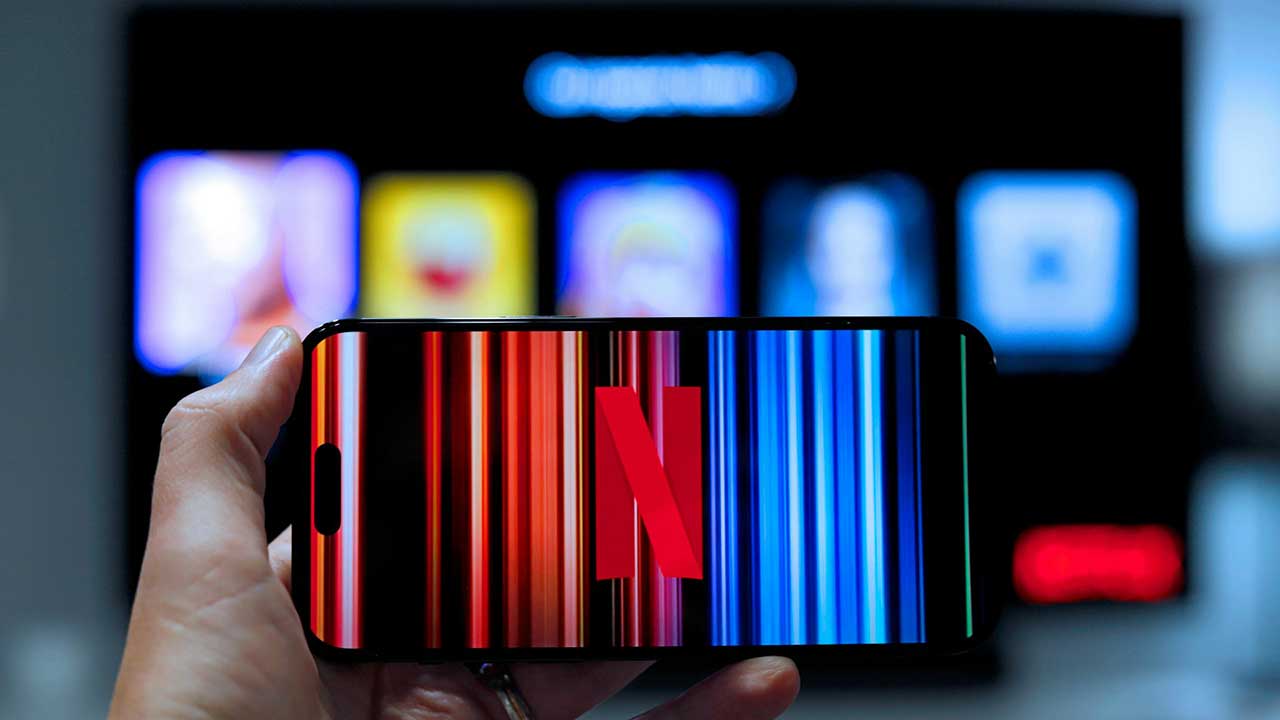

Netflix has quietly removed the familiar cast button that let people beam shows from a phone to most modern TVs, a small interface change with outsized consequences for anyone who relies on hotel screens or Airbnb sets while on the road. Instead of treating your phone as a universal remote that can light up almost any television, the company now expects viewers to use native apps on supported devices or stick with a shrinking list of older hardware that still works.
For frequent travelers, that shift turns what used to be a simple evening ritual into a scavenger hunt for compatible apps, logins, and remotes in unfamiliar rooms. I see it as a revealing moment in the streaming wars, where convenience for people on the move is being traded for tighter control over devices, accounts, and how Netflix is accessed.
What exactly Netflix just turned off
The core change is straightforward: Netflix no longer lets most users start a show on a phone and hand it off wirelessly to a TV or streaming stick that supports casting. The company has confirmed that the mobile app no longer supports casting shows from a mobile device to most modern televisions, even when those TVs or dongles already have the Netflix app installed and are on the same network, a shift that hits people who relied on that cast button in hotels and short term rentals hardest, as detailed in recent travel-focused reporting.
Instead of the familiar cast icon lighting up any compatible screen in the room, the app now pushes viewers toward using the Netflix interface on the TV itself, or toward a limited set of legacy casting devices that still function. I see that as a deliberate narrowing of options: the company is not removing Netflix from those televisions, it is removing the phone as a universal bridge between your account and whatever screen you happen to find.
How travelers used to rely on casting
For years, casting from a phone or tablet was the workaround that made Netflix feel portable in a world of inconsistent hotel tech. Business travelers could walk into a room with a generic smart TV, tap the cast icon in the Netflix app, and instantly turn that anonymous screen into an extension of their own living room queue, a pattern that became especially common in hotels and Airbnbs where guests either did not trust shared logins or did not want to type long passwords on clumsy remotes, a behavior highlighted in coverage aimed squarely at travelers who depended on casting.
That flexibility also made it easier to respect boundaries around shared devices, since you could keep your account confined to your own phone while still enjoying a full screen experience on whatever TV was available. In my view, that is why the change feels so jarring: it does not just remove a convenience feature, it removes a privacy friendly way to watch in spaces that are not your own.
Which devices still work, and which are cut off
The new policy does not treat all hardware equally, and the fine print matters. Netflix has removed the ability to cast shows and movies from phones to TVs for most modern setups, but subscribers using certain older casting hardware can still hand off video from a mobile device, a distinction that has been spelled out in reports noting that Netflix has removed the ability to cast unless people are using older casting options and that the feature has been removed for most newer devices, as described in detailed coverage of how Netflix now treats different TVs and dongles.
Some of the clearest lines have been drawn around Google’s ecosystem. Netflix has killed casting from your phone to the TV on newer Chromecast hardware, while the feature remains available for some older Chromecast products that still support the older style of mobile to TV handoff, a split that has been confirmed in coverage explaining that Netflix quietly rolled out the change in Nov and that, however, the feature remains for some older Chromecast products even as newer Google Chromecast devices lose that support, as outlined in reporting on how Chromecast users are now split between old and new.
How users discovered the change
The shift did not arrive with a splashy announcement or a big software banner, it surfaced through confusion. People opened the Netflix app, noticed the cast icon was gone or no longer worked with their usual TVs, and started asking questions in public forums. The change was first spotted by users on Reddit and then confirmed in an updated Netflix support page, a sequence that has been traced in reports that cite how Reddit and other communities flagged the missing feature before Netflix quietly updated its documentation, as described in coverage of how the company confirmed the casting shutdown.
From my perspective, that discovery pattern matters because it shows how central casting had become to everyday use. People did not need a press release to tell them something was wrong, they felt the absence in their nightly routines and then went looking for answers. That bottom up realization, starting with confused posts and only later backed by official support language, underscores how deeply integrated the feature was in how subscribers actually watch.
Theories about why Netflix pulled the plug
Netflix has not offered a clear public explanation for why it ended broad casting support, which has left subscribers to connect the dots themselves. One widely discussed theory is that the move is tied to the company’s crackdown on account sharing, with some users suggesting that limiting casting makes it harder for people to treat a single mobile login as a roaming key for multiple households, a line of thinking captured in a Reddit thread where one commenter wrote that maybe it is related to the crackdown on account sharing because that relies on stationary devices, such as a TV, determining the primary location and then checking in with the subscriber base once in a while, a speculation that has been circulating in user discussions about the casting change.
Others see the decision as part of a broader push to funnel viewing through official apps on specific platforms, which gives Netflix more consistent control over features, ads, and data collection. I read the silence from the company as strategic: by not tying the change to any one policy, Netflix keeps its options open while still nudging people toward usage patterns that are easier to police and monetize.
What Netflix has (and has not) said officially
On the record, Netflix has been notably restrained. The company has not publicly explained the rationale behind ending broad casting support and has yet to respond in detail to questions about why the feature disappeared for most users, a gap that has been highlighted in coverage noting that Netflix has not publicly explained the rationale behind ending broad casting support and that the company has yet to respond to specific inquiries about the change, as summarized in reporting on how the company has handled questions about the removal.
What Netflix has done instead is quietly update its support pages to spell out which devices still support mobile to TV casting and which do not, while continuing to promote its cheapest ad supported plan, priced at 7.99 dollars, that still works with certain legacy Google Cast devices. From my vantage point, that combination of silence on motives and precision on supported hardware suggests the company wants to frame this as a routine technical update, even as the practical effect for travelers and multi device households is anything but routine.
Why this hits travelers and shared spaces hardest
For people who mostly watch Netflix on a single living room TV, the change may feel like a minor annoyance. For travelers, it is a direct hit to one of the few reliable ways to make unfamiliar rooms feel like home. Reports aimed at frequent flyers and digital nomads have emphasized that Netflix no longer supports casting shows from a mobile device to most TVs in hotels and Airbnbs, which means guests now have to hope that the in room TV has a working Netflix app, that the remote is present, and that they are comfortable logging into a personal account on a shared device, a new reality that has been laid out in detail in coverage warning that travelers can no longer rely on phone to TV casting.
In shared spaces like dorm lounges, office break rooms, or extended family homes, the loss of casting also removes a neutral way to share control. Instead of one person queuing up a show on their phone and handing off the stream to a big screen without leaving a trace on the TV itself, everyone now has to negotiate whose account gets signed in on the device, or whether to fall back to laptops and tablets. I see that as a subtle but real shift in how communal viewing works, one that adds friction at exactly the moments when people most want things to be simple.
How the change fits into Netflix’s broader strategy
Viewed in isolation, killing phone to TV casting looks like a small technical tweak. Placed in the context of Netflix’s recent growth and policy moves, it reads more like a strategic tightening of the ecosystem. Earlier this year, the company’s gamble on stricter account controls and a revamped ad supported tier paid off with more than 9 million new subscribers in a single quarter, a surge that has been cited in analysis of how Netflix’s recent decisions, including its approach to device support, are part of a broader growth strategy that has already added more than 9 million subscribers in the first quarter of the year, as described in reporting on how Netflix’s recent bets have boosted its subscriber base.
From that angle, limiting casting looks less like a random downgrade and more like another lever in a campaign to standardize how and where people watch. By nudging viewers toward native apps on specific devices, Netflix can enforce its rules on simultaneous streams, ad delivery, and content presentation more consistently. I interpret the casting change as one more sign that the company is willing to sacrifice some of the improvisational flexibility that made streaming feel liberating in order to lock in a more controlled, and more easily monetized, viewing environment.
What options remain for people who still want to cast
Despite the sweeping nature of the change, mobile to TV casting is not completely dead. According to updated support language, Netflix removes most mobile to TV casting options but retains support for certain devices that still implement the older style of wireless handoff, a nuance captured in reports explaining that Netflix removes most mobile to TV casting feature but still supports wireless casting from mobile on specific legacy hardware, as laid out in coverage of how Netflix removes most mobile to TV casting options but retains some.
In practice, that means people who own older Chromecast units or other legacy Google Cast devices may still be able to start a show on their phone and send it to the TV, at least for now. For everyone else, the alternatives are more cumbersome: carrying a personal streaming stick that plugs into HDMI ports, relying on laptop to TV connections through HDMI cables, or accepting the friction of logging in and out of Netflix apps on shared televisions. None of those options fully replace the simplicity of tapping a cast icon on a phone, which is why I expect this change to remain a sore point for travelers and multi device households long after the initial surprise wears off.
Why the quiet removal matters for the future of streaming
The way Netflix handled this shift, quietly removing a widely used feature and letting users discover the loss on their own, is a telling sign of where streaming is headed. The streaming giant quietly removed the feature that lets you control content on your TV screen using a mobile device, a change that was first pieced together by users in places like Reddit before being reflected in official support pages, as documented in reporting that describes how Netflix quietly removed phone based TV control.
To me, that pattern signals a broader industry trend in which platforms feel confident enough in their market position to trim features that do not align with their strategic goals, even if those features are beloved by a subset of users. As streaming matures, the balance of power is shifting away from the improvisational hacks that made services feel flexible and toward more tightly managed ecosystems where companies decide not just what you watch, but how and where you are allowed to watch it.
More from MorningOverview