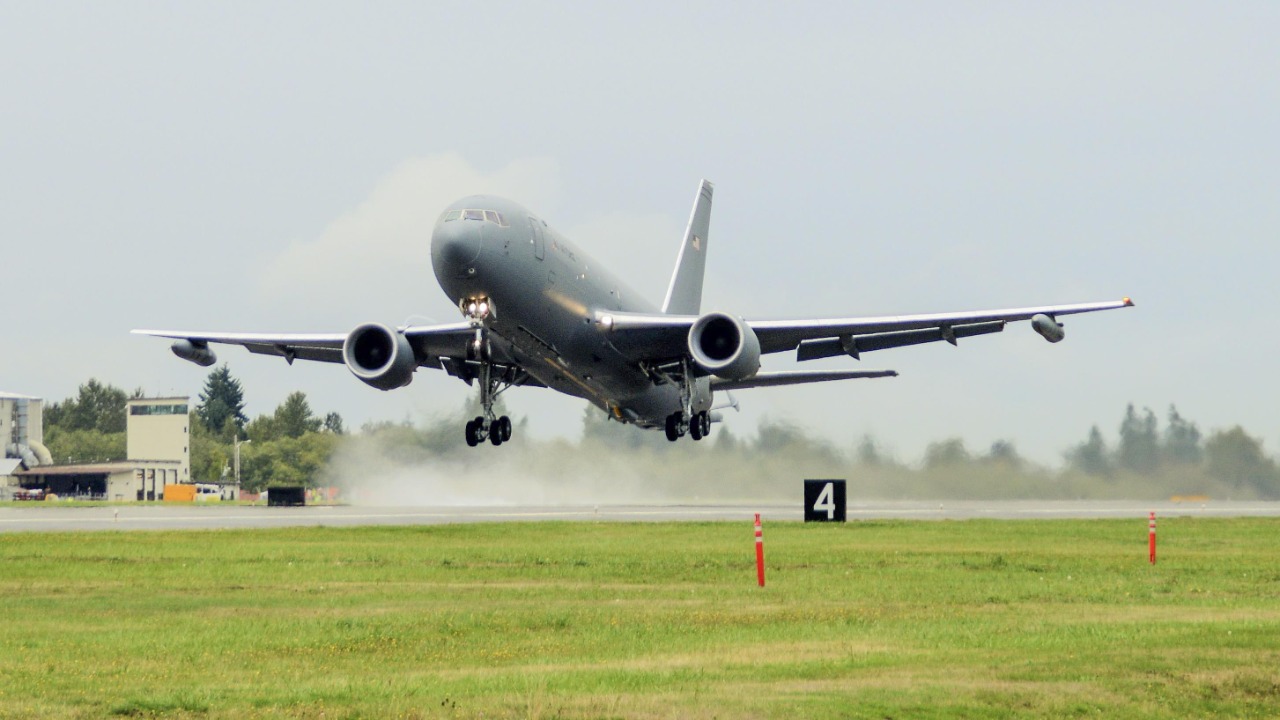

Boeing’s latest win in the Pentagon marketplace is a $2.47 billion order for 15 additional KC-46A Pegasus tankers, a fresh vote of confidence in an aircraft that is steadily becoming the backbone of U.S. aerial refueling. The new batch, part of the Air Force’s Lot 12 production, keeps the assembly lines humming and signals that the service is locking in its next-generation tanker fleet even as it weighs future competitions and upgrades.
With this award, the KC-46A program crosses another threshold in both scale and strategic relevance, extending a multilot procurement that has already reshaped how the United States projects power over long distances. I see this contract as less a standalone deal and more a marker of how Washington intends to sustain global reach in an era of contested airspace and pacing threats in the Indo-Pacific and Europe.
The new $2.47 billion deal and what Lot 12 really means
The headline figure is striking on its own: the Air Force has committed $2.47 billion for a Lot 12 tranche of KC-46A aircraft, securing 15 more tankers that will roll off Boeing’s production line over the next several years. In practical terms, that means the service is not just topping up an existing fleet, it is locking in a long-term industrial rhythm that keeps suppliers engaged, workers employed and training pipelines full for crews who will fly and maintain these jets. The contract also underscores that, despite early technical issues, the Air Force is prepared to keep scaling the Pegasus fleet as its primary refueling platform.
From Boeing’s perspective, Lot 12 is another proof point that its tanker strategy is paying off, reinforcing a program that has already generated multiple multibillion dollar awards. The company has framed the latest award as part of a continuum of production lots that began with earlier options and is now maturing into a stable, recurring business line for its defense segment. The Air Force’s decision to award an $2.47 billion Air Force Contract for Lot 12 KC-46A Tankers signals that the service is comfortable with the aircraft’s trajectory and is willing to keep investing at scale even as it refines requirements for future tanker generations.
How the KC-46A fits into the Air Force’s refueling strategy
At the strategic level, the KC-46A is not just another aircraft order, it is the centerpiece of how the Air Force intends to sustain fighters, bombers and mobility aircraft across vast distances. The Pegasus is designed to refuel a wide range of U.S. and allied platforms in flight, a capability that effectively stretches runways across oceans and into contested regions. By adding 15 more aircraft under the latest contract, the Air Force is deepening a fleet that will be central to any high-end conflict scenario where tankers must operate closer to the fight, under greater threat and with more complex mission demands than the Cold War era ever envisioned.
The aircraft’s role extends beyond simple fuel transfer. The KC-46A is built to support aeromedical evacuation, cargo transport and passenger movement, giving commanders a flexible asset that can shift from refueling to humanitarian missions or troop movements as needed. Earlier in the program, Boeing secured a $2.25 billion Contract Option to Build Lot 9 Air Force KC-46A Tankers Under a broader $2B framework, with the company highlighting the aircraft’s ability to support aeromedical evacuation missions alongside its refueling duties. That multi-mission profile is a key reason the Air Force continues to double down on the platform as it shapes a more agile and resilient global mobility force.
Replacing an aging fleet that dates back to the Eisenhower era
The KC-46A’s importance becomes clearer when set against the age and limitations of the aircraft it is replacing. For decades, the Air Force has relied on KC-135 Stratotankers, aircraft whose basic design traces back to the Eisenhower era and that have been stretched, upgraded and re-engined to keep them viable. Those jets have served well, but they are increasingly expensive to maintain and lack the modern defensive systems, connectivity and survivability features that a contested environment demands. The Pegasus is intended to take over that mission, bringing a more modern airframe, updated avionics and a digital backbone that can plug into the broader command and control architecture.
Official fact sheets describe how The KC-46A is intended to replace the United States Air Force fleet of KC-135 Stratotankers and provide vital air refueling, cargo and passenger support. That reference to 135 Stratotankers and their long service life underscores just how overdue this modernization is. The KC-46A, based on a commercial airliner platform, brings more efficient engines, updated flight decks and the potential for future upgrades that would be difficult or impossible to integrate into the older tankers. In my view, each new production lot, including the latest 15 aircraft, is another step away from dependence on a fleet that has been flying since before many of today’s pilots were born.
From Lot 9 to Lot 12, a program that is steadily scaling
The Lot 12 award does not exist in isolation, it is part of a deliberate ramp-up that has seen the Air Force exercise successive contract options as the KC-46A matures. Earlier lots, including Lot 9, laid the groundwork by funding initial production runs, ironing out early technical issues and building the industrial base needed to support a long-term program. Those earlier awards also gave Boeing the runway to refine manufacturing processes, reduce unit costs and demonstrate that it could deliver aircraft at the pace the Air Force requires.
When Boeing agreed to Build Lot 9 Air Force KC-46A Tankers Under a structured Contract Option, it signaled that both sides were prepared to move beyond development turbulence and into a more predictable production rhythm. The progression from that $2.25 billion Lot 9 deal to the current $2.47 billion Lot 12 award shows a program that is not shrinking or stalling but expanding in scope and ambition. I read that continuity as a sign that the Air Force sees the Pegasus not as a stopgap but as a long-term pillar of its mobility and refueling enterprise, even as it explores concepts for a future “next generation” tanker.
Global demand and the KC-46A’s export footprint
While the latest contract is a U.S. Air Force deal, the KC-46A is increasingly a global story, with allied air forces buying into the same platform to strengthen interoperability. The aircraft’s ability to refuel U.S. and allied jets using both boom and hose-and-drogue systems makes it attractive to partners who want to plug into American-led operations without sacrificing flexibility for their own fleets. That international interest also helps spread development and sustainment costs, which in turn supports the economics of large production lots like the one just awarded.
Reporting on the program notes that The KC-46A plays a key role in military mid-air refueling missions and has already attracted orders from Japan and Israel, with Japan and four for Israel specifically cited as customers. That export footprint matters because it means U.S. crews will increasingly train and operate alongside allied Pegasus operators, creating a common tanker ecosystem that can support coalition operations from the Pacific to the Middle East. In my assessment, the Air Force’s decision to keep buying the KC-46A in sizable lots reinforces the aircraft’s credibility in the eyes of foreign buyers who want assurance that the platform they are investing in will be supported for decades.
Industrial impact and Boeing’s broader Pentagon portfolio
For Boeing, the Lot 12 tanker award is part of a broader pattern of major Pentagon business that is helping stabilize its defense and space segment at a time when its commercial arm has faced intense scrutiny. The company has secured large orders not only for the KC-46A but also for combat helicopters and other platforms, creating a diversified revenue stream that is less vulnerable to downturns in any single program. The Pegasus line in particular supports thousands of jobs across the supply chain, from avionics suppliers to maintenance training contractors, and the new 15-aircraft order helps keep that ecosystem intact.
Recent reporting on Pentagon contracts highlights how Boeing Lands $7B+ Pentagon Orders for Apache Helicopters and Pegasus Tankers, with an Apache Package for Army programs underscoring the breadth of the company’s defense work. The US Army’s reliance on that Apache Package for Army modernization, combined with the Air Force’s commitment to the KC-46A, gives Boeing a powerful foothold across multiple services. In my view, the $2.47 billion tanker award is not just a win for one program, it is a reinforcing pillar in a larger portfolio that ties Boeing’s fortunes closely to long-term U.S. defense planning.
Operational advantages of the Pegasus design
Beyond the contract numbers, the KC-46A’s design offers operational advantages that help explain why the Air Force is willing to keep buying in bulk. Built on a commercial airliner platform, the Pegasus benefits from a global support network, proven engines and a cockpit architecture that is familiar to many pilots transitioning from civilian aviation. That foundation allows the Air Force to leverage commercial best practices in maintenance and logistics, potentially reducing lifecycle costs compared with bespoke military-only designs.
The aircraft’s refueling systems and mission avionics are tailored for modern operations, with the ability to support both boom and drogue refueling and to operate as a communications node in the battlespace. Official descriptions of the KC-46A Pegasus emphasize its role in providing vital air refueling, cargo and passenger support, as well as its integration into the United States Air Force’s broader mobility strategy. When I look at the combination of multi-mission flexibility, commercial heritage and digital systems, it is clear why the service is comfortable anchoring its tanker fleet on this platform even as it continues to refine and upgrade the design.
What the latest award signals about future tanker plans
The decision to fund 15 more KC-46A aircraft at a cost of $2.47 billion sends a clear signal about the Air Force’s near and midterm tanker plans. Rather than slowing purchases while it studies future concepts, the service is pressing ahead with a steady acquisition tempo that will deliver a sizable Pegasus fleet well before any next-generation tanker is ready. That approach reflects a pragmatic recognition that the United States cannot afford a capability gap in aerial refueling, particularly as it shifts more attention to the Indo-Pacific, where distances are vast and basing options can be politically or militarily constrained.
At the same time, the structure of the KC-46A program, with its series of production lots and contract options, gives the Air Force room to adjust course if requirements change or new technologies emerge. The progression from earlier awards like the Lot 9 Contract Option to the current Lot 12 deal shows how the service can scale up or down while maintaining industrial continuity. In my assessment, the latest award is both a commitment and a hedge: a commitment to fielding a robust tanker fleet built around the Pegasus, and a hedge that preserves flexibility for whatever comes next in the Air Force’s long-term refueling roadmap.
More from MorningOverview