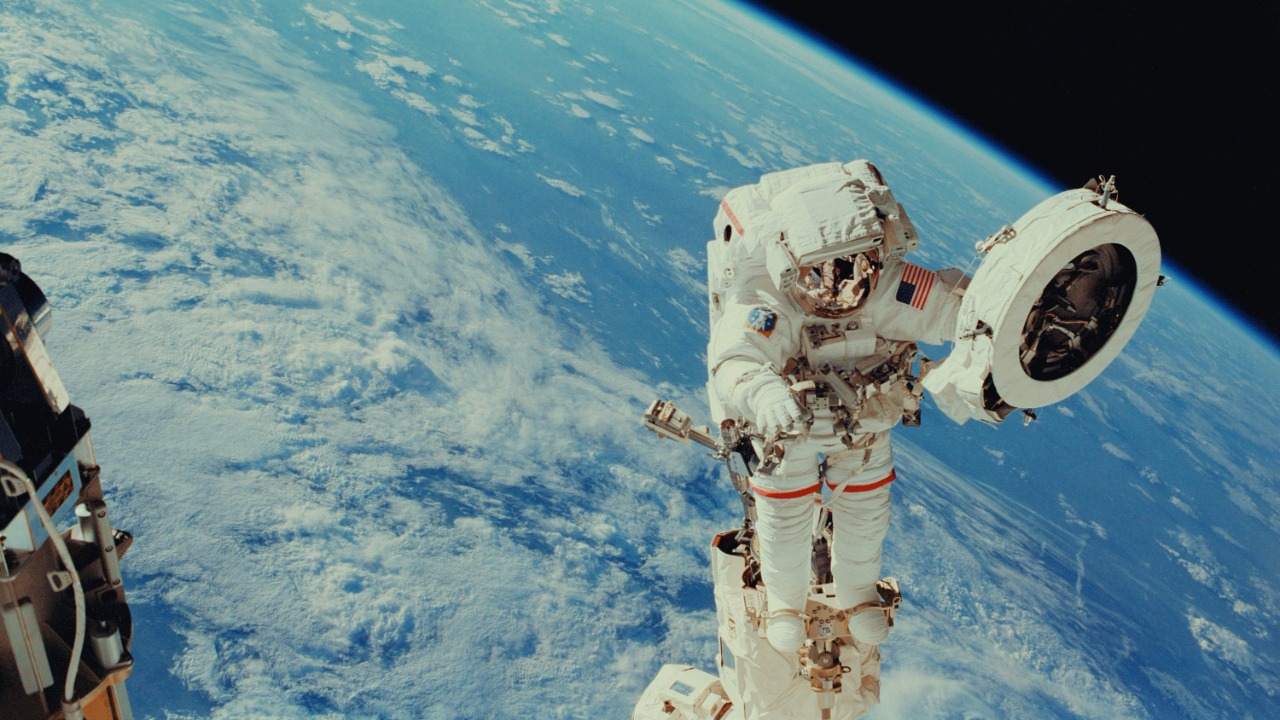

Human exploration of deep space is colliding with an uncomfortable biological reality, as new research shows that the very stem cells that renew our blood and immune systems appear to grow old far more quickly in orbit. Instead of simply coping with microgravity and radiation, these foundational cells begin to look and act as if they have skipped ahead years in the aging process after only weeks in space. For long missions to the moon, Mars, and beyond, that accelerated wear and tear could quietly undermine astronaut health long before a spacecraft ever reaches its destination.
The emerging picture is stark: human stem cells exposed to spaceflight conditions show classic hallmarks of aging, from frayed chromosomes to faltering function, on a compressed timeline that would be unthinkable on Earth. As I look across the latest experiments, from twin-astronaut comparisons to month-long stays aboard the International Space Station, the message is consistent and hard to ignore, raising urgent questions about how we protect crews on multi‑year journeys.
What stem cells do for the body, and why aging them early is dangerous
To understand why this matters, it helps to start with what stem cells actually do. Our blood system depends on a small pool of hematopoietic stem and progenitor cells that continually replenish red blood cells, platelets, and the immune cells that patrol for infections and cancer. As Our blood stem cells are important, they replenish our blood supply and help us maintain proper circulation, But, as we age, so do they, gradually losing their capacity to repair damage and respond to stress. On Earth that decline unfolds over decades, but in orbit researchers are now seeing similar patterns emerge in a matter of weeks.
Stem cells are not just passive building blocks, they are, as one clinician put it, nature’s own architects of regeneration. In work on healthy longevity, specialists describe how Unveiling the Potential of Stem Cells is a Leap Towards Healthy Ageing The journey towards understanding and harnessing these cells is central to keeping tissues resilient. If spaceflight pushes these same regenerative cells into premature decline, astronauts could face weakened immunity, slower wound healing, and a higher lifetime risk of malignancies, all while operating in one of the most hostile environments humans have ever entered.
From twin astronauts to petri dishes: how scientists spotted the problem
The warning signs did not appear overnight. Earlier work tracking identical twins, one in orbit and one on the ground, hinted that spaceflight could reshape biology at the most fundamental level. In that landmark comparison, scientists followed a pair of astronauts over the course of a year and documented wide‑ranging shifts in gene expression, immune activity, and cellular aging markers in the brother who lived in orbit, findings that have since been synthesized in the twins study on how prolonged missions affect the human body. Those early results did not single out stem cells, but they set the stage for more targeted experiments that would.
Building on that foundation, investigators began sending human stem cells themselves into orbit to see how they would behave in isolation from the rest of the body. In one line of work, New research into how the human body responds to space travel is raising fresh concerns for the future of long-term missions, with scientists reporting that New research shows stem cell function and resilience can decline after relatively short exposures. By stripping away the complexity of a whole organism and focusing on these cells in culture, they could watch aging‑like changes unfold in real time.
What happens to stem cells after just weeks in orbit
The most striking data come from experiments that left human stem cells aboard the International Space Station for roughly a month. Researchers sent stem cells to the ISS for a month to see how they would react to the space environment, and ResearchersSpending
In these studies, Human HSPCs exposed to 32 to 45 days of spaceflight showed hallmark features of aging, with Researchers observing that space conditions triggered DNA damage responses, altered gene expression, and inflammatory signaling that would normally be associated with much older cells. After just 32, 45 days in orbit, the stem cells looked as if they had skipped ahead years in their biological timeline. Space scientists report that spending time in microgravity pushes human stem cells into an accelerated aging pattern, a conclusion reinforced by work showing that Space
Classic hallmarks of aging, compressed into a month
What makes these findings so unsettling is not just that stem cells change in space, but that they change in ways that mirror classic aging biology. In orbit, the cells behaved as though they had been alive for far longer, showing telomere shortening, genomic instability, and shifts in how they divide and differentiate that are usually seen late in life. One analysis described how The cells behaved as though they had undergone years of wear, with particular concern around the protective caps on chromosomes that shorten as we age.
Other teams have framed the same pattern in terms of the broader hallmarks of aging, from chronic inflammation to impaired DNA repair. Aging hallmarks in weeks not years were documented when HSPCs in orbit began to show molecular signatures linked to both aging and malignancy, with inflammatory signals heightened after only a few dozen days in space, a pattern captured in work on Aging hallmarks in orbit. After just 32 to 45 days, the combined effects of microgravity, radiation, and other stressors of space were enough to speed cellular aging in ways that After just 32 to 45 days would be difficult to reproduce on Earth without years of natural aging or intense experimental manipulation.
Inside the lab: what the UC San Diego team actually saw
The most detailed look so far comes from a group of scientists who focused specifically on human blood stem cells and how they respond to spaceflight. Their findings reveal space-induced genetic, mitochondrial, and functional changes that collectively point to accelerated aging of blood stem cells, a pattern laid out in work titled Spaceflight Accelerates Human Stem Cell Aging, San Diego Researchers Find which details how these cells lose their youthful characteristics after a relatively short stay in orbit. The team documented shifts in how the cells handled oxidative stress and repaired DNA, both key levers in the aging process.Independent coverage of the same experiments has underscored how quickly the changes appeared and how closely they resembled aging on Earth. Reports summarizing the work note that Spaceflight Accelerates Aging of Human Stem Cells, Study Finds, with investigators emphasizing that these findings are critically important because they show that even brief missions can leave a lasting imprint on the body’s regenerative machinery, a conclusion captured in analyses of how Spaceflight Accelerates Aging of Human Stem Cells, Study Finds. Taken together, the data suggest that the stem cell compartment is not just passively exposed to space, it is actively reshaped by it in ways that could echo for years after an astronaut returns home.
“Clear evidence of aging”: what the lead scientists are saying
For the researchers at the center of this work, the message is blunt. In space, stem cells decline in function, said lead study author Catriona Jamieson, director of the Sanford Stem Cell institute, describing how the cells’ ability to self‑renew and generate healthy blood and immune cells drops off under microgravity and radiation. She has pointed to clear evidence of aging in these cells, arguing that the same mechanisms might be harnessed to better understand age‑related diseases on Earth, a perspective laid out in coverage of how Sep findings could eventually be applied to patients on Earth.
Other accounts of the experiments have emphasized just how stressful the space environment appears to be for these foundational cells. Stem cells are found throughout the body, and they can make more of themselves or turn into other specialized cells, yet in orbit they show signs of strain that suggest it is simply stressful to be up there, a point made in reporting that Stem cells age faster in space. When the scientists describe their results, they are not talking about subtle shifts at the margins, but about a wholesale tilt toward an older, more fragile cellular state.
Radiation, microgravity, and genomic instability: why space is so harsh
Behind the scenes, several overlapping forces appear to be driving this rapid aging. Microgravity alters how fluids move through the body and how cells sense mechanical forces, while cosmic radiation delivers a steady drizzle of high‑energy particles that can slice through DNA. They also observed an increase in genomic instability, or an increase in replication errors in genetic code, which can raise the risk of cancer and other diseases, a pattern highlighted in reporting that They
Space travel may accelerate the aging of stem cells as much as ten‑fold, according to analyses that compare the molecular changes seen in orbit with those expected over the same period on Earth. Space travel pushes human stem cells into an accelerated aging pattern, with microgravity and radiation working together to erode genomic stability and trigger stress responses, a dynamic described in detail in work on how Stem cells and space travel interact. While the exact ratio will vary by individual and mission profile, the direction of travel is clear: the longer stem cells spend in space, the older they look when they come back.
What this means for astronauts on long missions
For crews headed to the moon or Mars, the implications are sobering. Human HSPCs exposed to 32 to 45 days of spaceflight already show hallmark features of aging, so a mission that keeps astronauts in deep space for many months could leave their blood and immune systems looking far older than their chronological age. Spaceflight accelerates aging of human blood stem cells, and Human
These findings are critically important because they show that the body’s regenerative core is not spared from the stresses of spaceflight. Spaceflight Accelerates Aging of Human Stem Cells, Study Finds, and the investigators behind that work have warned that without countermeasures, long‑duration missions could leave astronauts biologically older in ways that standard medical exams might miss, a concern reflected in analyses that Sep
From bad news to new tools: how space aging could help fight disease
There is, however, a more hopeful side to this story. By compressing years of aging into weeks, spaceflight offers scientists a kind of fast‑forward button for studying how stem cells grow old and how cancers emerge from that process. To date, the SSCI has conducted 17 missions to the ISS, and the authors of one major study stated that Together, our results reveal spaceflight-accelerated aging of human stem cells that could aid modeling of cancer and age-related disorders, a vision laid out in work describing how SSCI
Stem cell research in space is already being framed as a way to advance regenerative medicine beyond Earth. However, knowing this allows for countermeasure development, for example, shielding strategies in spacecraft design, drug regimens that protect DNA, or even infusions of stem cells during the mission, ideas that are being explored in work on However
Designing missions around a vulnerable biology
For now, the message for mission planners is that biology has to be treated as a hard constraint, not an afterthought. Space travel found to accelerate cellular aging shows that even small doses of cosmic radiation can stir up trouble at the cellular level, especially when combined with microgravity and the other stressors of space, a point underscored in analyses that While
At the same time, the broader context of human spaceflight research is shifting toward a more integrated view of health. Space travel may accelerate the aging of stem cells as much as ten‑fold, and Space travel pushes human stem cells into an accelerated aging pattern, but those same studies also point to ways to monitor and potentially intervene in the process, building on earlier human experiments like the twins study that first revealed how deeply space can reach into our biology. As I weigh the evidence, I see a future in which every long‑duration mission is paired with a sophisticated stem cell health plan, treating these tiny, powerful cells as critical crew members in their own right.
More from MorningOverview