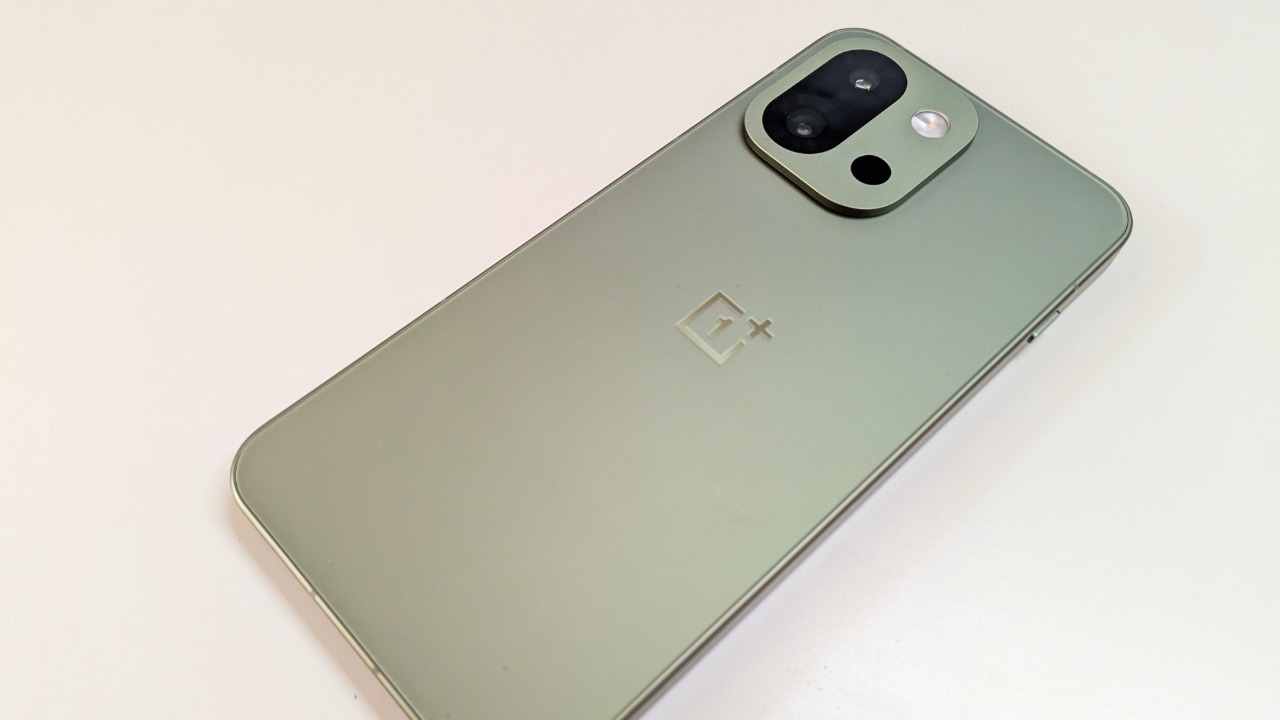

The next wave of OnePlus phones is shaping up to be less about shaving millimeters off the chassis and more about cramming in as many milliamp-hours as physics and regulators will allow. After steadily growing capacities over the last few generations, the company now appears ready to ship a device with a battery that could eclipse anything it has put in a mainstream handset before. If that happens, it will not just be a spec-sheet flex, it will be a statement about how OnePlus sees the future of performance, gaming, and all-day connectivity.
I see three threads converging here: the rapid escalation in battery sizes on recent flagships, the aggressive numbers rumored for the OnePlus 15R, and a broader shift toward electric car–style power tech in phones. Taken together, they point to a near-term OnePlus launch that could set a new internal record for capacity, and potentially reset expectations for how long a high-end Android phone should last between charges.
OnePlus has been quietly building a battery arms race
To understand why the next OnePlus might carry its biggest battery yet, it helps to look at how quickly the company has been scaling up capacity. Earlier flagships like the OnePlus 11 topped out at 100%, 5,000 mAh, while the OnePlus 12 jumped to 100%, 5,400 mAh, signaling that battery life had become as central to the pitch as raw chipset speed or camera hardware, a trend detailed in coverage of the current Battery Revolution Coming to high-end Phones. That steady climb shows a company already willing to sacrifice a little thinness for more endurance, long before the latest rumors surfaced.
The pattern continues with the OnePlus 13, which is described as being powered by a 6,000mAh pack, a meaningful improvement over the OP12’s 5,400mAh capacity, according to lab-focused reporting on the device’s battery life. When a brand moves from 5,000 to 5,400 to 6,000mAh in just a few cycles, it is not a blip, it is a roadmap. That trajectory sets the stage for an even more dramatic leap in the next generation, especially in variants that are free to prioritize capacity above all else.
The OnePlus 15 already pushed capacity into laptop territory
Even before we get to the 15R, the standard OnePlus 15 has already rewritten the company’s own rulebook on how big a phone battery can be. Reporting on the device describes it as having the largest pack yet in a mainstream OnePlus flagship, with a table that explicitly lists the OnePlus 12 at 100%, 5,400 mAh and the OnePlus 11 at 100%, 5,000 mAh, then positions the new model as the next step in that climb, as part of a broader Is the Latest Spark in a Battery Revolution Coming to Phones. That framing matters, because it shows OnePlus is not treating this as a one-off experiment, but as a central pillar of its flagship identity.
The global version of the OnePlus 15 goes even further, with reports that the Global Model Will Get a Huge 7,300-mAh Battery paired with a 165Hz Refresh Rate. That combination of a Huge pack and a high Refresh Rate screen would have sounded outlandish a few years ago, yet it now reads like a logical extension of the company’s priorities. When the same coverage notes that this 7,300-mAh setup is coming to the Global Model Will Get version of the phone, it effectively sets a new internal benchmark that any “battery champion” variant, including the rumored 15R, will be measured against.
Real-world tests show 7,300-mAh is not just a lab number
Spec sheets are one thing, but the OnePlus 15’s battery story only really lands when you see how that 7,300-mAh figure behaves in daily use. Hands-on testing describes the phone as a big Android device with a bigger 7,300-mAh battery, and notes that this capacity translates into multi-day endurance even under heavy workloads, as detailed in a review that frames the pack as deserving a medal for its stamina. In that piece, photographer and reviewer Andrew Lanxon at CNET highlights how the phone’s Android software and hardware tuning let the 7,300-mAh cell stretch far beyond what earlier OnePlus flagships could manage.
Those same tests also underscore the engineering trade-offs that make such a large pack feasible. The review notes how the chassis design, internal layout, and thermal management all had to be rethought to accommodate the 7,300-mAh battery without turning the phone into a brick, and how the company still found room for a high-refresh display and fast charging. When a device like this proves in the wild that a 7,300-mAh pack is not only possible but practical, it gives OnePlus a clear template for pushing even further in a follow-up model that is explicitly framed around endurance.
The OnePlus 15R is tipped to go even bigger
That brings me to the OnePlus 15R, which multiple reports suggest is being positioned as a battery life specialist rather than just a cheaper sibling. One analysis explicitly frames the 15R as coming for the battery life crown, arguing that its capacity and tuning could outlast not only rivals but even its own flagship stablemate, a claim that aligns with the idea of a device built for people who push their phones hard all day. In that context, the 15R is not just another regional variant, it is a statement about how OnePlus thinks people use their phones now, a point highlighted in coverage that cites Jay Bonggolto’s analysis of modern usage patterns.
More detailed reporting on the device suggests that the OnePlus 15R could have an even bigger battery than the OnePlus 15 itself, with OnePlus having already confirmed that the upcoming model will share DNA with the Ace 6T in some markets. That same coverage notes that the 15R could eclipse the capacity of the standard flagship and that charging speeds may vary by region, with some countries seeing slightly slower top-ups in exchange for the larger pack. When you read that the OnePlus 15R could have a pack that outmuscles the already huge 7,300-mAh cell, it becomes clear why expectations are building that this may be the company’s biggest battery yet.
Rumors point to a massive 8,300 mAh pack
The most eye-catching claim around the 15R is a report that its battery could reach a staggering 8,300 mAh, a figure that would not just edge past the 7,300-mAh OnePlus 15 but leave it in the dust. That same analysis characterizes the OnePlus 15R’s HUGE 8,300 mAh Battery Could Shame the Flagship OnePlus 15, framing the R-series phone as a kind of endurance monster that might embarrass the more expensive model on longevity alone. If those numbers hold, the 15R would instantly become the largest-capacity phone OnePlus has ever shipped, and one of the biggest packs in any mainstream Android handset.
What makes that 8,300 mAh figure even more striking is the suggestion that this capacity is tied to the Ace branding in some markets, with the report noting that OnePlus is about to launch the Ace 6 variant that shares this enormous pack. That connection matters because it shows the company is willing to use its regional Ace line as a testbed for extreme hardware, then bring the same specs to global R-series devices. When a source describes the HUGE 8,300 m battery as part of a strategy where the Battery Could Shame the Flagship and ties it to the Ace family, it reinforces the idea that OnePlus is deliberately carving out a niche for ultra-long-lasting phones rather than stumbling into it by accident.
How 8,300 mAh fits into OnePlus’s broader lineup
If the 15R really does ship with an 8,300 mAh pack, it will sit at the top of a very deliberate capacity ladder inside the OnePlus portfolio. At the lower end, you still have devices like the OnePlus 12, which earlier listings describe as a more conventional flagship with a focus on balanced specs, something you can see when you Find out more about the product in retail-style listings. Above that sits the OnePlus 13 with its 6,000mAh battery, then the OnePlus 15 with 7,300-mAh, and finally the rumored 15R with 8,300 mAh, each step representing a clear bump in endurance.
On the marketing side, OnePlus also appears to be segmenting devices by region and audience, with some models positioned as global flagships and others as localized performance or gaming phones. Product listings for the OnePlus 13, for instance, show how the company presents that device as a premium option in multiple markets, something you can see when you Find the device in online catalogs. In that context, a battery-first 15R with 8,300 mAh would not replace the main flagship, it would complement it, giving power users a clear reason to pick the R-series over the sleeker, more mainstream 15.
Design, durability and the Micro-Arc future
Of course, stuffing 8,300 mAh into a phone is not just a question of capacity, it is a question of materials and durability. OnePlus has already signaled that its next flagship will use aerospace-grade Micro-Arc Oxidation on the frame, a treatment that reportedly makes the frame 3.4 times harder than aluminum and 1.3 times tougher than titanium. That detail comes from an official teaser that also mentions OnePlus is reportedly developing a smaller screen flagship for 2026, set to launch as the OnePlus 15T and 15s, depending on market, as part of a return to OnePlus’s legacy of power and portability, a strategy teased in an Instagram post.
If that Micro-Arc Oxidation treatment becomes standard across the 15 family, it could be a crucial enabler for larger batteries. A frame that is 3.4 times harder than aluminum and 1.3 times tougher than titanium is better suited to handling the extra weight and internal stress of a huge dual-cell pack, especially in markets where phones are used without cases. It also hints at a future where OnePlus can offer both a compact 15T or 15s and a massive 15R, each with serious capacity, without compromising structural integrity, something that would have been far harder to pull off with older materials.
Why electric car battery tech matters here
The other piece of the puzzle is how OnePlus is actually achieving these capacities without making phones unmanageably thick. A key part of the answer lies in techniques borrowed from electric vehicles, particularly the use of dual-cell designs that allow higher wattage charging and more flexible internal layouts. Analysis of this trend notes that companies like Honor and OnePlus have been doing this for years, with the good news framed around the idea that Using a dual-cell battery lets you charge two cells in tandem, effectively doubling the charging lanes without overstressing a single pack, as explained in a deep dive on how Honor and others are adapting EV tech.
For a phone like the rumored 15R, that approach is almost certainly essential. An 8,300 mAh pack built as a single monolithic cell would be a nightmare to charge quickly and to cool under sustained gaming or 5G use. Split into two or more cells, it becomes much more manageable, allowing the phone to maintain high wattage from the wall plug while keeping temperatures in check. That is the same logic that underpins fast-charging electric cars, and it is no accident that the OnePlus 15’s 7,300-mAh battery is already being discussed in the context of a broader Battery revolution that borrows heavily from EV engineering.
What this means for everyday battery life
For users, the practical impact of a jump from 7,300-mAh to 8,300 mAh is not just a bigger number on a spec sheet, it is a tangible shift in how often they need to think about charging. If the OnePlus 15 can already stretch into a second day of heavy use in some tests, a 15R with 8,300 mAh could realistically push into a third day for moderate users, even with demanding apps like Genshin Impact, Instagram Reels, and Google Maps in the mix. That kind of endurance changes behavior: people stop topping up at every opportunity and start trusting their phone to last through travel days, festivals, or long work shifts without anxiety.
It also has implications for how OnePlus positions its software and accessories. A phone that comfortably lasts two or three days on a charge makes ultra-fast wall chargers slightly less critical, which could be useful in markets where regulators are scrutinizing high-wattage bricks. At the same time, it opens the door for OnePlus to lean harder on features like high-refresh displays, always-on widgets, and background AI processing, knowing that the battery budget is generous. When you consider that the OnePlus 15 already pairs a Battery of 7,300-mAh with a 165Hz Refresh Rate panel, it is easy to imagine the 15R using its extra capacity to keep similar luxuries running without compromise.
How retailers and product listings hint at OnePlus’s priorities
Another subtle indicator of where OnePlus is headed comes from how its devices are presented in online storefronts and product databases. Listings for current models like the OnePlus 12 and OnePlus 13 often foreground battery capacity and charging speed alongside camera and display specs, a shift from earlier years when power was a secondary bullet point. You can see this emphasis when you Find the OnePlus 12 in aggregated product feeds, where endurance is treated as a core selling point rather than an afterthought.
The same pattern appears in generic product search results that surface OnePlus hardware alongside accessories and competing phones. When you browse a broader product category page that includes phones, chargers, and cases, the prominence of battery-related specs in OnePlus entries stands out. That consistency across marketing channels suggests the company sees big batteries not just as a tech story, but as a retail differentiator that helps its devices pop in crowded comparison grids.
The next OnePlus could redefine “all-day” for Android
Pulling these threads together, the picture that emerges is of a company systematically raising its battery game with each generation, then preparing to take a dramatic leap with the OnePlus 15R. From the OnePlus 11’s 100%, 5,000 mAh pack to the OnePlus 12’s 100%, 5,400 mAh, the OnePlus 13’s 6,000mAh, and the OnePlus 15’s 7,300-mAh, the trajectory is unmistakable, and it is reinforced every time you Find those devices in spec sheets and reviews. An 8,300 mAh 15R would be the logical, if still audacious, next step.
There are still open questions, of course, from how much thicker and heavier the 15R will be compared with the standard 15, to whether all regions will get the same capacity and charging speeds. Some markets may see slightly different configurations, just as earlier OnePlus models have varied by country, something you can infer when you Find multiple entries for the same core device. But based on the reporting so far, one thing feels clear: the next OnePlus that focuses on endurance is on track to carry the biggest battery the company has ever shipped, and in doing so, it could reset what “all-day” means for Android power users.
For anyone who has ever watched their phone die halfway through a long-haul flight or a day of 4K video recording, that is more than a nice-to-have. It is a sign that the industry is finally treating battery life as a first-class feature again, and that OnePlus intends to be at the front of that charge. As the company continues to refine its materials, experiment with Micro-Arc Oxidation, and lean on EV-inspired dual-cell designs, the OnePlus 15R and its rumored 8,300 mAh pack look less like an outlier and more like the new normal for a brand that has decided bigger really is better when it comes to batteries.
Even the way OnePlus devices surface in generic product searches, with battery specs front and center, hints at a future where capacity is as central to the brand as fast charging once was. If the 15R delivers on its HUGE 8,300 mAh promise, it will not just be the biggest battery OnePlus has shipped so far, it will be a marker of where the entire Android ecosystem is headed next.
More from MorningOverview