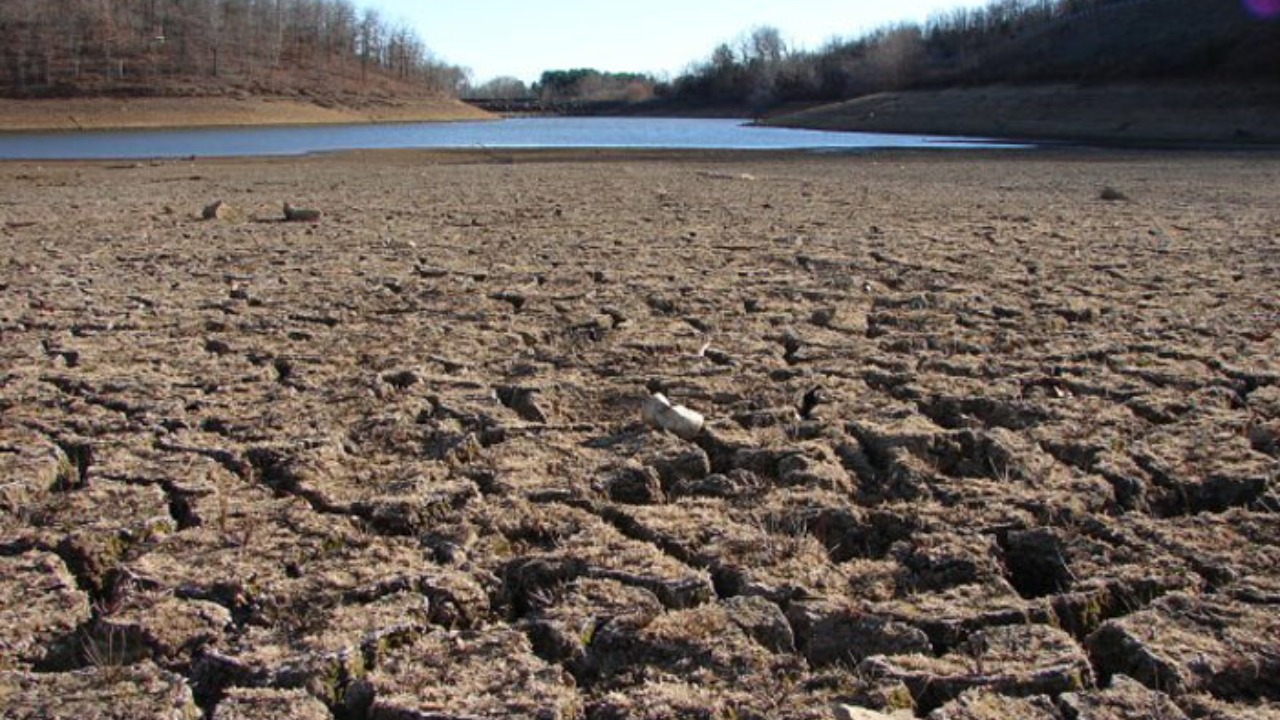

Across the United States, one of the most destructive forces undermining homes and infrastructure is not a storm or an earthquake but the soil itself. In regions rich in certain clays, the ground swells when wet and shrinks when dry, prying apart foundations, cracking streets and warping pipelines with little public attention or political urgency.
Engineers and inspectors have warned for years that this quiet hazard is both widespread and expensive, yet it remains largely invisible until a driveway buckles or a living room wall splits. As climate swings intensify cycles of soaking and drought, the slow-motion damage from expansive soil is poised to grow, even as building codes and consumer awareness struggle to keep up.
What makes soil “expansive” in the first place
At the heart of the problem is a specific kind of clay mineral that behaves less like a solid and more like a sponge. These clays absorb water into their microscopic layers, increasing in volume, then contract again as they dry, a process that repeats with every rainy season, irrigation cycle or plumbing leak. In geotechnical terms, these are known as shrink–swell or expansive soils, and they are present in various regions around the world, from semi-arid suburbs to fast-growing exurbs, where they can be costly to repair once they start moving beneath a structure, a pattern described in detail in guidance on Understanding the Challenges of Expansive Soil.
Not all clays behave this way, and even within a single neighborhood the ground can shift from stable to volatile in a matter of meters. Soil with a high clay content, especially those rich in minerals that engineers group under the label Expansive, can exert powerful vertical and horizontal pressures on anything built above them as they swell and contract. The Colorado Geological Survey notes that such Expansive Soil and Rock can move in vertical, horizontal or both directions, turning what looks like solid ground into a dynamic, heaving platform that quietly undermines conventional foundations.
A hidden disaster with a multibillion-dollar price tag
For homeowners, the first sign of trouble is often cosmetic, a hairline crack in drywall or a sticky door that no longer closes square. Yet beneath those small annoyances lies a national problem that engineers have described bluntly as a hidden disaster. Each year, shrinking or swelling soils inflict at least $2.3 billion in damages to houses, buildings, roads and pipelines, a figure that rivals or exceeds the annual losses from more headline-grabbing natural hazards in some regions.
Those costs are spread across insurance claims, municipal repair budgets and out-of-pocket spending by families who discover that their policies exclude soil movement. Legal analyses of Construction Defects tied to What builders knew or should have known about Expansive Soil show how disputes often hinge on whether developers properly investigated and disclosed the risk. In that context, the technical definition of EXPANSIVE SOIL is not just academic, it is central to who pays when a subdivision starts to crack.
How swelling clays attack foundations and walls
When clay-rich ground swells, it does not simply rise evenly like a lifting platform. Instead, moisture tends to concentrate around the perimeter of a house, near downspouts, flower beds and leaky irrigation lines, while the soil under the center of the slab may stay relatively dry. That uneven movement twists and bends concrete, leading to fractures that telegraph upward as diagonal cracks in brick, gaps at window frames and sloping floors. Inspectors who specialize in Expansive Soils and Their Spoils warn that some clays can change volume by a staggering percentage, and that differential movement of 10% is not uncommon in the most reactive deposits.
As the soil dries, the process reverses, but the structure rarely returns to its original position. Instead, foundations are left with voids beneath them, and walls that once relied on uniform support now span gaps where the ground has pulled away. Home repair firms that focus on What happens when Expansive Soils and What Problems Can They Cause describe how both shrinking and swelling contribute to cracks in floors, walls or ceilings, a cycle that can continue for years as seasons and watering habits change.
From California suburbs to Central Texas, a widespread threat
Although expansive soil is often associated with a few notorious regions, the risk map is far broader than many buyers realize. In a typical year in California, expansive soils cause damage to more homes than earthquakes and floods combined, according to inspectors who track Expansive Soil and explain What You Need to Know before buying or remodeling. That quiet tally of cracked slabs and tilted patios rarely makes the evening news, but it shapes the long-term affordability of homeownership in some of the country’s most expensive markets.
Farther east, Central Texas sits squarely in an area where expansive soils are common, a fact that collides with the region’s rapid growth and appetite for new construction. Local guidance on Expansive Soil and Preventing Foundation Damage urges buyers to consider soil testing before closing, a step that is still far from universal in many booming subdivisions. Municipal advisories, such as Monterey Park’s public information on Dealing with Expansive Soil, underscore how local governments are starting to treat the issue as a public concern rather than a purely private headache.
Why some houses crumble while the neighbor’s looks fine
One of the most frustrating aspects of expansive soil is its inconsistency. A street can feature one home with severe foundation distress and another, just a few doors down, that appears untouched. Inspectors who work in regions with notorious clays note that even within a single subdivision, the mineralogy can vary from lot to lot, and that a term like “Bentonite” is commonly used to describe a family of highly expansive clays that may be present in pockets rather than uniform layers.
Construction details amplify those natural differences. A house with deep, well reinforced footings and carefully managed drainage can ride out the same soil movement that cripples a neighboring structure built on a thinner slab with poor grading. Guidance for buyers and inspectors on expansive soils stresses how small changes in elevation, landscaping and even the placement of trees can alter moisture patterns around a foundation. In practice, that means two homes that look identical from the curb can be living on very different ground.
Cracks, buckles and the telltale signs underfoot
For residents, the early warning signs of soil movement are often subtle and easy to dismiss. Hairline fractures radiating from window corners, stair-step cracks in brick veneer and gaps between baseboards and flooring can all signal that the structure is flexing as the ground shifts below. Foundation repair specialists who focus on how Cracked and buckled walls develop note that such damage is more likely to occur due to expansive soils compared to many other foundation problems, particularly when the soil is mixed with construction debris or poorly compacted fill.
Inside, doors that swing open on their own, windows that stick seasonally and tiles that pop loose from concrete can all be part of the same story. Articles on Have you ever wondered why the Leaning Tower of Pisa leans draw a direct line between uneven settlement and the kind of tilting that, on a smaller scale, plays out in suburban living rooms. When nearly 60% of homes built on expansive clay soil experience some form of foundation distress, as described in analyses of The Impact of Expansive Clay Soil on Your Home and its Foundation, those small clues take on a larger significance.
Why climate swings are making the problem worse
Expansive soil damage is not just a function of where a house is built, but how the local climate behaves over time. Long dry spells followed by intense rain create the most punishing cycle for reactive clays, baking them into a shrunken, cracked state before suddenly flooding them with water that they rapidly absorb. Engineering discussions in Feb on Understanding the Challenges of Expansive Soil highlight how these repeated wetting and drying cycles magnify movement, especially in regions where climate change is intensifying both droughts and downpours.
Local watering habits layer another variable onto that climate backdrop. Overwatering near the foundation, inconsistent irrigation and leaking sprinkler lines can create sharp moisture contrasts between different parts of the same yard, effectively turning the soil into a patchwork of swelling and shrinking zones. Homeowner guides that frame Expansive Soils and Your Foundation Walls as a year round concern, not just a rainy season issue, stress that these human controlled moisture swings can be as damaging as natural weather patterns.
Engineering fixes and the limits of retrofits
Modern geotechnical and structural engineering has developed a toolkit to cope with expansive soils, but those solutions are most effective when they are built in from the start. Deep piers that extend below the active soil zone, post tensioned slabs that distribute movement and carefully designed drainage systems can all help a new home ride out the swelling and shrinking below. Inspectors who track trends since Nov note that Geotechnical and structural engineering have come a long way in the last 20 years, with specific foundation designs now tailored to known soil conditions.
Retrofitting an existing structure is more complicated and often more expensive. Contractors may install underpinning piers, inject grout to fill voids or regrade yards to redirect water, but these measures can only partially reverse years of movement. Legal and technical discussions around Construction Defects tied to EXPANSIVE SOILS- THE HIDDEN DISASTER underscore how difficult it can be to restore full structural integrity once the ground has shifted and shrinks, removing wall support that was never designed to move so dramatically.
What homeowners can do before and after the cracks appear
For buyers and owners, the most powerful tools are information and early action. Before construction or purchase, a soil report that identifies whether a lot contains Expansive clays can guide foundation design and help set realistic expectations about maintenance. Municipal advisories like Monterey Park’s guidance on Dealing with Expansive Soil recommend practical steps such as maintaining consistent soil moisture around the home, keeping large trees away from foundations and ensuring that gutters and downspouts move water well clear of the slab.
Once signs of movement appear, prompt evaluation can prevent a nuisance from becoming a structural crisis. Foundation specialists who analyze Did your home’s foundation move because of soil or some other cause emphasize that not every crack signals imminent failure, but that patterns of damage, such as recurring diagonal fractures or doors that suddenly misalign, warrant professional assessment. In regions where By John Nunez and other local experts have flagged expansive soils as a chronic issue, regular monitoring and modest preventive work can be far cheaper than waiting until a home is visibly tilting.
Why the quiet crisis under our feet demands more attention
Expansive soil rarely produces the dramatic images that drive disaster coverage, yet its cumulative impact on housing, infrastructure and household finances is profound. When Each year, shrinking or swelling soils quietly rack up at least $2.3 billion in damage, the question becomes not whether the problem is serious, but why it remains so poorly understood outside engineering circles. The answer lies partly in the slow pace of the damage and partly in the fragmented responsibility for prevention, which is split among builders, regulators, insurers and individual homeowners.
As climate volatility increases the stress on already reactive soils, the quiet wrecking of homes and infrastructure is likely to accelerate unless building practices, codes and consumer awareness catch up. From Jul guidance on Clay Soil Foundation Problems to Aug advisories on What You Need to know about reactive ground, the technical knowledge is already on the table. The challenge now is turning that expertise into routine practice, so that the soil beneath new neighborhoods is treated not as an afterthought, but as a central character in the story of how and where we build.
More from MorningOverview