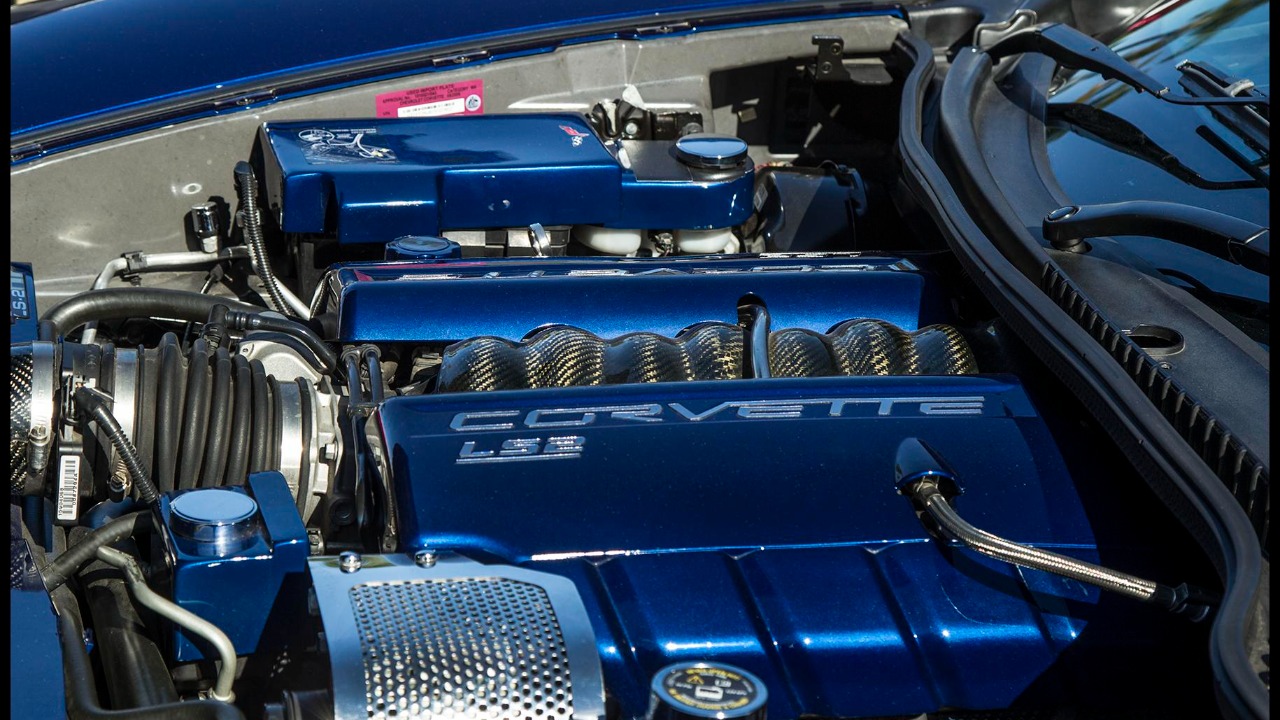

General Motors has spent decades refining overhead-valve V8s while much of the industry pivoted to dual overhead cam designs, turbocharging, and downsized blocks. I set out to understand why Chevrolet in particular keeps betting on pushrod engines in its trucks and performance cars, and how that choice fits into a market racing toward electrification and ever tighter emissions rules.
What emerges from the reporting is less nostalgia than a deliberate strategy: Chevy sees compact, torquey small-blocks as a competitive tool for packaging, towing, and cost, even as rivals tout high-revving multi-cam engines and battery packs. The company is not ignoring new technology, but it is threading it through a familiar architecture that still underpins some of its most profitable vehicles.
Chevy’s small-block heritage still shapes its modern strategy
Chevrolet’s loyalty to pushrod engines starts with history, but it survives because that history has been relentlessly updated rather than frozen in time. The original small-block V8 that arrived in the mid‑1950s set a template of compact dimensions, a single cam in the block, and simple valvetrain geometry that proved easy to scale and cheap to build. Over successive generations, GM kept that basic layout while adding electronic fuel injection, aluminum heads, and modern controls, turning what began as a mass‑market workhorse into a foundation for everything from family sedans to Le Mans‑winning race cars, as detailed in coverage of the small‑block’s evolution and its role in Corvette and Camaro programs here.
That continuity matters because it lets Chevy treat the small-block as a living platform rather than a legacy artifact. Engineers can carry over block architecture, bore spacing, and many internal dimensions while swapping in new combustion chambers, direct injection, and cylinder deactivation, which keeps development costs in check and simplifies manufacturing. Reporting on GM’s fifth‑generation “LT” V8 family shows how the company folded in high‑pressure fuel systems, variable valve timing, and advanced knock control without abandoning the pushrod layout, preserving the compact packaging that has long distinguished Chevy’s V8s from taller, wider dual overhead cam rivals here.
Packaging and weight give pushrods an edge in trucks and sports cars
The most immediate reason Chevy still leans on pushrods is physical: a cam-in-block V8 is shorter and often lighter than a comparable dual overhead cam engine, which gives designers more freedom in both trucks and sports cars. With only one camshaft buried low in the block and simple two‑valve heads, a small-block can sit lower in the chassis, improving hood height, forward visibility, and crash structure. Technical breakdowns of the LT1 and LT2 V8s in the C7 and C8 Corvette highlight how the compact valvetrain helped engineers keep the center of gravity low and maintain a sleek body profile that would be harder to achieve with a taller multi‑cam engine of similar displacement here.
In full‑size pickups and SUVs, that same packaging advantage translates into more room for steering components, front suspension travel, and crash energy management without resorting to extreme front‑end height. Analyses of the Chevrolet Silverado and GMC Sierra platforms show how the small-block’s dimensions allow a relatively short front overhang and a cab-forward stance while still accommodating four‑wheel drive hardware and large cooling systems, something that becomes more challenging with bulkier dual overhead cam V8s here. The weight savings from simpler heads and fewer moving parts also help offset the mass of modern emissions hardware and heavy‑duty frames, which is critical in vehicles that already push the upper limits of gross vehicle weight ratings.
Low‑end torque and drivability suit how truck buyers actually tow
Beyond packaging, Chevy’s engineers and marketers argue that pushrod engines deliver the kind of torque curve that pickup and SUV buyers actually use. A long‑stroke, two‑valve V8 with a relatively mild cam profile tends to make strong torque at low and midrange rpm, which is where trailers are pulled up grades and work trucks haul loads through traffic. Technical specifications for the 6.2‑liter L87 V8 in the Silverado 1500 show peak torque arriving well below the engine’s redline, and towing guides emphasize how that broad plateau helps maintain speed on inclines without constant downshifts or high‑rpm noise that can fatigue drivers over long distances here.
That character contrasts with many dual overhead cam turbocharged engines that concentrate their punch in a narrower band and rely heavily on boost management to balance power and durability. While Ford’s EcoBoost V6s and Ram’s Hemi V8s have proven capable, Chevy’s decision to keep a naturally aspirated pushrod option gives buyers a simpler, more linear response that some fleet managers and private owners still prefer. Reporting on truck comparison tests frequently notes that the small-block’s immediate throttle feel and predictable engine braking inspire confidence when descending grades with heavy trailers, a trait that stems directly from its low‑rpm torque bias and straightforward valvetrain here.
Cost, complexity, and durability keep pushrods attractive to GM accountants
From a business perspective, the pushrod architecture remains attractive because it delivers competitive power with fewer parts and simpler machining. A single camshaft, shorter timing chain, and compact heads reduce material and manufacturing costs compared with multi‑cam designs that require multiple chains or belts, additional cam phasers, and more intricate casting work. Analyses of GM’s powertrain investment strategy point out that the company can amortize tooling for small-block blocks and heads across high‑volume truck, SUV, and performance applications, which spreads development expenses and helps keep per‑unit costs in check even as emissions and control systems grow more sophisticated here.
Durability is another part of the equation, especially for commercial fleets and buyers who keep vehicles for long service lives. The relative mechanical simplicity of a pushrod valvetrain, with fewer cams and bearings to wear, has historically translated into robust long‑term reliability when properly maintained. Fleet case studies cited in coverage of GM’s truck business show high‑mileage Silverado and Sierra models with small-block V8s accumulating hundreds of thousands of miles in municipal and construction service, reinforcing the perception that these engines are known quantities with predictable maintenance needs here. That reputation lets GM justify continued investment in the architecture as a low‑risk way to support its most profitable segments.
Rivals embraced dual overhead cams and turbos for different tradeoffs
Chevy’s persistence with pushrods stands out because many direct competitors chose a different path, prioritizing high‑rev power density and emissions flexibility over compactness and simplicity. Ford’s shift to the modular and later Coyote dual overhead cam V8 families, along with its aggressive rollout of EcoBoost turbocharged V6s, reflects a belief that multi‑cam heads and forced induction offer more headroom for future efficiency gains and performance tuning. Technical deep dives into the 5.0‑liter Coyote highlight its four‑valve heads, variable cam timing on both intake and exhaust, and high‑revving character, which suits applications like the Mustang GT and F‑150 where marketing leans on horsepower figures and advanced technology messaging here.
Stellantis, through Ram and Dodge, has walked a middle line, keeping the Hemi pushrod V8 in trucks and muscle cars while also developing dual overhead cam engines and electrified powertrains. Reporting on Ram’s engine roadmap shows the company preparing to phase out some Hemi applications in favor of the “Hurricane” twin‑turbo inline‑six, a multi‑cam design that promises better fuel economy and emissions performance in a smaller package here. Against that backdrop, Chevy’s decision to double down on a modernized small-block looks less like inertia and more like a calculated bet that its particular mix of packaging, torque, and cost will remain compelling even as rivals tout more complex hardware.
Modern small-blocks layer advanced tech on an old-school layout
Chevy’s current pushrod engines are far removed from the carbureted small-blocks that built the brand’s reputation, and the company has been careful to integrate contemporary technology into the familiar architecture. The fifth‑generation LT family uses direct fuel injection, variable valve timing, and sophisticated combustion chamber design to meet stringent emissions and efficiency targets while still delivering the low‑end torque buyers expect. Technical documentation on the LT1 and LT4 details how high‑pressure injectors, sculpted piston crowns, and carefully managed swirl patterns in the combustion chamber allow higher compression ratios without detonation, which boosts both power and fuel economy compared with earlier port‑injected designs here.
Chevy has also leaned on electronic controls to make pushrod engines more adaptable to different driving conditions. Features such as Active Fuel Management and Dynamic Fuel Management can shut down cylinders under light load, effectively turning a V8 into a V4 or even a V2 in certain scenarios to save fuel. Coverage of these systems in GM’s truck lineup explains how rapid, seamless transitions between cylinder modes are managed by the engine control unit and specialized lifters, allowing the company to claim meaningful efficiency gains without abandoning the core small-block layout here. In that sense, Chevy is using electronics and software to extract more from a proven mechanical foundation rather than starting over with a clean‑sheet multi‑cam design.
Corvette and Camaro show how pushrods still win on the track
Chevy’s sports cars provide a high‑profile showcase for what a modern pushrod engine can do when tuned for performance rather than towing. The C8 Corvette Stingray’s LT2 V8, a 6.2‑liter naturally aspirated small-block mounted behind the driver, delivers a blend of torque and top‑end power that keeps it competitive with European rivals that rely on dual overhead cam architectures. Technical reviews of the LT2 emphasize its dry‑sump lubrication, high‑flow intake, and revised cam profile, which together help the engine rev freely while still producing strong midrange thrust, a combination that suits both street driving and track work here.
On the racing side, the Corvette C8.R and Camaro ZL1 programs demonstrate how far Chevy can push the small-block under endurance and high‑load conditions. Reports on the C8.R’s 5.5‑liter flat‑plane crank V8 note that, while its valvetrain differs from the road car’s cross‑plane design, it still uses a cam‑in‑block layout that benefits from the same compactness and low center of gravity that define the production LT engines here. In NASCAR and drag racing, where rules often favor pushrod engines, Chevy’s continued refinement of small-block geometry and materials has kept its teams competitive, reinforcing the idea that the architecture remains viable at the highest levels of motorsport.
Emissions, fuel economy, and the looming EV shift test the formula
Even as Chevy extracts more performance and efficiency from pushrod engines, regulatory pressure and the rise of electric vehicles are tightening the window in which internal combustion can operate. Federal and state emissions standards, along with corporate average fuel economy requirements, push automakers to reduce fleet‑wide CO₂ output, which is easier to achieve with smaller turbocharged engines, hybrids, and battery‑electric models. Analyses of GM’s long‑term strategy highlight the company’s public commitment to an all‑electric light‑duty lineup in the coming decades, a goal that will inevitably shrink the role of large displacement V8s in passenger vehicles here.
Chevy is already responding by pairing its pushrod engines with more advanced transmissions and lightweight materials to eke out incremental gains while it ramps up EV offerings like the Silverado EV and Blazer EV. Reporting on GM’s Ultium platform shows how much capital the company is directing toward battery plants and dedicated electric architectures, signaling that internal combustion development will increasingly focus on niches where it still offers clear advantages, such as heavy towing, high‑performance track use, and certain commercial applications here. In that context, the small-block’s future looks less like a universal solution and more like a specialized tool that Chevy will keep sharpening for specific jobs even as the broader market electrifies.
Why Chevy is likely to keep pushrods alive alongside EVs
Looking ahead, I see Chevy’s continued investment in pushrod engines as a pragmatic hedge rather than a refusal to modernize. The company is pouring resources into electric platforms, yet it still earns substantial profits from full‑size trucks, SUVs, and performance cars that rely on small-block V8s. Industry analyses of GM’s financials underscore how crucial these segments are to funding the EV transition, which gives the automaker a strong incentive to keep their powertrains competitive and appealing for as long as regulations and consumer demand allow here.
As battery technology improves and charging infrastructure expands, the balance will shift further toward electric trucks and performance models, but there is little evidence in the reporting that GM plans to abandon pushrod engines abruptly. Instead, the company appears to be managing a gradual overlap period in which refined small-blocks serve buyers who prioritize towing, range under load, and familiar serviceability, while Ultium‑based EVs court early adopters and fleets focused on emissions targets. Technical and strategic briefings from GM suggest that as long as the small-block can meet emissions rules and deliver strong margins, Chevy will keep refining its cam‑in‑block formula alongside its electric future here.
More from MorningOverview