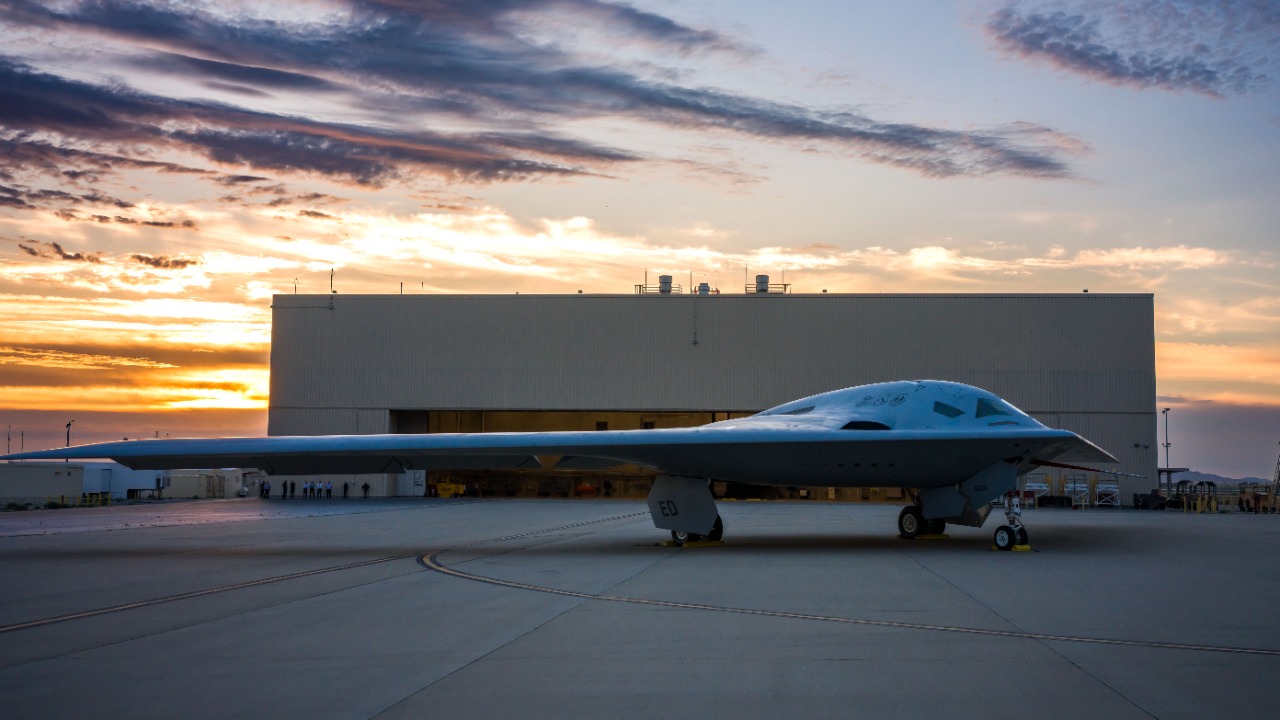

America’s newest stealth bomber is moving from concept to reality faster than many expected, and the pace of work around it is starting to look less like a boutique prototype effort and more like the early stages of a real fleet. The B-21 Raider program is still wrapped in secrecy, but a growing body of public clues points to a quiet acceleration in production and testing that is reshaping how the United States plans to project power in the 2030s and beyond.
I see a pattern emerging that goes beyond individual test flights or factory milestones: the B-21 is being built as a scalable, software-driven weapons system that can be produced, upgraded, and operated at a tempo that older bombers could never match. That shift, more than any single number of airframes, is what gives the current build-up its strategic weight.
The B-21’s classified build-up and the limits of what we know
The central tension around the B-21 Raider is that it is both one of the Pentagon’s most important programs and one of its most tightly controlled. Officials have signaled that multiple test aircraft are already flying and that production is underway, yet they have not publicly confirmed how many bombers exist or how quickly they are rolling off the line. Some reporting has described a “secret” fleet and suggested that the number of aircraft could be growing rapidly, but the precise size of that fleet is Unverified based on available sources.
One outlet has claimed that a hidden B-21 force has already reached 40 aircraft as part of a U.S. production push, but that specific figure is Unverified based on available sources and cannot be independently confirmed from the reporting provided here, even though the broader description of a secret B-21 Raider fleet underscores how much of the program remains behind the curtain. What is clear is that the Air Force has deliberately kept detailed production numbers out of public view, in part to complicate adversary planning and in part to preserve flexibility as the aircraft moves from development into operational testing.
From debut to acceleration: how the Raider left the shadows
The B-21’s public journey began with a carefully choreographed rollout that emphasized deterrence and long-range strike as central pillars of U.S. strategy. When the bomber was first unveiled, Air Force leaders framed it as a response to increasingly sophisticated air defenses and the need to hold targets at risk across vast distances, highlighting that the Raider was designed from the outset to penetrate contested airspace and support nuclear and conventional missions alike. That early messaging set expectations that this would not be a boutique platform, but a workhorse for the long haul, a point underscored during its formal debut focused on American-style deterrence.
Since that rollout, the tempo of visible activity has steadily increased, with more frequent references to test flights, integration work, and preparations at bases that are expected to host the bomber. The narrative has shifted from unveiling a single prototype to describing a program that is methodically building toward operational capability, even if the exact number of aircraft remains classified. That evolution, from a symbolic debut to a sustained test and integration campaign, is one of the clearest signs that the Raider is moving into a phase where production and fielding decisions carry as much weight as the original design.
Industry signals of a production ramp
While the Air Force has kept its numbers close, Northrop Grumman has offered hints that the industrial side of the program is performing ahead of expectations. Company materials have highlighted that the B-21 is meeting key performance benchmarks and that its design and manufacturing approach are intended to support efficient, repeatable production rather than one-off craftsmanship. Executives have pointed to the use of advanced digital engineering, modular hardware, and open systems as reasons the aircraft has shown strong performance through innovative technology, a phrase that in defense acquisition often signals that a program is staying on schedule or better.
Those same materials emphasize that the Raider’s production line was built around modern manufacturing techniques, including extensive use of model-based systems engineering and highly automated fabrication processes. In practice, that means the factory can pivot more quickly from building test articles to producing operational aircraft, and it can incorporate design tweaks without the kind of disruptive retooling that plagued earlier stealth programs. The focus on repeatable, digitally driven workflows is a strong indicator that the B-21 is meant to scale, not just exist as a handful of demonstrators.
Why analysts are calling for a higher build rate
Outside the factory gates, defense analysts have increasingly argued that the Air Force should not be content with a modest B-21 fleet, especially as aging B-1B and B-2 bombers face mounting sustainment challenges. One influential assessment has urged policymakers to double the planned production rate, warning that a slow build would leave the United States with too few penetrating bombers to meet global demands in a high-end conflict. That report frames the Raider as a rare opportunity to reset the bomber force and calls for a deliberate decision to double the production rate so the aircraft can be fielded in meaningful numbers before legacy fleets become untenable.
The argument rests on a straightforward math problem: if the Air Force retires older bombers faster than it buys new ones, the total number of long-range strike platforms will shrink at exactly the moment adversaries are investing heavily in anti-access systems. Advocates for a faster B-21 build contend that the program’s relatively clean testing record and modern manufacturing base justify a more aggressive ramp, especially if Congress is willing to front-load funding. In their view, the real risk is not building too many Raiders, but building too few and too late.
Test flights, second aircraft, and the shift from prototype to fleet
Evidence of a quiet acceleration is also visible in the growing number of test events and aircraft sightings tied to the Raider. Earlier coverage focused on the first prototype’s initial flights, but more recent reporting has highlighted that a second B-21 has taken to the air, signaling that the program is moving beyond a single test article. The description of America’s new stealth bomber taking a “next step” with a second aircraft’s first flight reflects a transition from proving that the design can fly to demonstrating that it can be built consistently, a milestone captured in reporting on the second bomber’s first flight.
Each additional test aircraft expands what engineers can learn about the bomber’s performance envelope, mission systems, and maintainability, and it also validates the production line’s ability to turn out airframes that match the digital design. As more Raiders enter flight test, the program gains the data it needs to refine tactics, training, and support concepts, which in turn makes it easier for the Air Force to justify moving into low-rate initial production. That feedback loop, from factory to test range and back, is a hallmark of programs that are preparing to scale up rather than linger in development limbo.
AI, single-pilot operations, and the hidden advantage
One of the most intriguing aspects of the B-21 is how much of its capability is expected to come from software and onboard computing rather than raw airframe performance. Reporting on the aircraft’s cockpit concept has noted that the Raider is being designed to support single-pilot operations, a radical departure from the multi-crew setups of earlier bombers. That shift implies a heavy reliance on automation and artificial intelligence to manage sensors, electronic warfare, and mission planning, with some analysts suggesting that the bomber’s advanced systems hint at AI-enabled single-pilot operations that reduce workload and increase survivability.
Beyond the cockpit, academic analysis has argued that the B-21’s real edge may lie in its ability to integrate seamlessly into a broader network of sensors, shooters, and command systems. One detailed study has described the Raider as having a “hidden advantage” rooted in its open architecture and capacity to evolve through software updates, rather than relying solely on hardware upgrades that take years to field. That perspective casts the bomber as a kind of flying node in a larger kill web, with its hidden advantage emerging from how it connects to other assets as much as from its own stealth and payload.
Digital design, modular systems, and the logic of a surge
The B-21’s digital backbone is not just a technical curiosity, it is the foundation for any future production surge. By building the aircraft around modular mission systems and a highly virtualized design environment, engineers can test changes in software before they ever touch a physical jet, reducing the risk that upgrades will disrupt the line. Company materials have stressed that the Raider’s strong performance is tied to this digital-first approach, which allows teams to model, simulate, and validate complex interactions long before they reach the factory floor, a process highlighted in descriptions of its innovative technology.
In practical terms, that means the Air Force can contemplate building more aircraft without locking itself into a static configuration that will be obsolete in a decade. Instead, the service can field a baseline B-21 and then layer in new sensors, weapons, and software-defined capabilities over time, much as commercial airliners receive avionics and cabin upgrades across their service lives. This approach aligns with calls from analysts to accelerate production, because it reduces the penalty for buying early: even if the first Raiders lack some future features, their digital architecture is designed to absorb those enhancements later.
Public glimpses: videos, photos, and social media breadcrumbs
For a program as secretive as the B-21, open-source imagery has become an important, if limited, window into its progress. Officially released footage has shown the bomber taxiing, taking off, and flying in controlled conditions, giving observers a sense of its size, planform, and some external features. One widely viewed clip of the Raider in flight has circulated on video platforms, offering a rare look at the aircraft’s silhouette and fueling speculation about its performance, as seen in a public B-21 flight video that analysts have pored over frame by frame.
Social media has added another layer of visibility, with aviation enthusiasts and defense watchers sharing satellite images, ground photos, and commentary whenever a new sighting occurs. A notable example is a post highlighting the bomber’s presence and activity at a key test location, which helped confirm that the Raider is flying more often than official press releases alone would suggest. That kind of open-source sleuthing, exemplified by a detailed B-21 tracking thread, does not reveal classified performance data, but it does reinforce the impression that the aircraft is moving steadily through its test program.
Training, bases, and the path to operational status
As the B-21 inches closer to operational service, the Air Force has been laying the groundwork at the bases that will eventually host the bomber and its crews. Preparations include infrastructure upgrades, security enhancements, and the development of new training syllabi tailored to the Raider’s unique systems and mission profile. Video segments focused on the program have highlighted how airmen are being readied to maintain and support the aircraft, with particular attention to the specialized skills required to handle low-observable coatings and advanced avionics, themes that feature prominently in a B-21-focused training overview.
Those preparations are not just about parking a new jet on an old ramp, they are about reshaping entire wings around a platform that operates differently from legacy bombers. From mission planning cells that must integrate the Raider into joint strike packages, to logistics chains that need to supply new components and materials, the shift to a B-21-centric force structure is already underway. The pace and scope of that groundwork are another indirect indicator that the Air Force expects more than a token number of aircraft and is planning for a sustained presence rather than a boutique capability.
Strategic implications of a quietly growing Raider force
Taken together, the industrial signals, test milestones, and training investments point to a B-21 program that is quietly gathering momentum, even if the exact number of airframes remains classified. The notion of a “hidden fleet” captures the reality that much of this growth is happening out of public view, but the available evidence suggests a deliberate effort to move from a handful of prototypes to a credible operational force on a timeline that matches emerging threats. While specific claims about fleet size, such as the assertion that the Raider inventory has already reached 40 aircraft, are Unverified based on available sources, the broader trajectory is unmistakable: the B-21 is transitioning from concept to capability.
For U.S. strategy, that transition matters because it restores a measure of flexibility in long-range strike that has been eroding as older bombers age and adversary defenses improve. A scalable, software-driven stealth bomber that can be produced at a steady clip, upgraded in the field, and operated with a smaller crew footprint changes the calculus for both deterrence and warfighting. The real story behind America’s hidden B-21 fleet is not a single headline number, but the convergence of technology, industrial capacity, and strategic urgency that is pushing the Raider toward a larger, more capable presence in the skies.
More from MorningOverview