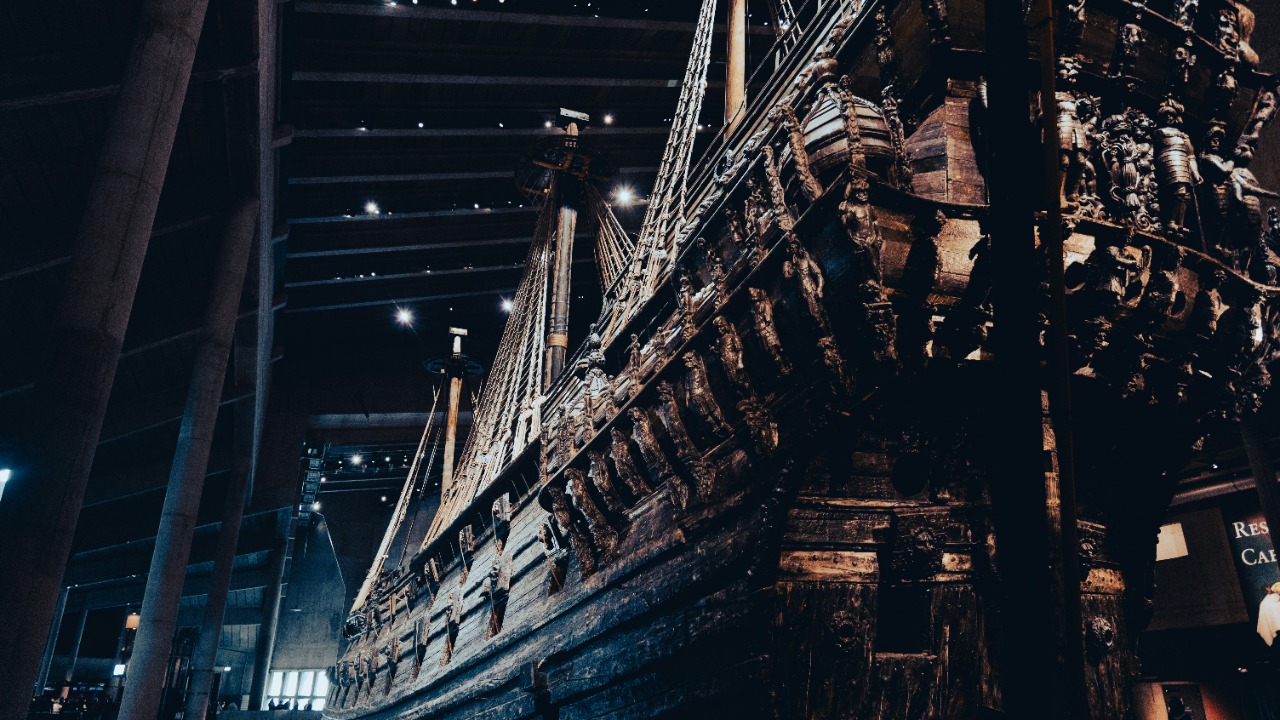

For a brief, blazing moment in the age of sail, a single wooden warship could define what “fast” meant on the open ocean, turning raw timber and canvas into a kind of national calling card. The story of the warship that once held the speed crown is really a story about how far designers were willing to push wood, rope and human nerve before iron and steam rewrote the rules. I trace that arc here, from the design table to the gun deck, to understand how a wooden hull could outrun its rivals and why that mattered so much to the navies that built it.
The race to build the fastest wooden warship
Naval speed in the wooden era was never just about bragging rights, it was a strategic asset that could decide whether a fleet caught an enemy, escaped a trap or delivered vital cargo in time. When shipyards competed to build the swiftest warship, they were really competing to control information and initiative at sea, since the faster vessel could choose when to fight and when to vanish over the horizon. I see that competition as the backbone of the “speed crown” idea, a constantly shifting title that moved from one hull to another as designers refined every plank and sail.
What made a wooden warship fast was a blend of hull form, sail plan and weight distribution, all tuned to squeeze the most out of the wind without tearing the ship apart. Naval architects experimented with longer, finer hulls that cut through the water instead of pushing it aside, and they paired those shapes with towering rigs that carried more canvas than earlier generations thought practical. The process was iterative and empirical, closer to the painstaking compilation of a dense technical reference like a maritime design dictionary than to a single eureka moment, and each new “fastest” ship emerged from that slow accumulation of measurements, trials and hard-won experience.
How navies measured “fast” before steam
Before propellers and standardized engine tests, speed at sea was a slippery concept, shaped as much by weather and seamanship as by the lines of the hull. Navies relied on timed runs over known distances, log readings and comparative trials between sister ships to decide which vessel truly deserved to be called the quickest. In practice, that meant the speed crown was often awarded on the basis of repeated performance in varied conditions, not a single record-breaking dash, because commanders knew that a ship that excelled only on paper or in perfect winds was of limited use in war.
Those measurements were crude by modern standards, but they were systematic enough to guide design choices and deployment. Officers recorded speeds under different sail configurations, sea states and cargo loads, then compared those figures across squadrons to identify standout performers. The resulting data sets, while scattered in logbooks rather than centralized databases, functioned much like a specialized vocabulary list for naval performance, a curated body of terms and numbers that, in a different context, might resemble a compact technical corpus such as a machine learning token vocabulary. By treating speed as something that could be observed, cataloged and debated, navies turned subjective impressions into a competitive metric.
Design tricks that pushed wooden hulls to their limits
When I look at the fastest wooden warships, what stands out is how aggressively their designers stretched the material limits of timber construction. Longer keels and finer bows reduced drag, but they also increased structural stress, forcing builders to rethink internal bracing and the way planks were fastened to the frame. The most successful designs balanced that tension, creating hulls that were light enough to accelerate quickly yet strong enough to survive heavy seas and the recoil of broadside guns.
Above the waterline, sail plans became more ambitious as shipwrights chased every knot of speed. Taller masts and broader yards carried additional sails, from towering royals to studding sails that could be set in fair weather to widen the ship’s wind-catching surface. That extra canvas translated directly into speed when handled well, but it also demanded larger, more skilled crews who could reef and trim quickly before a sudden squall turned advantage into disaster. The warship that held the speed crown at any given moment was usually the one whose design managed to integrate these innovations without tipping into fragility or unmanageable complexity.
Speed as a weapon, not just a statistic
Speed on a wooden warship was not an abstract number, it was a tactical tool that shaped every engagement. A faster ship could choose to fight only on favorable terms, closing to deliver a raking broadside or staying just outside an opponent’s effective range while still harassing with long guns. In convoy duty, the swiftest escorts could sprint to investigate distant sails, intercept raiders or relay signals, turning raw speed into a multiplier for the entire formation’s effectiveness.
In commerce raiding and blockade running, the value of speed was even more stark. A warship that could outrun most pursuers could operate deep in enemy waters, striking at merchant shipping and then vanishing before heavier ships of the line could respond. Conversely, a fast blockader could maintain a tighter cordon around an enemy port, confident that any attempt to slip out would be met by a vessel capable of giving chase. The ship that wore the informal crown of “fastest” in its era often became the preferred choice for these high-risk, high-reward missions, where a single knot of extra speed might mean the difference between glory and capture.
The human factor: crews that made fast ships faster
Even the most advanced wooden hull was only as quick as the crew that sailed it, and the navies that prized speed invested heavily in training and discipline. Sail handling was a complex choreography, with dozens or hundreds of sailors hauling lines, trimming sheets and reefing canvas in a sequence that had to be both precise and rapid. A well-drilled crew could change tack or adjust to a wind shift in moments, keeping their ship in the optimal point of sail and squeezing out incremental gains that added up over a long chase.
Command decisions mattered just as much as muscle. Captains who understood the nuances of their ship’s behavior in different conditions could choose routes and sail configurations that played to its strengths, avoiding points of sail where the hull form or rigging was less efficient. Over time, the fastest warships developed reputations not only for their design but for the particular officers and crews associated with them, a reminder that the speed crown was as much a human achievement as a technical one. When a wooden warship became famous for outrunning all comers, it was usually because its people had learned to live at the edge of what its structure and sails could safely deliver.
When the speed crown started to slip from wood to iron
The dominance of wooden warships in the race for speed did not end abruptly, but the writing was on the wall once iron hulls and steam propulsion matured. Early steamships were not always faster in absolute terms, especially over long distances where coal supply limited sustained high speeds, yet they offered something wooden sail warships could not: reliability. A steam-powered ironclad could maintain a steady pace regardless of wind direction, undermining one of the key tactical advantages that fast wooden ships had enjoyed.
Hybrid vessels, with both full sail rigs and auxiliary steam engines, marked the transitional phase in which wooden speed champions still had a role but increasingly shared the stage with iron and steel. As navies shifted budgets and attention toward armored, engine-driven designs, the incentive to push wooden hulls to new speed records faded. The warship that once held the speed crown in the age of timber and canvas became a benchmark rather than a blueprint, a reminder of what could be achieved with pre-industrial materials just as the industrial age was about to redefine naval power.
Legacy of the fastest wooden warships in modern naval thinking
Although no modern navy relies on wooden warships, the lessons from those speed-obsessed designs still echo in contemporary naval architecture. The trade-offs between speed, endurance, protection and firepower that designers wrestled with in the age of sail are essentially the same questions that shape today’s destroyers, frigates and patrol craft. A fast hull is still a lighter, more finely tuned structure that must be carefully balanced against the need for sensors, weapons and fuel, even if the materials have shifted from oak and pine to steel and composites.
There is also a cultural legacy in the way navies talk about and celebrate their fastest ships. Just as earlier generations swapped stories about legendary wooden hulls that could outrun any foe, modern sailors trade tales of high-speed trials and record-breaking transits. The idea of a “speed crown” persists as a kind of informal honor, a way of recognizing the ship that best captures the restless, competitive spirit of life at sea. In that sense, the wooden warship that once held the title is less a relic than a starting point for an ongoing conversation about what it means to be fast, agile and decisive on the world’s oceans.
Why the myth of the fastest wooden warship still resonates
Stories about the fastest wooden warship endure because they sit at the intersection of engineering, adventure and national identity. A ship that could outpace its rivals was more than a tool of war, it was a floating argument about a country’s ingenuity and ambition, visible to every foreign port it entered. When I look at how those stories are retold in books, museums and popular culture, I see a persistent fascination with the idea that human skill and natural materials, properly combined, can still produce something extraordinary.
That resonance also reflects a broader nostalgia for an era when the boundaries of technology felt tangible and comprehensible. In the age of sail, anyone standing on a dock could see the elements that made a ship fast, from the rake of its masts to the sharpness of its bow, and could imagine how those features behaved in a storm. The warship that once held the speed crown has become a symbol of that visibility, a reminder that even as modern naval technology grows more opaque and digital, the core challenge remains the same: to move through a hostile environment as quickly, safely and purposefully as possible.
More from MorningOverview