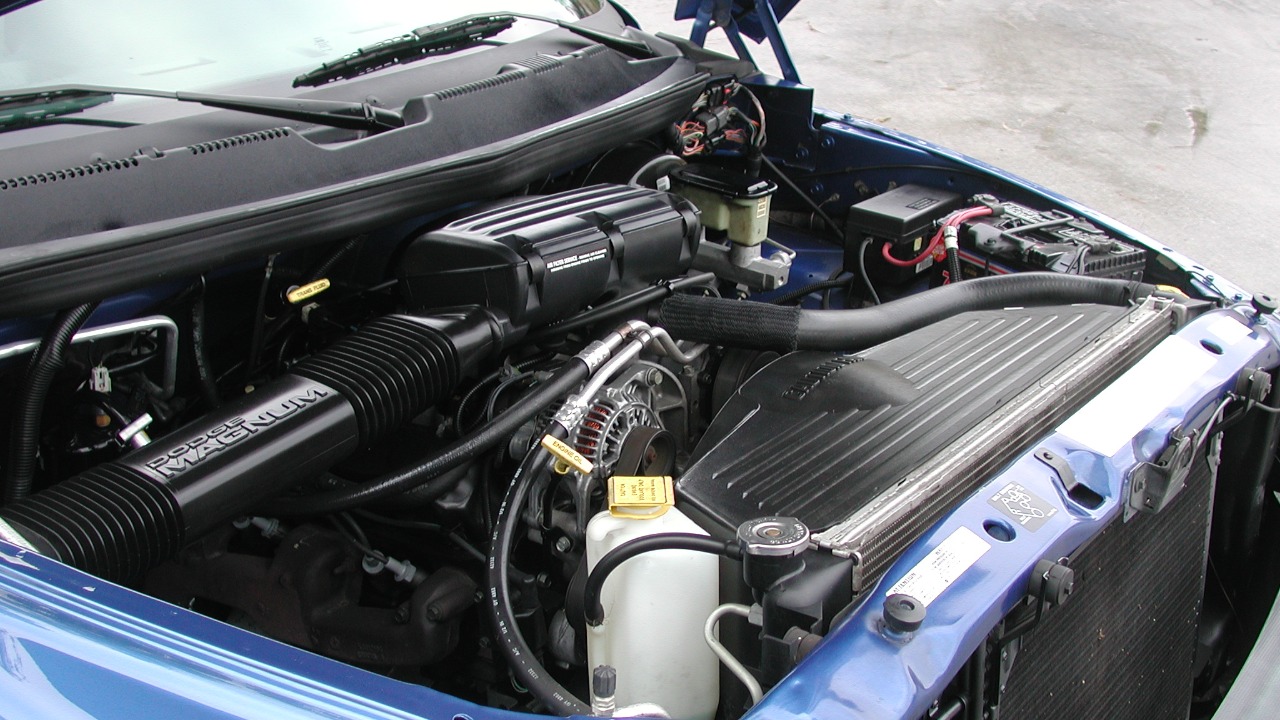

Ram’s twin-turbo Hurricane inline-six is replacing the long-running Hemi V8 in key truck and SUV models, and that shift has owners scrutinizing every early report of problems and praise. I set out to track what real drivers are saying about reliability, drivability, and day-to-day ownership, then weigh those experiences against what the company itself promises for this new engine family. The result is a picture that is more nuanced than the internet’s loudest critics or boosters suggest, with clear patterns in both the concerns and the compliments.
What the Hurricane is, and why Ram is betting on it
Ram’s Hurricane is a turbocharged inline-six designed to deliver V8-like power with better efficiency, and it now sits at the center of Stellantis’ truck strategy. The engine is marketed in multiple outputs, with the high-output versions aimed at replacing traditional big-displacement V8s in full-size pickups and SUVs, and the standard-output tune targeted at everyday towing and commuting. In dealer materials, Ram emphasizes that the Hurricane uses modern turbocharging, direct injection, and a compact packaging layout to deliver strong torque while meeting stricter emissions and fuel-economy targets, positioning it as a forward-looking alternative to the aging Hemi architecture that defined Ram’s image for years, a pitch that is laid out in detail in a dealer overview of the Hurricane engine.
That technical promise is why the engine’s reliability record matters so much to buyers who grew up trusting naturally aspirated V8s. Ram is asking traditional truck owners to accept more complexity in exchange for efficiency and power, and that trade-off only works if the engine proves durable in real-world use. Owners are already comparing the Hurricane’s early behavior to the long track record of the 5.7-liter Hemi, and they are doing it in public, in forums, Facebook groups, and YouTube reviews where every rattle, leak, or flawless road trip becomes part of the emerging narrative about whether this new inline-six can be trusted for the long haul.
Early adopters: first miles, first impressions
Drivers who have put the first few thousand miles on Hurricane-powered Rams tend to focus on how different the truck feels compared with the Hemi, and those impressions shape their confidence in the engine’s long-term prospects. Some early adopters describe the power delivery as smoother and more responsive, especially in the midrange where the turbos are fully spooled, and they note that the truck feels quicker in everyday passing and highway merging than the outgoing V8. In a detailed owner discussion about how people are liking the Hurricane motor, several posters walk through their initial driving impressions, from acceleration to perceived refinement, as they evaluate whether the new engine feels like an upgrade or a compromise compared with their previous trucks, a debate that plays out in a thread on how everyone is liking the Hurricane.
Those first impressions are not universally glowing, and they often hinge on expectations shaped by years of V8 ownership. Some drivers say the engine sounds more mechanical and less “trucky” than a Hemi at idle, and a few note that the turbocharged character takes some getting used to, especially for those who prefer the instant, linear response of a big naturally aspirated engine. Others are watching fuel economy closely, reporting that real-world numbers sometimes fall short of the optimistic window-sticker estimates when the truck is driven hard or used for towing. These early adopters are effectively stress-testing the Hurricane in normal life, and their feedback is setting the tone for how cautious or confident later buyers feel about the engine’s reliability and overall behavior.
Online anxiety: is the Hurricane “as bad as I read online”?
As with any new powertrain, the Hurricane’s reputation is being shaped as much by online anxiety as by actual mechanical failures. Potential buyers scrolling through social media and forums encounter threads that frame the engine as a risky bet, often based on secondhand stories or comparisons to other turbocharged sixes that have had issues in different brands. In one widely shared discussion, a Ram shopper asks bluntly whether the Hurricane is as bad as they have read online, prompting a wave of responses that range from cautious optimism to outright skepticism, with some posters pointing out that many of the loudest complaints come from people who do not yet own the engine, a dynamic that is visible in a Reddit thread asking if the Hurricane engine is as bad as they read online.
What emerges from those conversations is less a catalog of widespread failures and more a reflection of how nervous truck buyers are about complexity and long-term repair costs. Commenters worry about turbo longevity, direct-injection carbon buildup, and the potential price of out-of-warranty repairs on a relatively new design, even when they acknowledge that there are not yet large numbers of catastrophic failures being reported. Others push back, arguing that every new engine faces a wave of online fear before enough real-world data accumulates, and they note that many owners posting actual mileage numbers and trip reports are not seeing the horror stories that some threads imply. The gap between perception and documented issues is wide, and for now, much of the anxiety is speculative rather than rooted in a pattern of confirmed defects.
Owner reports from forums and Facebook groups
Beyond the broad anxiety, owner communities are starting to collect more granular reports about how Hurricane-powered trucks behave in daily use. In a large Ram-focused Facebook group, members trade notes on everything from break-in procedures to oil-change intervals, and they catalog minor quirks like occasional rough cold starts or software-related transmission behavior that may or may not be tied directly to the engine. Some posts describe trouble-free experiences over the first several thousand miles, with owners reporting that the truck pulls strongly, tows confidently, and has not triggered any check-engine lights, while others flag isolated issues that they are monitoring with their dealers, all within the context of a growing thread of Hurricane engine owner comments.
Forum threads add another layer of detail, as mechanically inclined owners share their observations about oil consumption, coolant levels, and any early signs of leaks or component wear. Some posters say they have checked under the hood regularly and found no evidence of fluid loss or unusual smells, which bolsters their confidence that the engine is solidly built. Others mention small issues like sensor glitches or software updates that were handled under warranty, and they debate whether those are teething problems typical of a new platform or red flags for long-term reliability. The tone in these spaces is often more measured than the alarmist posts that circulate widely, with many owners adopting a “wait and see” stance while keeping detailed logs of their trucks’ behavior.
Test drives and first-year ownership of 2025 models
As the Hurricane spreads into more 2025 Ram models, test-drive reports and first-year ownership stories are becoming a key source of information for shoppers who are still on the fence. Drivers who have sampled the engine in new trucks describe strong acceleration and a noticeable difference in how quickly the truck builds speed compared with older V8s, especially when merging or passing on the highway. In one discussion focused on 2025 models, people who have either test driven or purchased a Hurricane-equipped Ram share their impressions of throttle response, cabin noise, and how the engine feels under load, offering early feedback that helps others gauge whether the new powertrain meets their expectations, as seen in a thread where owners ask who has test drove or purchased a 2025 with the Hurricane.
Those early owners also report on how the engine behaves after the novelty wears off, including how it handles daily commuting, stop-and-go traffic, and weekend towing. Some note that the truck feels more eager to downshift and use its powerband, which they attribute to the combination of turbocharging and transmission tuning, while others say they appreciate the quieter cruising behavior at highway speeds. Reliability comments in these early reports are mostly limited to minor issues or the absence of problems, with several owners emphasizing that they have not seen any warning lights or mechanical concerns in the first months of use. That lack of major complaints does not prove long-term durability, but it does suggest that the Hurricane is not immediately plagued by systemic failures in its first wave of 2025 applications.
YouTube reviewers put the Hurricane under the microscope
Video reviewers have become influential voices in shaping perceptions of the Hurricane, since they can show real-time acceleration, towing, and fuel-economy readouts that written posts cannot. Several YouTube channels have posted detailed walkarounds and driving impressions of Hurricane-powered Rams, highlighting how the engine sounds from inside and outside the cabin, how quickly it responds to throttle inputs, and how it behaves when towing trailers or climbing grades. In one review that focuses on real-world driving, the host spends time demonstrating the engine’s torque delivery and commenting on its smoothness and noise levels, giving viewers a sense of how the Hurricane feels in everyday use as they watch a Hurricane-equipped Ram on the road.
Other reviewers dig into specific questions that prospective buyers care about, such as whether the engine exhibits turbo lag, how it manages heat under sustained load, and what kind of fuel economy it returns when driven at highway speeds with and without a trailer. One video focuses on towing performance, showing the truck pulling a significant load while the host monitors transmission temperatures and boost levels, offering commentary on how confidently the engine handles the strain in a towing-focused Hurricane test. Another reviewer spends time on a mix of city and highway routes, resetting the trip computer and reporting the observed fuel economy while discussing how the engine’s character compares with the outgoing V8, as seen in a real-world fuel economy drive. These videos do not yet reveal a pattern of mechanical failures, but they do give potential buyers a clearer sense of how the engine behaves under different conditions, which in turn informs their expectations about reliability.
Performance, efficiency, and the reliability trade-off
One of the central questions around the Hurricane is whether its performance and efficiency gains justify the added complexity that can worry long-term owners. On paper and in many real-world tests, the engine delivers strong acceleration and competitive towing capability, with reviewers and owners alike noting that it feels more muscular in the midrange than the Hemi it replaces. Some drivers report that the truck pulls more confidently up grades and passes with less effort, which they attribute to the turbocharged torque curve that keeps the engine in its sweet spot more often. A YouTube review that highlights the engine’s acceleration and responsiveness underscores this point, as the host repeatedly comments on how quickly the truck builds speed during a Hurricane road test.
Fuel economy is more mixed, with some owners seeing modest gains over their previous V8 trucks and others reporting similar or slightly worse numbers depending on driving style and load. Turbocharged engines are sensitive to how they are driven, and heavy throttle use or frequent towing can quickly erode any efficiency advantage, which is why some drivers say their real-world results do not match the optimistic expectations they had when switching from a Hemi. From a reliability standpoint, the key trade-off is that the Hurricane’s turbos, direct injection, and higher specific output introduce more components that must hold up over time, and owners are keenly aware that long-term durability will depend on how well those systems handle heat, contamination, and wear. For now, the available reports suggest that the engine delivers on its performance promises, while the jury is still out on whether it can maintain that performance without expensive repairs deep into its service life.
Comparing the Hurricane to the outgoing Hemi V8
For many Ram buyers, the Hurricane is not being judged in a vacuum, it is being measured against the Hemi V8 that has powered their trucks for years. The Hemi’s reputation is not spotless, but it is familiar, and owners know what to expect in terms of common issues, maintenance costs, and typical lifespans. By contrast, the Hurricane is still building its track record, which makes some drivers hesitant to give up a known quantity for a new design that relies on turbocharging and higher specific output to match or exceed the Hemi’s performance. In online discussions, owners often frame their decision as a choice between the proven simplicity of a naturally aspirated V8 and the modern efficiency of a turbocharged six, and they weigh that choice carefully when considering a new truck purchase.
Video reviewers and forum posters who have driven both engines back to back often describe the Hurricane as quicker and more refined in certain situations, while acknowledging that it lacks the traditional V8 sound and character that some buyers value. One YouTube review that compares the feel of the new engine to previous Ram powertrains notes that the Hurricane delivers strong acceleration and a quieter cabin at cruising speeds, which the host presents as a clear evolution in how the truck drives during a Hurricane driving review. At the same time, long-time Ram owners in forums point out that the Hemi’s long production run has allowed most of its major issues to be identified and addressed, while the Hurricane is still in its early years, leaving open questions about how it will age past 100,000 miles. That comparison shapes the reliability debate, since buyers are not just asking whether the Hurricane is good, but whether it is good enough to justify leaving the Hemi behind.
What we can and cannot say about long-term reliability
With the Hurricane still relatively new in Ram’s lineup, any sweeping claims about long-term reliability would be premature and, based on the available sources, unverified. The owner reports, forum threads, Facebook posts, and YouTube reviews that exist today mostly cover the first months or, at most, the first few years of use, which is not enough time to reveal the full spectrum of potential issues that might emerge as the engines accumulate high mileage. So far, there is no clear evidence in these sources of a systemic defect or widespread pattern of catastrophic failures, and many owners report trouble-free experiences over their initial miles. At the same time, the concerns about turbo longevity, direct-injection maintenance, and out-of-warranty repair costs remain largely hypothetical, since there is not yet a large pool of high-mileage Hurricane trucks to study.
What can be said with confidence is that the Hurricane is delivering the performance and drivability that Ram promised, and that early owners are not reporting a flood of serious mechanical problems in the sources reviewed here. The online anxiety around the engine often outpaces the documented issues, fueled by understandable caution from buyers who rely on their trucks for work, towing, and long-distance travel. For now, the most responsible stance is to recognize that the Hurricane appears to be functioning well in its early years, while acknowledging that its ultimate reliability record will only be written as more trucks rack up significant mileage and as independent data on long-term failures and repair costs becomes available. Until then, prospective buyers will continue to lean on the growing body of owner reports, from detailed forum logs to candid Facebook posts, to decide whether they are comfortable betting on Ram’s new turbocharged future.
More from MorningOverview