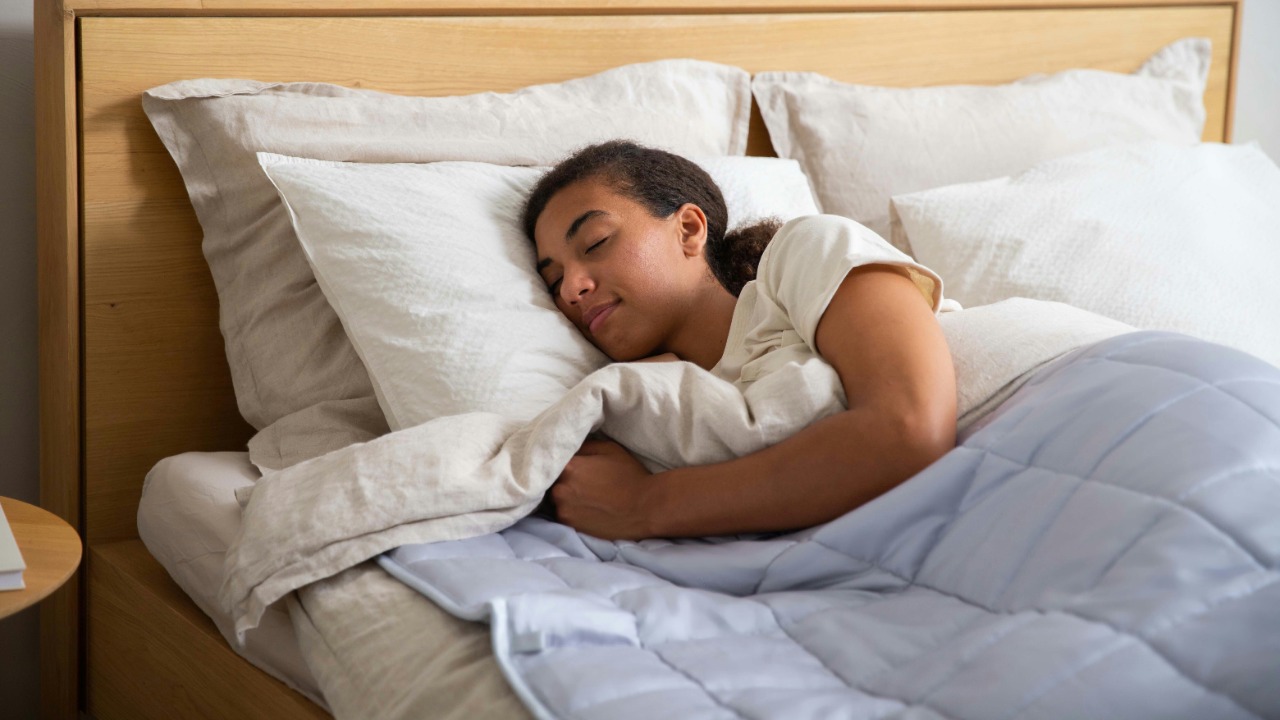

For most people alive today, a “good night’s sleep” means roughly eight uninterrupted hours in a dark room, followed by a single morning wake-up. Yet historical evidence suggests that this pattern is a relatively recent invention, not a timeless biological rule. Long before alarm clocks and late-night screens, many communities slept in two distinct blocks, with a wakeful stretch in the middle of the night that was considered entirely normal.
As researchers revisit diaries, court records, medical texts, and modern sleep experiments, a more complicated picture of human rest is emerging. I find that the story of first and second sleep is not just a quirky historical footnote, but a window into how industrial schedules, artificial light, and cultural expectations reshaped something as intimate as the way we close our eyes.
How historians uncovered the “first” and “second” sleep
The idea that people once spoke casually of a “first sleep” and “second sleep” did not come from a lab, but from the archives. Social historians combing through early modern letters, legal testimonies, and literary works kept encountering phrases like “after my first sleep” or “toward the end of our second sleep,” used with no explanation, as if every reader would understand. These references appeared in sources from Britain, continental Europe, and colonial North America, suggesting that segmented nights were woven into everyday life rather than confined to a single village or sect, a pattern that detailed archival work has traced across centuries of preindustrial society in Europe and beyond, as described in one widely cited historical survey.
What convinced many scholars that this was more than a linguistic quirk was the consistency of the pattern. Documents described people waking naturally around midnight, praying, talking, smoking, having sex, or even visiting neighbors before returning to bed for a second bout of sleep. Medical texts of the time sometimes advised patients to use the interval between sleeps for reflection or quiet activity, treating it as a predictable part of the night. When I look at this body of evidence together, it reads less like scattered anecdotes and more like a shared cultural script for how nights were supposed to unfold before gas lamps and factory whistles rewrote the timetable.
What segmented sleep actually looked like
Reconstructing a typical night in a preindustrial household, historians and sleep scientists describe a rhythm that feels surprisingly structured. People often went to bed not long after dusk, especially in winter, when evenings were long and artificial light was scarce or expensive. After several hours, they would drift into a wakeful period that might last an hour or more, then return to bed for a second stretch of sleep that carried them into the early morning. This pattern of two consolidated blocks, separated by a calm interval, is what researchers now call biphasic or segmented sleep, and it aligns with descriptions of “first sleep” and “second sleep” in early modern sources that have been analyzed in depth by scholars of the human sleep cycle.
During that middle-of-the-night window, people did not behave like insomniacs anxiously checking the clock. Accounts describe them stoking the fire, tending to animals, brewing ale, or quietly talking in bed. Religious manuals recommended specific prayers for the time between sleeps, while some court records mention crimes or encounters that took place during this liminal period. The wakefulness was expected and often purposeful, not a sign that something had gone wrong. When I compare these narratives with modern descriptions of “sleep maintenance insomnia,” the contrast is striking: what many of us now experience as a problem was once a built-in feature of the night.
Biology behind first and second sleep
Historical documents alone cannot prove that segmented sleep is hardwired, but modern experiments suggest that our bodies are capable of falling into this pattern when freed from artificial light and rigid schedules. In one influential laboratory study, volunteers were exposed to long nights of darkness over several weeks, with no clocks or external time cues. After an initial adjustment period, many participants naturally began to sleep in two chunks, separated by a quiet, wakeful interval in the middle of the night, a pattern that has been cited in reviews of human circadian rhythms as evidence that consolidated eight-hour sleep is not the only biologically viable option.
Physiologically, this makes sense. The brain’s internal clock, anchored in the suprachiasmatic nucleus, responds strongly to light and darkness, and in the absence of bright evening light, melatonin levels rise earlier and stay elevated for longer. When nights stretch to 14 hours of darkness, as they often did in winter before electric lighting, it is plausible that the brain would organize sleep into two stable bouts rather than one unbroken block. The mid-night wakefulness in these experiments was not marked by grogginess or distress; instead, subjects often described a calm, reflective state that some researchers liken to a meditative or hypnagogic phase. To me, that suggests that the historical “watch” between sleeps may have felt less like insomnia and more like a built-in pause for thought.
How industrialization and electric light rewired the night
If segmented sleep was once so common, the obvious question is why it faded. The answer, according to historians and sleep researchers, lies in the collision of industrial work schedules and artificial light. As cities grew and factories multiplied, employers demanded punctual, early-morning labor, and workers were expected to arrive rested and ready at fixed times. That pressure encouraged people to compress their rest into a single block that fit neatly between the end of the workday and the start of the next shift, a shift that detailed historical analyses link to the rise of industrial capitalism and the spread of artificial illumination.
Electric lighting then finished what factory whistles began. Gas lamps and, later, incandescent bulbs flooded homes and streets with light that extended waking hours deep into the evening. Instead of going to bed soon after sunset, people stayed up to read, socialize, or work, effectively squeezing the night. With fewer hours of darkness, there was less room for a leisurely two-part sleep. Cultural norms followed suit: medical advice, popular magazines, and eventually workplace wellness programs began to promote a single, continuous night’s rest as the ideal. Over time, the language of “first” and “second” sleep disappeared from everyday speech, replaced by the expectation that a healthy adult should close their eyes once and not stir until morning.
The modern myth of the perfect eight-hour block
Today, the eight-hour benchmark is so entrenched that many people treat it as a biological law rather than a social convention. Sleep experts often recommend seven to nine hours for adults, but public conversation tends to flatten that range into a single, magic number. This has created a powerful narrative: if you are not sleeping eight uninterrupted hours at night, you are failing at self-care. Yet when I look at the historical record and modern sleep science together, that narrative looks more like a cultural script than a universal truth, a point that some clinicians and educators now highlight when they describe the eight-hour sleep myth.
The problem is not that eight hours of continuous sleep is bad; for many people, it works well. The problem is treating it as the only legitimate pattern. People who wake in the middle of the night often panic, assuming they are broken or doomed to chronic fatigue, when their bodies may simply be expressing a rhythm that was once common. That anxiety can itself worsen sleep, creating a feedback loop of worry and wakefulness. By framing segmented or flexible sleep as abnormal, modern culture may be pathologizing a range of patterns that human biology can comfortably support, especially when work and caregiving demands make a single long block of rest unrealistic.
What we know about biphasic and polyphasic sleep today
Contemporary sleep research uses terms like monophasic, biphasic, and polyphasic to describe how people divide their rest across a 24-hour period. Monophasic refers to one main sleep episode, biphasic to two, and polyphasic to three or more. In practice, many cultures still embrace biphasic patterns, such as a shorter night’s sleep paired with a midday siesta, without treating them as pathological. Clinical and educational resources now explain that these patterns can be compatible with good health, as long as total sleep time and timing align with an individual’s circadian rhythm, a point underscored in modern overviews of biphasic sleep.
At the same time, not all segmented schedules are created equal. Extreme polyphasic regimens, popularized in some productivity circles, often involve multiple short naps and very little total sleep, which can impair cognition, mood, and physical health. The historical first-and-second-sleep pattern, by contrast, still delivered a substantial total duration of rest, just divided into two chunks. When I compare these approaches, it becomes clear that the key variables are not just how many times you sleep, but how long, when, and in what light environment. That nuance is often lost in online debates that pit “traditional” segmented sleep against “modern” consolidated sleep as if one must be universally superior.
Why the middle-of-the-night wake-up feels so alarming now
One of the most striking differences between past and present is how people interpret waking in the middle of the night. In early modern accounts, the interval between sleeps is treated as a normal, even useful, part of the night. Today, many people who wake at 2 a.m. immediately reach for their phones, worry about the next day’s tasks, and conclude that something is wrong with their brains. That reaction is not purely psychological; it is shaped by decades of messaging that equates uninterrupted sleep with health and productivity, a framing that modern commentators have begun to challenge in conversations about countering rigid sleep schedules.
When I talk to clinicians who treat insomnia, they often describe a vicious cycle: a person wakes briefly, becomes anxious about being awake, and in doing so activates the very stress systems that make it harder to fall back asleep. In a culture that expects a single, flawless block of rest, any deviation can feel like failure. Reframing a short period of wakefulness as potentially normal, especially if it is calm and not associated with distress, can sometimes reduce that anxiety. That does not mean ignoring serious sleep disorders, but it does suggest that our expectations may be amplifying problems that a more flexible mindset could soften.
How experts interpret segmented sleep in the 21st century
Sleep specialists today are careful not to romanticize the past, but many acknowledge that human sleep is more adaptable than the eight-hour ideal suggests. Some clinicians argue that consolidated night sleep is largely a modern adaptation to industrial schedules and electric light, rather than a fixed biological mandate. They point to historical records of first and second sleep, modern experiments in extended darkness, and cross-cultural examples of siesta cultures as evidence that our species can thrive under multiple configurations of rest, a perspective that is laid out in detail by practitioners who describe consolidated sleep as a modern adaptation.
At the same time, experts emphasize that individual needs vary. Some people function best with a single, continuous night’s sleep, while others feel more alert with a nap or a naturally segmented pattern. Age, genetics, work demands, and health conditions all shape what “good sleep” looks like. Rather than prescribing a one-size-fits-all schedule, many clinicians now focus on total sleep time, regularity, and alignment with circadian rhythms. From my vantage point, the most responsible message is not that everyone should return to first and second sleep, but that we should be cautious about turning one historically contingent pattern into a universal rule.
What history and science mean for your own sleep
For anyone lying awake at night, the story of first and second sleep offers both context and caution. It suggests that waking briefly in the middle of the night is not inherently abnormal and that human sleep has long been shaped by culture, technology, and work. At the same time, modern life is not a 17th century village. Electric light, shift work, and digital devices expose us to bright screens late into the evening, suppressing melatonin and pushing sleep later, a pattern that contemporary reporting on sleep history and wellness links to widespread complaints of fatigue and insomnia.
In practical terms, that means paying attention to both biology and context. If you wake calmly for a short period at night and fall back asleep without distress, you may not need to pathologize that pattern. If, however, you struggle to get enough total sleep, feel unrefreshed, or face safety-critical tasks like driving or operating machinery, it is worth seeking professional guidance. Historical insight can broaden our sense of what is possible, but it does not replace medical evaluation. The most useful lesson I draw from the story of first and second sleep is that our nights are not fixed by nature alone; they are negotiated between bodies, technologies, and expectations, and we have more room to renegotiate than the eight-hour myth suggests.
Rethinking “normal” in a culture of sleep anxiety
As sleep has become a wellness obsession, the gap between idealized rest and lived experience has widened. Apps track every toss and turn, smartwatches score our nights, and social media is full of advice on optimizing sleep for productivity. Against that backdrop, learning that our ancestors once slept in two shifts can feel oddly liberating. It reminds me that “normal” is not a fixed point but a moving target, shaped by work patterns, lighting, and cultural stories about what a good night should look like, a theme that also surfaces in critical essays on the disappearance of segmented sleep.
None of this means abandoning efforts to improve sleep quality. It does, however, invite a more forgiving standard. Instead of chasing a perfect, uninterrupted eight hours, it may be more realistic to aim for enough total sleep, at roughly consistent times, in a dark and quiet environment, while accepting that brief awakenings or occasional schedule shifts are part of being human. When I place the historical evidence alongside modern science, the message that emerges is less about returning to a lost golden age of slumber and more about loosening the grip of a rigid ideal that never fit everyone in the first place.
Where the research goes next
Despite the growing interest in historical sleep patterns, many questions remain open. Researchers are still debating how widespread segmented sleep was outside Europe, how it varied by class and season, and how it interacted with factors like diet, disease, and childbirth. Modern studies are also limited by the difficulty of recreating preindustrial conditions in a lab, especially over long periods. Some scientists are now calling for more fieldwork in communities with minimal artificial light and different work structures, to see how sleep organizes itself when industrial schedules and bright evenings are not the default, a direction that aligns with broader efforts to map human sleep across cultures in contemporary clinical discussions.
For now, the convergence of archival research and circadian biology has already shifted how many experts talk about sleep. Instead of treating the eight-hour, uninterrupted night as the unquestioned standard, they increasingly present it as one workable pattern among several. As more data accumulate, I expect the conversation to move further away from rigid prescriptions and toward a more nuanced understanding of how different bodies, in different environments, can get the rest they need. In that sense, revisiting first and second sleep is not about nostalgia; it is about expanding the range of what we consider healthy in a world where sleep has become both a personal struggle and a public health concern.
Living with a flexible sleep story
Ultimately, the rediscovery of segmented sleep gives us a richer story to tell ourselves when we turn out the lights. Instead of a single, fragile ideal that shatters with every 3 a.m. awakening, we can draw on a longer history in which nights were more varied and wakefulness was not always a crisis. That perspective does not erase the challenges of insomnia, shift work, or caregiving, but it can soften the shame and anxiety that often accompany imperfect sleep in a culture that prizes constant optimization, a point echoed in reflective pieces that question the rigidity of modern sleep expectations.
When I think about my own nights, I find it helpful to remember that human sleep has always been a negotiation between biology and circumstance. The eight-hour block is one outcome of that negotiation, not its endpoint. Knowing that people once moved comfortably between first and second sleep does not mean I should copy their schedule, but it does give me permission to treat my own patterns with a little more curiosity and a little less fear. In a world where so much feels out of our control, that shift in mindset may be one of the most practical gifts history has to offer.
More from MorningOverview