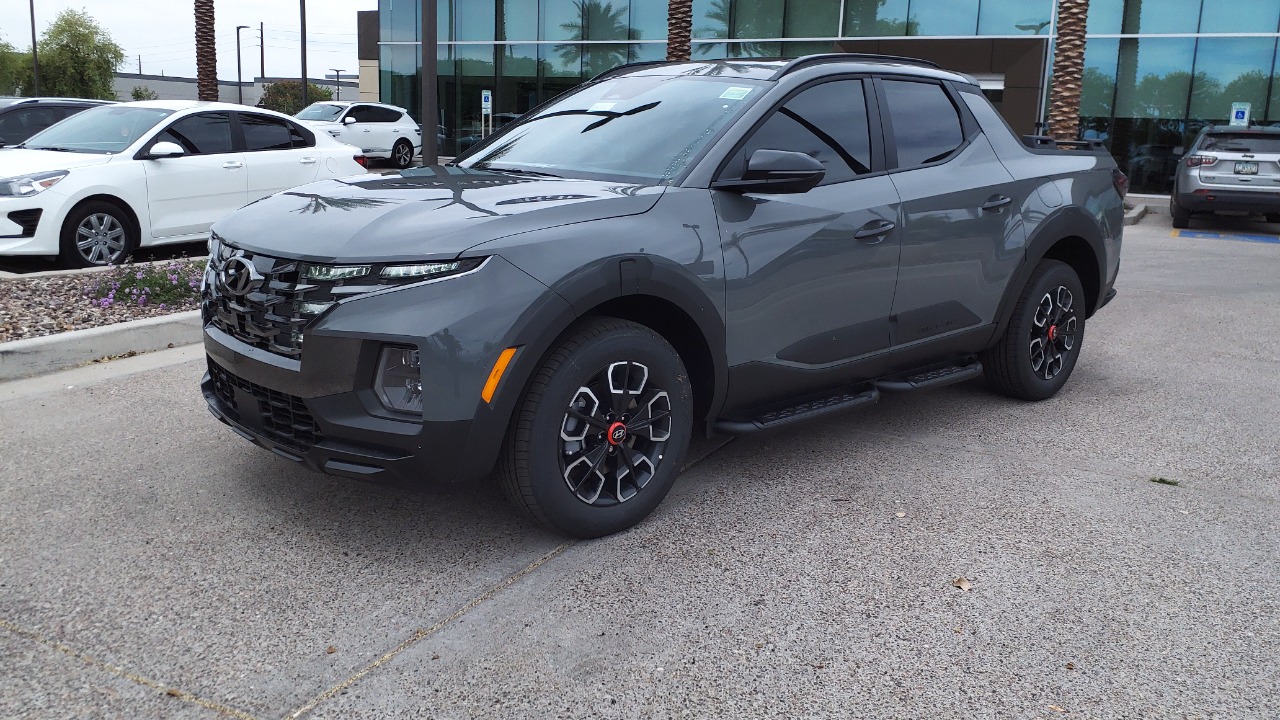

Small pickups have quietly shifted from niche curiosities to some of the most closely watched vehicles in American showrooms, reshaping expectations for what a truck can be. Instead of chasing ever-bigger towing numbers, buyers are suddenly rewarding compact models that prioritize price, practicality, and everyday comfort over brute force. That pivot is forcing automakers, dealers, and even regulators to rethink a segment that many assumed was locked into a “bigger is better” trajectory.
What looks like an overnight sensation is really the convergence of several long‑building pressures: rising vehicle prices, urban congestion, and a new generation of buyers who want truck utility without the bulk. As I trace how compact pickups went from afterthought to trendsetter, the pattern that emerges is less about nostalgia for “small trucks” and more about a broader shift in how Americans balance capability, cost, and flexibility in a volatile economy.
From full-size dominance to compact surprise
For years, the U.S. truck market was defined by full‑size behemoths that grew longer, taller, and more expensive with every redesign, while smaller models were treated as entry‑level side projects. That hierarchy is now under pressure as compact pickups post some of the fastest growth in the segment, pulling in buyers who previously would have settled for a crossover or a used half‑ton. Industry data on truck sales shows that while full‑size models still account for the bulk of volume, compact pickups are rising from a small base at a pace that has caught even some automakers off guard, a trend reflected in reporting on how compact pickups are rising fast relative to their larger siblings.
What makes this shift so striking is that it runs counter to decades of product planning that assumed Americans would always trade up in size as their incomes grew. Instead, many buyers are trading down in footprint while still paying for well‑equipped trims, effectively redefining what “top of the line” looks like in a truck. Analysts who once focused almost exclusively on the Ford F‑150, Chevrolet Silverado, and Ram 1500 now track compact nameplates as leading indicators of changing tastes, because their growth hints at a ceiling for how big and expensive mainstream trucks can get before consumers push back.
Why buyers suddenly want smaller trucks
The appeal of compact pickups starts with simple math: they are generally cheaper to buy, easier to park, and less punishing at the pump than full‑size trucks, while still offering an open bed for weekend projects and outdoor gear. For younger buyers and urban households, that combination solves a problem that traditional sedans and crossovers never quite addressed, namely how to carry messy or bulky items without committing to a massive vehicle. In interviews and sales data, many first‑time truck owners describe compact pickups as a “just enough” solution that fits their real lives instead of the aspirational towing scenarios that dominate big‑truck advertising.
There is also a cultural shift at work, as consumers grow more comfortable mixing utility with lifestyle branding rather than treating trucks as purely work tools. Social media walk‑throughs and long‑form reviews on platforms like YouTube have turned compact pickups into characters in their own right, with creators dissecting bed storage tricks, tailgate party setups, and camping builds in meticulous detail. One widely viewed breakdown of small‑truck practicality, for example, uses a step‑by‑step video format to show how a compact bed can be configured for daily commuting and weekend adventures, a style of coverage that mirrors the granular demonstrations seen in videos such as this detailed feature review and helps normalize the idea that a smaller truck can still feel aspirational.
How automakers misread the compact opportunity
Automakers did not exactly rush into this space. For much of the past decade, product planners assumed that the profit margins on full‑size trucks were too good to risk cannibalization by cheaper, smaller models. That caution left a gap between car‑based crossovers and traditional body‑on‑frame pickups, a gap that only a few brands were willing to test with unproven compact designs. When those experiments began to gain traction, it exposed how much pent‑up demand there was for a truck that could slip into a city parking garage and still haul a load of lumber on Saturday.
Part of the miscalculation came from relying on historical data that treated compact trucks as low‑margin fleet vehicles rather than as potential lifestyle flagships. Internal planning documents and industry musings show how executives often framed small pickups as a defensive play instead of a growth engine, focusing on cost containment rather than innovation. That mindset is captured in analytical essays that dissect how companies sometimes cling to legacy assumptions about what customers want, even as the market shifts under their feet, a pattern explored in strategic reflections like these musings on changing demand that describe how organizations can be slow to recognize new niches until a competitor proves they are viable.
Price pressure, inflation, and the search for value
Rising vehicle prices have turned the truck lot into a high‑stakes budgeting exercise, pushing many shoppers to reconsider how much capability they truly need. As average transaction prices for full‑size pickups climbed into luxury‑car territory, compact trucks emerged as a way to retain the image and utility of a truck without taking on a mortgage‑sized payment. Buyers who might once have stretched for a mid‑trim half‑ton are now opting for a well‑equipped compact instead, trading some towing capacity for a monthly bill that feels more manageable in an era of higher interest rates and stubborn inflation.
That search for value is not just about sticker price, it is about optionality in a volatile world. Consumers are increasingly wary of locking themselves into a single, highly specialized vehicle when their work, housing, or family needs could change quickly. Business thinkers have described this instinct as a desire to preserve flexibility under uncertainty, a theme explored in frameworks that encourage people to favor choices that keep future paths open rather than closed. The logic behind choosing a smaller, more adaptable truck over a maxed‑out heavy‑duty model echoes the arguments in books on how to survive and thrive in a volatile world, where the emphasis falls on maintaining options instead of betting everything on a single, rigid configuration.
Urban living, parking realities, and the footprint factor
Beyond price, the physical footprint of a vehicle has become a decisive factor for many buyers who live in dense neighborhoods or older suburbs. Full‑size pickups can be a tight squeeze in city garages, narrow driveways, and crowded supermarket lots, turning everyday errands into a stress test. Compact pickups, by contrast, slot into spaces that feel familiar to drivers coming out of compact SUVs, while still offering the open bed that makes a truck so useful. That balance of maneuverability and utility is particularly attractive in regions where street parking is scarce and curb cuts are short.
Urban planners and transportation researchers have long warned that vehicle bloat can strain infrastructure that was designed for smaller cars, from parking stall dimensions to turning radii at intersections. As cities revisit their design standards, the friction between oversized vehicles and tight urban grids has become more visible, reinforcing the appeal of trucks that respect those constraints. Technical glossaries and engineering references that catalog vehicle dimensions and design parameters, such as the detailed datasets compiled in resources like this engineering dictionary, underscore how much thought goes into matching vehicle size to the built environment, and why a modestly scaled pickup can feel like a better fit for daily life than a towering crew‑cab.
Design language: from workhorse to lifestyle tool
Compact pickups are also benefiting from a shift in design language that treats them less as stripped‑down workhorses and more as multipurpose lifestyle tools. Instead of bare‑bones interiors and vinyl seats, many of the newest small trucks offer carlike cabins, large touchscreens, and clever storage solutions that appeal to buyers who expect their vehicle to double as a mobile office and a weekend escape pod. That evolution mirrors broader trends in product design, where utilitarian objects are reimagined with softer edges, friendlier interfaces, and a stronger sense of personality.
Design critics have noted how this blending of function and lifestyle branding can change the way people relate to everyday tools, from kitchen appliances to bicycles, and trucks are no exception. The language used to describe compact pickups increasingly borrows from outdoor gear and tech culture, emphasizing modularity, customization, and playfulness rather than brute strength alone. Essays that track how cultural products are framed and reframed over time, such as the long‑running commentary threads collected in archives like this stream of cultural analysis, help explain why a smaller truck with a built‑in bottle opener and configurable bed rails can feel more modern than a larger model that still leans on old‑school toughness as its primary selling point.
Heritage, nostalgia, and the memory of “real” small trucks
There is a powerful nostalgia component to the compact pickup story, especially among buyers who grew up around the truly small trucks of the 1980s and 1990s. Those vehicles, often imported from Japan or built in partnership with Japanese brands, were simple, durable, and easy to wrench on, and they have taken on an almost mythic status in enthusiast circles. When modern compact trucks echo that footprint and ethos, even in a more refined form, they tap into a reservoir of goodwill that larger, more complex models cannot easily access.
Historians of material culture have shown how objects associated with formative life stages, such as a first car or a family work truck, can shape preferences decades later. In regions where conflict or economic upheaval has disrupted daily life, the restoration of familiar artifacts can even become a form of cultural healing, as seen in detailed case studies of how communities rebuild their physical heritage after war. The emotional resonance that attaches to a modest, hard‑working vehicle is not so different from the attachment to other everyday objects documented in research on cultural heritage restoration, where the return of a once‑ordinary item can symbolize continuity and resilience in the face of disruption.
Media narratives, internet culture, and the hype cycle
Media coverage has amplified the compact pickup surge by framing it as a kind of plot twist in the long‑running story of American trucks. Headlines that once celebrated ever‑higher towing numbers now share space with features on clever storage cubbies and fuel‑sipping four‑cylinders, signaling that the definition of a desirable truck is broadening. That narrative shift matters because it shapes what buyers expect to see on dealer lots and what automakers feel pressured to deliver in their next product cycles.
Online, compact pickups have become fodder for memes, long‑form newsletters, and niche blogs that revel in the quirks of internet culture. Writers who track the weirder corners of the web have noted how quickly a new vehicle can be adopted as a mascot for broader debates about consumerism, climate, and masculinity, with small trucks often cast as a kind of compromise symbol between environmental concern and practical need. Curated digests of online oddities, such as the eclectic roundups found on sites like this web culture archive, routinely surface posts that treat compact pickups as both objects of genuine enthusiasm and targets of affectionate satire, a dual role that keeps them in the conversation far beyond traditional automotive media.
Lessons from past truck cycles and automotive history
To understand how surprising this compact resurgence feels inside the industry, it helps to look back at earlier cycles when small trucks briefly grabbed attention before fading. In the late twentieth century, waves of compact imports and domestic spin‑offs periodically challenged the dominance of full‑size models, only to be sidelined when fuel prices fell or regulatory pressures shifted. Period magazines and trade journals from that era show how quickly enthusiasm could evaporate once buyers were lured back to bigger, more powerful trucks, reinforcing the belief that small pickups were a fad rather than a durable segment.
Those historical records also reveal how often automakers have underestimated the staying power of consumer preferences that do not fit their existing profit models. Detailed archives of mid‑century automotive coverage, such as the digitized issues preserved in collections like this period magazine archive, capture debates over compact cars, safety regulations, and fuel economy that echo today’s arguments about truck size and efficiency. The lesson is that what looks like a sudden swing in taste is often the latest turn in a long negotiation between what consumers want, what companies are willing to build, and what policymakers will allow on the road.
Language, identity, and what we call a “truck”
Underneath the sales charts and design tweaks lies a quieter shift in language: the word “truck” itself is stretching to cover a wider range of shapes and roles. For some buyers, a compact pickup is a legitimate work vehicle; for others, it is closer to a ruggedized family car with an open cargo area. That ambiguity gives automakers room to experiment with unibody constructions, hybrid drivetrains, and crossover‑like interiors while still marketing the result as a truck, a label that carries powerful identity signals in American culture.
Linguists and technologists have long observed how the meanings of common words evolve as new products and technologies emerge, and how those shifts can influence what people feel comfortable buying. Lists of frequently replicated words and phrases, such as the compilations used to study how language spreads across online communities, show how terms like “truck,” “SUV,” and “crossover” migrate and blur over time. One such compilation, the catalog of widely copied vocabulary hosted in resources like this list of replicated words, illustrates how certain labels gain cultural traction far beyond their original technical definitions, which helps explain why a compact, car‑based pickup can still tap into the emotional weight of the truck identity even if its capabilities differ from a traditional body‑on‑frame rig.
What comes next for the small‑truck boom
As compact pickups gain momentum, the key question is whether they will remain a niche alternative or become a central pillar of the truck market. Much will depend on how automakers balance pricing, capability, and technology in their next generation of models, especially as electrification and stricter emissions rules reshape the economics of every segment. If small trucks can deliver credible range and payload in hybrid or fully electric form without losing their price advantage, they could become the default choice for a broad swath of buyers who no longer see a need for a full‑size rig.
There are also open questions about how regulators and city planners will respond to the changing vehicle mix on their streets. Some urban advocates argue that encouraging smaller trucks could ease congestion and improve safety for pedestrians and cyclists, while others worry that any expansion of truck ownership, regardless of size, could entrench car‑centric infrastructure. Commentators who track the intersection of technology, culture, and policy, including those who publish wide‑ranging essays on digital and physical futures like the ones aggregated in online culture roundups, suggest that the compact pickup boom is part of a broader renegotiation of how we move, work, and consume. For now, what is clear is that the smallest trucks on the lot have become some of the most revealing mirrors of where American drivers are headed next.
More from MorningOverview