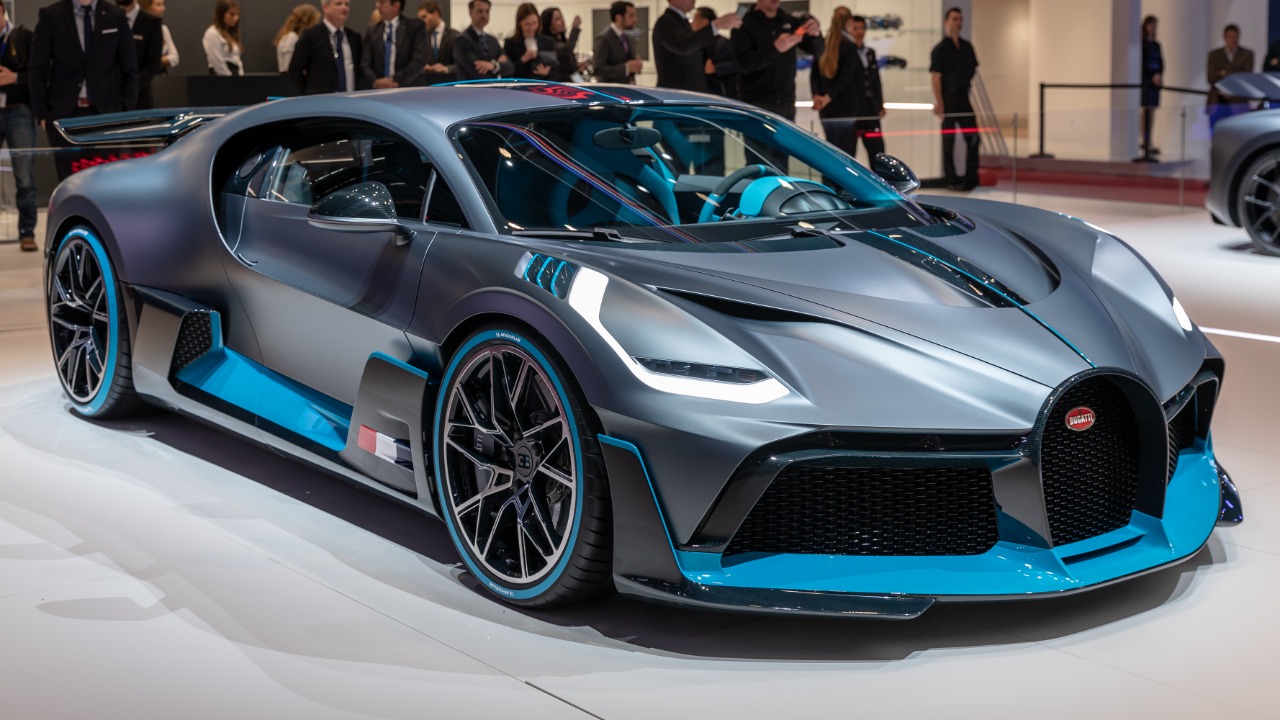

Bugatti’s latest public-relations headache did not start in a boardroom, but in a Florida garage where a frustrated Chiron owner threatened to solve his parts problem with a 3D printer. What followed was a rare, very public intervention from the brand’s chief executive, a social media firestorm, and a fresh debate over who really controls a multimillion‑dollar hypercar once it leaves the factory. I see this clash as a revealing test case for how old‑world luxury makers respond when digital‑age owners push back in full view of millions of followers.
The Florida ultimatum that put Bugatti on the spot
The saga began with Florida owner and influencer Alex Gonzalez, who used his sizable online audience to complain that his Bugatti Chiron had been “blacklisted” by the factory and cut off from official parts support. In a series of videos, he framed the dispute as a standoff over access and safety, arguing that if the company would not sell him what he needed, he would simply manufacture components himself and dared the brand to stop him. That framing, delivered in the language of consumer rights and personal autonomy, turned a private service dispute into a public showdown.
Gonzalez then escalated the drama by issuing a 24‑hour deadline for Bugatti to restore support for his car, warning that he would move ahead with 3D‑printed parts if the company did not respond. His followers amplified the countdown, and the story quickly jumped from niche car circles into mainstream automotive culture coverage, with detailed breakdowns of the Florida man’s ultimatum and the claim that his Chiron had been formally blacklisted by the brand appearing in reports that tracked how the clock was ticking on his demand for factory cooperation, including one widely shared explanation of the 24‑hour ultimatum.
How a private DM from Bugatti’s CEO went public
What transformed the dispute from a one‑sided rant into a global talking point was the decision by Bugatti chief executive Mate Rimac to contact Gonzalez directly. Instead of issuing a carefully worded press release, the CEO slid into the owner’s direct messages and opened with a casual greeting that made clear he had seen the videos and was not amused. That message, which began with a conversational “hey man, Bugatti CEO here, it began,” signaled that the company was willing to engage on the same informal platforms where the criticism had gone viral.
Once Gonzalez shared screenshots and clips of that exchange, the CEO’s DM became part of the public record, dissected frame by frame by car fans and commentators. The conversation, which included Rimac’s insistence that the owner could not safely 3D‑print structural parts for a Bugatti and that his gear was not up to the task, was reposted widely, including in a detailed breakdown of the “hey man, Bugatti CEO here” DM that highlighted how unusual it was for the head of a hypercar brand to argue engineering details in a social media inbox.
Why Bugatti says 3D‑printed parts are a red line
From Bugatti’s perspective, the core issue was not hurt feelings but safety and liability around a 1,500‑horsepower machine that can exceed 260 mph. In his messages and subsequent comments, Rimac stressed that the Chiron’s components are engineered to extreme tolerances, validated through exhaustive testing, and produced under tightly controlled conditions that a home or small‑shop 3D printer simply cannot replicate. The company’s argument is that once owners start substituting unvalidated parts in critical systems, the risk extends beyond the driver to passengers, bystanders, and the brand’s reputation if something fails catastrophically.
That stance was echoed in later coverage that unpacked the CEO’s technical objections, including his claim that the owner’s equipment and materials were not remotely comparable to Bugatti’s own processes. Reports on the exchange emphasized that Rimac drew a clear distinction between cosmetic or non‑critical pieces and structural or high‑load components, insisting that the latter could not be safely reproduced outside the factory environment. Analyses of his comments on why “you can’t 3D‑print parts for a Bugatti” underscored how firmly the company views unauthorized fabrication as a non‑negotiable safety boundary rather than a negotiable customer‑service issue.
Social media turned a service dispute into a global spectacle
What might once have been a quiet argument between a dealer, a regional service manager, and a wealthy client instead unfolded in real time across Instagram, Facebook, and X. Gonzalez documented his frustrations in vertical videos, walking viewers around his Chiron, pointing to the parts he said he could not obtain, and promising to take matters into his own hands. Those clips, shot in the familiar influencer style of handheld confessionals and quick cuts, made the story feel less like a corporate dispute and more like a personal drama that fans could rally around.
As the posts spread, car culture pages and commentators began stitching and reposting the footage, adding their own captions and commentary. One widely circulated reel showed Gonzalez repeating his 24‑hour demand and hinting at the 3D‑printing plan, a clip that was later embedded in coverage of the viral Instagram reel that helped push the story beyond hardcore Bugatti watchers. By the time the CEO’s DM surfaced, the narrative had already hardened into a David‑versus‑Goliath storyline in which a lone owner was portrayed as standing up to a secretive luxury brand.
Inside the “blacklisted” Chiron controversy
At the heart of Gonzalez’s complaint was his claim that Bugatti had “blacklisted” his Chiron, effectively cutting it off from factory parts and service. In his telling, that status meant he could no longer maintain the car through official channels, leaving him with a multimillion‑dollar asset that the manufacturer refused to support. The term “blacklisted” carried heavy implications, suggesting a formal internal designation that singled out his vehicle for punitive treatment, and it quickly became a rallying cry in his videos and posts.
Subsequent reporting dug into that allegation, describing how the owner framed the blacklist as both a safety risk and a financial hit, since a Chiron without factory backing is far less attractive to future buyers. Coverage of the dispute noted that Gonzalez repeatedly referenced his “blacklisted Chiron” in public posts and that this label was central to his argument that he had no choice but to explore alternative parts sources. Detailed write‑ups of how the CEO reached out to a “popular influencer who threatened to 3D‑print his blacklisted Chiron” highlighted how the blacklist claim shaped public perception of the standoff, even as Bugatti itself did not publicly confirm the internal status of the car.
Bugatti’s rare public intervention and shifting PR playbook
For a brand that typically communicates through carefully staged launches and curated lifestyle imagery, the decision to engage directly with a disgruntled owner on social media marked a notable shift. Instead of relying solely on lawyers or dealers, Bugatti allowed its CEO to become the face of the response, speaking in plain language about engineering limits and legal exposure. That move carried risks, since any misstep could be screen‑captured and replayed endlessly, but it also allowed the company to counter the narrative that it was ignoring a safety concern raised by a customer.
Analysts pointed out that this was not just a one‑off DM but part of a broader attempt to regain control of the story after Gonzalez’s ultimatum gained traction. Coverage of the episode described how Bugatti “stepped in” once the Florida owner publicly threatened to 3D‑print parts, framing the CEO’s intervention as a strategic effort to defuse a viral controversy before it damaged the brand’s image among younger enthusiasts. Reports on how Bugatti stepped in after the threat to 3D‑print parts underscored that the company was willing to bend its usual communications playbook when a social media narrative began to define its relationship with a high‑profile customer.
The 24‑hour deadline and the CEO’s counter‑message
Gonzalez’s self‑imposed 24‑hour deadline was designed to force a response, and it worked. As the countdown played out in his videos, viewers were invited to watch in real time to see whether Bugatti would cave, compromise, or call his bluff. The ultimatum format, familiar from reality TV and influencer drama, turned a complex service and safety dispute into a simple question of whether the brand would meet his terms before the clock hit zero, and that framing helped drive engagement across platforms.
Rimac’s response, once it surfaced, effectively flipped that script. Instead of treating the deadline as a negotiation, he focused on the technical and legal impossibility of what Gonzalez was proposing, arguing that no amount of public pressure could make 3D‑printed structural parts acceptable on a car like the Chiron. Coverage of the exchange highlighted how the CEO’s messages undercut the idea that the owner held all the leverage, with one detailed account of the 24‑hour ultimatum noting that the brand’s top executive responded not with concessions but with a firm restatement of the company’s safety standards.
Car culture’s split reaction to the standoff
As clips of the DM and the ultimatum spread, the broader car community fractured into camps. Some enthusiasts sided with Gonzalez, arguing that once someone buys a hypercar, they should have the freedom to repair or modify it as they see fit, even if that means experimenting with advanced manufacturing techniques. For these viewers, the idea of a manufacturer “blacklisting” a car and restricting access to parts felt like an overreach that undermined the basic notion of ownership, especially when the sums involved run into the millions.
Others, including many with engineering or track experience, echoed Bugatti’s concerns and warned that social media bravado should not override hard limits on what is safe at extreme speeds. Comment threads and reaction videos debated whether the owner’s 3D‑printing ambitions were a clever workaround or a dangerous stunt, with some creators using the controversy to explain the difference between cosmetic printed pieces and load‑bearing components. One widely shared X post captured the polarized mood by summarizing the back‑and‑forth between the Florida man and the CEO, a reaction that was later embedded in coverage of the viral X commentary that helped frame the dispute as a referendum on modern car ownership.
How influencers and fan pages amplified every twist
Beyond Gonzalez and Bugatti, a constellation of car pages, meme accounts, and commentary channels helped turn the story into a rolling spectacle. Fan pages reposted the DM screenshots with dramatic captions, while others cut together timelines of the feud, complete with countdown clocks and side‑by‑side clips of the owner’s threats and the CEO’s responses. This secondary wave of content often blurred the line between reporting and entertainment, but it also ensured that each new development reached audiences far beyond the original follower base.
Some of the most detailed recaps came from enthusiast pages that specialize in hypercar gossip, which laid out how the CEO “broke his silence” after the Florida man’s demand to get his Chiron “unblacklisted.” Those posts walked through the sequence from the initial complaint to the DM exchange, highlighting the unusual spectacle of a top executive arguing with a customer in public view. One such breakdown of how the CEO broke his silence underscored how much of the narrative was now being shaped not by traditional media but by car culture accounts that thrive on exactly this kind of high‑drama clash.
What the episode reveals about hypercar ownership in the social media era
Stepping back from the personalities, the Bugatti–Gonzalez clash highlights a deeper tension in modern hypercar ownership. On one side are manufacturers that see their cars as tightly controlled engineering projects, with every part and service procedure governed by internal standards and legal obligations. On the other are owners who increasingly view these machines as platforms for personal branding and content creation, where public grievances and bold threats can be leveraged to extract concessions or at least win sympathy from fans.
In that context, the Florida standoff looks less like an isolated spat and more like an early test of how far each side is willing to go. Detailed coverage of the CEO’s comments on 3D printing and the owner’s insistence that he had been unfairly blacklisted shows that both were speaking not only to each other but to a global audience of current and aspiring hypercar owners. One widely shared reel that revisited key moments in the dispute, including the DM and the ultimatum, framed the entire episode as a case study in how quickly a private service issue can become a public brand crisis, a narrative that was reinforced in recaps built around the follow‑up Instagram reel that kept the story alive even after the initial deadline passed.
More from MorningOverview