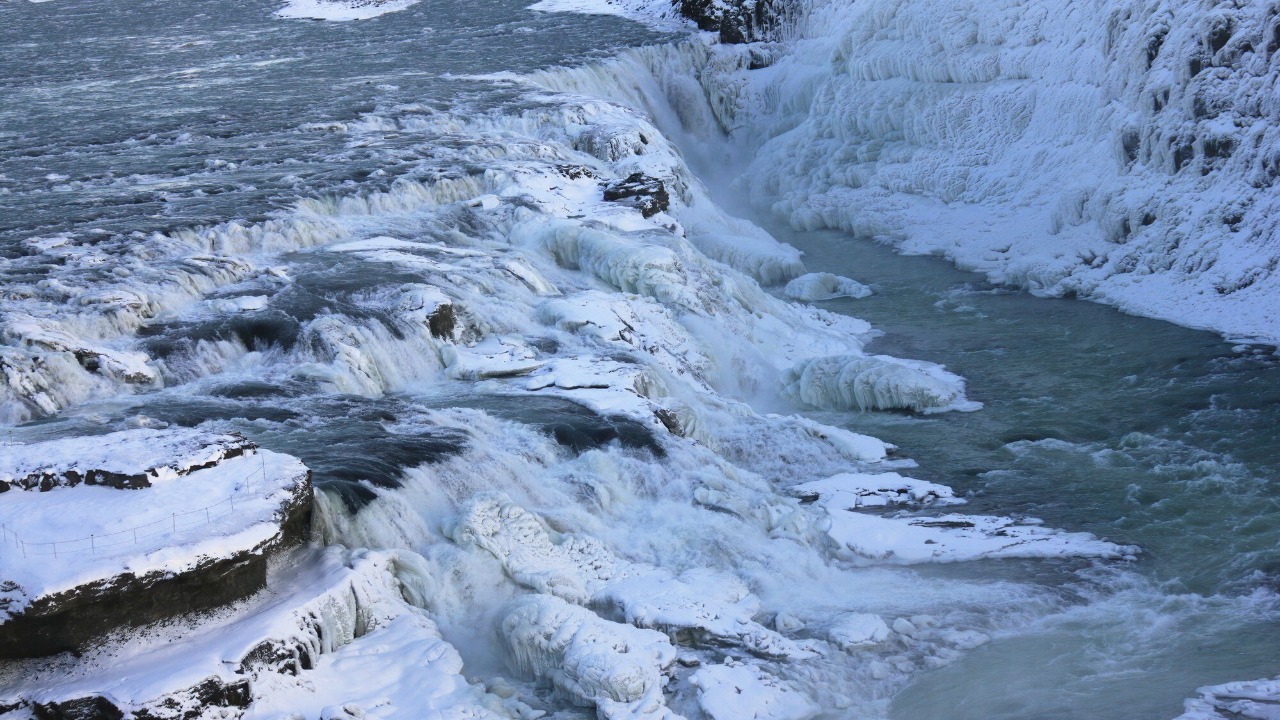

The idea that the Atlantic basin is physically deepening as the Strait of Gibraltar slowly collapses into it sounds like science fiction, yet it reflects a real set of tectonic and oceanographic questions. I set out to trace what is actually known about the region’s geology, how scientists talk about a “sinking” ocean, and why this story has spread so quickly despite sparse, highly technical data.
What emerges is less a single dramatic discovery than a layered picture of plate boundaries, sea level measurements and digital-era rumor, all converging on a narrow gateway between the Atlantic and the Mediterranean. The stakes are not only geophysical, they are also about how we interpret specialized research once it escapes the lab and starts circulating in public feeds.
How a dramatic claim about a sinking Atlantic caught fire
The phrase “entire Atlantic Ocean sinking faster than expected” has circulated widely in recent months, usually paired with striking imagery of the Strait of Gibraltar and language about the seafloor “crumbling” into a deeper basin. The core claim is that the boundary where the Eurasian and African plates meet is deforming in a way that accelerates vertical motion of the ocean floor, effectively lowering the basin relative to sea level. That framing, while rooted in real tectonic processes, has been amplified into a sweeping narrative that suggests a rapid, basin-wide plunge.
In most versions of the story, Gibraltar is cast as a kind of hinge, with the Atlantic on one side and the Mediterranean on the other, and the suggestion is that the hinge itself is failing. A slideshow-style report describes the Atlantic basin sinking faster as the narrow strait “crumbles,” language that has then been repeated across social posts and comment threads. The scientific literature, by contrast, tends to speak in terms of millimeters per year of vertical motion, complex fault geometries and long time scales, which rarely survive intact once they are translated into viral headlines.
What “sinking” really means in ocean science
When geophysicists say an ocean is “sinking,” they are usually talking about the solid Earth, not the water itself. The seafloor can subside as tectonic plates cool and thicken, as sediment loads accumulate, or as one plate bends downward into a subduction zone. At the same time, global sea level can rise or fall relative to that moving floor, driven by thermal expansion, ice melt and changes in ocean circulation. The net effect at any given coastline is a combination of vertical land motion and changing water height, which is why tide-gauge records and satellite altimetry must be interpreted together.
In the Atlantic, long-term subsidence of the oceanic crust is a well-understood process that unfolds over tens of millions of years as newly formed seafloor moves away from the Mid-Atlantic Ridge and cools. The Gibraltar story adds a more localized twist, suggesting that the plate boundary at the eastern edge of the basin is deforming in a way that accelerates downward motion there. That is plausible in principle, because convergent margins can create deep trenches and complex basins, but the leap from localized tectonic subsidence to an “entire Atlantic” dropping at an unusual rate is a much larger claim that requires dense, high-quality measurements that are not yet visible in the public-facing material tied to the viral narrative.
The tectonic puzzle at the Strait of Gibraltar
The Strait of Gibraltar sits at a complicated junction where the African and Eurasian plates interact, with the small Alboran microplate and a patchwork of faults mediating the motion. Geophysical models have long debated whether this boundary behaves like a classic subduction zone, with one plate diving beneath another, or a more diffuse system of shortening and strike-slip motion. If a subduction-like process is active, then parts of the seafloor could indeed be bending and sinking into the mantle, deepening the local basin over geologic time.
The popular framing of Gibraltar “crumbling into the basin” takes that tectonic uncertainty and turns it into a vivid image of collapse. In reality, the rates involved are likely on the order of millimeters per year, comparable to other convergent margins, and any associated deepening of the Atlantic’s eastern edge would be gradual. The slideshow that helped popularize the idea of a rapidly sinking Atlantic uses the Gibraltar region as a focal point for this story of vertical motion, but it does not provide the kind of detailed seismic profiles, GPS time series or bathymetric change maps that would be needed to quantify how much of the observed deformation is truly exceptional compared with other plate boundaries.
Separating basin-wide change from local deformation
One of the most important distinctions in this debate is between localized tectonic deformation and basin-wide structural change. A subduction zone or flexural basin near Gibraltar can deepen significantly without implying that the entire Atlantic crust is suddenly subsiding faster than expected. Oceanographers and geodesists typically look for consistent patterns across many instruments, including tide gauges along distant coasts and satellite measurements of sea surface height, before declaring a large-scale shift in basin behavior.
So far, the public-facing material tied to the Gibraltar story focuses on the dramatic geometry of the strait rather than a comprehensive analysis of Atlantic-wide vertical motion. The language about the “entire Atlantic Ocean” sinking appears to extrapolate from a specific tectonic setting to a whole basin, a move that is not supported by the sparse, non-technical evidence presented in the viral accounts. Without a clear, peer-reviewed synthesis that reconciles local subsidence near Gibraltar with broader Atlantic sea level and crustal data, the claim of a basin-wide acceleration in sinking remains unverified based on available sources.
How social media reshaped a technical story
The leap from specialized tectonic research to sweeping claims about a collapsing ocean has been accelerated by social media groups that thrive on dramatic geoscience narratives. In one discussion thread, members share images of the Strait of Gibraltar, speculate about catastrophic shifts in ocean depth and trade links to secondary write-ups that repeat the “sinking faster than expected” line without adding new data. A prominent example is a public post in a geology-themed group where users circulate the Gibraltar story alongside other eye-catching claims about planetary change, using it as a springboard for broader conversations about climate and tectonics.
In that thread, which is hosted on a large social platform, the Gibraltar narrative is embedded in a mix of personal anecdotes, screenshots and reposted slideshows, including a link to the original “sinking Atlantic” piece. The discussion illustrates how a single, loosely sourced claim can gain authority simply by being repeated in a community that treats it as plausible background knowledge. The Facebook group post that helped spread the story does not add new measurements or peer-reviewed analysis, but it does show how quickly a vivid phrase like “crumbling into the basin” can become a shorthand for complex tectonic processes once it enters the social media ecosystem.
Why the language of collapse matters
The words used to describe geophysical change shape how non-specialists imagine the underlying processes. Terms like “crumbling,” “collapsing” and “sinking faster than expected” evoke sudden, catastrophic motion, even when the actual rates involved are measured in millimeters per year. That gap between imagery and measurement is not just a semantic quibble, it affects how people interpret risk, from coastal planning to perceptions of global instability.
Scientists, by contrast, tend to rely on controlled vocabularies and technical dictionaries that encode specific meanings for terms like “subsidence,” “uplift” and “isostatic adjustment.” One example is a Japanese geoscience dictionary used in computational experiments, which catalogs domain-specific terminology and their relationships in a structured format. A resource such as the dic2010 geoscience lexicon reflects how carefully experts distinguish between different kinds of vertical motion, a nuance that is often lost when those concepts are translated into general-audience headlines about a sinking ocean.
From tectonics to training data: how machines learn this story
The Gibraltar narrative is not only circulating among human readers, it is also being ingested by machine learning systems that scrape large swaths of the web. Language models trained on broad text corpora encounter the same mix of technical papers, popular science write-ups and social media speculation that human readers do, and they must infer how to use phrases like “Atlantic basin” and “sinking faster than expected” from context. If the training data overrepresents sensational accounts relative to careful geophysical analysis, the resulting models may echo the dramatic framing more readily than the cautious one.
Some of the vocabularies used to train such models are explicitly designed to capture character-level patterns in scientific and general language, including rare or domain-specific terms. A widely shared example is a multilingual character-based vocabulary file used in a transformer model, which lists tokens ranging from everyday words to specialized jargon. The character-level vocabulary behind one such model includes the building blocks that allow an AI system to recognize and reproduce phrases like “Strait of Gibraltar” or “Atlantic basin,” even if it has never seen the exact combination “entire Atlantic Ocean sinking faster than expected” before.
Why certain phrases about the Atlantic stick
Not every scientific claim goes viral, and the ones that do often share a particular linguistic profile. Short, concrete words like “ocean,” “sink” and “crumble” are easy to remember and recombine, and they resonate with existing metaphors about a fragile planet. Studies of word frequency and replication on collaborative platforms have shown that some terms and phrases appear disproportionately often, not because they are more accurate, but because they are more contagious in conversation and text.
One curated list of highly replicated words from a federated wiki project highlights how certain simple, evocative terms dominate shared pages across many independent sites. The replicated word list includes everyday vocabulary that tends to spread easily, a pattern that helps explain why a phrase like “Atlantic Ocean sinking” can outcompete more precise but less vivid alternatives such as “tectonic subsidence at the Eurasia–Africa plate boundary.” When those sticky words are paired with dramatic imagery of Gibraltar, they create a narrative that is primed to travel far beyond the small circle of specialists who study the region’s geology.
How media vocabularies frame geoscience risk
News organizations and commentary outlets also play a central role in shaping how the Gibraltar story is told, because their internal vocabularies influence which angles and adjectives feel natural in coverage. Lexicons derived from large archives of articles, such as those built from decades of reporting by major newspapers, reveal recurring patterns in how topics like climate, oceans and tectonics are framed. Terms associated with crisis, acceleration and surprise often cluster around environmental stories, which can subtly steer writers toward language that emphasizes urgency.
One publicly available dictionary extracted from a long-running news outlet’s text archive illustrates this effect. The news-derived word list includes thousands of tokens that reflect editorial habits, from the frequent pairing of “rising” with “seas” to the use of “unexpected” in stories about scientific findings. When a claim about the Atlantic “sinking faster than expected” surfaces, it slots neatly into this existing linguistic template, making it more likely that editors and headline writers will adopt similar phrasing even in the absence of detailed, peer-reviewed confirmation.
Reading Gibraltar’s geology with appropriate caution
For readers trying to make sense of the Gibraltar story, the key is to separate three layers: the underlying tectonic science, the specific measurements that would be needed to confirm an unusual rate of subsidence, and the narrative choices that turn those ingredients into a viral claim. The science supports the idea that the Strait of Gibraltar sits atop a complex, slowly deforming plate boundary where parts of the seafloor may be bending and deepening over long time scales. What remains unverified based on available sources is the stronger assertion that the entire Atlantic basin is sinking at a rate that departs sharply from established models.
Until detailed seismic, geodetic and bathymetric data are presented in a transparent, peer-reviewed form that directly addresses that basin-wide claim, it is prudent to treat phrases like “crumbling into the basin” as evocative metaphors rather than literal descriptions of imminent change. The Gibraltar region will continue to attract scientific attention, and future studies may refine our understanding of how its tectonics influence Atlantic structure. For now, the most responsible reading is that the ocean is not suddenly dropping away beneath us, but that our language about it is shifting faster than the seafloor itself.
More from MorningOverview