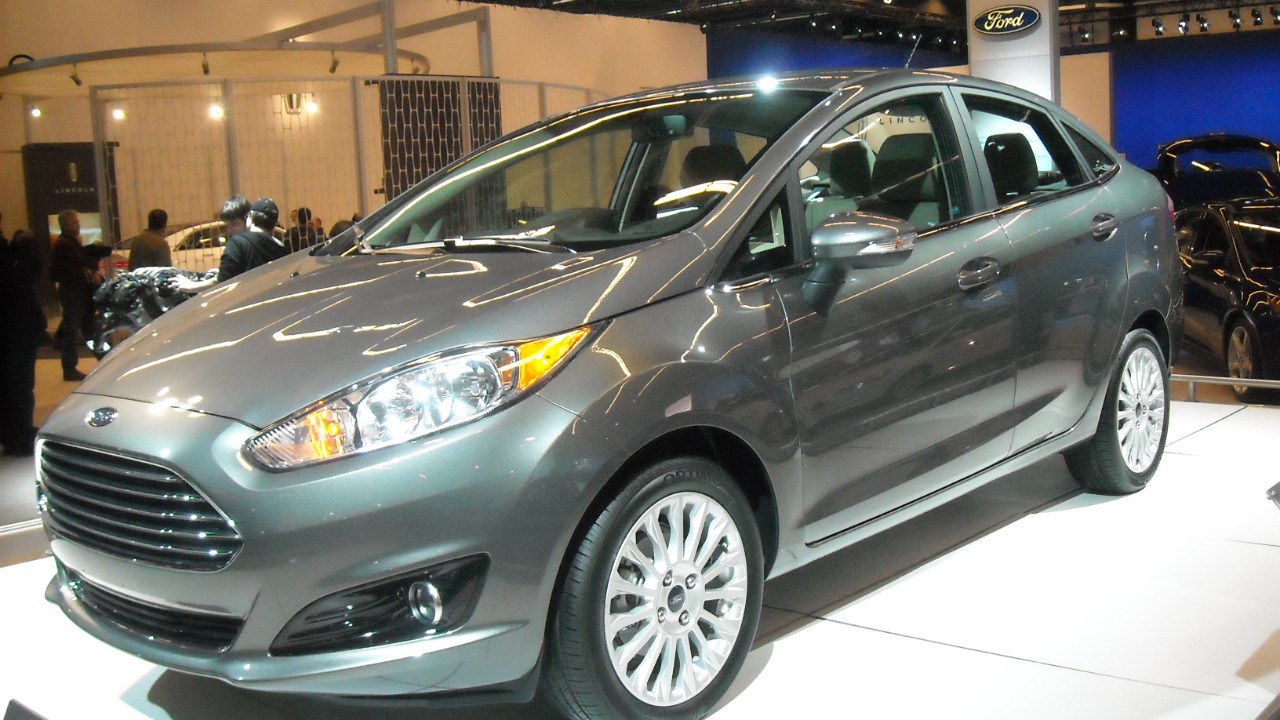

Ford is quietly closing the book on its cheapest cars, trading volume-focused nameplates for a leaner lineup built around higher-margin crossovers, trucks, and performance models. The shift has unfolded over several model years, but it is now crystallizing into a clear strategy: exit low-profit segments, retire three more familiar models, and push capital into technology, electrification, and premium trims instead of bargain-basement stickers.
What looks like a simple list of discontinued vehicles is really a story about how one of America’s oldest automakers is trying to protect profits in a market that increasingly rewards size, tech, and brand cachet. As budget-friendly sedans and small hatchbacks disappear from showrooms, Ford is betting that customers will follow it upmarket, even if that means fewer choices for buyers who once relied on the company for affordable transportation.
From mass-market sedans to margin-first strategy
Ford’s retreat from traditional passenger cars did not start with the latest round of cuts, it began when the company decided that low-priced sedans were no longer worth the capital they consumed. Internal planning shifted toward trucks, SUVs, and performance icons, with executives effectively accepting that the brand would sell fewer vehicles overall if each one generated more profit. That pivot set the stage for the current moment, where the company is comfortable walking away from entire categories that once defined its identity.
Dealer-facing explanations describe how Ford stopped making most of its cars so it could concentrate on more profitable segments and future technology, a rationale laid out in detail in a breakdown of why Ford stopped making cars. The same material underscores that this was not a sudden move but a phased withdrawal, with each discontinued sedan freeing up engineering and marketing resources for higher-margin vehicles that better fit the company’s long-term financial goals.
Budget cars give way to EVs and tech-heavy models
As Ford wound down its cheapest cars, it did not simply pocket the savings, it redirected them into electric vehicles and advanced driver-assistance systems that require heavy upfront investment. The company’s logic is straightforward: a compact sedan sold on price alone cannot support the cost of cutting-edge software and batteries, but a well-equipped crossover or truck can. By pruning low-margin models, Ford created room in its budget to chase customers who are willing to pay more for technology and perceived innovation.
That thinking is spelled out in a Mar 30, 2025 explanation that links the end of several sedans to a push for EVs and new features, noting that EVs and Technological Advancements were central to the decision. That same account emphasizes that discontinuing sedans allowed Ford to reallocate resources and better compete with players such as Tesla, a clear signal that the company sees its future in tech-forward vehicles rather than bare-bones budget cars.
Three more models exit as Ford trims its 2025 lineup
The latest phase of Ford’s strategy is playing out in the 2025 model year, where three more nameplates are being retired as the company tightens its portfolio. Each of these exits removes a relatively affordable option from the showroom, nudging buyers toward pricier crossovers and trucks that carry richer margins. The pattern is consistent: models that sit in crowded, price-sensitive segments are the ones being cut, while vehicles that can command higher transaction prices are protected or refreshed.
One of the most notable examples is the Ford Edge, a midsize crossover SUV that has been a staple for families who wanted space and comfort without stepping up to a full-size truck. A dealer overview dated Apr 29, 2025 lists Ford Edge among the discontinued models, describing how The Edge, a SUV equipped with the SYNC infotainment system and advanced safety features, is being phased out as trends and consumer preferences shift. That decision removes a relatively attainable crossover from the lineup, reinforcing Ford’s willingness to sacrifice volume in favor of a tighter, more profitable range.
How the 2020 car cuts set the stage
The groundwork for today’s higher-margin focus was laid when Ford first began culling its car lineup in 2020, a move that signaled the company’s willingness to abandon entire segments. At that point, the company made clear that it would keep only a small handful of traditional cars while steering most buyers toward crossovers and trucks. That early decision effectively trained customers to see Ford as a brand centered on utility vehicles and performance rather than compact sedans and budget-friendly commuters.
A Nov 11, 2020 dealer communication framed the shift bluntly, posing the question, Does Ford still make cars, and answering with a qualified Yes. It explained that the 2021 lineup would feature only two new cars, the Ford Mustang and the remaining sedan, while the rest of the traditional car range was being wound down. That same material pointed shoppers toward used Ford cars in Memphis, underscoring how quickly the company was pivoting away from new budget car sales and into a world where crossovers and trucks would carry the volume.
Discontinued SUVs show the shift is not just about sedans
Ford’s move upmarket is not limited to traditional cars, it is also reshaping the SUV side of the showroom, where some of the more affordable crossovers are now on the chopping block. By cutting lower-priced utility vehicles, the company is signaling that even within the SUV boom, it prefers models that can support richer trims and higher transaction prices. That approach narrows the entry points into the brand, effectively asking budget-conscious buyers to stretch or look elsewhere.
One of the clearest examples is the Ford Escape, a compact crossover that long served as a gateway SUV for urban drivers and young families. A Jun 29, 2025 analysis of Ford’s discontinued models notes that The Ford Escape, a compact and fuel-efficient SUV, had been especially popular for being easy to park and appealing to urban drivers. That same discussion points out that Discontinuing certain models often paves the way for innovation, citing the successful revival of the Ford Bronco as an example of how the company may eventually replace some of today’s cuts with more profitable, buzzworthy nameplates.
2024’s farewell to Fiesta and other budget favorites
By 2024, Ford’s retreat from budget cars was already well advanced, with some of its most affordable nameplates either gone or limited to specific markets. The company’s smallest hatchbacks and compact sedans, once mainstays for first-time buyers and commuters, were increasingly out of step with a market that favored taller, more versatile vehicles. Each discontinuation chipped away at the lower end of the price spectrum, making it harder for shoppers to find a new Ford at the kind of prices that defined the brand in earlier decades.
A Dec 27, 2023 overview of Fords Being Discontinued in 2024 highlighted how the Ford Fiesta had already been removed from the lineup, noting that The Ford Fiesta has been discontinued as Ford adapts to the changing demands of the automotive market. That same piece, published in Dec, invited readers to Join Kunes Auto Group for a closer look at how these decisions fit into broader industry trends, underscoring that Ford’s exit from budget segments is part of a wider shift across automakers rather than an isolated move.
Escape and Corsair: popular SUVs sacrificed for future plans
The most recent and perhaps most telling cuts involve two popular compact SUVs that once anchored Ford’s mainstream lineup. By choosing to end production of these models, the company is signaling that even successful nameplates are not safe if they do not align with its margin and technology priorities. The decision also shows how Ford is managing its factories and inventories with a long view, planning for a future mix of vehicles that leans even more heavily on higher-priced offerings.
Reporting from late summer 2025 details how Ford will stop producing the Escape and Corsair at the end of 2025, while still anticipating enough inventory to last into 2026 so buyers can find the best deals before incentives disappear. The report, dated Aug 26, 2025, notes that Ford expects to manage the wind-down carefully, using discounts and dealer support to clear remaining stock without undermining the pricing power of its future lineup.
What higher margins mean for buyers and the brand
For buyers, Ford’s shift away from budget cars and into higher-margin territory means fewer low-cost options and more emphasis on well-equipped crossovers, trucks, and performance models. Entry-level shoppers who once gravitated toward compact sedans or small hatchbacks now face a choice between stretching for a pricier SUV, hunting for a used vehicle, or leaving the brand altogether. At the same time, customers who can afford the new lineup are likely to see more technology, better interiors, and a clearer focus on features that justify higher monthly payments.
For the brand, the strategy is a calculated gamble that profitability and a sharper identity will outweigh the loss of volume and the risk of alienating price-sensitive drivers. The company is effectively betting that a lineup anchored by crossovers, trucks, and a few halo cars will be strong enough to carry it through the industry’s transition to electrification and software-driven vehicles. Unverified based on available sources are the exact profit figures behind these decisions, but the pattern of discontinuations, from sedans to compact SUVs, makes one thing clear: Ford is no longer trying to be all things to all buyers, and its latest three model exits are simply the most recent proof of a margin-first play that has been years in the making.
More from MorningOverview