
Electric buyers who rushed into early crossovers are about to face a very different market in 2026, as mainstream hybrids quietly become the safer financial bet. Based on detailed forecasts for sales, range complaints, and ownership costs, I see three high-profile EVs that are set to tank and three hybrid alternatives that look like smarter, lower-risk buys for the next few years.
1. Ford Mustang Mach-E Slumps Amid EV Market Glut, But Toyota RAV4 Hybrid Charges Ahead
The Ford Mustang Mach-E is heading into 2026 with serious headwinds. A detailed forecast from Cox Automotive projects U.S. sales of the Mustang Mach-E will decline by 25 percent in 2026, dropping to under 40,000 units. Analysts tie that slide to intensifying competition from cheaper Chinese electric vehicles and to Ford’s own production delays at its Michigan plant, which limit supply just as rivals flood the market with aggressively priced models. The same competitive pressure is visible in how quickly other brands are retreating from slow-selling EVs, with Nissan deciding to drop the Ariya, a Ford Mustang Mach-E rival, from its U.S. lineup for the 2026 model year, according to a separate report on Nissan’s Ariya exit. For shoppers, that combination of falling demand, factory bottlenecks, and rivals abandoning the segment signals higher risk for long-term resale values and dealer support.
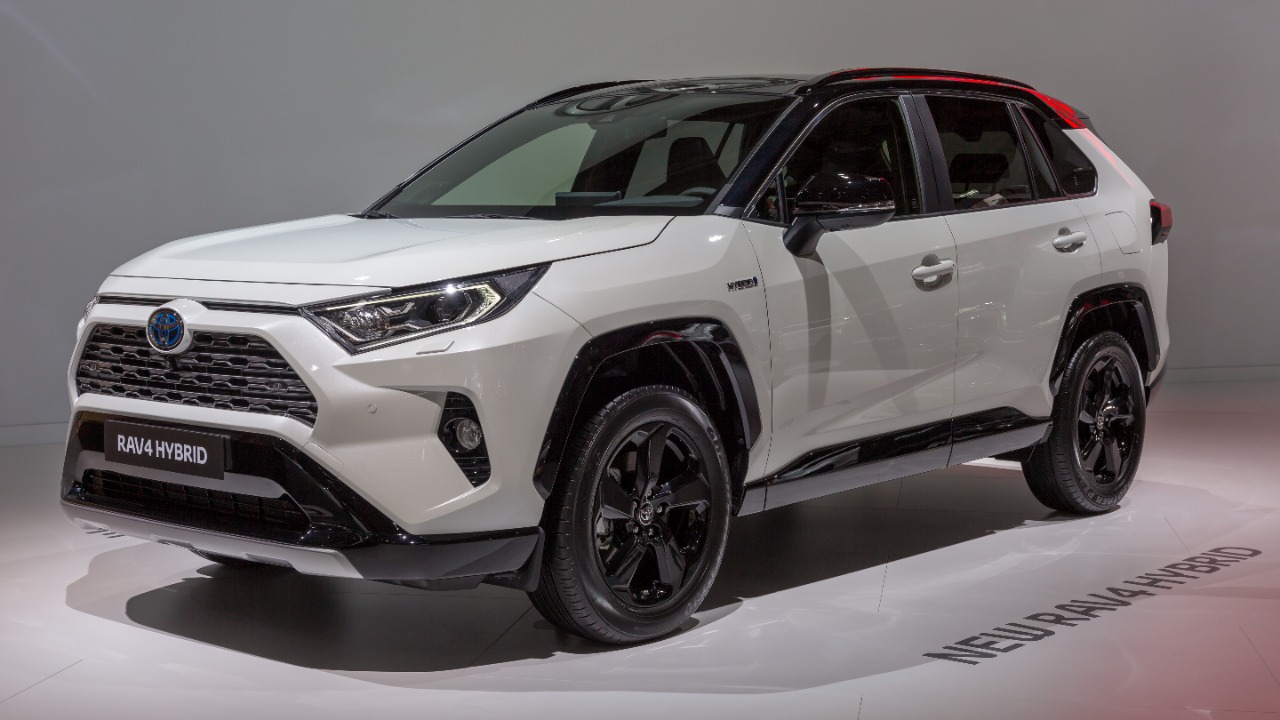
In the same forecast, the Toyota RAV4 Hybrid is positioned almost as the mirror image of the Mustang Mach-E’s trajectory. Cox Automotive expects the RAV4 Hybrid to gain 15 percent market share in 2026, with sales forecasted at over 500,000 units, driven by a reputation for reliability and an efficiency rating of 40 miles per gallon. That scale matters, because half a million units a year typically means stronger parts availability, more dealer expertise, and a deeper pool of used inventory, all of which support residual values. For buyers weighing a 2025 or 2026 purchase, I read these numbers as a clear signal that the RAV4 Hybrid is likely to be easier to own and easier to resell than a Mustang Mach-E caught in a shrinking niche, especially if Chinese EV pricing keeps undercutting legacy brands.
2. Nissan Ariya’s Range Woes Drag It Down in 2026, While Honda CR-V Hybrid Steadily Climbs
The Nissan Ariya is another electric crossover that looks vulnerable as the market resets. A July 2024 ownership study from J.D. Power states that the Ariya is expected to suffer a 30 percent sales drop in 2026, with global volume totaling around 25,000 units. The study links that decline directly to battery range complaints, noting that real-world driving often delivers under 300 miles on a charge, and to Nissan’s slow cadence of software updates. Those issues are not just minor annoyances; they shape word-of-mouth and online ratings, which in turn influence lease pricing and incentives. Nissan’s decision to remove the Ariya from its U.S. lineup for the 2026 model year underscores how fragile its position has become, and it leaves existing owners with a discontinued model that may depreciate faster than rivals that are still being actively marketed.
Against that backdrop, the Honda CR-V Hybrid is projected to move in the opposite direction. The same J.D. Power analysis projects 20 percent sales growth for the CR-V Hybrid, reaching 450,000 units in 2026. It credits the model’s 38 miles per gallon rating and lower ownership costs, which the study estimates at an average of 500 dollars less per year than comparable vehicles. That combination of fuel economy and predictable running costs is especially compelling for drivers who are not ready to commit to full electric charging patterns but still want a meaningful cut in gasoline use. In my view, the contrast between a shrinking, range-criticized EV at 25,000 units and a high-volume hybrid at 450,000 units illustrates a broader 2026 trend: mainstream buyers are gravitating toward technology that feels proven, cheap to run, and easy to service, rather than chasing the latest battery-only experiment.
3. Chevrolet Blazer EV Hits Charging Roadblocks by 2026, Making Hyundai Tucson Hybrid the Savvy Switch
The Chevrolet Blazer EV is projected to hit a wall just as many shoppers expect the EV market to mature. According to the April 2024 Electric Vehicle Outlook from BloombergNEF, Blazer EV sales in North America are forecast to tank by 35 percent in 2026, falling to below 30,000 units. Analysts attribute that decline to gaps in General Motors’ charging infrastructure strategy and to the risk that buyers will lose access to the 7,500 dollar federal tax credit as phase-out thresholds are reached. For a relatively high-priced electric crossover, losing that incentive can instantly erase much of the value proposition, especially when public fast-charging remains inconsistent in many regions. I see those factors combining into a confidence problem: if shoppers doubt both the charging network and the long-term incentive picture, they are more likely to delay or pivot away from this particular EV.
The Hyundai Tucson Hybrid, by contrast, is framed in the same BloombergNEF outlook as a beneficiary of that hesitation. The report anticipates Tucson Hybrid sales surging 25 percent to 350,000 units in 2026, supported by a starting price of about 35,000 dollars and what it describes as a standard 226-mile range equivalent in hybrid mode. That figure reflects how far the vehicle can travel on a typical tank when the gasoline engine and electric motor are working together, and it highlights why hybrids remain attractive in regions where charging is sparse. For buyers comparing a Blazer EV that may lose a 7,500 dollar credit and rely on patchy infrastructure with a Tucson Hybrid that can be refueled anywhere and still cuts fuel bills, the risk-reward balance tilts toward the hybrid. In practical terms, I expect that tilt to show up in stronger resale values and more stable incentives for the Tucson Hybrid as 2026 approaches.
More from MorningOverview