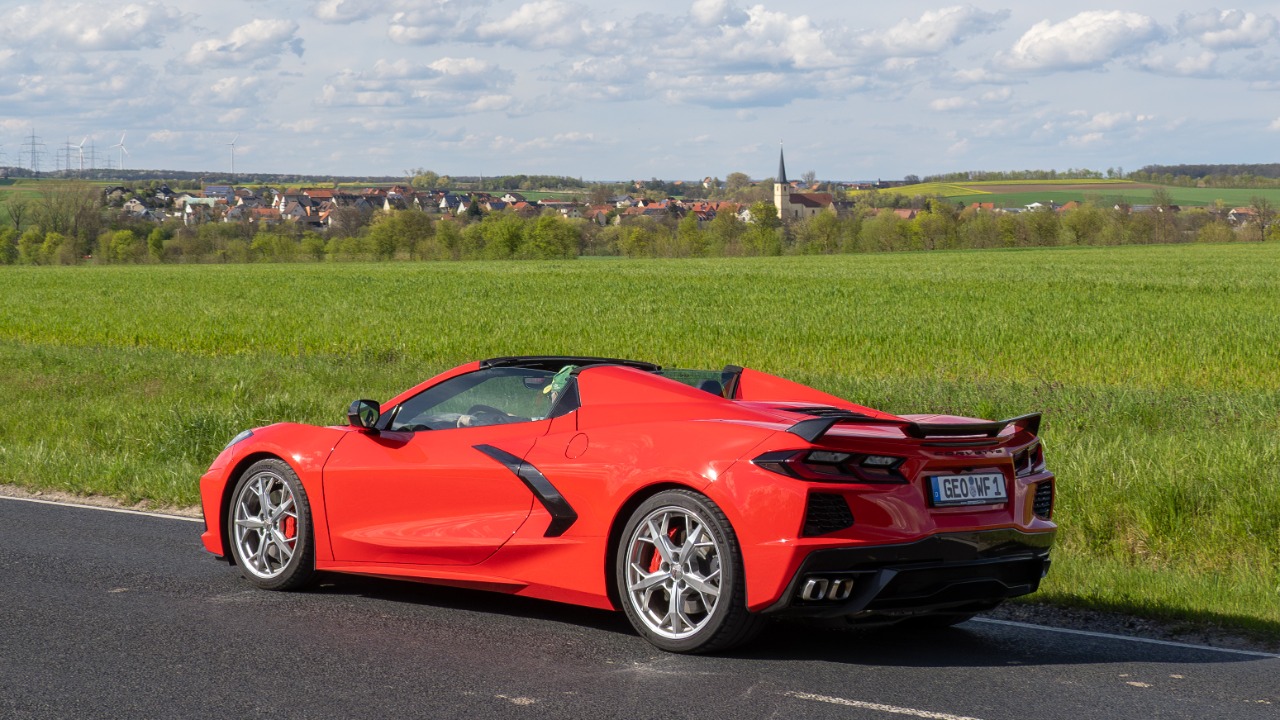

Chevrolet is in the middle of a high-stakes reset, trimming parts of its traditional design operation just as its latest electric crossover emerges with proportions and details that look unmistakably inspired by the Corvette. The result is an EV that blurs the line between practical family hauler and halo sports car, raising fresh questions about how much of Chevy’s future identity will be built on the Corvette’s silhouette.
I see a company trying to reconcile cost-cutting and platform consolidation with the need to keep its most emotional nameplate alive in the electric era, and the new crossover’s Corvette-like cues show how tightly those goals are now intertwined. The tension between a leaner design pipeline and a louder, more aggressive EV aesthetic is shaping not just one model, but the broader trajectory of Chevrolet’s performance and electric strategy.
Chevy’s design shake-up and the Corvette-shaped EV in its wake
The starting point is blunt: Chevrolet has pared back parts of its in-house design team at the same moment its latest electric crossover has surfaced with a profile that looks like a Corvette stretched into SUV form. Reporting on the restructuring describes Chevy “firing” its designers and then unveiling an EV whose nose, fender lines, and stance echo the brand’s flagship sports car, a juxtaposition that has fueled speculation that cost-cutting is pushing the company to lean harder on existing styling cues rather than fund clean-sheet ideas. That context makes the crossover’s coupe-like roofline and muscular haunches feel less like coincidence and more like a deliberate attempt to bottle Corvette cachet in a more profitable body style, a move that aligns with how other brands have spun their sports cars into crossovers.
Images of the new electric crossover show a front fascia with sharp, swept-back lighting, a low hood, and an aggressive, almost mid-engine-like visual balance that would not look out of place in a Corvette design studio. The side glass tapers toward the rear, the rear fenders flare over large wheels, and the overall stance sits lower than a typical family SUV, all of which reinforce the impression that this is a Corvette in crossover drag rather than a generic EV. That resemblance has been widely noted in coverage of the model, with one report explicitly tying the timing of the design team shake-up to the debut of a crossover that “looks like a Corvette SUV,” a description that captures how closely the new EV’s surfacing tracks with the sports car’s proportions and helps explain why enthusiasts immediately drew the comparison in the first place, as seen in the analysis of the designer shake-up.
How GM is positioning an electric Corvette, officially and unofficially
While the crossover borrows heavily from Corvette styling, General Motors has been more cautious when it comes to promising a full battery-electric Corvette sports car. GM president Mark Reuss has publicly discussed the company’s work on electrified Corvettes, including hybrid variants and the broader Ultium platform that could underpin a future EV, but he has also been careful to frame a pure electric Corvette as a long-term project rather than an imminent product. In one detailed update, Reuss outlined how GM is evaluating performance, range, and thermal management targets for a potential electric Corvette, signaling that the company wants any such car to meet or exceed the current model’s capability rather than simply exist as a compliance exercise, a stance that underscores how high the bar is for electrifying a nameplate so closely tied to internal combustion performance, as described in the electric Corvette update.
At the same time, other GM executives have tried to tamp down expectations that a showroom-ready EV Corvette is just around the corner. Corvette executive chief engineer Tony Roma has said that GM has “no official plans” for a fully electric Corvette on sale today, even as the company experiments with concepts and technology that could eventually support one. That message, delivered while GM showcases EV Corvette design studies and invests heavily in Ultium-based performance hardware, creates a kind of strategic ambiguity: the company is clearly preparing the ground for an electric Corvette future, but it is not yet willing to commit to a production timeline. Roma’s comments, reported in detail in coverage of GM’s stance on an EV Corvette, highlight how the brand is trying to manage expectations among enthusiasts and investors who see the Corvette as a bellwether for GM’s performance ambitions in the electric age, a tension captured in the report that GM has no official plans for a production EV Corvette.
The California Corvette concept and the SUV-style silhouette
Into that uncertainty stepped the California Corvette concept, an all-electric design study that reimagines the Corvette as a sleek, high-riding machine with a more practical cabin and a distinctly crossover-like stance. The concept’s proportions are striking: a long hood, a cab pushed rearward, and a fastback roof that flows into a wide tail, all perched higher off the ground than a traditional sports car. It looks less like a direct successor to the current C8 and more like a Corvette-infused GT or SUV, a direction that aligns closely with the production EV crossover now drawing comparisons to a Corvette SUV. The California concept’s surfacing, with its sharp creases and dramatic side intakes, shows how GM’s designers are exploring ways to stretch Corvette DNA into new segments without losing the visual drama that defines the nameplate, a theme that stands out in photo-heavy coverage of the California Corvette concept.
The concept was unveiled as part of a broader design initiative that invited studios to imagine hypercar-level performance in different regional flavors, and the California version leaned into a coastal, grand-touring persona that still carried unmistakable Corvette cues. Its electric powertrain layout allowed for a more flexible interior and packaging, which in turn made the higher ride height and more spacious cabin feel natural rather than forced. That experiment in blending Corvette styling with crossover practicality foreshadowed the production EV crossover’s approach, where a similar mix of long-hood drama and SUV usability is now being applied to a model that is expected to reach customers. The way the California concept bridges those worlds is evident in detailed reports on the EV Corvette design study, which emphasize how its silhouette and stance push the Corvette idea toward an SUV-like form factor.
From design study to brand statement: what the California Corvette signals
Beyond its sheet metal, the California Corvette concept functions as a statement about how GM sees the Corvette brand evolving in an electric landscape. Rather than treating Corvette as a single two-seat sports car, the concept positions it as a design language and performance ethos that can be applied to multiple body styles, including a more practical, lifestyle-oriented EV. The concept’s all-electric powertrain, with its promise of instant torque and silent cruising, is paired with a cabin that appears more open and airy than the current C8, suggesting that GM is willing to trade some of the traditional cockpit-like feel for broader appeal. That shift is not accidental; it reflects a recognition that future Corvette-branded products may need to serve as daily drivers as much as weekend toys, a point underscored in coverage that describes the California concept as an all-electric Corvette tailored to a specific region’s tastes, as seen in the detailed breakdown of the all-electric California Corvette.
The concept’s role in GM’s global hypercar design series also hints at how the company is testing public reaction to more radical Corvette forms before committing to production. By framing the California Corvette as one of several experimental designs, GM can gauge enthusiasm for a higher-riding, more versatile Corvette without promising to build it. The overwhelmingly strong reaction to the concept’s styling, particularly its blend of familiar Corvette elements with a more SUV-like stance, likely informed the decision to infuse the new EV crossover with similar cues. In that sense, the California Corvette is less a one-off fantasy and more a trial balloon for a broader Corvette sub-brand strategy, a reading supported by reports that place the concept within a global series of hypercar-inspired designs that explore how far the Corvette identity can stretch, as detailed in coverage of the global hypercar design series.
The future of a full EV Corvette and why it remains in limbo
Even as GM experiments with Corvette-flavored EV concepts and crossovers, the path to a full production electric Corvette sports car remains murky. Analysts and enthusiasts have pointed out that GM’s broader EV rollout has faced delays and recalibrations, and that the company must balance investment in a niche performance model against higher-volume electric trucks and SUVs. Reports on the future of an electric Corvette describe the project as being in a kind of limbo, with engineering work and design studies underway but no firm commitment to a launch window. That uncertainty reflects both the technical challenge of delivering Corvette-level performance with acceptable range and cost, and the strategic question of when the market will be ready to embrace a battery-powered version of an icon that has long been defined by its V8 soundtrack, a dilemma explored in depth in analysis of the future electric Corvette.
From my perspective, the limbo status also gives GM room to watch how customers respond to Corvette-inspired EVs that are not full sports cars, such as the California concept and the new crossover. If those models succeed in translating Corvette cachet into EV sales, they could build the business case for a more expensive, lower-volume electric flagship. Conversely, if buyers prove more interested in practical performance crossovers than in pure sports cars, GM might decide that the Corvette’s electric future lies more in SUV-like shapes than in a direct successor to the C8. The company’s cautious messaging, combined with its willingness to showcase bold concepts without tying them to production plans, suggests that it is still testing which version of an electric Corvette story will resonate most strongly with both loyalists and new EV customers.
Why the new EV crossover looks like a Corvette SUV
The resemblance between the new electric crossover and a Corvette SUV is not just a matter of a few shared styling cues; it reflects a deliberate strategy to leverage the Corvette’s visual identity in a segment that promises higher volumes and margins. The crossover’s low, wide stance, sculpted hood, and aggressive front lighting all echo the C8’s design language, while its sloping roof and pronounced rear shoulders create a silhouette that reads as “Corvette, but taller.” In a market where many EV crossovers risk blending into a sea of similar-looking blobs, anchoring a new model’s appearance to an established performance icon is a powerful way to stand out. That approach is evident in coverage that notes how the crossover’s design makes it look like a Corvette SUV, a description that captures both the visual overlap and the marketing logic behind it, as highlighted in the report on the EV Corvette-inspired crossover.
There is also a practical dimension to this design convergence. By adapting Corvette-like proportions to a crossover, Chevy can create an EV that offers more interior space and everyday usability while still delivering the kind of emotional appeal that draws buyers into showrooms. The higher seating position, larger cargo area, and likely availability of all-wheel drive make the crossover a more realistic primary vehicle for many households than a low-slung two-seater, yet the familiar Corvette cues on the outside help justify a premium price and position the model as something more special than a typical family EV. In that sense, the crossover functions as a bridge product, inviting traditional Corvette fans to consider an EV without asking them to give up the styling they love, and inviting EV intenders to buy into the Corvette mythos without committing to a track-focused sports car.
Enthusiast reaction and the environmental angle
Enthusiast reaction to the idea of a Corvette-flavored EV has been predictably mixed, with some purists lamenting any move away from a front- or mid-engine V8 and others embracing the performance potential of electric power. Coverage of the California Corvette concept and related EV design studies shows that many fans are intrigued by the possibility of instant-torque Corvettes that can out-accelerate their gasoline predecessors while offering more everyday comfort and practicality. At the same time, there is a vocal contingent that worries about brand dilution if the Corvette name is applied too broadly to crossovers and lifestyle vehicles. That tension is evident in reporting that highlights both the excitement around the EV concept’s styling and the skepticism about whether it should wear the Corvette badge at all, a debate captured in analysis of the electric Corvette concept.
There is also a broader environmental and regulatory context shaping these reactions. As emissions standards tighten and cities explore restrictions on internal combustion vehicles, an electric Corvette, whether in sports car or crossover form, becomes not just a design experiment but a potential lifeline for the brand’s long-term viability. Enthusiasts who might once have dismissed EVs outright are now weighing the trade-offs between preserving the sound and feel of a traditional Corvette and ensuring that the nameplate survives in a world that increasingly favors zero-emission vehicles. The new crossover’s Corvette-like styling, combined with its electric powertrain, offers a kind of compromise: a way to keep the visual drama and performance image alive while aligning with environmental expectations. How that compromise is received will go a long way toward determining whether GM doubles down on Corvette-branded EVs or keeps them at the fringes of its lineup.
How the EV Corvette concept fits into GM’s broader performance play
GM’s decision to showcase an EV Corvette concept and then roll out a production crossover that borrows heavily from its styling is part of a larger performance strategy that spans both combustion and electric models. The company has already introduced hybrid Corvettes that blend electric assistance with traditional engines, and it is developing Ultium-based platforms capable of supporting high-output motors and advanced torque vectoring. The EV Corvette concept serves as a design and technology showcase within that ecosystem, demonstrating how GM could package its latest battery and motor systems in a vehicle that still looks and feels like a Corvette. Detailed coverage of the concept’s reveal emphasizes its role as a halo for GM’s electric ambitions, positioning it as a signpost for where the company’s performance EVs could go, as seen in reports on the EV Corvette design direction.
At the same time, the concept and the crossover highlight the flexibility of GM’s design and engineering approach. By using a common set of EV components and adapting them to different body styles and brand identities, GM can spread development costs while tailoring products to specific audiences. A low-slung EV Corvette sports car, a California-style GT, and a Corvette-flavored crossover could, in theory, share much of their underlying hardware while offering distinct experiences. That modularity is central to GM’s Ultium strategy, and the Corvette experiments show how it might be applied at the high-performance end of the spectrum. The key question is whether GM will commit the resources to bring multiple Corvette-branded EVs to market, or whether the crossover will remain the primary expression of Corvette styling in the electric space while the traditional sports car transitions more slowly.
Why Chevy is betting its EV identity on Corvette cues
Chevy’s decision to let its new EV crossover echo the Corvette so closely is ultimately a bet that design and emotion will matter as much as range and charging speeds in the next phase of the EV market. Early adopters were willing to buy electric cars that looked unconventional or even anonymous, but as EVs move into the mainstream, buyers are increasingly looking for vehicles that express a clear identity. The Corvette offers one of the strongest visual identities in Chevy’s portfolio, and transplanting its cues onto an EV crossover is a way to inject instant character into a segment that can otherwise feel generic. Coverage of the EV Corvette concept and the crossover’s debut underscores how much attention these models have drawn precisely because they look like Corvettes, suggesting that the strategy is already paying dividends in terms of visibility, as reflected in reports on the Corvette-inspired EV styling.
From a branding standpoint, this move also helps Chevy differentiate its EVs from those of its rivals. While many competitors are creating new sub-brands or abstract names for their electric lineups, Chevy is leaning into one of its most established badges to signal performance and desirability. That approach carries risks, particularly if future Corvette-branded EVs fail to live up to the performance expectations set by their gasoline predecessors, but it also offers a clear narrative: the Corvette is not being left behind by electrification, it is leading Chevy into it. The new crossover, with its Corvette-like face and proportions, is the first mass-market test of that narrative. How it sells, and how it is received by both traditional Corvette fans and new EV buyers, will shape not only the fate of a potential electric Corvette sports car but also the broader direction of Chevy’s design language in the electric era.
More from MorningOverview