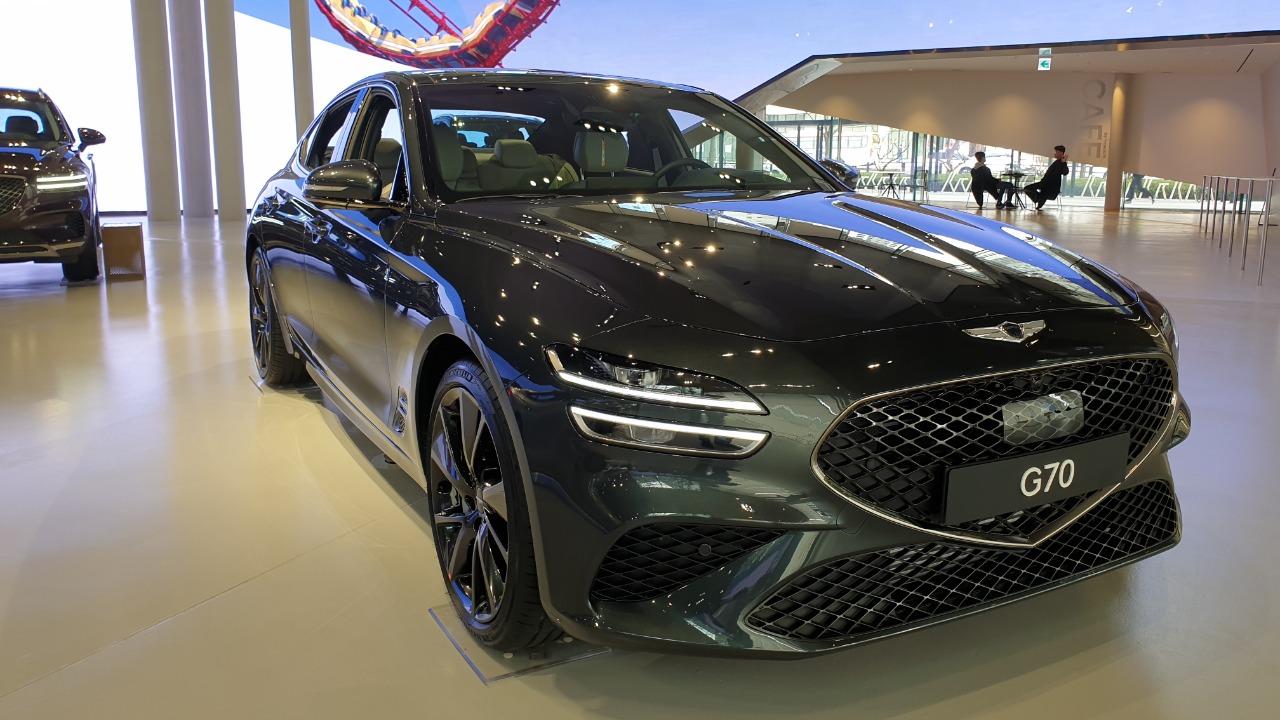

Genesis has just pulled off what many luxury buyers would have considered unthinkable a few years ago, taking the top spot in a major U.S. ranking of premium carmakers ahead of Porsche, Lexus and BMW. The decision signals a shift in how American shoppers weigh design, technology and value in the luxury space, and it puts a relatively young brand at the center of a segment long dominated by European and Japanese incumbents.
As the U.S. market absorbs that reshuffle, the implications stretch beyond bragging rights. A Korean marque that only launched in the United States less than a decade ago is now being held up as the benchmark for luxury, forcing rivals to confront a new competitive reality and giving buyers fresh leverage as they compare price tags, features and ownership experience.
How Genesis climbed to the top of U.S. luxury rankings
The latest recognition of Genesis as the leading luxury marque in the United States rests on a simple premise: the brand is delivering a blend of refinement, technology and pricing that resonates with shoppers who once defaulted to German or Japanese badges. In a recent evaluation of premium automakers, Genesis was named the best luxury car brand in the country, a verdict that explicitly placed it ahead of Porsche, Lexus and BMW based on a combination of vehicle scores, safety data and long-term value. That accolade, detailed in an official Genesis announcement, underscores how quickly the company has moved from newcomer to benchmark in the eyes of U.S. reviewers.
Behind the headline ranking is a broader pattern of praise that has followed Genesis across multiple model lines and independent assessments. The brand’s U.S. communications arm has highlighted how its sedans and SUVs have accumulated strong ratings for interior quality, ride comfort and advanced driver assistance systems, positioning Genesis as a credible alternative to long-established luxury players. In a detailed U.S. market release, the company points to consistent recognition across its lineup, reinforcing the idea that this is not a one-model fluke but a systemic shift in how the brand is perceived.
What the rankings actually measure, and why they matter
Luxury rankings can sound abstract, but the methodology behind Genesis’s new status helps explain why the result is resonating with shoppers. The U.S. outlet that crowned Genesis on top weighs factors such as expert road-test scores, reliability projections, safety ratings and the overall value proposition of each model, then rolls those into a brand-level assessment. In that framework, Genesis outscored rivals that have long dominated enthusiast wish lists, a point underscored in a broader guide to the best luxury car brands that lays out how each automaker stacks up on performance, comfort and ownership costs.
Those criteria matter because they align closely with how real buyers make decisions, especially as premium vehicles push deeper into six-figure territory. Shoppers weighing a Genesis G80 against a BMW 5 Series or a Lexus ES are not just comparing horsepower and leather quality, they are also looking at predicted maintenance costs, warranty coverage and crash-test performance. An analysis on Autopost Global notes that Genesis has leaned heavily on long warranties and high equipment levels to tilt that equation in its favor, effectively turning the traditional luxury calculus on its head by offering more features at a lower entry price.
Inside the Genesis formula: design, tech and value
Genesis’s rise is not an accident of timing, it is the product of a deliberate strategy that blends bold design, dense feature content and aggressive pricing. The brand’s current lineup, showcased on its U.S. consumer site, spans sedans like the G70, G80 and G90 alongside SUVs such as the GV60, GV70 and GV80, with each model leaning into a distinctive “Athletic Elegance” design language and high-end cabin materials. That portfolio gives Genesis coverage across the core segments that matter most to American luxury buyers, from compact sport sedans to three-row family haulers.
Technology and value are the other pillars of the formula. Many Genesis models bundle large infotainment screens, advanced driver assistance suites and premium audio systems as standard or low-cost options, where rivals often reserve similar equipment for expensive packages. A head-to-head comparison from a Norman, Oklahoma retailer argues that this approach helps make Genesis “the best luxury car brand in 2025” by delivering more features per dollar than German and Japanese competitors, a case laid out in detail in the Norman dealership’s comparison of Genesis against other premium marques.
How Genesis stacks up against Porsche, Lexus and BMW
Being ranked ahead of Porsche, Lexus and BMW is not just a trophy for Genesis, it is a direct challenge to three very different visions of luxury. Porsche has long defined the performance end of the segment, Lexus has built its reputation on reliability and quiet comfort, and BMW has traded on a blend of driving dynamics and brand cachet. The latest U.S. ranking suggests that Genesis is now seen as delivering a more compelling overall package when those attributes are weighed together, particularly once pricing and standard equipment are factored in. Enthusiast discussions on platforms like the Genesis G70 subreddit reflect that shift, with owners noting that the brand’s mix of performance and amenities has started to lure buyers who previously would not have considered a Korean luxury badge.
The comparison with Lexus is especially instructive because both brands emphasize comfort and technology, albeit with different histories and dealer footprints. A detailed breakdown from a Pennsylvania retailer contrasts Genesis sedans and SUVs with their Lexus counterparts on cabin quality, powertrains and safety features, arguing that Genesis often matches or exceeds Lexus equipment at a lower price point. That analysis, published by a Doylestown-area store, frames Genesis as the more modern-feeling option in several segments, a claim that is spelled out in the Doylestown Genesis vs. Lexus comparison that highlights how the Korean brand is pressing its advantage in design and tech.
The role of U.S. buyers in reshaping luxury expectations
Rankings and dealer comparisons only matter if they reflect what buyers are actually doing, and there are signs that U.S. shoppers are increasingly willing to reward Genesis for its approach. Owners and prospective customers have taken to social platforms to share their experiences with models like the G70 and GV70, often focusing on how the vehicles feel more expensive than their window stickers suggest. In one widely shared Instagram post, a content creator highlights the cabin materials and technology of a Genesis SUV in a way that mirrors the talking points of professional reviewers, underscoring how the brand’s design choices are resonating beyond traditional car-enthusiast circles.
That grassroots enthusiasm is complemented by more structured feedback in the form of owner reviews and dealership anecdotes. Sales staff who handle both conquest and repeat customers report that many buyers are cross-shopping Genesis directly against German and Japanese rivals, then opting for the Korean brand after test drives reveal comparable performance and higher perceived value. A video review on YouTube captures that dynamic, with the presenter walking through the features of a Genesis model and explicitly framing it as a credible alternative to established luxury nameplates, a narrative that aligns closely with the brand’s recent climb in formal rankings.
Dealer perspectives: where Genesis wins and where it still lags
On the ground, dealers are often the first to see whether a glowing ranking translates into actual showroom traffic, and their reports help flesh out the picture behind Genesis’s new status. Retailers that specialize in the brand say they are seeing more customers arrive with Genesis already on their short list, rather than discovering it only after visiting a Hyundai store or stumbling across a display. The Norman comparison that positions Genesis as a top-tier luxury choice is not just marketing spin, it reflects a pattern of shoppers walking in with specific questions about how Genesis stacks up against Audi, BMW and Lexus, a trend the Norman head-to-head blog describes in the context of local buying habits.
At the same time, dealers acknowledge that Genesis still faces hurdles that its more established rivals do not. Brand awareness remains a work in progress outside major metro areas, and the network of standalone Genesis showrooms is still expanding, which can affect service convenience and perceived prestige. The Doylestown comparison with Lexus implicitly touches on this gap by noting the breadth of Lexus’s dealer footprint, even as it argues that Genesis offers a stronger product in several key categories, a tension that the Doylestown analysis frames as an opportunity for Genesis to convert more shoppers as its retail presence grows.
Why value is becoming the new luxury battleground
One of the clearest lessons from Genesis’s ascent is that value has become central to how Americans define luxury, especially as prices for high-end vehicles climb. Buyers who once equated prestige with paying a premium are now more likely to scrutinize what they receive for that money, from warranty coverage to standard safety tech. The Autopost Global piece on Genesis’s strategy notes that the brand has leaned into this shift by offering long warranties and generous equipment lists, a tactic that the Autopost Global article links directly to the brand’s ability to lure customers away from more expensive rivals.
That focus on value does not mean compromising on the traditional hallmarks of luxury, and Genesis’s product planning reflects an effort to balance both sides of the equation. The official U.S. site highlights features such as Nappa leather, real wood trim and advanced driver assistance systems across the lineup, reinforcing the message that buyers are not trading down in quality when they choose a Genesis over a German or Japanese competitor. The Genesis U.S. homepage presents that case visually, with an emphasis on design and technology that aims to reassure shoppers who might still associate Korean brands with mainstream rather than premium offerings.
What Genesis’s win means for the next wave of luxury competition
Genesis’s new status at the top of a major U.S. luxury ranking is more than a marketing milestone, it is a signal that the competitive map in premium autos is being redrawn. If a relatively young brand can outscore Porsche, Lexus and BMW on a composite of quality, safety and value, then the old assumptions about who sets the standard in luxury no longer hold. The broader guide to leading premium marques, which now places Genesis alongside or ahead of long-established rivals, suggests that future rankings of the best luxury car brands will be far more fluid than in the past, with newer players able to climb quickly if they hit the right mix of design and pricing.
For consumers, that fluidity is likely to translate into more choice and sharper competition on features and financing, as incumbents respond to the pressure from Genesis and other upstarts. For the industry, it raises the stakes around electrification, software and customer experience, areas where Genesis has already begun to invest through models like the GV60 and through a focus on concierge-style services at its growing network of dedicated showrooms. The brand’s own communications, including the detailed U.S. release on its recent awards, frame the current recognition as a starting point rather than a finish line, hinting that the next phase of luxury competition will be fought as much on innovation and ownership experience as on horsepower and leather.
More from MorningOverview