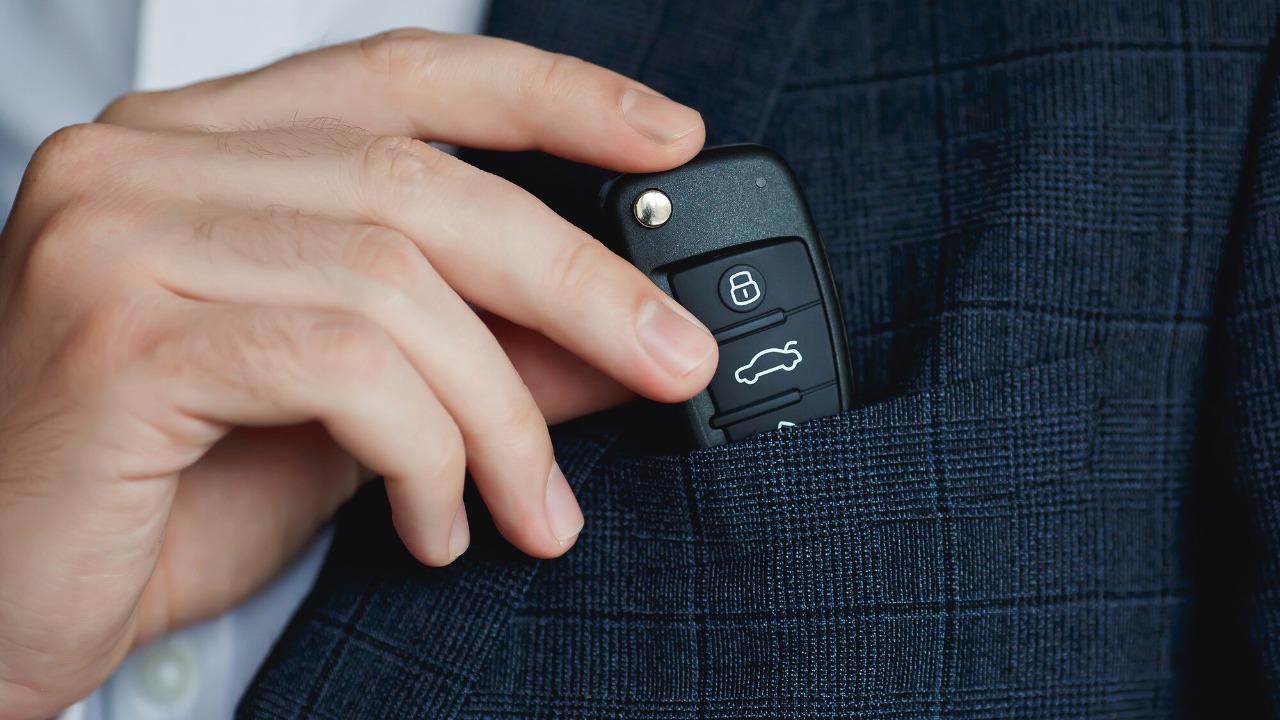

Police and insurance investigators have been blunt about one thing: most people are storing their car keys in ways that make life easier for thieves. The single rule they keep repeating is simple but disruptive to habit: keep every key or fob out of line-of-sight and out of wireless range from the front of your home, treating it as sensitive data rather than a casual object on the hallway table. I want to unpack why that guidance has become so urgent, how it fits into a longer history of crime prevention, and what it actually looks like in a real household.
Why police say your key storage is part of the crime scene
When officers talk about “key discipline,” they are not being abstract. In many modern thefts, the crime scene effectively starts at your front door, where a key or fob left on a console table can be cloned or grabbed in seconds. Investigators who reconstruct these incidents often find no broken glass and no forced entry, only a pattern of convenience: keys dropped near windows, smart fobs hanging on hooks by the door, and spare sets tucked in obvious kitchen drawers. From a policing perspective, that casual storage turns a private home into a low-friction access point for anyone willing to exploit it.
That logic mirrors how other security debates have evolved, where the everyday habits of ordinary people become central to risk. In online communities that dissect safety practices, contributors repeatedly stress that small, routine choices can either harden or weaken a target, a theme that surfaces even in discussions about collaborative projects such as the idea lab archives that weigh how design decisions affect vulnerability. When police urge drivers to rethink where a key lives at night, they are effectively asking them to redesign a tiny piece of their domestic environment so it no longer lines up neatly with the way thieves operate.
The one rule officers keep repeating
Across briefings and neighborhood meetings, the core message from law enforcement can be boiled down to one rule: treat your keys like confidential material and store them where they cannot be easily seen, reached, or wirelessly scanned from outside. In practice, that means moving fobs away from doors and windows, avoiding open hooks in hallways, and resisting the urge to leave a spare in the glove box or center console. The goal is not to create a fortress but to break the predictable patterns that make you an efficient target.
That single rule reflects a broader crime-prevention principle that has been echoed in policy debates for decades, where officials argue that modest changes in routine can have outsized effects on public safety. In legislative records such as the detailed congressional proceedings from earlier eras, lawmakers repeatedly return to the idea that everyday behavior, from how people lock doors to how they handle documents, shapes the opportunity structure for crime. When police now tell drivers to relocate their keys at home, they are applying that same logic to a new generation of vehicles and wireless systems.
How thieves actually exploit your habits
Modern car thieves do not need to smash a window if your habits do the work for them. In many cases, they rely on relay devices that can amplify the signal from a key fob left near a front wall, tricking the car into thinking the key is right beside it. In others, they simply watch for patterns, noting which houses leave keys on visible hooks or which drivers consistently stash a spare in the wheel well or fuel flap. The more predictable the routine, the easier it is to script a quick, low-risk theft.
Police reports and local government advisories often describe this as a problem of “routine activity,” where offenders, targets, and lack of guardianship line up in time and space. County-level documents, such as the detailed public safety and procedural guidance compiled in local government records, show how officials try to disrupt that alignment by nudging residents to change simple behaviors. When I look at how those frameworks translate to car crime, the pattern is clear: thieves are counting on you to be predictable, and key storage is one of the easiest routines for them to map.
Why “smart” keys need old-school thinking
Smart keys and proximity fobs were sold as the end of fumbling for metal in the dark, but they also created a new attack surface that many drivers still underestimate. Because the car only needs to sense the fob within a certain radius, thieves can exploit that wireless handshake without ever touching the key itself, especially if it sits near an exterior wall. The technology is sophisticated, yet the defense that officers recommend is almost stubbornly analog: distance, barriers, and deliberate placement.
That tension between high-tech systems and low-tech safeguards is familiar in other fields, from education to industrial safety, where digital tools are layered on top of practices that still depend on human judgment. Training materials that walk through risk scenarios, such as the structured safety and operations manuals available through vocational education portals like specialized technical guides, often emphasize that no device is secure by default if people use it carelessly. With smart keys, the same rule applies: the fob may be encrypted, but if it lives in the easiest possible place for a thief to exploit, the advantage shifts back to the attacker.
The psychology of leaving keys “where I can see them”
Most of us do not leave keys in obvious spots because we are reckless; we do it because we are busy and want to avoid losing them. The hallway bowl, the kitchen counter, the hook by the door, all of these are cognitive shortcuts that reduce the mental load of remembering where things are. From a psychological standpoint, they are classic examples of external memory, where the environment is arranged to help us function with less effort, even if that means trading away some security.
Researchers who study everyday decision-making have long noted how people balance convenience against risk, often underestimating threats that feel abstract or distant. In writing and communication studies, for instance, scholars have documented how individuals cling to familiar habits even when they know those habits are flawed, a theme explored in collections like the critical essays on entrenched “bad ideas” about practice found in analytical textbooks. When I apply that lens to key storage, the pattern is similar: the habit of leaving keys in plain sight persists because it feels efficient, and the downside only becomes real after something goes wrong.
What “doing it right” looks like in a real home
Translating police advice into a workable routine starts with mapping your own space. Instead of the front-door hook, that might mean a small, closed box on a shelf in an interior room, or a drawer that is not visible from any window. For smart fobs, officers often suggest adding a physical barrier that can dampen wireless signals, such as a lined pouch or metal container, and then placing that container away from exterior walls. The aim is to create both visual and electronic distance between the key and anyone standing outside.
In practice, I have seen households succeed when they treat this as a design problem rather than a scolding. They pick a single, consistent location that is slightly inconvenient but still easy to reach, then build a habit around it, much like families who decide that all important documents live in one fireproof box. Legal scholars who examine how rules shape behavior, including those who publish detailed analyses of how people respond to regulatory nudges in venues like the law review literature, often note that clear, simple defaults work better than complex instructions. The same holds here: one designated, out-of-sight spot for every key, every time.
Why one clear rule beats a dozen scattered tips
Police could offer a long checklist of dos and do-nots, from never leaving your engine running on the driveway to avoiding key handoffs in crowded car parks. Instead, many departments have shifted toward a single, memorable rule about treating keys as sensitive items, because they know that people are more likely to follow one strong guideline than a page of fine print. In risk communication, that kind of simplification is not dumbing things down; it is a deliberate strategy to cut through noise.
There is a parallel here with how experts evaluate complex systems in other domains, where they distill performance into a few key metrics so that non-specialists can act on the findings. In technical benchmarking projects, for example, analysts may run intricate evaluations behind the scenes but present the outcome as a simple score or recommendation, as seen in structured result files like the evaluation summaries used to compare different systems. When officers boil their advice down to “store your keys like confidential material, out of sight and out of range,” they are doing the same kind of translation, turning a complex threat landscape into one actionable habit.
How communities learn from each other’s close calls
Individual drivers are not the only ones adapting to smarter theft techniques; neighborhoods and online groups have become informal laboratories for what works. Residents share stories about attempted relay attacks caught on doorbell cameras, compare notes on storage solutions, and sometimes even coordinate with local police to adjust patrols based on patterns they notice. That peer-to-peer learning can be messy, but it often surfaces practical fixes faster than any official pamphlet.
Scholars who track how communities process risk and experience have documented similar dynamics in other contexts, from local history projects to digital comment archives. In one extensive study of how people narrate and respond to events over time, a researcher compiled a detailed thesis on community memory and adaptation, preserved in a comprehensive dissertation like the one available through university research repositories. I see echoes of that work in the way drivers now talk about key storage: one person’s near-miss becomes another person’s wake-up call, and gradually the “normal” way to handle keys shifts toward something more cautious.
What history tells us about small habits and big risks
Although smart keys feel like a thoroughly modern problem, the underlying issue, that everyday habits can either invite or deter crime, is not new. Historians who examine how communities have handled security over long stretches of time often find that the most consequential changes are not dramatic new laws but subtle shifts in routine, like when people started locking doors at night as a matter of course. Those shifts rarely happen all at once; they emerge from a mix of official warnings, personal stories, and gradual cultural change.
Archival projects that collect public reactions to risk and responsibility, such as the extensive comment compilations hosted on platforms like collaborative history sites, show how debates over “common sense” safety measures can stretch on for years. In more specialized historical research, including detailed case studies preserved in journals like the one accessible through regional history archives, scholars trace how small domestic practices, from where valuables are stored to how homes are arranged, intersect with broader patterns of crime and social trust. When I look at today’s arguments over key storage through that lens, they feel less like a passing fad and more like the latest chapter in a long story about how we learn to live with new kinds of risk.
More from MorningOverview