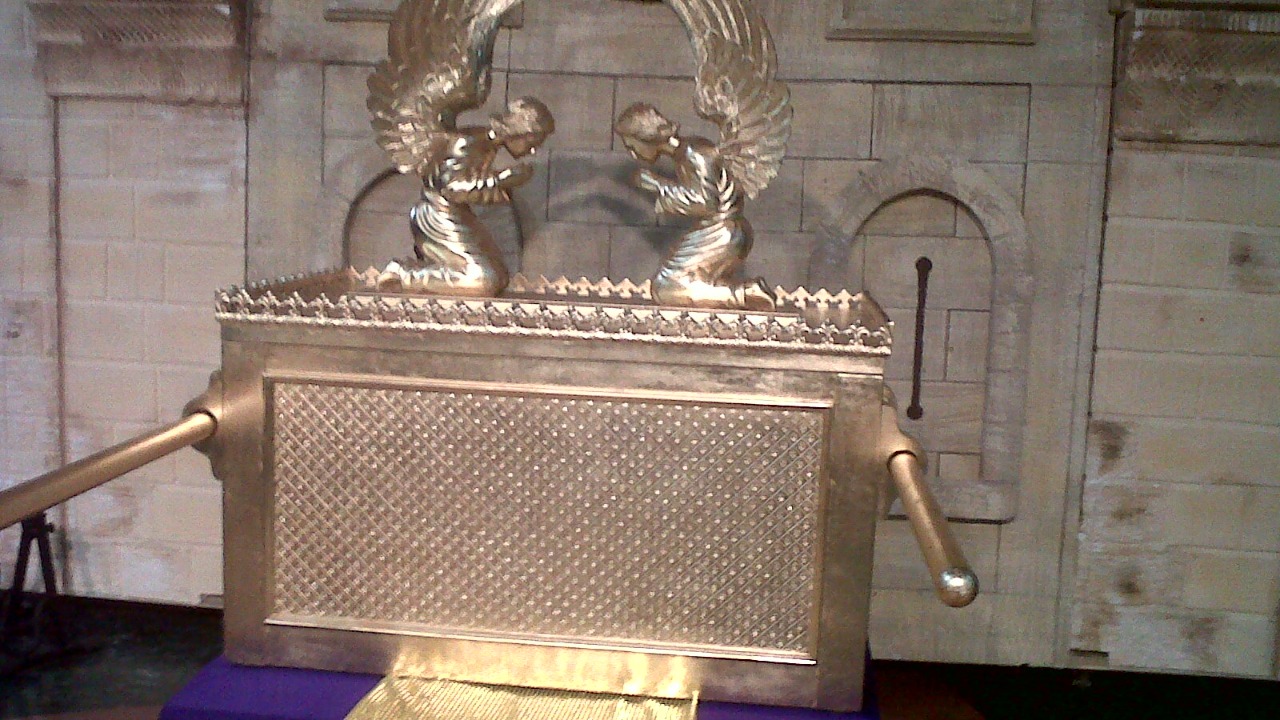

The Central Intelligence Agency’s long history with psychic research has resurfaced in a surprising new context, as a declassified document about “remote viewing” is being read as a tantalizing hint about the Ark of the Covenant. What began as a Cold War-era experiment in paranormal intelligence gathering is now fueling a wave of claims that U.S. operatives once believed they had glimpsed the biblical relic’s hiding place.
As I trace the document’s journey from a government archive to viral social feeds, the story that emerges is less about a confirmed archaeological breakthrough and more about how a single, cryptic file can ignite global fascination. The record does not settle the Ark’s fate, but it does reveal how seriously American intelligence once took the idea that human minds might reach across continents to find something that has eluded physical searchers for centuries.
How a Cold War psychic memo became a viral Ark sensation
The latest wave of interest began when an unclassified CIA document, long buried in an online reading room, started circulating on social media with bold claims that agents “may know” where the Ark of the Covenant is hidden. Posts framed the file as proof that U.S. intelligence had quietly confirmed the relic’s existence, even though the document itself is a technical report from a remote viewing session rather than a conventional field investigation. As the link spread across Facebook, Threads, and other platforms, the memo was recast from a niche artifact of psychic research into a supposed treasure map.
Television segments and digital reports quickly followed, treating the resurfaced file as a fresh discovery and highlighting how a government program once tried to psychically locate the Ark. One broadcast walked viewers through the document’s references to a sacred object and a specific geographic setting, presenting the material as part of a broader look at Cold War-era paranormal experiments that targeted high value “religious artifacts” and strategic sites, a framing that helped turn a dry intelligence product into a pop culture talking point anchored in remote viewing lore.
Inside the declassified remote viewing file
At the center of the controversy is a declassified report from the CIA’s archives that records a controlled session in which a remote viewer was tasked with describing a location and object tied to a coded target. The document, labeled with the identifier “CIA-RDP96-00789R001300180002-7,” reads like a transcript and analytical summary, noting impressions of terrain, structures, and a revered container associated with intense religious significance. The language is clinical, but the imagery is vivid enough that readers have linked it to the Ark of the Covenant, even though the file itself never uses that name in a straightforward, confirmatory way.
The report sits within a broader collection of psychic research materials that were released as part of the government’s effort to declassify Cold War-era programs. It outlines the methodology, including tasking procedures and feedback protocols, and it treats the viewer’s impressions as data points to be evaluated rather than as definitive truth. The very fact that such a session was commissioned, however, has fueled speculation that intelligence officials once considered the Ark a legitimate target for paranormal collection, a possibility that critics and enthusiasts alike have pored over in the original scanned document.
What the CIA actually did with psychic research
The Ark file did not emerge in a vacuum, it is part of a long and often controversial history of U.S. government interest in psychic phenomena. During the late stages of the Cold War, American intelligence agencies funded programs that explored whether “remote viewers” could describe distant locations, hidden objects, or even classified installations using only mental focus. These efforts were driven in part by concern that rival powers were experimenting with similar techniques, and they produced a patchwork of reports that mixed anecdotal successes with many sessions that yielded ambiguous or unverifiable results.
Public accounts of these programs describe how remote viewing was tested against known targets to gauge accuracy, then occasionally applied to real-world intelligence questions when traditional methods fell short. The Ark-related session appears to belong to that second category, where an iconic religious object was treated as a target of opportunity in a broader experiment on the limits of human perception. Later reviews of the psychic research effort concluded that the data did not justify operational reliance, but the surviving files show that, for a time, the CIA was willing to explore unconventional paths in search of strategic and symbolic information, a context that now shapes how I read the Ark memo highlighted in recent coverage.
From archive to algorithm: how social media reframed the file
What transformed a niche intelligence report into a global talking point was not a new revelation inside the document, but the way it was packaged and shared online. A Facebook post framed the unclassified file as evidence that agents “may know” the Ark’s location, pairing a screenshot of the memo with a short caption that implied a breakthrough. That framing encouraged readers to treat the document as a solved mystery rather than as a fragment of a decades-old research program, and the post’s rapid spread showed how easily archival material can be recast as breaking news when it is stripped of context in a viral feed, as seen in one widely shared social media update.
The same narrative jumped to other platforms, where short text posts and reposted screenshots repeated the claim that the CIA had effectively “found” the Ark using psychic methods. On Threads, a succinct description of the memo’s contents, paired with a link to the underlying document, invited users to imagine that U.S. operatives had quietly solved one of history’s great religious mysteries. The brevity of those posts left little room for nuance about the experimental nature of remote viewing or the absence of physical corroboration, a gap that helped the story gain traction in a widely circulated thread.
What news reports say the Ark memo does, and does not, prove
As the story migrated from social feeds to newsrooms, reporters began to parse what the declassified file actually supports. Coverage emphasized that the document shows the CIA once tasked a remote viewer with describing a site and object that many readers interpret as the Ark, but it also stressed that there is no evidence of a subsequent expedition or physical confirmation. The memo records impressions and analytical commentary, not a field report from archaeologists or operatives on the ground, a distinction that undercuts the strongest claims that the agency “found” the relic in any conventional sense, a point underscored in detailed political reporting.
Some outlets leaned into the more sensational framing, highlighting language that suggests the viewer perceived a sacred container in a specific region and presenting that as near confirmation of the Ark’s existence. Others took a more cautious approach, noting that remote viewing sessions often produced symbolic or metaphorical imagery and that the intelligence community itself treated such data as tentative. The result is a split narrative, where one set of stories treats the memo as a near smoking gun and another treats it as a fascinating but inconclusive artifact of Cold War experimentation, a tension that is evident in coverage that describes how the CIA “confirmed” the Ark using resurfaced documents.
The Ark’s enduring pull on archaeology and belief
The reason a single psychic memo can command so much attention is that it taps into a centuries-long search for the Ark of the Covenant, a quest that blends archaeology, theology, and national identity. The Ark, described in the Hebrew Bible as a gold-covered chest that held the stone tablets of the Ten Commandments, has been linked to sites from Jerusalem to Ethiopia, with each proposed location carrying its own religious and political implications. Modern expeditions have scoured churches, caves, and ancient fortifications, yet none have produced universally accepted proof of the Ark’s survival, leaving the object suspended between history and faith.
Recent reporting on the CIA file situates it within this broader landscape, noting that the idea of a government agency quietly probing the Ark’s whereabouts fits neatly into existing narratives about secret knowledge and hidden relics. Some accounts suggest that the remote viewing session pointed to a specific region that overlaps with long standing local traditions about the Ark’s resting place, while also acknowledging that no excavation or peer reviewed study has verified those claims. That blend of tantalizing overlap and stubborn uncertainty is part of what makes the declassified material so compelling to readers who already follow debates over alleged discoveries and “breakthroughs” tied to the Ark, a dynamic reflected in features that describe how the files “hint” at a possible location breakthrough.
How alternative history communities seized on the document
Beyond mainstream news, the Ark memo has been eagerly adopted by alternative history and fringe archaeology communities that have long argued that powerful institutions possess hidden knowledge about ancient artifacts. For these audiences, the fact that the CIA once devoted resources to a psychic probe of a sacred object is itself validation that the Ark is more than legend. Online forums and niche sites have woven the declassified session into broader theories about secret excavations, suppressed discoveries, and a global competition to control religiously charged technology, even when the underlying file offers no direct support for such sweeping narratives.
Some of the most enthusiastic reactions have come from pages that specialize in ancient mysteries, where the memo is presented alongside speculative maps and interpretations of biblical passages. One widely shared post framed the declassified material as evidence that the Ark was “located” in the 1980s, even though the document stops short of naming a precise site or recording any follow up mission. That framing has helped the file gain a second life as a kind of mythic waypoint, a piece of official paper that can be cited in support of long standing theories about the Ark’s survival, as seen in commentary that treats the CIA session as a key clue in locating the Ark.
Television, YouTube, and the spectacle of psychic espionage
The story’s migration to video has amplified its most cinematic elements, turning a technical intelligence report into fodder for dramatic reenactments and speculative panels. Television segments have paired archival footage of Cold War briefings with stylized graphics of glowing chests and desert landscapes, inviting viewers to imagine CIA operatives quietly harnessing psychic powers to track down a biblical relic. These productions often compress the history of remote viewing into a few minutes, emphasizing the most striking anecdotes while leaving out the more mundane reality of mixed results and internal skepticism.
On YouTube, creators have built longer narratives around the declassified file, walking audiences through the memo line by line and layering in commentary about biblical prophecy, secret societies, and alleged modern sightings of the Ark. One video presentation, framed as an investigation into whether the CIA “found” the Ark, uses the remote viewing transcript as a spine for a broader exploration of psychic espionage, complete with maps, archival images, and interviews with enthusiasts. The format allows for a more detailed look at the document, but it also encourages viewers to treat suggestive language as near proof, a dynamic that is evident in a popular video breakdown of the case.
Why the CIA Ark memo matters, even without a confirmed relic
Stripped of the more breathless claims, the declassified remote viewing file still offers a revealing glimpse into how far U.S. intelligence was willing to go in exploring unconventional methods. The decision to target an object associated with deep religious meaning suggests that officials saw value not only in potential strategic insights, but also in understanding symbols that resonate across cultures. Even if the session produced no actionable lead, the fact that it was commissioned and preserved shows that the boundary between hard intelligence and myth was more porous during the psychic research era than many might assume.
For me, the enduring significance of the Ark memo lies less in whether it pinpointed a hidden chamber and more in what it says about the stories we tell around power, faith, and secrecy. The document has become a canvas onto which different communities project their hopes, doubts, and suspicions, from believers who see it as confirmation of sacred history to skeptics who view it as a cautionary tale about government flirtations with pseudoscience. As long as the Ark of the Covenant remains unverified in any physical sense, the psychic file will sit at the intersection of these narratives, a small but potent reminder that even a single page from an intelligence archive can reshape public imagination when it escapes into the viral churn of modern media, a process that began when local outlets first flagged the remote viewing document and continued as national and international reports traced its journey through online coverage and political analysis.
More from MorningOverview