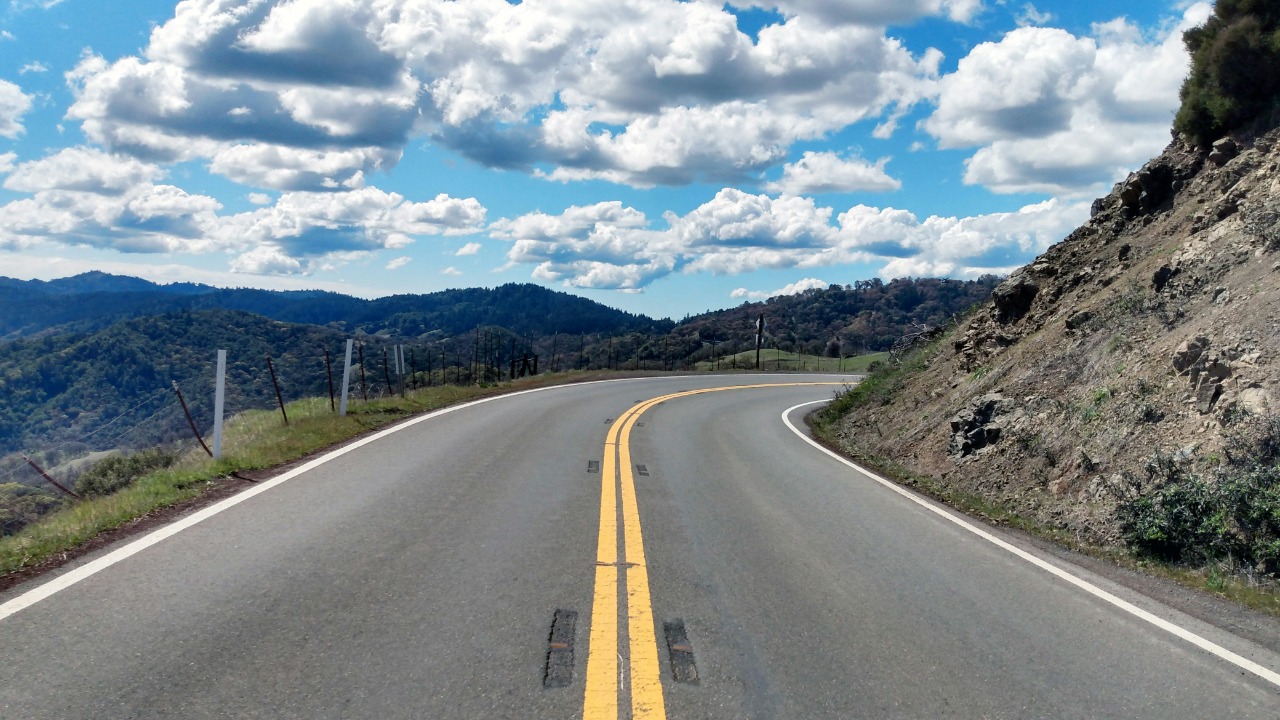

On a quiet stretch of Mendocino County roadway, a single boulder pulled from a roadside cut has forced archaeologists to rethink how people once moved through Northern California. What began as a routine look at exposed rock has turned into a case study in how chance discoveries can unsettle long‑held assumptions about the state’s deep past.
The find has also become a rare bridge between local curiosity, professional fieldwork and the broader tools researchers now use to decode patterns, from chipped stone on a boulder’s face to the language we use to describe it. In tracing how this rock went from roadside oddity to archaeological touchstone, I am really tracing how evidence, community and data converge to redraw part of California’s story.
The lonely Mendocino road that hid a surprise
The story begins with the landscape itself, a narrow Mendocino County road where traffic is light and the forest presses close to the asphalt. Road crews had cut into a slope to keep the lane clear, leaving a scatter of exposed stone that usually attracts little more than a passing glance. It was in this unremarkable setting that a single boulder, partly buried and streaked with lichen, caught the attention of people used to reading the land for subtle signs of the past, as later detailed in reporting on the roadside discovery.
What made the boulder stand out was not its size or shape but the patterning on its surface, a series of marks that did not match the random fractures of natural weathering. The rock sat just far enough from the road to have escaped heavy machinery, yet close enough that its face was visible from a passing car. That liminal position, between untouched hillside and engineered shoulder, created the conditions for the find: a piece of the deep past revealed only because modern infrastructure sliced through it.
From curiosity to archaeological lead
Once the unusual markings were noticed, the boulder shifted from roadside curiosity to potential archaeological lead. Initial photographs circulated among people familiar with Northern California rock art and tool traditions, and the consensus was that the surface showed deliberate human modification rather than random cracking. The pattern of pecking and abrasion suggested repeated, purposeful contact, the kind of signature archaeologists look for when distinguishing cultural features from geology.
That early assessment prompted a closer, in‑person inspection, with observers documenting the orientation of the boulder, the depth of the marks and the surrounding soil. The key question was whether the rock had been moved by road work or whether it remained in or near its original position, since context is crucial for interpreting any archaeological feature. The fact that the boulder appeared to be part of a larger outcrop, rather than a dumped fill stone, strengthened the case that the markings recorded activity that once took place on that hillside rather than somewhere else.
Why one boulder can shift a regional timeline
The reason this single rock matters is that it appears to sit outside the expected pattern for known archaeological sites in that part of Mendocino County. Established surveys have tended to cluster Indigenous activity in certain valleys, ridgelines and river corridors, leaving some stretches of road mapped as cultural blanks. The boulder’s markings suggest that people were using this particular slope in ways that had not been documented, which in turn hints that the distribution of past activity was more extensive than the site records show.
In practical terms, that means archaeologists may need to revisit assumptions about where to look for evidence of early habitation or ritual. A feature like this can extend the known footprint of a cultural tradition, push back the inferred age of local occupation or reveal a previously unrecognized route between better documented areas. When a roadside cut exposes a worked boulder in a place that was supposed to be quiet, it challenges the idea that the archaeological map is close to complete and underscores how much of California’s pre‑contact history remains literally buried.
Community eyes and social media as field tools
The boulder’s path from obscurity to significance also ran through community networks and social media, not just formal field reports. Images and short descriptions shared online drew in local residents, amateur historians and people with ties to nearby tribal communities, who added their own observations and questions. One widely shared post framed the rock as a lonely sentinel on a Mendocino road that had quietly altered how people thought about California’s past, a narrative that helped the story travel far beyond the county line through a social media update.
In parallel, discussion threads in regional history and archaeology groups became informal clearinghouses for new photos, GPS coordinates and speculation about the markings’ purpose. Members compared the boulder’s surface to other known sites, debated whether the pattern fit grinding, carving or symbolic use, and flagged the need for professional documentation. One such conversation unfolded in a dedicated community group where participants traded field impressions and logistical details in a long discussion thread, illustrating how digital platforms now function as ad hoc extensions of the survey notebook.
Reading the rock: what the markings might mean
Interpreting the boulder’s surface requires more than simply noting that the marks are human made. Archaeologists look at the spacing, depth and orientation of each peck or groove to infer how the rock was used, whether as a grinding surface, a canvas for petroglyphs or a combination of both. On this stone, the pattern appears to show repeated contact in specific zones rather than a random scatter, which points toward a structured activity that was performed over time rather than a single event.
That kind of pattern analysis is painstaking, but it is also where the most important clues lie. By comparing the boulder’s markings to documented examples from other parts of Northern California, researchers can test whether it fits into a known tradition or represents a local variant. The goal is not to force the rock into a preconceived category but to see whether its surface tells a consistent story about how people interacted with it, from the angle of approach to the likely tools used. Each groove and pit becomes a data point in reconstructing a practice that left no written record.
How archaeologists use pattern data, from rocks to words
The work of decoding the boulder’s markings sits within a broader shift in archaeology toward more systematic pattern analysis, a shift that mirrors developments in language and data science. Just as linguists rely on large frequency lists of English words to understand how language is structured in everyday use, archaeologists increasingly compile detailed catalogs of tool marks, site locations and artifact types to see which combinations recur. One example of this kind of linguistic baseline is a corpus of single‑word frequencies that helps researchers quantify how often particular terms appear in ordinary text.
Similar logic underpins modern approaches to both text and material culture. In natural language processing, models are trained on curated vocabularies so they can recognize and predict patterns in how characters and words co‑occur, as in a machine learning vocabulary file that lists the tokens a system can interpret. Archaeologists, in turn, build their own reference sets of known site types and mark patterns, then compare new finds like the Mendocino boulder against those baselines. The underlying idea is the same: meaning emerges not from a single instance but from how that instance fits into a larger, carefully documented pattern.
Why “common patterns” matter for an uncommon rock
To understand why the Mendocino boulder is so disruptive, it helps to think about how often certain features repeat across the archaeological record. Some rock art motifs and grinding surfaces are so widespread that they function like high‑frequency words in a language, turning up in site after site. Researchers sometimes use external lists of widely replicated terms, such as a catalog of frequently copied words, as analogies for how cultural elements propagate. When a new site shows a familiar motif in an unexpected place, it suggests that the underlying practice traveled farther than previously documented.
The Mendocino boulder appears to carry elements that are both familiar and out of place, a combination that forces a re‑evaluation of how cultural practices spread across the region. If the markings match known patterns from distant valleys, then the rock becomes evidence of a broader network of movement or influence. If they diverge in key ways, the boulder may instead point to a localized tradition that has simply gone under‑recorded. In either case, the find highlights how much weight archaeologists place on recurring patterns when they reconstruct histories that lack written chronicles.
Cross‑checking interpretations, like solving a puzzle
Interpreting a single boulder is a bit like working through a difficult crossword: each clue can point in several directions until enough letters are filled in to narrow the options. Archaeologists cross‑check their readings of rock markings against environmental data, known trade routes and other nearby sites, looking for combinations that make sense together. The process resembles how puzzle enthusiasts rely on comprehensive word lists, such as a downloadable crossword dictionary, to test whether a guessed answer is even a valid entry.
For the Mendocino rock, that cross‑checking involves more than stylistic comparison. Researchers must consider whether the slope’s geology would have made it a practical grinding or carving surface, whether seasonal water sources nearby could have supported repeated visits, and whether any artifacts in the surrounding soil align with the inferred use. Each line of evidence either reinforces or weakens a given interpretation, much as each intersecting answer in a crossword either confirms a letter or forces a rethink. The goal is not to force a clever solution but to arrive at the one that best fits all the available clues.
What this means for future road work and research
The implications of the Mendocino boulder extend beyond a single hillside. If a routine road cut can expose a feature that reshapes part of the regional archaeological map, then transportation and infrastructure projects across California may need to treat even seemingly marginal stretches of ground as potential sources of significant finds. That does not mean halting every project, but it does argue for more systematic collaboration between engineers, local communities and cultural resource specialists whenever new ground is disturbed.
For researchers, the boulder is a reminder that the archaeological record is not a fixed archive but a living, expanding dataset. Each new discovery, especially in places that were assumed to be quiet, forces a recalibration of models about where people lived, traveled and practiced ceremony. In that sense, the rock by the Mendocino road is less an isolated curiosity than a prompt to look again at the spaces between known sites, to treat the gaps on the map as questions rather than empty zones, and to recognize that California’s oldest stories are still emerging from the cut banks and road shoulders of the present.
More from MorningOverview