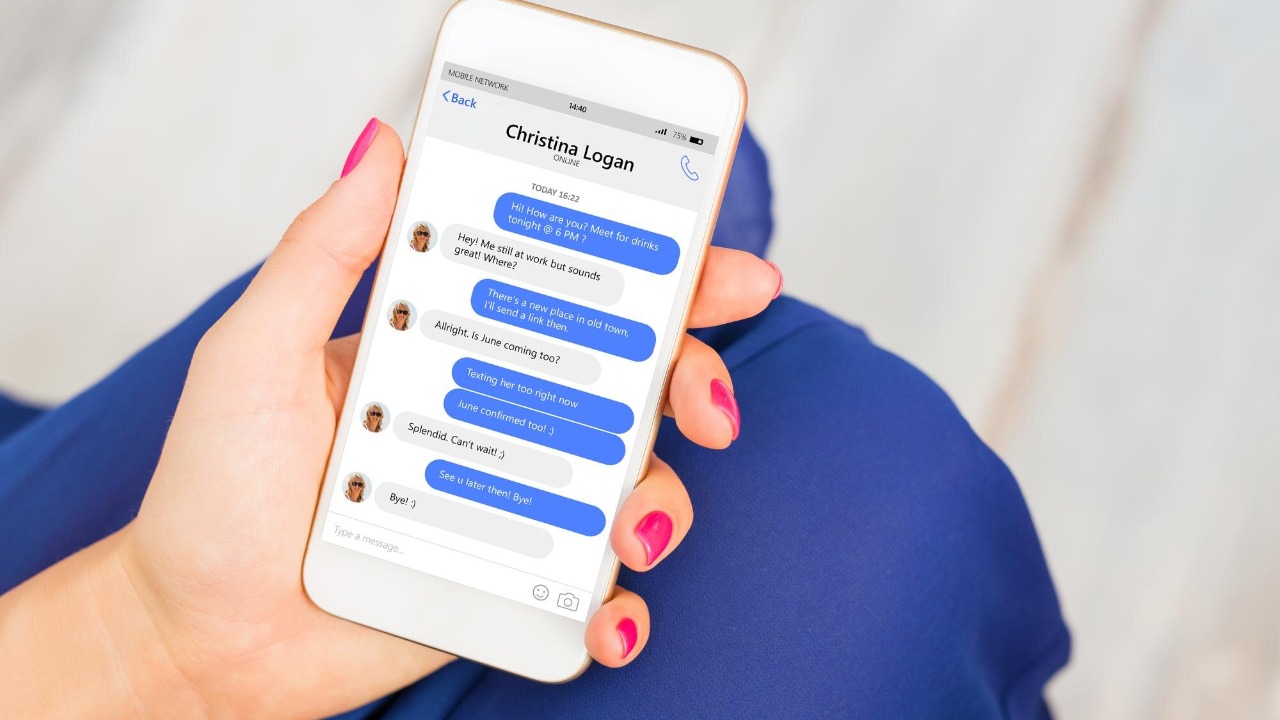

Google Messages is quietly gaining a workplace twist: a feature that lets organizations route, log, and review employee chats in ways that look a lot more like corporate email than casual texting. Instead of being a purely personal app on an Android phone, it is starting to resemble a managed communications channel that bosses, IT teams, and compliance officers can monitor. That shift raises real questions about how much privacy workers can expect when they type into what still feels like a private messaging window.
As employers lean into mobile messaging for everything from shift updates to client conversations, the line between personal and professional chat is blurring fast. I am looking at how this new monitoring capability in Google Messages works in practice, what it means for power dynamics at work, and how employees can protect themselves without pretending the feature does not exist.
What Google Messages is changing inside the workplace
The core change is not that Google Messages suddenly spies on people by default, but that it now gives organizations tools to treat chats as managed business records. In a corporate setup, IT administrators can configure work profiles or managed devices so that conversations tied to a company account are stored, audited, or exported, much like email. Reporting on the feature describes how employers can gain visibility into message threads, including who said what and when, turning what used to be ephemeral text exchanges into durable logs that managers can review later for performance, compliance, or dispute resolution purposes, as detailed in coverage of how Google Messages now lets bosses monitor chats.
In practice, that means a chat with a supervisor about a client deadline or a quick note to a colleague about a project can be captured and stored on company systems, even if it looks like a normal RCS or SMS thread on the phone. The feature fits into a broader trend of employers consolidating communication into official channels that they can control and audit, rather than letting work spill into unmanaged apps. It also reflects a familiar corporate logic: if a conversation affects the business, leadership wants the option to see it, whether that happens in email, chat, or text.
How bosses can actually see your Google Messages
For a manager to see employee chats, the organization typically needs to be using managed Android devices or work profiles, where Google Messages is deployed as part of a corporate configuration. In that environment, messages associated with the work profile can be synced to company servers or third party archiving tools, giving supervisors or compliance teams a dashboard view of conversations. The technical setup is not magic surveillance; it relies on device management policies, account controls, and explicit routing of data into systems that are already used to monitor email and collaboration tools.
Once that pipeline is in place, bosses can search for keywords, filter by employee, or pull up entire threads when they want to reconstruct how a decision was made or whether a policy was followed. The same infrastructure that lets a manager track project updates in a team chat can also surface side comments that were never meant to be part of a formal record. That is the real shift: Google Messages is no longer just a phone app, it becomes another node in a monitored corporate network where the default assumption should be that anything work related might be reviewed later.
Why employers want text-level visibility in the first place
From an employer’s perspective, bringing Google Messages into the monitoring fold is about risk management and productivity, not just curiosity. Companies already archive email to comply with financial regulations, litigation holds, and internal investigations, and mobile messaging is simply the next frontier. When sales teams, field staff, or remote workers rely on text to coordinate with clients or colleagues, leadership wants those exchanges to be discoverable if a deal goes wrong, a complaint surfaces, or a regulator asks for records. That logic mirrors the way financial institutions document customer communications to satisfy strict oversight, a mindset that is spelled out in detail in corporate playbooks on financial marketing and compliance.
There is also a softer, cultural reason: managers increasingly see chat logs as a window into how teams actually function. Instead of relying solely on formal reports or meetings, they can scan message history to understand who is doing the invisible coordination work, who is consistently late on responses, and where bottlenecks form. That kind of granular visibility can help leaders reward the right people and fix broken processes, but it also risks turning everyday conversation into a performance metric, especially when the monitoring is not clearly explained to staff.
The power imbalance when your boss can read your chats
Once a messaging app becomes a monitored channel, the power imbalance between employer and employee becomes impossible to ignore. Workers may feel pressure to be “always on” in Google Messages, responding quickly and performing enthusiasm in every thread because they know their words can be pulled up later. That dynamic echoes long standing concerns in journalism and other fields about how digital traces can be used to evaluate, discipline, or even intimidate staff, concerns that have been explored in depth in media accountability discussions such as those collected in Nieman Reports.
In a monitored chat environment, informal jokes, venting, or quick shortcuts that used to feel harmless can suddenly look risky. Employees may self censor, avoid raising sensitive issues in writing, or move difficult conversations to unmonitored apps, which can undermine transparency and trust. The more that Google Messages is framed as an official record, the more workers will treat it like a permanent file, which changes not only what they say but how they relate to colleagues and managers. That shift is not inherently bad, but it is a profound cultural change that organizations need to acknowledge rather than pretend nothing has changed.
How Google’s AI and smart replies reshape monitored conversations
Google Messages is not just a pipe for text; it increasingly layers in AI powered suggestions, smart replies, and predictive phrasing that can subtly shape how employees communicate. When a worker sees a suggested response like “Sounds good, I’ll handle it” and taps it, they are not only saving time, they are also letting an algorithm influence the tone and content of a monitored record. That matters in a workplace context, because those AI assisted replies can be interpreted later as commitments, approvals, or acknowledgments, even if the employee barely thought about them before hitting send.
Under the hood, those features draw on language models and token level vocabularies similar to the ones used in research projects such as the CharacterBERT vocabulary, which break text into units that can be predicted and recombined. When such systems are embedded in a corporate messaging app, they do more than autocomplete sentences; they help standardize how people talk at work, nudging them toward certain phrasings and away from others. In a monitored environment, that can make conversations look more polished and compliant on the surface, while still leaving the underlying power dynamics and privacy concerns unresolved.
Why some workers still see upside in the new feature
Despite the obvious privacy concerns, some employees may welcome the fact that Google Messages can now function as an official, traceable channel. When a boss promises a promotion, approves overtime, or signs off on a risky decision in chat, having that exchange logged in a system the company controls can protect the worker if memories suddenly change. In that sense, monitoring can cut both ways, giving staff a way to point to written evidence when they need to defend their performance or challenge an unfair accusation.
There is also a more pragmatic appeal: features that make it easier to coordinate with managers, share updates, and respond quickly can help ambitious employees stand out. Guides on workplace communication already encourage staff to use chat tools strategically to showcase reliability and initiative, a theme that shows up in advice on how a Google chat feature can impress your boss. When those same tools are wired into Google Messages under corporate control, the incentive to treat every message as part of a professional portfolio only grows stronger, even if that means sacrificing some spontaneity.
What this means for privacy, consent, and workplace norms
The arrival of employer level monitoring in Google Messages forces a fresh look at what privacy and consent really mean at work. Legally, many companies already reserve the right to monitor communications on corporate devices, but the social expectation around text messages has been different from email. People still tend to see SMS and RCS as more intimate, more like a phone call than a memo. Turning that channel into a logged record without clear, repeated disclosure risks eroding trust, especially in organizations that already struggle with transparency.
Ethically, the key question is not whether monitoring is allowed, but whether it is proportionate, well explained, and limited to what is genuinely necessary for business and compliance. Research on organizational communication and surveillance, including work on digital governance and power structures such as the analysis in this study of institutional control, suggests that unchecked monitoring can chill speech and damage morale. If Google Messages is going to become a semi official record of workplace life, employers need to pair that capability with clear policies, training, and real safeguards against misuse, not just a buried clause in an onboarding packet.
How employees can protect themselves when using Google Messages for work
For workers, the first line of defense is awareness. If a phone is company issued, or if a work profile is installed on a personal device, it is safest to assume that any conversation in Google Messages tied to that profile can be monitored or archived. That means keeping personal chats strictly separate, avoiding sensitive topics in work threads, and treating every message as if it might be read out loud in a meeting one day. It also means paying attention to onboarding materials, IT notices, and HR trainings that describe how mobile messaging is handled, even if the language is dense or technical.
Beyond that, employees can push for clarity and boundaries. Asking whether Google Messages conversations are logged, who can access them, and how long they are stored is not insubordination, it is basic digital hygiene. In some sectors, unions or worker councils may negotiate explicit rules around monitoring, drawing on broader debates about surveillance and autonomy that have been explored in critical essays like Musings on power and technology. Even in non union workplaces, raising these questions can nudge management toward more thoughtful policies, especially if multiple employees voice similar concerns.
Lessons from other monitored environments and data heavy systems
Google Messages is not the first system to turn everyday communication into structured, analyzable data. Corporate email, customer relationship management tools, and even sports performance platforms have been logging interactions and metrics for years. In professional athletics, for example, teams routinely track player movements, biometric data, and communication patterns to optimize performance, a practice reflected in the data rich updates that appear in feeds like sports analytics reports. Those systems show how quickly raw information can be turned into dashboards, rankings, and decisions that affect careers.
On the technical side, the ability to search and analyze chat logs depends on robust dictionaries, corpora, and classification schemes that turn messy language into something machines can process. Resources such as the dic2010 lexical dataset illustrate how detailed those building blocks can be, mapping words and forms so algorithms can recognize patterns. When similar techniques are applied to Google Messages in a corporate context, they make it possible not only to retrieve specific conversations, but also to run sentiment analysis, flag “risky” phrases, or profile communication styles, all of which deepen the monitoring beyond simple archiving.
Where policy, contracts, and culture need to catch up
The spread of monitored messaging through tools like Google Messages is outpacing the policies that govern it. Many employee handbooks still treat text messages as informal, barely mentioning them compared with email or official collaboration platforms. That gap leaves both workers and managers guessing about what is acceptable, which is a recipe for conflict when a chat log suddenly becomes central to a dispute. Legal and HR frameworks need to be updated to reflect the reality that mobile messaging is now a core part of how business is done, not a side channel.
Contractual language and internal rules can borrow from existing models in sectors that already handle sensitive data, such as finance and education, where detailed protocols for communication and record keeping are standard. Academic and professional materials on organizational governance, like the guidance compiled in institutional policy manuals, show how explicit rules can set expectations and reduce ambiguity. At the same time, culture matters as much as contracts: if leaders treat monitored chats as a tool for collaboration rather than constant surveillance, and if they model restraint in how they use that visibility, employees are more likely to accept Google Messages as a legitimate workplace channel instead of a digital panopticon.
The future of work chat when everything can be archived
Looking ahead, the integration of monitoring into Google Messages is likely to be a preview, not an exception. As more apps blend personal and professional use, organizations will push to bring them under the same compliance and analytics umbrella that already covers email and enterprise chat. That trajectory aligns with broader shifts in digital capitalism, where data about behavior is continuously harvested, analyzed, and fed back into management decisions, a pattern dissected in critical studies of communication and markets such as institutional policy manuals and in analyses of how information flows shape power structures like those in this study of institutional control.
For workers, the challenge will be to navigate that reality without surrendering all sense of privacy or agency. That means learning the technical basics of how tools like Google Messages are configured, insisting on clear communication from employers, and using alternative channels when a conversation truly needs to stay off the corporate record, while still respecting legal and ethical boundaries. For employers, the test will be whether they can use these new capabilities to support collaboration and accountability rather than to micromanage every keystroke. The technology is already here; what remains uncertain is whether workplace norms and protections will evolve quickly enough to keep the balance of power from tilting even further toward those who control the logs.
More from MorningOverview