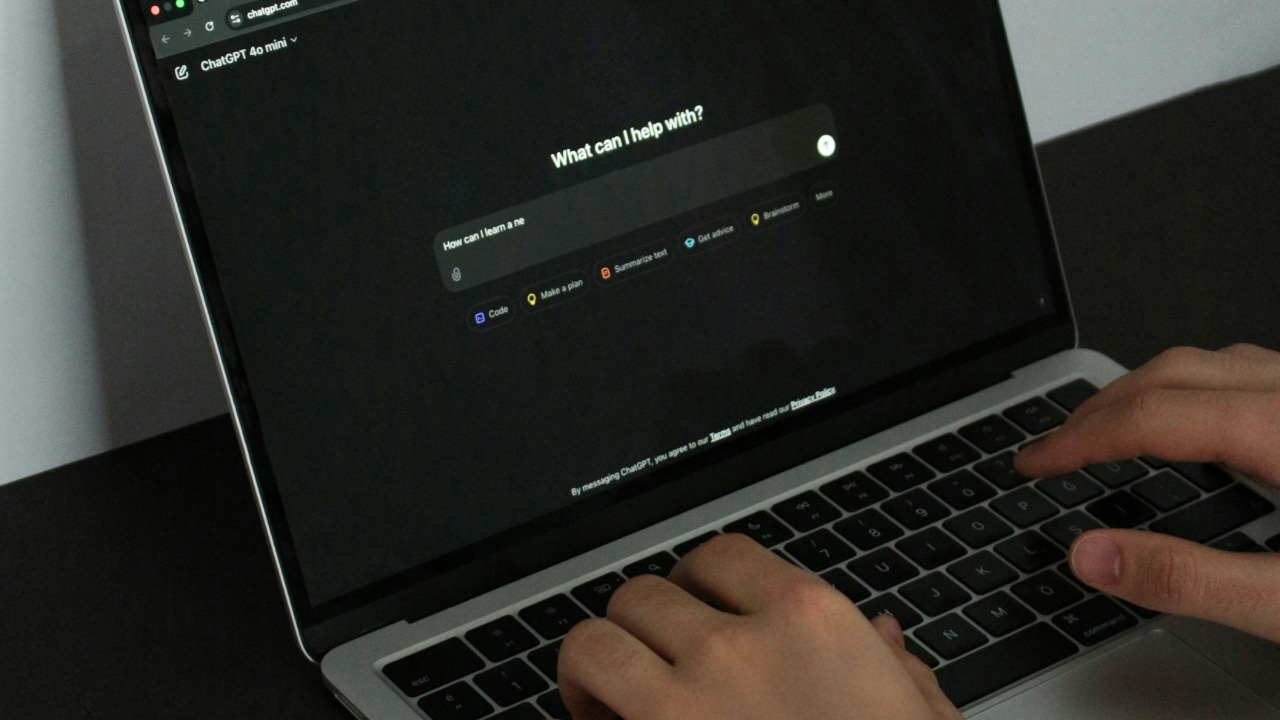

OpenAI’s flagship chatbot may be on the verge of a major shift in how it makes money, with a leak suggesting that advertising could soon appear inside ChatGPT’s answers. If that happens, the change would reshape not only the product’s user experience but also the wider ecosystem of search, content, and SEO that has grown up around generative AI.
I want to unpack what this potential move might look like, why it is surfacing now, and how it could ripple through publishers, marketers, and everyday users who increasingly rely on ChatGPT as a starting point for information and ideas.
What the leak actually suggests about ads in ChatGPT
The first thing that matters is what is known, and what remains unverified, about ChatGPT potentially inserting ads into its responses. Based on the available sources, there are claims circulating that OpenAI is testing or preparing a format where sponsored content appears alongside or inside generated answers, but the specific implementation details, targeting rules, and launch timeline are unverified based on available sources. The core allegation is simple: commercial messages would be blended into the conversational interface that millions of people already treat as a neutral assistant.
Discussion threads among developers and early adopters have amplified these claims, with some users sharing screenshots and secondhand descriptions of experimental ad units inside ChatGPT’s interface. On at least one prominent forum, participants are debating whether such a move is inevitable for a product that has rapidly scaled its user base and infrastructure costs, even as the exact mechanics of any ad rollout remain unclear, as reflected in the ongoing conversation on one developer forum. At this stage, without direct confirmation from OpenAI, the existence of a structured ad program inside ChatGPT should be treated as a credible but still unconfirmed possibility.
How the rumor spread and why it resonates
Even without official documentation, the idea of ads in ChatGPT has spread quickly through professional and creator circles, in part because it fits a familiar pattern from the broader tech industry. Once a platform reaches a certain scale, the pressure to monetize more aggressively tends to rise, especially when infrastructure costs are high and investors expect a clear path to profit. That context makes the leak feel plausible to many observers, which is why it has gained traction rather than being dismissed as a fringe theory.
On business-focused social networks, creators and startup educators have already begun framing the shift as a near-term reality, warning their audiences that the “clean” interface they rely on for research and ideation may soon include sponsored placements. One widely shared post from a startup education account, for example, bluntly tells followers that ChatGPT “is going to start showing ads,” using that claim to spark discussion about how founders should adapt their marketing strategies, as seen in a recent LinkedIn update. The certainty of that language, even though the underlying details are not yet confirmed, has helped cement the idea that an ad-supported ChatGPT is less a question of “if” and more a question of “when.”
Why OpenAI might be tempted to put ads in a chatbot
From a business perspective, the logic behind inserting ads into ChatGPT is straightforward. Running large language models at global scale is expensive, and subscription revenue alone may not cover the full cost of compute, research, and product development. An ad layer would give OpenAI a way to monetize the enormous volume of free queries that users fire at the system every day, especially in categories like shopping, travel, and software tools where commercial intent is high. In that sense, the leak aligns with a familiar playbook: build a habit-forming product, then introduce advertising once the audience is too large to ignore.
There is also a strategic angle. If users increasingly start their information journeys inside ChatGPT instead of on traditional search engines, the conversational interface becomes a powerful gatekeeper for attention. That makes it attractive to brands that want to appear at the moment of decision, whether the user is choosing a SaaS platform, a hotel, or a new smartphone. Some creators in the AI and marketing space have already begun speculating about how brands might buy visibility inside AI assistants, with video explainers walking through hypothetical ad formats and revenue models, as in one early breakdown on YouTube. While those scenarios remain speculative, they highlight why an ad-supported chatbot is so appealing to advertisers who feel they are losing ground in traditional search.
User trust, transparency, and the risk of “stealth” ads
For users, the biggest question is not whether ads might appear, but how clearly they would be labeled and separated from organic answers. People turn to ChatGPT for help with decisions that range from trivial to deeply consequential, and they often treat its responses as authoritative. If sponsored recommendations are blended too seamlessly into that flow, the line between neutral guidance and paid promotion could blur in ways that undermine trust. The risk is especially acute in sensitive domains like health, finance, or legal information, where a biased suggestion could have real-world consequences.
Creators and commentators who focus on AI ethics have already raised concerns about “stealth” advertising inside generative tools, warning that users may not notice subtle labels or disclosures if they are buried in a dense chat transcript. Some video analysts have walked through mock interfaces that show how a single sponsored link, framed as part of a helpful answer, could nudge users toward a particular product without them realizing they are being marketed to, as illustrated in one critical walkthrough on YouTube. If OpenAI does move forward with ads, the clarity of its labeling and the strength of its policies around sensitive categories will be central to whether users continue to trust the assistant’s judgment.
What ads inside ChatGPT could mean for SEO and content creators
For publishers and SEO professionals, the prospect of ads inside ChatGPT is layered on top of an existing disruption: generative answers already reduce the number of clicks flowing to traditional websites. If the chatbot not only summarizes information but also surfaces sponsored recommendations, the competition for visibility becomes even more intense. Brands that once fought for a top-three position on a Google results page may now find themselves vying for a single sponsored slot inside an AI-generated paragraph, with far less transparency about how that placement is awarded.
Some SEO practitioners have been testing how well ChatGPT can already produce search-optimized copy, treating the model as both a competitor and a tool. In one detailed experiment, a marketer evaluated the assistant’s ability to craft keyword-targeted blog posts, meta descriptions, and outlines, concluding that the system can generate structurally sound SEO content but still benefits from human refinement and strategy, as documented in a long-form SEO case study. If ads are layered on top of that capability, the same tool that helps brands write content could also become the gatekeeper that decides which of those brands gets surfaced in a sponsored slot, tightening the feedback loop between AI-generated text and AI-mediated discovery.
Will AI-written content and AI ads hurt search rankings?
Another concern is how search engines will treat pages that are heavily influenced by AI, especially if those pages are designed to capture traffic that might otherwise stay inside ChatGPT. Some SEO consultants argue that using AI to draft content is not inherently harmful, as long as the final result is accurate, original, and genuinely useful to readers. Others warn that overreliance on generic AI text can lead to thin, repetitive pages that algorithms may eventually devalue. The uncertainty is compounded by the possibility that search engines could adjust their ranking systems in response to a flood of AI-authored material.
Several practitioners have begun publishing their own tests and guidance on this front, examining whether AI-generated articles perform differently in search compared with fully human-written pieces. One agency, for example, has shared a detailed breakdown arguing that AI-assisted writing does not automatically damage rankings, but that careless use can create quality and duplication issues that algorithms are likely to penalize, as outlined in a practical guide on AI and SEO. If ChatGPT starts showing ads, that tension could sharpen: brands might feel pressure to produce more AI-shaped content to win organic visibility, even as they consider paying for sponsored exposure inside the same ecosystem.
How marketers are already preparing for AI-native ad formats
Even before any official ad product launches inside ChatGPT, marketers are experimenting with ways to treat AI assistants as a new kind of distribution channel. Some are building prompt libraries and internal playbooks to ensure that their brand names, product descriptions, and differentiators are consistently fed into the model’s context when they or their agencies generate content. Others are exploring how to structure product data, FAQs, and documentation so that AI systems can more easily surface accurate information about their offerings when users ask open-ended questions.
On video platforms, marketing educators have started to outline hypothetical strategies for “AI-native” advertising, walking through scenarios where a brand might sponsor a particular type of query or pay to be featured in a comparison answer. One tutorial-style video, for instance, sketches out how a SaaS company could position itself to benefit from conversational recommendations, treating AI assistants as a blend of search engine and chatbot, as discussed in a strategy session on YouTube. While these playbooks are still speculative, they show that many marketers are not waiting for a formal ad product to start thinking about how to appear inside AI-driven conversations.
Creators, influencers, and the new “AI recommendation” economy
Beyond traditional brands, individual creators and influencers are also trying to understand how AI recommendations might affect their visibility and income. If users increasingly ask ChatGPT for “the best channels to learn coding” or “top newsletters about personal finance,” the assistant’s answers could shape which creators gain new audiences. The introduction of paid placements inside those recommendations would raise difficult questions about fairness and disclosure, especially for smaller voices that lack the budget to compete with larger advertisers.
Short-form video creators have begun addressing these shifts directly, posting quick explainers about how AI tools might change the way audiences discover content and products. In one short clip, for example, a creator walks through the idea that AI assistants could become the first stop for product research, compressing what used to be a long trail of search results and reviews into a single conversational answer, as highlighted in a brief explainer on YouTube Shorts. If ads are layered into that flow, creators may find themselves competing not only with each other but also with sponsored recommendations that sit inside the same AI-generated response.
How users are already bending ChatGPT to commercial tasks
One reason the idea of ads inside ChatGPT feels so consequential is that users have already turned the assistant into a commercial tool, even without formal advertising. Freelancers and small businesses routinely ask the model to draft product descriptions, email campaigns, and landing page copy, effectively using it as a low-cost marketing assistant. In that context, the line between “using ChatGPT to market something” and “being marketed to inside ChatGPT” is already thin, and a formal ad product would simply make that dual role more explicit.
Video tutorials show just how deeply this behavior has taken hold. In one walkthrough, a creator demonstrates how to use ChatGPT to generate a full marketing funnel, from ad headlines to follow-up emails, positioning the tool as a central hub for small-business promotion, as seen in a step-by-step guide on YouTube. If OpenAI introduces ads into the same interface, those users may find themselves both producing and consuming marketing messages in a single conversational space, raising fresh questions about how influence and intent are managed inside the product.
Competing AI platforms and the pressure to monetize
Any move by OpenAI to introduce ads into ChatGPT would not happen in isolation. Rival AI platforms are also searching for sustainable business models, and some are experimenting with their own blends of subscriptions, enterprise licensing, and potential ad formats. If one major player successfully proves that conversational ads can generate significant revenue without alienating users, others are likely to follow, turning AI assistants into a new front in the long-running battle for digital advertising budgets.
Industry commentators have started to compare different monetization paths, weighing the trade-offs between pure subscription models and ad-supported hybrids. In one analysis-oriented video, a creator contrasts the potential of AI chatbots to replace parts of traditional search with the need to avoid overwhelming users with commercial noise, arguing that the platforms that strike the right balance will gain a long-term advantage, as discussed in a broader market overview on YouTube. If the leak about ChatGPT ads proves accurate, it could accelerate that competitive dynamic, pushing other AI providers to clarify how they plan to fund their own large-scale deployments.
More from MorningOverview