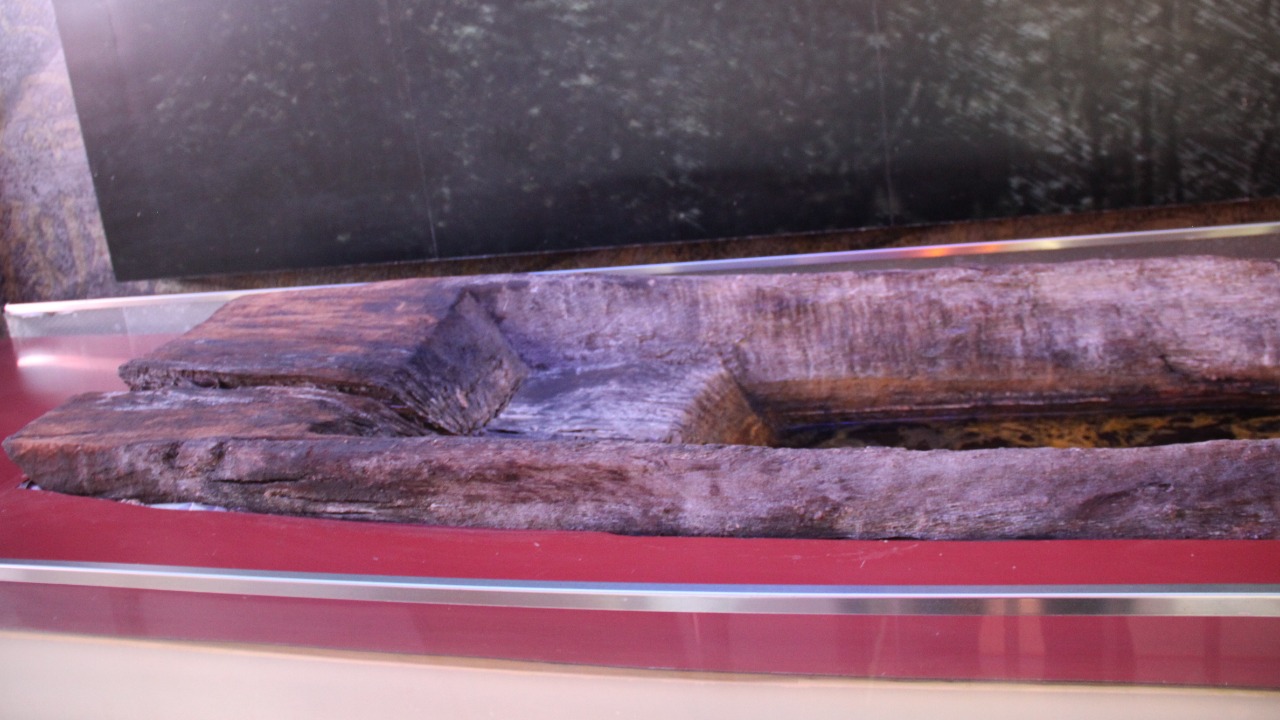

Archaeologists in Wisconsin have uncovered a cluster of 16 dugout canoes in Lake Mendota, including one that dates back roughly 5,200 years, transforming a quiet shoreline into one of the most remarkable windows onto North America’s early watercraft. The discovery, concentrated near a modern parking lot in Madison, pushes the timeline of known boatbuilding in the region far deeper into the past and reveals a continuous story of people living with, and on, this lake. I see in this find not just a collection of artifacts, but a layered record of technology, trade, and daily life spanning dozens of generations.
The “ancient parking lot” beneath Lake Mendota
The cluster of canoes sits just offshore from a lakeside parking area, a mundane piece of infrastructure that now turns out to be the edge of an extraordinary archaeological site. Divers and researchers have identified 16 dugout canoes preserved in the lakebed, arranged across a stretch of shallow water that effectively functions as an “ancient parking lot” for watercraft that were abandoned, lost, or deliberately placed there over thousands of years. The concentration of vessels in one small area suggests a favored landing spot or harbor that remained important across multiple cultural periods, rather than a scattering of isolated accidents.
Reporting on the project describes how underwater archaeologists mapped and documented the canoes as they realized the scale of the site, with each hull emerging from the sediment as part of a larger pattern of repeated use. The phrase “ancient parking lot” captures the way these 16 dugouts appear to have accumulated over time in a single, heavily trafficked zone, a pattern that has been detailed in coverage of the Lake Mendota canoes. Instead of a single spectacular artifact, the site offers a stacked record of lake life, with each canoe representing a different moment in a long continuum of Indigenous presence.
A 5,200-year-old canoe rewrites the regional timeline
Among the 16 vessels, one stands out for its staggering age: a dugout canoe that dates to roughly 5,200 years ago, making it one of the oldest known watercraft in the Great Lakes region. That age pushes organized boatbuilding in what is now Wisconsin back into the late Archaic period, long before the more familiar effigy mound and Mississippian traditions that often dominate public understanding of Midwestern prehistory. The canoe’s survival in the cold, low-oxygen waters of Lake Mendota gives researchers a rare, tangible example of early woodworking skill that usually disappears from the archaeological record.
Accounts of the excavation emphasize that this 5,200-year-old vessel was identified through careful dating and comparison with other finds, confirming that it predates previously discovered canoes in the same lake by thousands of years. The reporting on the 5,200-year-old canoe notes that its age dramatically extends the known timeline of Indigenous navigation on Lake Mendota, underscoring that people here were not only living along the shore but investing in durable, sophisticated watercraft deep into prehistory. For archaeologists, that single date reframes how early communities might have moved, traded, and fished across the wider landscape.
From two canoes to sixteen: how the discovery grew
The story of this site did not begin with all 16 canoes at once; it unfolded in stages as divers kept returning to the same stretch of lake. Initial work in Lake Mendota had already revealed earlier dugouts, including a roughly 1,200-year-old canoe that drew attention as a rare, well-preserved example of Indigenous boatbuilding. As survey methods improved and archaeologists expanded their search grid, more hulls emerged from the sediment, turning what looked like a one-off discovery into a dense concentration of vessels that spanned millennia.
Coverage of the project explains that the count of known canoes climbed steadily as underwater surveys continued, with researchers eventually confirming that they had identified 16 distinct dugouts in the same general area. Reports on how Wisconsin archaeologists identified 16 ancient canoes describe a process of methodical mapping, documentation, and cross-checking to ensure that each hull represented a separate vessel rather than fragments of the same boat. What began as a single remarkable find has now become a multi-layered site that captures repeated use of the lake over thousands of years, with each new canoe adding another chapter to the story.
What the canoes reveal about ancient life on the lake
For me, the most striking aspect of the Lake Mendota canoes is how they transform abstract timelines into concrete scenes of daily life. Each dugout hints at people fishing, traveling between villages, hauling goods, or perhaps setting out for seasonal camps along the shoreline. The range of ages represented in the 16 vessels suggests that the lake functioned as a long-term transportation corridor, not just a local fishing spot, with communities returning to the same landing areas generation after generation. The canoes effectively map out a persistent relationship between people and water that endured through major cultural and environmental shifts.
Details from the site help flesh out that picture, from the size and shape of the hulls to the tools and techniques implied by their construction. Reporting on the Lake Mendota canoes notes that the vessels vary in length and style, reflecting different periods and perhaps different uses, which in turn points to evolving patterns of subsistence and travel. When archaeologists talk about these boats as evidence of “maritime lifeways” in the interior of North America, they are grounding that idea in the physical reality of 16 dugouts that once carried people, fish, tools, and stories across the same waters that now lap against a modern city shoreline.
Indigenous continuity and cultural context
The canoes also sit within a broader Indigenous history that stretches far beyond the lake’s edge. The communities who built and used these vessels were part of cultural traditions that left other traces in the region, from mounds and campsites to stone tools and ceramics. Seeing 16 canoes layered in one place underscores that this was not an empty wilderness waiting to be settled, but a lived-in landscape where people had deep knowledge of currents, seasons, and shorelines. The watercraft are a reminder that mobility and connection were central to life here long before written records.
Background materials from state historians place the Lake Mendota finds alongside other documented Indigenous sites in Wisconsin, highlighting how water routes linked communities across what is now the Upper Midwest. The official overview of Wisconsin’s ancient canoes notes that these vessels fit into a long continuum of Native presence, with descendant communities today maintaining cultural and historical ties to the same waters. For those communities, the canoes are not just scientific specimens; they are ancestral objects that speak to identity, resilience, and continuity across thousands of years.
Preservation challenges in a working lake
Recovering and preserving wooden boats that have rested underwater for centuries is a delicate, high-stakes process, especially in a lake that is still heavily used for recreation and development. Once a canoe is exposed, its waterlogged wood can deteriorate quickly if it is not stabilized, which forces archaeologists to balance the desire to study and display these vessels with the need to protect them from rapid decay. The presence of a modern parking lot and shoreline infrastructure adds another layer of complexity, since wave action, boat traffic, and construction can all disturb the lakebed where the canoes lie.
Reports on the Lake Mendota project describe how conservators and archaeologists have had to make careful decisions about which canoes to raise and which to leave in place, guided by both scientific priorities and practical constraints. Coverage of how even more ancient canoes were found in Lake Mendota notes that each recovery involves specialized treatments to replace the water in the wood with stabilizing compounds, a process that can take years. In a working urban lake, that kind of long-term conservation effort requires sustained funding, coordination with local authorities, and a public willing to support the protection of submerged heritage that most people will never see directly.
How the story reached the public
The Lake Mendota canoes might have remained a niche topic within underwater archaeology if not for a wave of coverage that brought the story to a much wider audience. News outlets highlighted the sheer number of vessels and the extraordinary age of the oldest canoe, framing the site as a major addition to our understanding of North American prehistory. That attention helped shift the narrative of Wisconsin’s past from one focused mainly on land-based sites to a more nuanced picture that includes sophisticated watercraft and long-distance travel by boat.
One widely shared account described how Wisconsin archaeologists identified 16 ancient canoes beneath the lake’s surface, emphasizing both the scientific significance and the human stories implied by the find. Social media posts amplified those reports, turning the “ancient parking lot” phrase into a shorthand for the site and sparking broader conversations about underwater heritage. As more people encountered images and descriptions of the canoes, the discovery moved from a technical field report into a shared point of curiosity and pride for residents far beyond Madison.
Social media, fascination, and debate
As the news spread, social media became a key arena where the Lake Mendota canoes were celebrated, questioned, and debated. Posts highlighting the number of vessels and the 5,200-year age figure drew strong reactions, with some users marveling at the time depth and others asking how such fragile objects could survive so long underwater. The mix of awe and skepticism is familiar in archaeology, where spectacular finds often collide with public assumptions about what should or should not be possible.
One prominent post described the discovery as a “history find” and noted that researchers had identified 14 ancient canoes before the count rose to 16, a detail that circulated widely through a social media update on the canoes. On Reddit, users in an archaeology discussion thread traded links, asked technical questions about dating methods, and compared the Lake Mendota site to other underwater discoveries around the world. That online conversation, while informal, helped surface thoughtful questions about preservation, Indigenous consultation, and how to balance public access with the protection of fragile sites.
The diver’s-eye view and professional reaction
Behind the headlines, the people who actually located and documented the canoes have offered their own perspective on what it means to work in such a layered site. Underwater archaeologists and divers describe the experience of seeing a canoe emerge from the murky lakebed as both methodical and emotional, a slow process of brushing away sediment that suddenly reveals the curve of a gunwale or the hollowed interior of a hull. For specialists who spend years surveying featureless bottoms, encountering a 5,200-year-old boat in situ is a rare and powerful moment.
One of the key figures involved in the discovery shared a detailed reflection on social media, pointing readers to what she considered one of the better explanations of the 5,200-year-old canoe news. That post underscored how professionals in the field are not only generating data but also actively curating how their work is presented to the public, steering audiences toward nuanced accounts rather than sensationalized summaries. Within the archaeological community, the Lake Mendota site has been discussed as a benchmark for interior North American watercraft studies, a case that will likely shape how future underwater surveys are designed and funded.
Why this “ancient parking lot” matters far beyond Wisconsin
For all its local specificity, the Lake Mendota discovery carries implications that reach well beyond Madison or even the Upper Midwest. The 16 canoes collectively demonstrate that interior lakes could support complex, long-term maritime traditions comparable in importance to coastal seafaring, challenging older narratives that treated inland waters as secondary or peripheral. The 5,200-year-old dugout, in particular, anchors that argument in a single, datable object that shows how early communities invested in durable, reusable watercraft to knit their worlds together.
As I see it, the “ancient parking lot” beneath Lake Mendota invites a broader rethinking of how archaeologists and the public imagine mobility, technology, and connection in deep time. Coverage that first highlighted the cluster of 16 dugout canoes has now been joined by a growing body of analysis, conservation work, and community engagement, all orbiting around a set of wooden boats that once slipped quietly across a lake. In the end, what began as a routine underwater survey has become a rare opportunity to watch an entire region’s story of water, people, and time come into sharper focus, one canoe at a time.
More from MorningOverview