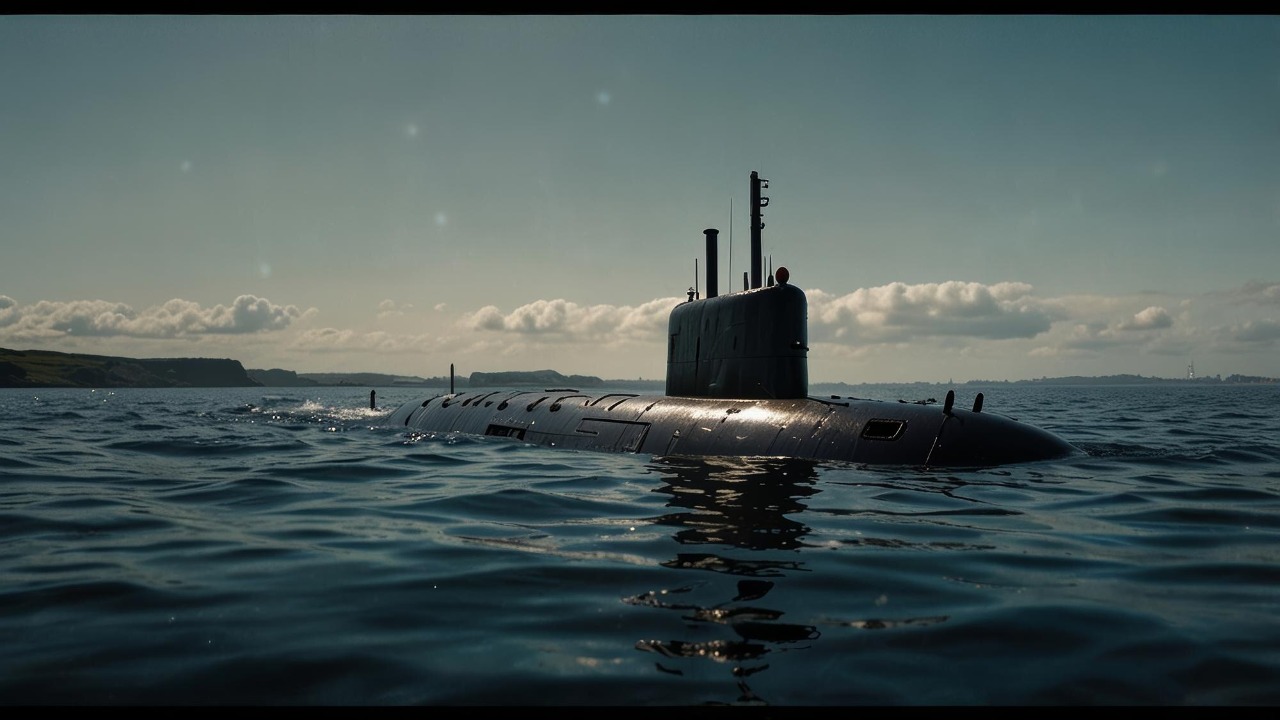

The United States Navy is quietly fielding a new kind of undersea vehicle that is less a traditional submarine and more a roaming, robotic weapons truck. Instead of relying on large crews and long refits, this autonomous sub is built to stay at sea for months, carry heavy payloads, and change missions with software rather than steel. If it works as advertised, it will not just add another platform to the fleet, it will force navies everywhere to rethink how undersea power is projected, protected, and deterred.
What makes this shift so significant is not only the technology on board, but the way it rewrites the basic math of naval warfare: cost per hull, risk per mission, and the speed at which new capabilities can be pushed into contested waters. A single robotic sub that can be reconfigured, retasked, and risked in places no crewed vessel would go has the potential to reshape everything from patrol patterns to how adversaries plan their own defenses.
The Navy’s first “big robo-sub” and why it matters
The most visible symbol of this change is the Navy’s first large unmanned undersea vehicle, often described as a “big robo-sub” because of its size and endurance compared with earlier drones. Unlike small, torpedo-like underwater robots used for mine hunting or inspection, this platform is closer in scale to a compact submarine, with the internal volume to carry significant sensors, communications gear, and modular payloads. It is designed to operate autonomously for extended periods, navigate complex undersea terrain, and report back without constant human control, which marks a clear break from the tethered or short-range systems that came before it.
What sets this vehicle apart is not just its autonomy but its role in the fleet architecture. The Navy is treating it as a long-range, multi-mission asset that can scout ahead of carrier groups, sit quietly near chokepoints, or act as a forward node for undersea networks. Reporting on the Navy’s acquisition of its first large unmanned undersea vehicle highlights how this “big robo-sub” is intended to serve as a testbed for new concepts of operation and as a bridge between small drones and full-size crewed submarines, with the platform’s size and endurance explicitly called out in descriptions of the first big robo-sub.
Stealthy design built for contested seas
The new autonomous submarine is being shaped from the outset for stealth, because its value depends on reaching places that are increasingly saturated with sensors. Its hull form, propulsion choices, and external features are all optimized to reduce acoustic and magnetic signatures, so it can slip through areas where surface drones or aircraft would be quickly detected. Designers are also leaning on low-profile communications masts and carefully managed emissions, so the vehicle can send back data or receive new instructions without giving away its position more than necessary.
Publicly shared imagery and descriptions of a stealthy autonomous submarine drone emphasize a smooth, hydrodynamic hull with minimal protrusions, a shrouded propulsor, and a focus on quiet operation rather than high sprint speed. The Navy’s concept art and design notes highlight how this stealth-first approach is meant to let the drone operate in heavily monitored littoral zones and near strategic infrastructure, where a crewed submarine might be considered too valuable to risk. A widely circulated description of a “stealthy autonomous submarine drone design” underscores this emphasis on low observability and undersea discretion, describing how the United States Navy has unveiled a concept that prioritizes stealth features in its autonomous submarine drone design.
From crewed boats to software-driven undersea fleets
The most profound shift this robo-sub represents is the move from a fleet defined by a small number of exquisite, crewed submarines to one that mixes those boats with a larger number of software-driven, unmanned platforms. Traditional attack submarines are extraordinarily capable but also extremely expensive and manpower intensive, which limits how many can be built and deployed at any given time. By contrast, a large unmanned sub can be built in greater numbers, updated through software, and risked in high-threat environments without putting sailors in harm’s way, which changes how commanders think about presence and persistence under the sea.
This transition mirrors what has already happened in the air, where remotely piloted aircraft and autonomous drones now complement crewed fighters and bombers. The Navy’s embrace of a large autonomous sub signals that similar logic is taking hold underwater, with unmanned vehicles expected to handle dull, dirty, or dangerous missions so that crewed submarines can focus on the most complex tasks. Visual and narrative coverage of the Navy’s new undersea drone, including footage that shows the vehicle being handled and deployed like a major fleet asset, reinforces the idea that this is not a niche gadget but a core element of a future undersea force, as seen in a detailed undersea drone demonstration.
Endurance, payload, and the new undersea logistics
Endurance is the currency of undersea warfare, and the autonomous sub’s design is clearly aimed at stretching how long a vehicle can stay on station without support. By removing the need to sustain a human crew, designers can devote more internal volume to batteries, fuel, or hybrid power systems, as well as to payload bays that can be reconfigured for different missions. That means a single hull can be loaded with surveillance gear for one deployment, then reconfigured with mine countermeasures or decoy systems for the next, all while operating at ranges that would be difficult for smaller drones.
This flexibility has major implications for undersea logistics. Instead of planning around the limited number of crewed submarines that can reach a region and remain there, planners can imagine a layered presence of unmanned vehicles that quietly cycle in and out of contested waters. Reporting on the Navy’s large unmanned undersea vehicle programs notes that these platforms are being built with modular payload bays and standardized interfaces, so new sensors or effectors can be integrated without redesigning the entire hull. That approach turns the robo-sub into a kind of undersea truck, where the real innovation lies in the payloads and software that can be swapped in and out over time.
New missions: from surveillance to strike
Once a large autonomous sub is in the water, the question becomes what missions it should perform, and here the Navy is clearly thinking beyond simple reconnaissance. Persistent surveillance is the most obvious role, with the vehicle using its sensors to map seabeds, track ship movements, or monitor undersea infrastructure such as cables and pipelines. Because it can loiter for long periods and move quietly, it can build a more continuous picture of activity in key areas than a manned submarine that must periodically return to port.
At the same time, the platform’s size and modularity open the door to more active roles, including acting as a communications relay, deploying smaller drones, or even carrying weapons. Concept art and program descriptions for large unmanned undersea vehicles often show internal bays that could accommodate torpedoes, mines, or other payloads, although specific loadouts remain closely held. The key point is that the robo-sub is being designed to support a spectrum of missions, from intelligence collection to potential strike, which is why adversaries are watching its development so closely even when the Navy only publicly emphasizes its surveillance and support roles.
Risk, escalation, and the ethics of unmanned undersea combat
Removing crews from submarines changes not only the risk calculus for the Navy, but also the potential for miscalculation at sea. Commanders may be more willing to send an unmanned vehicle into highly contested waters or close to an adversary’s coastline, knowing that a loss would be measured in hardware and data rather than lives. That can be an advantage in deterring aggression or gathering intelligence, but it can also tempt bolder operations that might be seen as more provocative, especially if the vehicle is suspected of carrying offensive payloads.
There are also unresolved questions about how much autonomy such a sub should have in deciding how to respond to threats or unexpected encounters. Current doctrine emphasizes human control over the use of lethal force, but as undersea communications remain constrained, there will be pressure to give unmanned vehicles more decision-making authority for self-defense or mission continuation. The Navy’s public messaging around its large unmanned undersea vehicles tends to stress that humans remain in the loop for critical decisions, yet the very nature of long-endurance, low-communication missions means that some degree of onboard judgment is inevitable. How that judgment is bounded, audited, and governed will shape how other nations respond and whether they feel compelled to field their own autonomous undersea weapons in kind.
How adversaries and allies are likely to respond
Every major shift in naval technology triggers a response, and the emergence of a large, stealthy autonomous sub is no exception. Potential adversaries will likely invest in better undersea surveillance, including fixed sensor arrays, seabed systems, and improved anti-submarine warfare platforms, to detect and track unmanned vehicles that might be harder to hear than traditional submarines. They may also accelerate their own unmanned undersea programs, seeking to match or offset the Navy’s new capabilities with similar platforms or with specialized counter-drones designed to hunt and disable them.
Allies, meanwhile, may see the robo-sub as an opportunity to plug into a more distributed undersea network without having to build or crew their own large submarine fleets. Shared standards for communications, payload interfaces, and data formats could allow partner navies to host or operate U.S.-designed unmanned vehicles in their own waters, extending the reach of collective surveillance and deterrence. The degree to which the United States is willing to export or co-develop such systems will signal how central it sees unmanned undersea vehicles to alliance strategy, and whether it views them as a tightly held advantage or a shared tool for maintaining stability in contested regions.
Industrial base, cost, and the race to scale
Behind the sleek imagery of a stealthy robo-sub lies a more prosaic but crucial question: can the industrial base build these vehicles at the scale and cost needed to make a strategic difference. Traditional submarine construction is slow and expensive, with specialized yards and a limited workforce, and any unmanned platform that relies on the same processes will face similar bottlenecks. The Navy’s push into large unmanned undersea vehicles is therefore also a test of whether industry can adopt more modular, commercial-style production methods for military hardware that still meets stringent reliability and security requirements.
Cost per hull will determine whether these autonomous subs become a niche capability or a pervasive presence. If each vehicle approaches the price of a crewed submarine, the fleet will remain small and the strategic impact limited. If, instead, the Navy and its contractors can drive down costs through standardized components, software reuse, and streamlined construction, then a larger number of vehicles can be fielded, creating the kind of distributed undersea network that truly changes the balance of power. Early reporting on the first large unmanned undersea vehicles suggests that the Navy is experimenting with commercial-off-the-shelf technologies and modular designs precisely to avoid the cost spirals that have plagued other high-end programs, but whether that approach holds as the fleet grows remains an open question.
Why this robo-sub marks a turning point in naval warfare
Viewed in isolation, a single autonomous submarine might look like just another incremental upgrade in a long line of undersea innovations. In context, it represents a convergence of trends that have been building for years: the rise of autonomy, the pressure to reduce risk to personnel, the need for persistent presence in contested regions, and the growing importance of undersea infrastructure as a strategic target. By combining large payload capacity, long endurance, and stealth with software-driven flexibility, the Navy’s new robo-sub becomes a platform that can evolve rapidly as missions change, rather than being locked into a fixed role for decades.
That adaptability is what makes this moment feel like a turning point rather than a mere modernization. As more of these vehicles enter service and as their payloads and software mature, they will start to reshape how commanders think about undersea campaigns, from the opening moves of a crisis to the long, quiet work of deterrence and surveillance. The shift will not happen overnight, and crewed submarines will remain central to naval power for a long time, but the arrival of a large, stealthy, autonomous sub that can operate alongside them is already forcing navies, policymakers, and technologists to rethink the future of undersea conflict. Unverified based on available sources.
More from MorningOverview