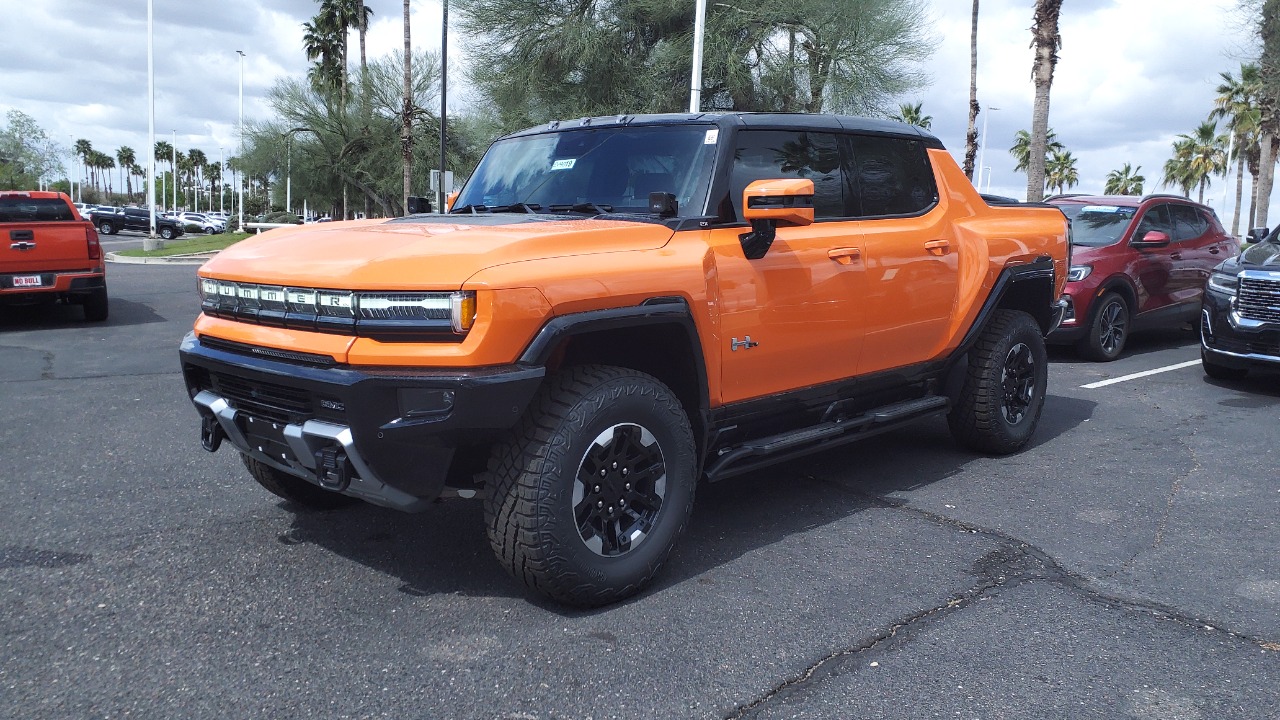

General Motors is betting that a new chemistry, lithium manganese rich batteries, can do for electric pickups and SUVs what small-block V8s once did for gas trucks: deliver usable power at a price mainstream buyers can handle. The company’s president, Mark Reuss, has started to spell out how this technology could underpin a new wave of electric trucks, including midsize models that have so far been missing from GM’s EV lineup. In his telling, LMR cells are not a science project but a strategic pivot meant to make electric workhorses cheaper, tougher, and easier to build at scale.
Why GM is pivoting to lithium manganese rich cells
When I look at GM’s battery roadmap, the shift toward lithium manganese rich chemistry reads less like a tweak and more like a reset of the cost structure for electric trucks. Reuss has framed LMR as the next evolution of the Ultium strategy, a way to keep the modular pack architecture while swapping in cells that use less nickel and cobalt, two of the most expensive and geopolitically sensitive ingredients in today’s EV batteries. In technical briefings, he has described LMR as a high-manganese formulation that aims to preserve energy density while cutting material costs and improving durability, a combination that is especially important for heavy vehicles that tow and haul over long distances, as detailed in his explanations of the new LMR batteries.
The company is positioning these cells as a bridge between today’s nickel-rich chemistries and more radical concepts like solid-state, which remain years away from mass production. In that sense, LMR is GM’s answer to the question of how to make electric Silverados and Equinox-sized trucks pencil out for buyers who care more about monthly payments than bleeding-edge tech. Reuss has emphasized that the chemistry is designed to drop into existing Ultium manufacturing lines with minimal retooling, which would let GM scale up production quickly once validation testing is complete, a point that surfaces repeatedly in technical discussions of how the automaker picked LMR as its future affordable battery technology in industry-focused analysis of GM’s LMR strategy.
Mark Reuss’s case for LMR-powered midsize trucks
Reuss has been unusually explicit about where he thinks LMR will show up first, and his comments put midsize pickups at the center of the plan. In recent interviews, he has said that future electric midsize trucks will use lithium manganese rich packs, arguing that the chemistry’s lower cost and robust cycle life are what finally make a Colorado- or Canyon-sized EV truck viable without a luxury price tag. That is a notable shift from GM’s first wave of Ultium products, which focused on large, high-margin vehicles like the GMC Hummer EV and Cadillac Lyriq, and it signals that the company now sees a path to profitable smaller trucks using the new LMR-powered midsize platform.
In a separate conversation that circulated widely among truck enthusiasts, Reuss reiterated that these midsize EVs are not hypothetical concepts but active programs in GM’s development pipeline. He tied their feasibility directly to the economics of LMR cells, saying that the chemistry’s material mix and manufacturing compatibility are what unlock the segment after earlier business cases fell short. That message was amplified in a social media post summarizing his remarks, where he was quoted saying that future electric midsize trucks would rely on LMR batteries to balance range, capability, and affordability, a point that was highlighted in a widely shared summary of his midsize truck comments.
How LMR fits into GM’s broader EV truck and SUV roadmap
GM’s bet on LMR does not exist in a vacuum; it is part of a broader attempt to recalibrate the company’s EV rollout after a bumpy start. Earlier this year, reporting on GM’s electric strategy for trucks and SUVs described a company trying to balance ambitious volume targets with the reality of high battery costs and uneven demand for large, premium-priced EVs. Analysts noted that GM was reassessing the pace and mix of its electric offerings, particularly in the full-size truck and SUV segments, where customers expect long range and heavy towing but are sensitive to sticker shock, a tension that was laid out in coverage of GM’s evolving EV truck and SUV plans.
Within that context, LMR looks like a tool to broaden the portfolio rather than a niche experiment. By targeting midsize trucks and potentially more affordable SUVs, GM can spread its Ultium investment across a wider range of price points while still reserving higher-cost chemistries for flagship models that can absorb the premium. Reuss has hinted that the company sees LMR as a way to standardize a cost-effective cell across several platforms, which would simplify supply chains and help stabilize margins as EV volumes grow. That approach aligns with the broader narrative that GM is trying to move from early-adopter halo products to a more balanced lineup that includes work-focused trucks and family SUVs built around the new lithium manganese rich cells.
Inside the technical pitch: cost, durability, and performance
From a technical standpoint, Reuss’s pitch for LMR revolves around three pillars: lower cost, improved durability, and adequate performance for truck duty cycles. He has described the chemistry as “lithium manganese rich” to emphasize that manganese is doing more of the heavy lifting in the cathode, which reduces reliance on nickel and cobalt without dropping energy density to the levels seen in lithium iron phosphate packs. In his detailed walkthrough of the technology, he underscored that the cells are being engineered for long cycle life and stable performance under high load, characteristics that are critical for towing and commercial use, and that are central to his public explanation of how LMR works in practice.
Reuss has also stressed that the company is not chasing record-breaking range numbers at any cost, but rather a balanced package that delivers enough miles for daily use while keeping pack sizes and prices in check. That philosophy is evident in how he talks about midsize trucks, where he suggests that customers might accept slightly shorter range than a full-size Silverado EV if the vehicle is significantly cheaper and still capable of hauling gear or towing a small trailer. The technical literature around GM’s LMR program points to a focus on optimizing the cell for fast charging and thermal stability, which would help maintain performance in hot and cold climates and reduce degradation over time, themes that recur in engineering-focused coverage of the company’s battery development priorities.
Recognition and validation for GM’s LMR program
GM has been eager to show that its LMR work is not just an internal bet but one that is earning external validation. The company highlighted that its lithium manganese rich battery cells were recognized with a Next Big Thing in Tech award, a nod that it framed as evidence that the chemistry has the potential to reshape how affordable EVs are built. In its announcement, GM described the award as a recognition of the cells’ promise to deliver lower-cost, high-performance energy storage suitable for a wide range of vehicles, from compact crossovers to trucks, and it used the moment to reinforce that LMR is central to its long-term electrification strategy, as detailed in the company’s own description of the award-winning LMR cells.
That kind of recognition matters because it signals to suppliers, investors, and policymakers that GM’s approach is being taken seriously by outside observers. It also helps the company make the case that it is not falling behind rivals that have leaned heavily into lithium iron phosphate or are touting solid-state breakthroughs. By pointing to an award focused specifically on the technical and commercial potential of its LMR cells, GM is effectively arguing that its middle-path strategy, which prioritizes manufacturability and cost over headline-grabbing lab results, is the more realistic route to mass-market electric trucks and SUVs.
Reuss’s public messaging and the role of video explainers
Reuss has not confined his LMR pitch to written statements and investor calls; he has also taken to video to explain the technology in more conversational terms. In a widely viewed interview, he walked through why GM chose lithium manganese rich chemistry, how it fits into the Ultium ecosystem, and what it means for future products, including trucks. The video format allowed him to emphasize that the company is already building and testing LMR cells, rather than simply modeling them on paper, and to stress that the goal is to bring them into production as quickly as validation allows, a message that came through clearly in his on-camera LMR explainer.
Short-form clips have also played a role in spreading the message beyond industry insiders. In one brief video segment, Reuss distilled the core idea that LMR batteries could unlock more affordable electric trucks, using plain language to connect the dots between chemistry choices and showroom prices. That kind of soundbite-friendly communication is important for shaping consumer expectations, especially as GM prepares to pitch LMR-powered trucks to buyers who may not care about cathode formulations but do care about range, towing, and cost, a dynamic that was evident in the concise short video highlighting LMR benefits.
Why midsize EV trucks are the proving ground
Among all the potential applications for LMR, midsize pickups stand out as the most strategically important proving ground. Reuss has repeatedly linked the chemistry to this segment, arguing that the combination of lower battery costs and right-sized packs is what finally makes an electric Colorado or Canyon feasible without pricing it far above its gasoline counterpart. Industry coverage of his remarks has framed LMR as the key that could “unlock” midsize EV trucks by delivering a cost-per-kilowatt-hour that supports competitive MSRPs while still offering the range and payload that buyers expect, a framing that runs through analysis of how LMR could unlock midsize trucks.
The stakes are high because midsize pickups are one of the most hotly contested segments in the North American market, with entrenched players like the Toyota Tacoma and Ford Ranger setting expectations for capability and reliability. If GM can bring an LMR-based midsize EV truck to market with a realistic price and usable range, it would not only fill a gap in its own lineup but also pressure rivals to respond with their own cost-optimized electric offerings. Reuss’s comments suggest that GM sees success here as a template it can replicate in other segments, such as midsize SUVs and commercial vans, using the same battery building blocks.
Investor and market reaction to GM’s LMR ambitions
On the financial side, GM’s LMR push has drawn a mix of optimism and caution from analysts who see both the potential and the execution risk. Some coverage has argued that the new chemistry could be a “game changer” if it delivers on promises of lower cost and solid performance, but has also noted that GM must prove it can scale production and integrate the cells into vehicles without the software and manufacturing stumbles that have dogged earlier Ultium launches. Commentators have pointed out that the company is trying to thread a needle between moving fast enough to stay competitive and avoiding the kind of rushed rollouts that can lead to recalls or quality issues, a tension that was highlighted in assessments of whether GM’s new LMR battery is ready to lead.
Market watchers have also tied the LMR strategy to GM’s broader effort to reassure investors that its EV business can eventually match or exceed the profitability of its internal combustion lineup. The company has faced questions about the pace of EV adoption, the capital intensity of battery plants, and the competitive threat from lower-cost rivals, particularly from China. By positioning LMR as a way to bring down battery costs without waiting for unproven technologies, GM is effectively telling the market that it has a pragmatic path to scaling EVs in high-volume segments like trucks and SUVs. Whether that message sticks will depend on how quickly the company can move from pilot lines and awards to showroom-ready vehicles that deliver on Reuss’s promises.
How LMR reshapes GM’s competitive stance in the EV truck race
Stepping back, I see GM’s LMR bet as an attempt to carve out a distinct lane in the increasingly crowded EV truck race. While some competitors are leaning heavily into lithium iron phosphate for cost-sensitive models and others are touting future solid-state breakthroughs, GM is arguing that a high-manganese chemistry offers a better balance of cost, energy density, and manufacturability for the kinds of trucks and SUVs that dominate its North American sales. Reporting on the company’s EV strategy has underscored that GM is trying to align its battery choices with the specific demands of large vehicles, where towing, payload, and long highway drives are more important than absolute efficiency, a theme that runs through broader coverage of its evolving truck and SUV electrification plans.
If LMR delivers as Reuss expects, it could give GM a cost and performance profile that is hard for rivals to match with either nickel-heavy or iron-based chemistries in the truck segment. That would not guarantee success, since execution on manufacturing, software, and charging infrastructure will matter just as much as cell chemistry. But it would mean that GM’s electric trucks and SUVs are built around a battery platform tailored to their specific use cases rather than adapted from smaller passenger cars. In a market where buyers judge trucks by what they can tow, how far they can go, and how much they cost, that alignment between chemistry and mission may turn out to be the most important part of Reuss’s LMR pitch.
More from MorningOverview