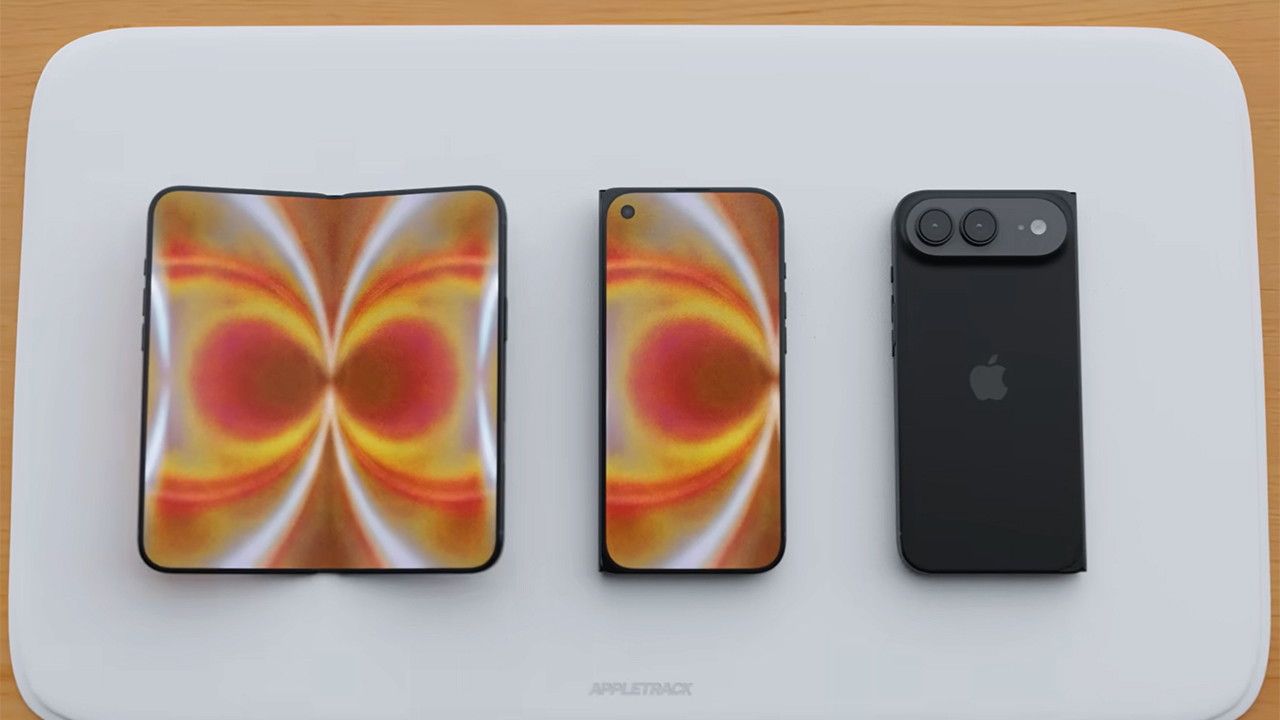

Apple’s long-rumored foldable iPhone is finally starting to look like a real product, and early reports suggest it will try to rewrite the rules of the category with a display that folds without a visible crease and a price that rivals a high-end laptop. Instead of chasing volume, Apple appears to be positioning this first-generation device as a halo product that tests how far loyal buyers are willing to stretch for a radically different iPhone. If the leaks are accurate, the iPhone Fold will arrive as both a design flex and a financial stress test for the entire premium smartphone market.
What is emerging is a picture of a device that aims to fix the biggest visual flaw of current foldables while pushing the price ceiling to new heights, with figures like $2,400 and $2,399 circulating across multiple supply chain reports. I see a company that is less interested in undercutting Samsung or Google on cost and more focused on debuting a foldable that feels like a no-compromise flagship, even if that means most people will only admire it from afar in the first generation.
The iPhone Fold vision: crease free, price shock built in
The central promise of the iPhone Fold is simple but ambitious: a folding iPhone that does not show the telltale groove where the screen bends. Several reports describe Apple solving what they call “the crease problem,” positioning the device as a clean, tablet-like canvas when opened rather than a display with a distracting valley down the middle. At the same time, those same reports tie the launch to a price that could reach $2,400, a figure that instantly signals this is not meant to be a mass-market iPhone on day one. The reporting frames this as a deliberate tradeoff: Apple is apparently willing to accept sticker shock if it can deliver a foldable that looks and feels more refined than anything else on the market.
That price positioning is not a one-off rumor. Another supply chain forecast pegs the device at $2,399, a number that sits just below the earlier $2,400 figure but still firmly in “luxury gadget” territory. The same cluster of reports notes that the device is expected to be called the iPhone Fold and that the pricing chatter began around Nov 23, 2025 and November 24, 2025, underscoring how closely the cost conversation is tied to the product’s identity. When I look at those numbers together, I see Apple intentionally bracketing expectations around a roughly twenty-four-hundred-dollar launch, not leaving much room for hope that this will quietly slide in at a more conventional flagship price.
How Apple got to a crease free display
Solving the crease has been the holy grail of foldable design, and Apple appears to have spent years quietly iterating before letting supply chain partners talk. According to engineering-focused reports, the company has moved its foldable project into an advanced validation phase after addressing the visible fold line that has plagued early devices from rivals. One detailed account notes that, as of Nov 23, 2025, Citing supply chain sources, UDN says that Apple has solved “the crease problem” and is now focused on engineering validation for a 2026 launch window. That timing suggests the company is confident enough in the underlying display technology to lock in form factor decisions and move toward mass production planning.
Other reports fill in how Apple is turning that breakthrough into actual hardware. One account from Nov 23, 2025 describes how According to United Daily News, the crease free design has been achieved and the iPhone Fold is entering an engineering validation stage that involves sourcing a key component at a cheaper rate. A separate report from the same period states that Apple Develops a Crease Free Display for Foldable iPhone and that Foxconn Prepares Production, with Apple reportedly using a polymer to reduce reflections. Taken together, these details point to a multi-layered approach that combines mechanical hinge design, panel engineering, and surface treatments to make the fold line effectively disappear in normal use.
Foxconn’s exclusive line and Apple’s 100 near-final units
Behind the scenes, Apple is already treating the iPhone Fold like a distinct product family, not just a variant of the existing iPhone assembly flow. One report from Nov 25, 2025 says Foxconn has set up an exclusive production line for the device and that Apple has built around 100 near-final units for testing. That number, 100, is small in the context of Apple’s usual scale, but it is significant as a sign that the company is moving from lab prototypes to hardware that can be evaluated for durability, yield, and user experience in more realistic conditions.
The decision to carve out a dedicated line at Foxconn also hints at how different the iPhone Fold’s manufacturing process is from a standard slab iPhone. Foldable hinges, ultra-thin glass or polymer layers, and complex internal layouts all demand new tooling and quality control steps, which is why an exclusive line makes sense even before mass production ramps. The same report notes that this work was underway by Nov 25, 2025, reinforcing the idea that Apple is deep into the industrialization phase rather than still experimenting in early R&D. For a company that typically keeps its supply chain moves quiet until the last possible moment, the emergence of these details suggests a high degree of confidence that the design is locked.
“First truly crease free” and what that means in practice
Marketing language around the iPhone Fold is already starting to crystallize, even before Apple has said a word publicly. One supplier-linked report from Nov 25, 2025 claims the iPhone Fold will be the “first truly crease-free foldable phone,” framing it as the only foldable phone on the market that does not show a visible fold line when the screen is lit. The same piece, attributed to Alan Martin and dated around Wed, November 26, leans heavily on supplier confidence that Apple’s implementation will look cleaner than anything from Samsung, Google, or other Android rivals. If that claim holds up, it would give Apple a simple, visible talking point that anyone can verify the moment they pick up the device.
From a user perspective, a “truly crease free” display would change how a foldable feels for reading, drawing, and watching video. Today’s best foldables, like Samsung’s Galaxy Z Fold6 or Google’s Pixel Fold, still show a subtle but noticeable indentation where the panel bends, especially on bright backgrounds or when light hits at an angle. By contrast, the iPhone Fold’s suppliers are promising a surface that looks more like a small iPad when opened, with the fold line effectively invisible in normal lighting. That is a high bar, and while I will reserve final judgment for hands-on time, the consistency of the crease free language across reports, including those that say the iPhone Fold’s Crease Free Design Has Been Achieved and is now in validation, suggests Apple is confident enough to let partners talk up this advantage.
A sky high price: $2,400, $2,399 and MacBook Pro money
If the display is meant to dazzle, the price is meant to filter. Multiple reports converge on a launch figure that hovers around twenty-four hundred dollars, with one calling out a nearly $2,400 price tag according to Fubon Research. Another leak, framed as iPhone Fold leaks with $2,400 price and no crease, repeats that $2,400 figure while emphasizing that the earliest foldable iPhone may be taking on the category’s biggest players with a design that aims to ensure strength while minimizing deformation. When I see the same number echoed across independent supply chain notes, I treat it as a strong signal that Apple is anchoring internal planning around that level.
Other analysts sharpen the comparison by tying the iPhone Fold’s cost to Apple’s own laptop lineup. One forecast from Nov 23, 2025 warns buyers to Get ready for a foldable iPhone that costs as much as a 16-inch MacBook Pro, explicitly framing the device as a phone priced like a Pro laptop. Another report from Nov 24, 2025 describes a “wild” Elsewhere $2,399 price tag for a folding iPhone that is on track to launch next year. The difference between $2,400 and $2,399 is negligible for buyers, but the repetition of both numbers across Nov 23, 2025 and Nov 24, 2025 reports underlines how locked in this “sky high” pricing narrative has become.
How Apple might justify the premium
At a glance, a roughly twenty-four-hundred-dollar phone sounds outrageous, but Apple rarely prices in a vacuum. The company tends to pair aggressive pricing with hardware or feature leaps that it can argue are unmatched, and the iPhone Fold appears to be no exception. One report from Nov 24, 2025 outlines three breakthrough features for the foldable iPhone, including a battery that could be the largest ever fitted to an iPhone, surpassing even the iPhone 17 Pro Max’s 5,088 mAh pack. If Apple can deliver a foldable that not only hides the crease but also outlasts its own Pro Max line on endurance, that becomes a tangible justification for some of the price delta.
There is also the simple reality that foldables are still expensive to build. Complex hinges, custom flexible OLED panels, and reinforced chassis designs all add cost, especially in a first-generation product where yields are lower. A report from Nov 24, 2025, framed as iPhone Fold Will Be Creaseless and Cost $2,400, explicitly ties the creaseless design to the high price, suggesting that Apple is not cutting corners on materials or engineering to hit a lower MSRP. When I put those pieces together, I see a company that is comfortable charging a premium because it believes the combination of a flawless fold, huge battery, and top-tier components will make the device feel more like a hybrid of iPhone and iPad than a simple phone upgrade.
Heated display patents and durability concerns
One of the more intriguing clues about Apple’s long-term foldable strategy comes from its patent work. A filing discussed on Nov 26, 2025 describes how Apple Patent Hints at a Heated Foldable Display for Future iPhone, outlining a system that can gently warm the display area around the hinge to reduce stress on the panel and, by extension, protect your images. The idea is that flexible displays are more vulnerable to damage when they are cold and stiff, so a controlled heating mechanism could make the fold smoother and less likely to crack over time.
It is not clear whether this heated display concept will appear in the first iPhone Fold or remain a future enhancement, but its existence shows how seriously Apple is thinking about durability. Foldable owners today worry about long-term wear, from micro-creases to outright panel failures, and a device that costs around $2,400 will face even higher expectations. By investing in technologies that actively manage the physical stresses on the display, Apple is signaling that it understands those concerns and is looking for ways to make a foldable feel as robust as a traditional iPhone. Even if the initial model relies more on mechanical design and materials than active heating, the patent trail suggests a roadmap of ongoing refinement rather than a one-off experiment.
Launch timing: 2026 target and the role of May
Beyond price and design, timing is the other big question hanging over the iPhone Fold. Supply chain chatter points to a 2026 launch window, with engineering validation reportedly underway as of Nov 23, 2025. One detailed report describes a Crease-Free iPhone Fold on track for a 2026 launch as Apple moves through engineering validation, suggesting that the company is aligning its internal milestones with a public debut sometime next year. Another report from Nov 26, 2025 mentions that the device is expected to arrive around May, tying the sky high pricing narrative to a specific part of the calendar.
Those timing hints line up with Apple’s broader product cadence. A May launch would sit outside the usual September iPhone window, which makes sense for a new category that Apple may want to spotlight on its own. It would also give the company room to position the iPhone Fold as a parallel flagship rather than a direct replacement for the standard iPhone line, at least in its first generation. The fact that multiple reports, including those that say Reports, Apple, Fold Is Crease, Free, But It May Cost and others that reference Nov 26, 2025 and May, are converging on that timeframe strengthens the case that Apple is targeting a mid-year reveal rather than waiting for the traditional fall cycle.
Where the iPhone Fold fits in the broader market
Even at a premium price, the iPhone Fold will not exist in a vacuum. Samsung’s Galaxy Z Fold series, Google’s Pixel Fold, and devices from brands like OnePlus and Honor have already carved out a niche for foldables that function as phone-tablet hybrids. What Apple seems to be betting on is that a cleaner display, tight integration with iOS, and the company’s ecosystem advantages will justify a higher price than most Android rivals. One report from Nov 26, 2025 notes that the iPhone Fold could cost nearly $2,400 while still aiming to compete directly with Samsung’s and Google’s foldable flagships, underscoring how Apple sees this as a head-to-head fight at the very top of the market.
At the same time, the iPhone Fold’s positioning as a device that costs as much as a 16-inch MacBook Pro suggests Apple is comfortable with relatively low volumes at first. This is a strategy the company has used before, from the original iPhone to the first Apple Watch Edition models, where early adopters effectively subsidize the R&D that later makes the technology more affordable. Reports that the folding iPhone is on track to launch next year with a wild $2,399 price tag and that it will be the first truly crease free foldable phone indicate that Apple is leaning into that playbook again. In my view, the iPhone Fold is less about immediate market share and more about planting a flag that says Apple intends to define what a premium foldable looks and feels like, even if only a small slice of its customer base buys in at launch.
More from MorningOverview