
Six centuries after it slipped from view, a pre-Columbian city has reappeared from the bottom of a lake, its streets, plazas, and temples preserved in cold, dark water. What began as a technical dive to map a reservoir has turned into one of the most evocative archaeological finds in recent memory, revealing a settlement that looks as if its inhabitants stepped away only yesterday. I want to trace how this submerged metropolis was found, what it tells us about the people who built it, and why it is reshaping the way researchers search for lost cities on land and underwater alike.
The discovery of this drowned urban landscape arrives just as archaeologists are also pulling another 600-year-old city out of the Mexican jungle, giving us a rare chance to compare how two very different environments can hide, and then protect, the same kind of human ambition. Taken together, the lakebed ruins and the newly mapped Zapotec center show how new tools, from sonar to laser scanning, are rewriting the map of the ancient Americas and forcing me to rethink how much of that past still lies out of sight.
A city asleep under water
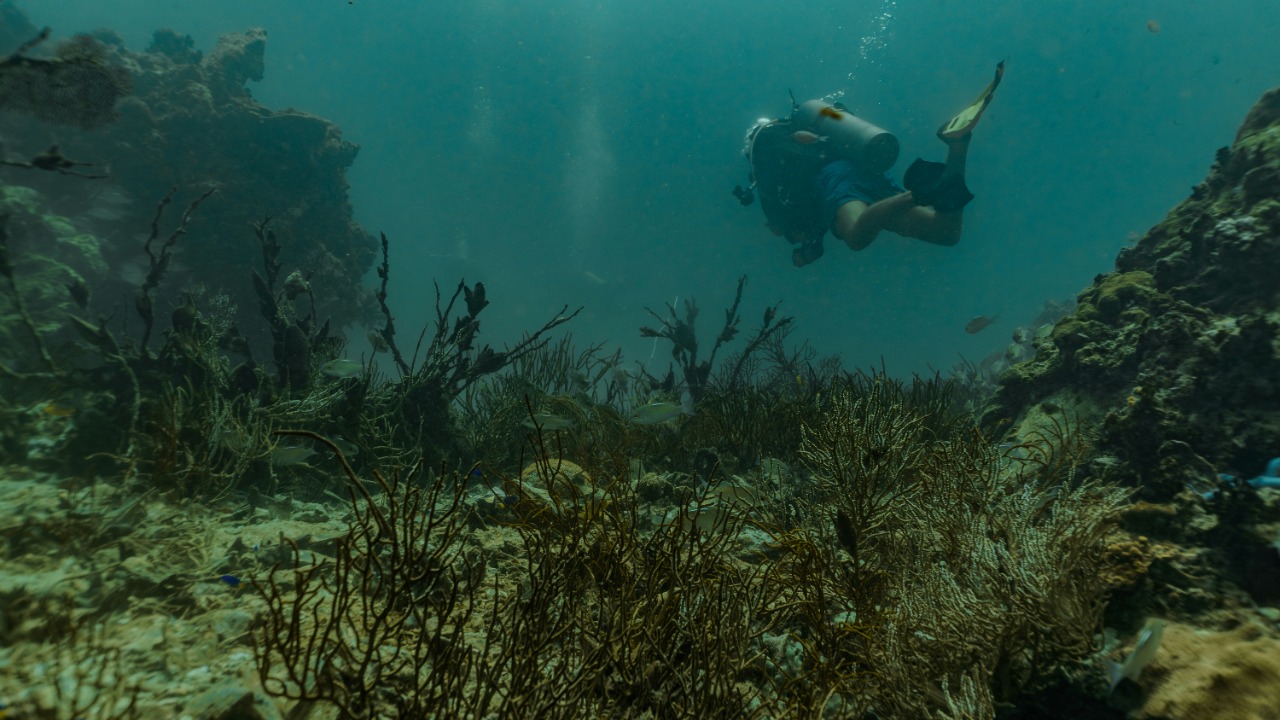
The story of the lakebed city begins with divers descending through murky water, expecting to find scattered foundations and instead swimming into intact streets. As they moved across the bottom, they reported stone walls still standing to shoulder height, doorways framed in place, and public buildings that could be recognized by their scale and layout. The site’s preservation is so striking because the lake effectively sealed it off from looters and weathering, turning the basin into a time capsule that kept wooden beams, plastered surfaces, and even domestic objects in situ for roughly 600 years, according to early assessments shared by the dive team.
Those first dives, described in detail by archaeologists who “dove to the bottom of a lake” and found a city frozen in time, relied on side-scan sonar to pick out rectilinear patterns before anyone entered the water, then used careful line surveys to map courtyards, causeways, and what appear to be ritual platforms once the team was on the bottom. The researchers have emphasized that the settlement was not a small village but a planned urban center, with a gridded core, multi-room compounds, and a central plaza that anchors the layout, all of which they documented during the initial campaign on the reservoir floor.
How a lake can preserve a metropolis
From my perspective, the most remarkable part of the submerged city is not just that it survived, but how well it survived. Once the rising water covered the settlement, the lake created a low-oxygen environment that slowed decay, while sediment gradually buried and cushioned walls and artifacts. That combination of anoxic water and soft silt meant that organic materials, which usually vanish from terrestrial sites, have a chance of surviving here, giving archaeologists access to wooden architecture, woven fibers, and plant remains that rarely endure for centuries in the open air.
Early reports from the dive team describe roof beams still locked into wall sockets and carved wooden elements preserved where they fell, a level of detail that allows researchers to reconstruct not only floor plans but also elevations and building techniques. The divers have also noted domestic spaces with grinding stones, storage pits, and hearths still visible, suggesting that the city was abandoned relatively quickly rather than dismantled stone by stone. That impression of sudden departure, combined with the exceptional preservation, is why some observers have described the site as a “perfectly preserved 600-year-old city” discovered at the bottom of a lake, a phrase that captures both the age and the eerie intactness of the find in the flooded basin.
Ballcourts, temples, and walls in the jungle
While divers were mapping streets underwater, another team in southern Mexico was tracing a different lost city, this one hidden not by water but by forest. For years, archaeologists thought the hilltop complex of Guiengola in Oaxaca was primarily a fortress, a defensive outpost guarding a strategic corridor. That interpretation began to crumble when researchers combined ground survey with airborne laser scanning and realized that the visible walls and terraces were only the most obvious part of a much larger urban system that extended across the surrounding slopes.
The new mapping revealed ballcourts, temples, and long defensive walls that framed residential districts, plazas, and ceremonial spaces, indicating that Guiengola functioned as a full-fledged city rather than a simple stronghold. Researchers who initially “thought it was just a fortress” now describe a sprawling Zapotec center with monumental architecture, engineered terraces, and a complex internal road network, all of which had been obscured by dense vegetation until lidar peeled back the canopy and exposed the underlying geometry of the site in the Oaxacan hills.
Reframing Guiengola as a Zapotec capital
What makes Guiengola so important, in my view, is how dramatically it shifts our understanding of Zapotec political geography in the Late Postclassic period. Instead of a peripheral fort, the site now appears to have been a major urban center with its own ceremonial core, residential neighborhoods, and defensive perimeter, suggesting that it played a central role in regional power struggles. Archaeologists have documented at least one large ballcourt, multiple temple platforms, and substantial perimeter walls, features that point to a city designed to project authority and manage both ritual and warfare.
Reporting on the new work at Guiengola emphasizes that the city was active roughly 600 years ago, placing it in the same broad timeframe as the submerged settlement, and that its discovery relied on high-resolution lidar data that revealed hundreds of terraces, platforms, and structures previously hidden by jungle. One detailed account notes that the lidar survey identified a dense urban core with monumental architecture and a surrounding landscape of engineered slopes and causeways, evidence that Guiengola was a planned city embedded in a carefully modified environment rather than an isolated hilltop redoubt in the Zapotec heartland.
Lidar, sonar, and the new map of ancient Mexico
Seen together, the lakebed city and Guiengola illustrate how new sensing technologies are transforming archaeology in Mexico. On land, lidar has become the tool of choice for revealing buried architecture beneath forest canopies, while underwater, sonar and photogrammetry are doing similar work in lakes and reservoirs. In both cases, the key is the ability to detect regular patterns that stand out from natural background noise, whether that is a grid of streets under trees or a cluster of right angles on a lake bottom.
Archaeologists working in the Mexican jungle have leaned heavily on lidar to identify not only Guiengola but also other pre-Columbian centers that were effectively invisible from the ground, mapping plazas, pyramids, and residential compounds across wide areas. One synthesis of these efforts describes a “lost Zapotec city” emerging from the jungle as researchers processed lidar returns, highlighting how the technology can reveal entire urban layouts in a single dataset and then guide targeted excavation and ground-truthing to confirm what the laser pulses suggest beneath the forest canopy.
A 600-year-old pre-Columbian network
For me, the most compelling thread running through these discoveries is the way they point to a dense network of pre-Columbian cities that were thriving across Mexico roughly six centuries ago. The submerged settlement, with its intact houses and public buildings, and Guiengola, with its ballcourts and temples, both speak to societies that invested heavily in urban life, monumental construction, and regional defense. They also suggest that what we currently see as isolated finds may in fact be fragments of a much larger mosaic of interconnected centers, trade routes, and political alliances.
Recent reporting on a “600-year-old pre-Colombian city” uncovered in the Mexican jungle underscores this point by situating Guiengola within a broader pattern of late pre-Hispanic urbanism, noting that lidar has revealed not just one city but a constellation of sites with plazas, pyramids, and defensive works. That work argues that these centers were part of a dynamic landscape of shifting alliances and conflicts in the centuries before Spanish invasion, a context that helps explain why some cities were fortified, others were abandoned, and at least one ended up submerged beneath a rising lake in the late pre-Hispanic era.
From “lost fortress” to major urban complex
Guiengola’s reinterpretation also shows how easily archaeologists can underestimate a site when they only see its most obvious features. For decades, the visible walls and hilltop structures encouraged a narrow reading of the complex as a military outpost, a place defined by conflict rather than daily life. Once lidar and systematic survey exposed the full extent of terraces, residential platforms, and ceremonial architecture, that picture shifted toward a more nuanced view of a city that combined defense with ritual, administration, and domestic activity.
One recent field report describes how researchers walked lidar-identified features and confirmed plazas, temple mounds, and residential clusters that had never been mapped before, effectively redrawing the site plan and expanding Guiengola’s footprint far beyond the previously known core. The same account stresses that the city’s defensive walls, some of which run for hundreds of meters, were integrated into a broader urban design rather than simply thrown up around a fortress, reinforcing the idea that Guiengola was a major Zapotec center whose complexity had been hidden in plain sight until new methods brought it into focus as a reimagined metropolis.
Ballgames, ritual, and power
Both the underwater city and Guiengola appear to have featured ballcourts and temple platforms, elements that speak directly to how power and ritual were intertwined in Mesoamerican urban life. Ballcourts were not just sports venues; they were stages for political theater, diplomacy, and sometimes human sacrifice, while temples anchored the sacred landscape and legitimized rulers through public ceremony. Finding these structures in newly documented cities suggests that even settlements we once saw as peripheral were deeply plugged into the ideological and ritual systems that bound the region together.
Coverage of the jungle city highlights “ballcourts, temples, [and] walls” as key components of the newly mapped urban layout, noting that these features cluster around central plazas and align with broader patterns seen at other Mesoamerican sites. The same reporting points out that the defensive walls encircling parts of the city likely reflect a period of heightened conflict, when control of trade routes and agricultural land was contested, and that the presence of multiple ballcourts hints at a sizable population and a complex social hierarchy capable of sustaining repeated large-scale events in the fortified jungle city.
Why some cities drown and others vanish into trees
One question I keep returning to is why one 600-year-old city ended up underwater while another disappeared into vegetation. In the case of the lakebed settlement, the most plausible explanation is a combination of environmental change and human intervention, with rising water levels, dam construction, or both gradually inundating the urban core. Once submerged, the city was effectively removed from the historical record, surviving only in local memory or scattered references, if at all, until modern survey work rediscovered it beneath the reservoir’s surface.
By contrast, Guiengola and its peers were abandoned on land, where vegetation slowly reclaimed terraces and plazas, and later communities built around or over the ruins. In that context, lidar has become the equivalent of sonar, cutting through the visual noise of the forest to reveal the underlying order of streets and platforms. A recent synthesis of the jungle work notes that the “lost Zapotec city” remained hidden for centuries precisely because the forest canopy masked its regular geometry, and that only when researchers processed the lidar data did the full extent of the urban layout become obvious, a reminder that absence from view does not mean absence from the landscape in the overgrown highlands.
Seeing the ruins through the divers’ eyes
Although lidar images and site maps can be compelling, the underwater city comes alive most vividly through the accounts and footage captured by the dive team. In video shared from the reservoir, divers move along intact walls, peer through doorways, and hover above what appear to be staircases leading up to now-vanished upper stories, their lights cutting narrow cones through the suspended silt. The sense of swimming through a ghost neighborhood is hard to shake, especially when the camera lingers on details like niches in walls or the outlines of hearths on the floor.
One widely circulated clip shows a diver gliding past a row of stone foundations that clearly define a street, then turning to reveal a larger structure with multiple rooms and a central courtyard, a layout that matches what archaeologists would expect from a high-status residence in a pre-Columbian city. The footage, which has been used to illustrate how “perfectly preserved” some of the architecture is, gives viewers a rare chance to experience an archaeological site in three dimensions, in situ, rather than as a reconstructed plan or museum display on the lakebed video.
What these finds change about the ancient Americas
As I weigh the submerged city against the jungle metropolis, I keep coming back to how much they expand the known footprint of complex societies in the Americas. Both sites date to roughly 600 years ago, both feature monumental architecture, and both were effectively missing from scholarly narratives until very recently, either because they were underwater or because they were hidden by trees. Their emergence suggests that our current map of pre-Columbian urbanism is still incomplete, skewed toward places that happen to be visible and accessible rather than representative of the full range of ancient settlements.
Recent overviews of the Mexican discoveries argue that the combination of lidar, sonar, and systematic survey is likely to reveal many more such cities in the coming years, particularly in regions where dense vegetation or modern infrastructure has obscured older landscapes. One account of the jungle work frames the newly documented Zapotec center as part of a broader wave of finds that are forcing archaeologists to rethink population estimates, political boundaries, and the resilience of pre-Hispanic societies in the face of environmental and social change, a wave that now clearly includes the city resting quietly on the bottom of a lake and its terrestrial counterparts.
More from MorningOverview