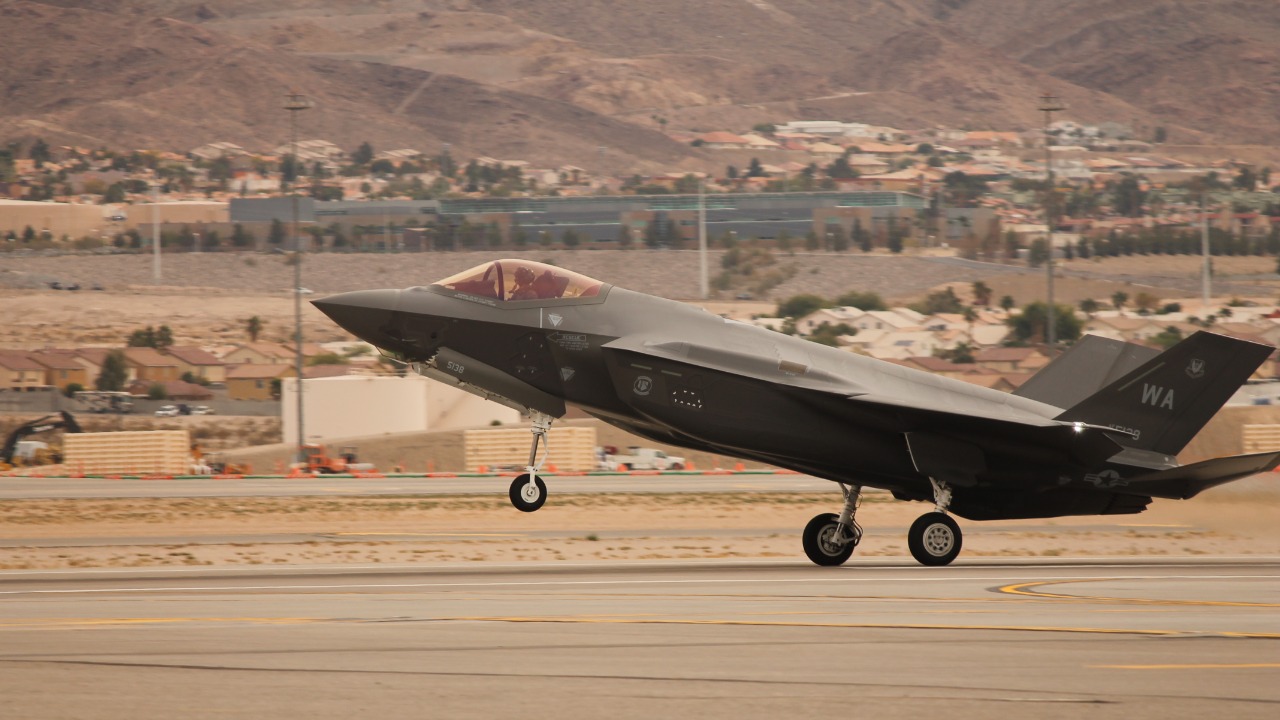

As air forces weigh their next-generation fighter options, the choice is no longer just about raw stealth or top speed. It is increasingly about how many jets a country can afford to buy, how often they can fly, and how flexibly they can be used in a crisis. That is where Sweden’s Saab JAS 39 Gripen, particularly the latest Gripen E, challenges the assumption that the F-35 is always the smartest buy.
I see a widening gap between what the F-35 promises on paper and what many smaller and mid-sized air forces actually need in practice, from cost and basing to electronic warfare and pilot training. When those real-world constraints are put at the center of the conversation, the Gripen starts to look less like a consolation prize and more like a deliberately lean alternative that can outperform the F-35 in several key mission profiles.
The strategic context: why the F-35 is not the only answer
For more than a decade, the F-35 has been sold as the default solution for Western and allied airpower, a stealthy multirole fighter that promises deep integration with U.S. networks and a long technological runway. That pitch has been compelling for countries that want tight interoperability with the United States and NATO, but it also locks them into a single, highly complex ecosystem with high acquisition and sustainment costs. As more operators confront budget ceilings, maintenance bottlenecks, and pilot shortages, the appeal of a lighter, more easily sustained platform like the Gripen is becoming harder to ignore.
Critics of the Gripen often argue that anything short of the F-35’s low observable design is a strategic compromise, yet several detailed comparisons have pointed out that airpower is not a one-metric contest. Analyses that pit the two jets directly against each other highlight that the F-35’s stealth and sensor fusion are formidable, but they also stress that survivability and effectiveness depend on tactics, electronic warfare, and force size as much as radar cross-section, which is where the Gripen’s design philosophy comes into play. One extensive comparison of the two fighters notes that the Swedish jet’s smaller logistical footprint and agile basing concept can offset some of the F-35’s advantages in a real campaign, especially for countries operating close to a powerful adversary’s borders, a point underscored in a detailed look at the Gripen versus F-35 trade-offs.
Gripen’s design philosophy: small, smart, and hard to kill
The JAS 39 Gripen was conceived from the start as a compact, multirole fighter that could survive and fight in a high-threat environment on Sweden’s doorstep. Instead of chasing maximum payload or range at any cost, Saab prioritized quick turnaround, ease of maintenance, and the ability to operate from short, dispersed road bases. That approach produced a relatively small airframe with a powerful engine, advanced avionics, and a focus on electronic warfare and data links, rather than relying solely on shaping for survivability.
In practice, this means the Gripen is built to complicate an enemy’s targeting problem through mobility and electronic deception, not just low radar signature. The latest Gripen E variant adds a modern active electronically scanned array radar, an infrared search and track system, and a sophisticated electronic warfare suite that is designed to jam and confuse opposing sensors. Detailed technical dives into the Gripen E’s systems emphasize how its avionics architecture is set up for rapid software updates and modular upgrades, allowing operators to adapt quickly as threats evolve, a point that stands out in a deep comparison of Gripen E and F-35 capabilities.
Cost, sustainment, and the numbers that actually fly
One of the most persistent criticisms of the F-35 is not its combat performance but its cost to buy and keep in the air. High per-hour operating expenses and complex maintenance requirements can quietly erode fleet readiness, leaving fewer jets available on any given day. For air forces with limited budgets, that can mean owning a cutting-edge aircraft that flies less often than planned, with training and sortie rates squeezed by sustainment bills.
The Gripen was engineered to attack that problem directly. Its smaller size, single engine, and emphasis on maintainability translate into lower operating costs and shorter turnaround times between sorties. Swedish doctrine envisions conscript mechanics servicing the jet on dispersed road bases, a concept that depends on straightforward access to components and minimal ground support equipment. Analysts who have compared the two fighters argue that, in many scenarios, a larger number of Gripens flying more frequently can deliver more persistent air coverage than a smaller fleet of F-35s constrained by maintenance cycles, a trade-off that becomes central in discussions of the Gripen E as a cost-effective alternative.
Stealth versus electronic warfare: different paths to survivability
Supporters of the F-35 often frame the debate as stealth versus non-stealth, but that oversimplifies how modern air combat actually works. The F-35’s low observable design does reduce detection ranges for certain radars, especially in the X-band, and that is a real advantage in the opening hours of a conflict. However, as more sensors come online, including low-frequency radars and infrared systems, survivability becomes a contest of jamming, deception, and tactics as much as shaping. The Gripen leans into that reality with a heavy emphasis on electronic warfare and networked operations.
Online debates among pilots, engineers, and enthusiasts frequently circle around whether the F-35’s stealth edge is decisive against a smaller, more agile fighter that invests heavily in jamming and decoys. In one widely discussed thread, contributors note that while the F-35 is generally accepted as more stealthy in pure radar cross-section terms, the Gripen’s electronic warfare suite and tactics can significantly complicate targeting, especially in cluttered environments and at longer ranges. That discussion of how F-35 stealth compares to Gripen underscores a broader point: survivability is a system-of-systems problem, and the Gripen’s designers have bet that smart jamming and agile basing can offset some of the F-35’s low observable advantage at a fraction of the cost.
AI, sensors, and the “digital fighter” argument
Both the F-35 and Gripen E are marketed as highly digital aircraft, but they embody that idea in different ways. The F-35 integrates its sensors and mission systems into a tightly controlled, proprietary ecosystem that is deeply linked to U.S. infrastructure. The Gripen, by contrast, is pitched as a more open, modular platform where operators can integrate national weapons and software more easily, and where artificial intelligence and automation are used to reduce pilot workload and streamline decision-making in the cockpit.
Some recent coverage has gone so far as to describe the Gripen as an “AI fighter,” highlighting how its avionics and mission systems are designed to fuse data from multiple sensors and external sources into a single, manageable picture for the pilot. That framing emphasizes the jet’s ability to act as a networked node, sharing and receiving targeting information across a broader force, rather than relying solely on its own onboard sensors. The portrayal of the Gripen as a highly automated, software-driven platform is central to arguments that it can deliver many of the same information-age advantages as the F-35 without the same level of cost or political dependency, a point captured in reporting that casts the JAS 39 as a leading AI-enabled fighter.
Operational flexibility: dispersed basing and quick turnarounds
Where the Gripen really separates itself from the F-35 is in how and where it can operate. Swedish doctrine assumes that fixed air bases will be prime targets in any conflict, so the Gripen is built to use short, improvised runways, including stretches of highway, with minimal ground support. That concept of dispersed operations is not just a theoretical selling point; it shapes everything from the jet’s landing gear and intake design to its maintenance philosophy and support equipment.
Visual demonstrations and training footage show Gripens landing on narrow roadways, refueling and rearming in minutes, and then taking off again to rejoin the fight. Those sequences are not just for show; they illustrate how a small team can keep the aircraft combat-ready under austere conditions, complicating an adversary’s targeting calculus. In contrast, the F-35’s reliance on more elaborate infrastructure and climate-controlled maintenance spaces makes it harder to replicate that level of agility. The contrast is particularly stark in video segments that highlight the Gripen’s road-base operations and rapid turnaround drills, as seen in detailed Gripen dispersal training footage.
Public perception and the “smart underdog” narrative
Beyond technical specifications, the Gripen has developed a kind of cult following among aviation enthusiasts and some defense analysts who see it as the thinking person’s fighter choice. The narrative casts the Swedish jet as a lean, cleverly engineered machine that delivers 80 or 90 percent of what the F-35 offers in many missions, at a fraction of the cost and political baggage. That perception is reinforced by stories that highlight its ability to operate from rural roads, its advanced electronic warfare suite, and its relatively low operating costs.
Social media posts and explainer pieces often frame the Gripen as redefining what a modern fighter can be, focusing on its blend of agility, digital systems, and pragmatic design choices. These accounts emphasize that the jet was built for a small country facing a larger neighbor, which forced Saab to prioritize survivability, affordability, and independence over prestige metrics like maximum payload. That framing has helped cement the Gripen’s image as a smart, asymmetric answer to heavyweight programs, a theme that recurs in widely shared descriptions of how Sweden’s JAS 39 is redefining modern fighters.
The Gripen E’s hidden challenges
None of this means the Gripen E is a flawless solution. The program has faced its own headwinds, including questions about export prospects, integration timelines, and how many air forces are willing to buck the gravitational pull of the F-35. Some analysts have pointed to emerging issues that were not fully anticipated when the latest variant was launched, including the difficulty of securing enough orders to keep production lines busy and sustain long-term upgrades at scale. Those concerns matter because a fighter’s value is tied not just to its design but to the size and health of its user community.
Reporting on the Gripen E’s trajectory has flagged at least one significant problem that caught observers off guard, highlighting how even a well-regarded design can run into structural challenges in a market dominated by a single flagship program. The risk is that, without a critical mass of customers, the cost advantages and upgrade path that make the Gripen attractive could erode over time. That tension between technical promise and market reality is central to analyses that warn the Gripen E faces an unexpected problem, reminding potential buyers that industrial and political factors can be as decisive as performance in the air.
What the record shows about Gripen’s real-world performance
While the F-35 has logged combat missions in several theaters, the Gripen’s operational record is more modest, reflecting Sweden’s foreign policy and the smaller number of export customers. Even so, the jet has built a reputation for high availability and reliable performance in the air forces that operate it, including Sweden, the Czech Republic, Hungary, South Africa, and Brazil. Its multirole design allows it to switch between air defense, ground attack, and reconnaissance tasks with relatively simple reconfiguration, which is a key selling point for smaller fleets that cannot afford specialized aircraft for every mission.
The Gripen’s development history also underscores how Sweden has used the program to maintain a degree of strategic autonomy in defense technology. The aircraft has gone through multiple upgrades, from the original A/B models to the C/D and now the E/F variants, each adding more capable sensors, weapons, and avionics. That evolutionary path is documented in detailed overviews of the Saab JAS 39 Gripen family, which trace how the platform has been adapted for different operators and missions. For potential buyers, that track record suggests a mature, continuously improved design rather than an untested leap into the unknown.
Politics, alliances, and the limits of the “better jet” question
Even when the Gripen looks compelling on paper, the decision to buy it instead of the F-35 is rarely a pure engineering choice. Fighter purchases are deeply political, often tied to alliance commitments, industrial offsets, and broader strategic signaling. For countries that want the closest possible integration with U.S. forces and systems, the F-35 carries a weight that goes beyond its technical attributes. Opting for a different platform can be read as a statement about strategic alignment, which is one reason the F-35 has secured such a dominant position in the market.
Some commentators have argued that enthusiasm for the Gripen can underestimate these geopolitical realities, especially when it comes from outside the governments actually making the decisions. Analyses that push back on overly optimistic visions of a Gripen-led alternative emphasize that, for many states, the political and strategic benefits of joining the F-35 club outweigh the operational advantages of a cheaper, more independent platform. That critique is laid out in assessments that describe pro-Gripen arguments as a kind of daydream that glosses over alliance dynamics, particularly in discussions of how strategic reality constrains Gripen choices. I see that as a reminder that “better” in fighter procurement is always relative to political context, not just performance charts.
Why some air forces should still look past the F-35
When I weigh the evidence, I do not see a single, universal answer to whether the Gripen is “better” than the F-35. For large, well-funded air forces that prioritize deep integration with U.S. systems and can absorb high sustainment costs, the F-35’s stealth and sensor fusion remain compelling. But for smaller and mid-sized countries facing tight budgets, dispersed geography, or the need to keep jets flying from austere bases, the Gripen’s blend of affordability, electronic warfare, and operational flexibility can deliver more usable combat power per dollar.
Detailed comparative studies reinforce that view, arguing that the Gripen E may be the most capable fighter available to states that either cannot or do not want to buy into the F-35 program. Those assessments highlight the Swedish jet’s ability to deliver advanced sensors, modern weapons, and robust networking in a package that is easier to sustain and less politically encumbered. In that sense, the Gripen does not have to beat the F-35 on every metric to be the smarter choice; it only has to align more closely with a given country’s actual needs and constraints, a case made forcefully in evaluations that describe the Gripen E as the best non-F-35 option. For a growing number of air forces, that is exactly the kind of “better” that matters.
More from MorningOverview