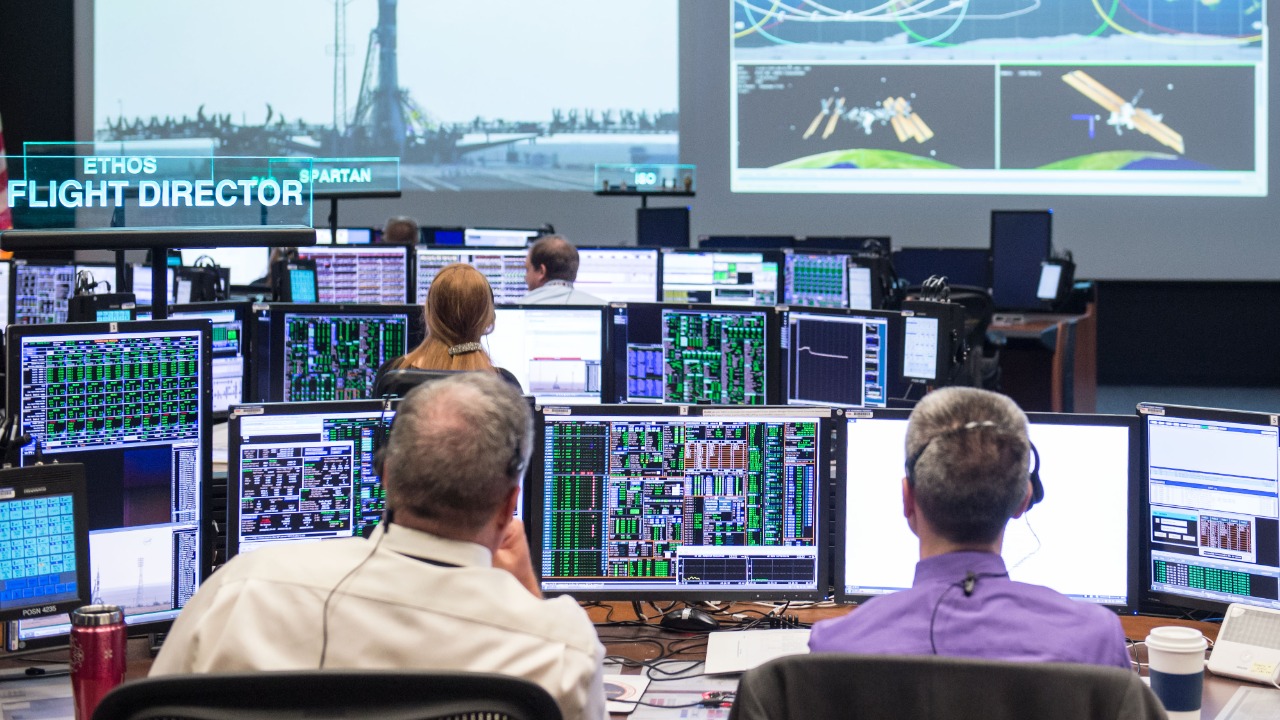

The latest Soyuz mission to the International Space Station did more than deliver a fresh crew: it underscored how, even in a tense geopolitical climate, American astronauts and Russian cosmonauts still rely on each other to keep humanity’s only orbital outpost running. A precisely timed launch, a rapid rendezvous profile, and a crew that bridges national space programs turned a routine rotation into a flight that will be remembered as a milestone in the long, complicated history of joint operations in low Earth orbit.
I see this mission as historic not because it reinvented human spaceflight, but because it proved that a decades-old spacecraft design can still set records, carry NASA’s oldest active spacefarers, and sustain a fragile partnership that has outlasted political shocks on the ground. The Soyuz capsule that arrived at the station this year is the latest chapter in a story that stretches from Cold War firsts to today’s carefully choreographed handshakes in microgravity.
A Thanksgiving liftoff that carried more than one nation’s hopes
The crew’s journey began with a Soyuz rocket rising from the Baikonur Cosmodrome on a Thanksgiving morning, a symbolic moment that blended an American holiday with a Russian launch tradition. The spacecraft carried a NASA astronaut alongside two Russian cosmonauts, a configuration that has become standard for station rotations but still carries political weight given the broader tensions between Washington and Moscow. The launch profile followed the familiar pattern of a multi-stage ascent into low Earth orbit, yet the timing and crew mix turned it into a vivid reminder that the International Space Station remains one of the few places where the two countries’ cooperation is not just intact but essential.
Coverage of the liftoff highlighted how the rocket’s climb through the Kazakh sky marked the start of a mission that would quickly transition from spectacle to precision orbital mechanics. Viewers watching the Thanksgiving morning launch saw the classic Soyuz stack, with its four strap-on boosters and core stage, perform as designed, placing the crewed capsule on the correct trajectory to chase the station. A separate report on the same ascent emphasized that the rocket was tasked with delivering a mixed US-Russian crew to the orbiting laboratory, underscoring that the mission was as much about sustaining a joint presence in orbit as it was about a single holiday liftoff, a point reinforced in detailed coverage of the Soyuz rocket carrying the US and Russian crew.
Inside the crew: NASA’s oldest active astronaut and two veteran cosmonauts
What set this flight apart from many earlier Soyuz missions was the profile of the astronaut representing NASA. Reporting on the crew noted that the spacecraft carried NASA’s oldest American astronaut currently flying to space, a detail that speaks to how long-duration missions and repeated flights have extended careers in orbit. The two Russian cosmonauts joining that astronaut brought their own experience with Soyuz systems and station operations, creating a team that blends deep familiarity with the hardware and the discipline needed for a rapid rendezvous.
Accounts of the launch from Baikonur described how the trio strapped into the compact descent module, with the NASA astronaut occupying the left seat and the Russian commander in the center, following long-established seating conventions. One report on the mission stressed that the Soyuz safely launched NASA’s oldest American astronaut and two Russian cosmonauts toward the ISS, highlighting both the age milestone and the fact that the crew composition is deliberately balanced to keep at least one representative from each partner nation on board the station at all times. Another detailed overview of the flight, focused on the joint nature of the crew, reinforced that this was a US-Russian team from liftoff through docking, a point echoed in coverage of the NASA astronaut and Russian cosmonauts on the Soyuz flight.
A record-setting sprint to orbit and a precision docking
Once in orbit, the mission quickly shifted from launch drama to a carefully scripted chase. The Soyuz followed a fast-track rendezvous profile that has become increasingly common in recent years, trimming the time between liftoff and docking from the two-day flights of the past to just a few hours. This approach reduces the strain on the crew, limits the time spent in the cramped capsule, and demands exacting performance from both the rocket and the spacecraft’s automated navigation systems. The result is a sprint to the station that feels more like a high-speed commuter run than the drawn-out orbital phasing maneuvers of earlier eras.
Earlier this year, another spacecraft in the same family, Soyuz MS-27, demonstrated just how far this fast-rendezvous technique can be pushed. Detailed analysis of that mission explained how Soyuz MS-27 reached the ISS in record time, using a refined four-orbit profile and precise launch timing to cut the journey to a matter of hours. The Thanksgiving flight built on that heritage, using similar orbital mechanics and automated Kurs rendezvous hardware to home in on the station. Video coverage of the docking sequence showed the capsule closing in on the ISS’s Russian segment, with the final approach and soft capture broadcast live to audiences following the Soyuz docking coverage, underscoring how routine, yet still technically demanding, these high-speed arrivals have become.
Why this Soyuz flight is being called “historic”
Describing a Soyuz mission as historic is a high bar, given that the spacecraft has been flying crews for more than half a century, but this flight clears it on several fronts. The combination of a record-chasing rendezvous profile, a crew that includes NASA’s oldest active American astronaut, and the continued presence of Russian cosmonauts alongside US partners at a time of strained relations on Earth makes the mission stand out. It is not a first flight of a new vehicle or a return to the Moon, but it is a powerful demonstration that the architecture of international spaceflight can still function even when the politics that created it are under pressure.
Another reason the label fits is the way this mission connects to a broader pattern of record-setting Soyuz operations. Earlier rotations have seen crews set new marks for time spent in orbit and for the speed of their journeys home. One such example came when a previous Soyuz, MS-25, returned its crew to Earth after a relatively short stay, with detailed reporting noting that Soyuz MS-25 landed after a record number of days in space for that particular mission profile. The current flight fits into that lineage of incremental records, showing how each new launch and landing refines the template for how quickly and safely crews can be rotated through the station while still gathering long-duration data.
A spacecraft with roots in the Cold War and lessons for new generations
To understand why the latest Soyuz mission matters, I find it useful to look back at where this spacecraft came from. The Soyuz design traces its lineage to the Soviet space program of the 1960s, when Moscow was racing to regain momentum after setbacks in human spaceflight. Historical accounts from that era describe how, fifty years ago, the Soviets returned cosmonauts to space with early versions of the capsule that would eventually evolve into today’s modernized Soyuz, using a three-module layout and a launch escape system that remain recognizable in current flights. A detailed retrospective on that period explains how Soviet engineers returned cosmonauts to space with a design that prioritized redundancy and survivability, traits that still define the spacecraft today.
That continuity is not just a matter of engineering pride, it is also a teaching tool. Educational material aimed at younger audiences breaks down the Soyuz into its key components, describing the orbital module, the descent module, and the service module in accessible language. One such resource explains in simple terms what the Soyuz spacecraft is, how it launches atop a rocket, docks with the ISS, and then returns its crew to Earth in a parachute-assisted landing on the steppe. The fact that the same basic configuration can be taught to elementary school students and flown by veteran astronauts on record-setting missions speaks to the robustness of the design and its role as a bridge between generations of spacefarers.
How NASA and Roscosmos keep flying together despite tensions
From my perspective, one of the most striking aspects of this mission is how normal it looks, given the political context. The United States and Russia have seen their relationship deteriorate sharply in recent years, yet their space agencies, NASA and Roscosmos, continue to coordinate crew assignments, training schedules, and launch logistics with a level of trust that would be hard to guess from headlines about terrestrial disputes. The presence of a NASA astronaut on a Russian spacecraft, and Russian cosmonauts on American vehicles, is the product of a deliberate “seat swap” policy designed to ensure that each nation always has at least one representative on the ISS, regardless of any single vehicle’s technical issues.
Reporting on the Thanksgiving launch emphasized that the mission was part of this broader framework, with the Soyuz carrying a mixed crew to the station while commercial spacecraft like SpaceX’s Crew Dragon continue to fly in parallel. Coverage of the ascent and orbital insertion noted that the Soyuz rocket launching the US and Russian crew is one pillar of a dual-access strategy that gives both partners redundancy in how they reach the ISS. A separate report on the same mission, focused on the crew composition and the broader political backdrop, reinforced that the NASA astronaut flying with Russian cosmonauts is not an anomaly but a planned feature of station operations, meant to keep the partnership resilient even when relations on the ground are strained.
The view from orbit: live coverage and public engagement
Another dimension of this mission’s significance lies in how it was shared with the public. Live video of the launch, orbital insertion, and docking turned what could have been a technical footnote into a shared experience for viewers around the world. I watched as the Soyuz separated from its rocket stages, deployed its solar arrays, and began its chase of the ISS, all in real time. That transparency is now standard for human spaceflight, but it still matters, especially when the crew represents nations that are otherwise at odds.
One of the primary feeds for this mission showed the spacecraft’s approach to the station, with cameras capturing the capsule as a small, bright dot growing larger against the black of space. The live docking broadcast walked viewers through each step of the rendezvous, from the initial flyaround to the final soft capture and hard-mate sequence. Another stream, focused on the earlier phases of the flight, provided a complementary view of the ascent and orbital insertion, giving audiences a chance to follow the Soyuz launch and rendezvous from multiple angles. Together, these broadcasts turned a complex ballet of orbital mechanics into a narrative that people could follow from their living rooms, reinforcing the idea that the ISS is not just a laboratory but a shared human project.
What this mission means for the future of ISS operations
Looking ahead, I see this Soyuz flight as a template for how the ISS partnership is likely to function in its remaining years. The station is expected to operate into the early 2030s, and keeping it staffed with a balanced mix of US and Russian crew members will require continued reliance on both Soyuz and commercial vehicles. The success of a mission that combines a rapid rendezvous, a record-setting astronaut age, and seamless coordination between NASA and Roscosmos suggests that the operational side of that equation is in good shape, even if the political side remains uncertain.
At the same time, the mission highlights the limits of how much more can be squeezed out of the current architecture. Soyuz remains a reliable workhorse, but it is also a design rooted in the 1960s, and the ISS itself is an aging platform. The record-setting performance of flights like Soyuz MS-27’s rapid trip and the carefully choreographed Thanksgiving launch show that there is still room for incremental improvement, yet they also underscore that the real breakthroughs in human spaceflight will likely come from new vehicles and destinations. For now, though, the latest Soyuz mission stands as proof that the partnership that built the ISS can still deliver, one historic flight at a time.
More from MorningOverview