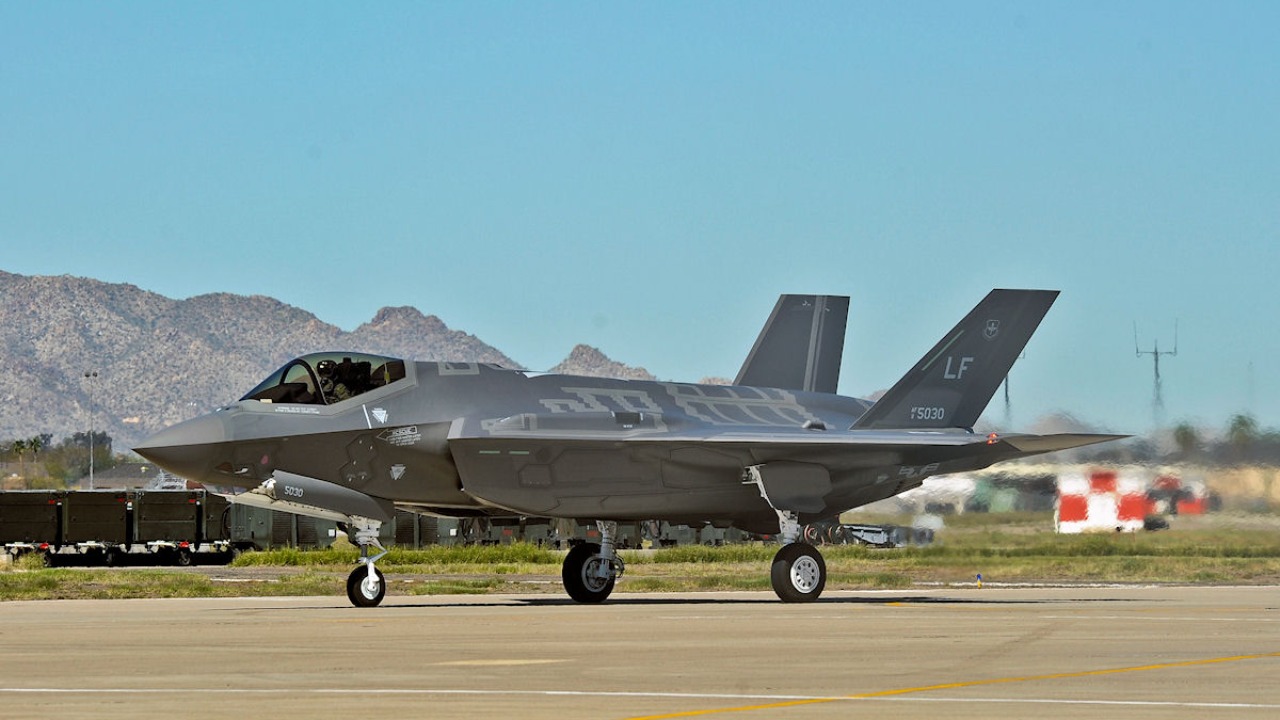

Canada’s long, often emotional argument over which fighter jet should replace the CF-18s has finally given way to a hard reality: the F-35 is coming, and the political space for reopening that choice has effectively disappeared. After years of shifting promises, reviews, and rival bids, the debate has moved from whether Canada should buy the aircraft to how quickly the country can make the most of it.
The end of that argument matters far beyond procurement minutiae, because it closes a chapter that tangled national defence, industrial policy, and alliance politics into a single polarizing question. With the decision locked in, I see the real story now in how Canada digests the lessons of a decade of delay and whether it can turn a contentious purchase into credible airpower in a more dangerous world.
How a three-word verdict captured a decade of argument
For years, the F-35 question in Canada was less a technical evaluation than a proxy war over what kind of military the country wanted and how much it was willing to pay for it. One detailed assessment of the saga boiled that entire experience down to a three-word summary that framed the national conversation in stark terms, using the F-35 as a lens on Canada’s broader discomfort with hard power and long-term defence spending commitments, a tension that shaped every twist in the procurement story and still colours how many Canadians view the jet today, as laid out in a concise analysis of Canada’s F-35 fighter debate.
That framing helped explain why arguments about stealth, sensors, and sustainment costs kept looping back to questions of identity and trust in government. The three-word verdict was not about avionics or weapons loadouts, it was about a political culture that struggled to reconcile ambitious rhetoric about NATO and NORAD with the sticker shock of a fifth-generation fleet, a disconnect that set the stage for the years of reversals that followed.
The Gripen alternative and the allure of “good enough”
Throughout the public debate, the Swedish Saab Gripen emerged as the most frequently cited alternative, pitched as a cheaper, simpler fighter that would be easier to maintain in Canadian conditions. Advocates argued that a modernized fourth-generation design could deliver “good enough” capability for sovereignty patrols and limited expeditionary missions, a case that circulated widely in Canadian aviation circles and was amplified in discussions comparing the F-35 and Gripen on platforms such as a widely shared public debate on the F-35 vs the Gripen.
Those arguments resonated with Canadians wary of complex, high-risk programs, especially after years of headlines about F-35 cost overruns and technical issues in other countries. Yet the Gripen pitch also revealed a deeper divide between a vision of Canada as a modest, regionally focused air force and one that must plug seamlessly into the most advanced NATO and NORAD operations, a divide that ultimately worked against the “good enough” option once alliance interoperability and long-term survivability in contested airspace became central to the evaluation.
Why the F-35 decision is now effectively irreversible
By the time Canada moved from debating options to signing contracts, the strategic and industrial context had shifted so far that revisiting the choice became largely theoretical. Analysts have pointed out that once Ottawa committed to the F-35 production and sustainment ecosystem, the marginal benefit of re-litigating the selection evaporated, because the aircraft had already become the de facto standard among key allies and the cost curve had stabilized in ways that undercut earlier fears, a reality underscored in a blunt assessment that Canada’s F-35 argument is now essentially pointless.
In practical terms, that means the political energy once spent on comparing airframes now has little leverage over the outcome, since unwinding the decision would carry enormous financial penalties and leave Canada out of step with the United States and other F-35 operators. The debate has not disappeared so much as it has migrated from the realm of “which jet” to the more constrained questions of basing, training, and how aggressively Canada will invest in upgrades and enablers that determine whether the fleet delivers its promised capability.
Inside the latest review and what it really changed
Even after the government signaled its intent to proceed with the F-35, it commissioned another review that was billed as a way to scrutinize costs, timelines, and industrial benefits. That exercise, detailed in a thorough analysis of Canada’s F-35 review, walked through the projected acquisition and sustainment bills, the planned delivery schedule, and the expected work share for Canadian firms, effectively translating years of abstract debate into concrete numbers and milestones that departments and contractors will now be judged against.
What the review did not do was reopen the fundamental choice of platform, which is why it irritated some critics who had hoped for a last-minute pivot and some allies who saw it as a sign of lingering ambivalence. The document instead locked in a path that treats the F-35 as a settled fact and focuses on risk management, from infrastructure upgrades at Canadian bases to the training pipeline needed to move pilots and technicians onto a far more complex aircraft than the CF-18s it will replace.
Allied pressure, NORAD realities, and U.S. expectations
Canada’s decision unfolded under the watchful eye of allies who have long pressed Ottawa to modernize its air force in line with shared commitments. Within NORAD, the expectation that Canada would field a fighter compatible with U.S. stealth operations and advanced command-and-control networks was never subtle, and discussions in Canadian military forums have highlighted how the drawn-out review process risked irritating Washington, a concern reflected in debates about whether the F-35 review was annoying the United States.
Those alliance dynamics became even more pointed as the United States, under President Donald Trump, continued to emphasize burden sharing and interoperability as tests of allied seriousness. Reporting on the Canadian purchase has noted how the F-35 program sits at the intersection of U.S. defence industry interests and presidential expectations, with Lockheed Martin’s role and Trump’s public focus on allied procurement shaping the backdrop against which Ottawa finally moved ahead, a linkage captured in coverage of Canada’s F-35 deal and U.S. politics.
From cost panic to capability focus
Early Canadian coverage of the F-35 fixated on headline acquisition costs and worst-case sustainment estimates, which fed a narrative of an out-of-control program. Over time, as more partner nations took deliveries and the production line matured, the conversation shifted toward what the aircraft could actually do in contested environments, a transition that defence commentators have traced in detailed breakdowns of the jet’s sensor fusion, stealth profile, and networked operations, including technical walk-throughs in long-form video analyses of the F-35’s capabilities.
That pivot from sticker shock to operational value did not erase concerns about long-term maintenance costs, but it reframed them as part of a broader calculation about survivability and relevance in high-end conflict. As more air forces concluded that fourth-generation fighters would struggle against modern integrated air defences, the F-35’s advantages in detection, data sharing, and electronic warfare became harder to dismiss, and Canadian decision-makers increasingly had to justify not just the price of buying the jet but the potential cost of being left with an obsolete fleet.
Industry stakes and the promise of high-tech work
Beyond pure military capability, the F-35 decision carried significant implications for Canadian aerospace and defence companies that had positioned themselves within the program’s global supply chain. Advocates for the purchase argued that staying inside the consortium would secure long-term, high-value contracts for Canadian firms producing components and providing specialized services, a case that has been echoed in industry-focused commentary highlighting the program’s role in advanced manufacturing and engineering jobs, including promotional material shared through outlets such as an industry-focused social media briefing.
Those industrial benefits were never guaranteed, since work share is tied to competitiveness and performance rather than simple offsets, but they became a central political selling point as the government sought to justify the investment to a skeptical public. The promise of high-tech employment and integration into a long-running global program helped counter the perception that Canada was simply writing a large cheque to a foreign contractor, reframing the deal as a way to anchor domestic expertise in areas like composites, avionics, and sustainment support.
Pilot perspectives and the mediocrity trap
Among those most invested in the outcome were current and former fighter pilots who had flown the CF-18 through its long service life and understood its limitations in modern scenarios. Some of the most pointed critiques of Canada’s hesitation came from that community, which warned that clinging to incremental upgrades or lower-end options risked “snatching mediocrity from the jaws of greatness” by locking the air force into a platform that would be outclassed for decades, an argument laid out in a detailed pilot’s reflection on Canada’s fighter jet dilemma.
Those voices did more than cheerlead for a particular aircraft, they framed the choice as a generational bet on whether Canadian pilots would be asked to operate at the leading edge of coalition operations or relegated to the margins. Their perspective helped shift the narrative from abstract procurement risk to the lived reality of aircrew who would have to fly into contested airspace, making the case that accepting a lower tier of capability for budgetary comfort was not a neutral decision but a conscious choice to limit what Canada could credibly contribute in future crises.
Public opinion, social media, and the fading controversy
For much of the past decade, the F-35 question spilled beyond defence circles into broader public discourse, where social media and online forums amplified every new report or leak. Detailed video explainers and panel discussions, such as a widely viewed online debate over Canada’s fighter options, helped demystify some of the technical issues while also giving space to critics who saw the jet as an overpriced symbol of misplaced priorities.
Yet as the decision hardened and deliveries moved from hypothetical to scheduled, the intensity of that public argument began to fade, replaced by more granular concerns about basing noise, local economic impacts, and the practicalities of integrating the aircraft into day-to-day operations. The F-35 shifted from a lightning rod in national politics to a complex, but largely accepted, program that Canadians will now judge less on ideological grounds and more on whether it delivers reliable service, credible deterrence, and tangible benefits to communities tied to the air force.
More from MorningOverview