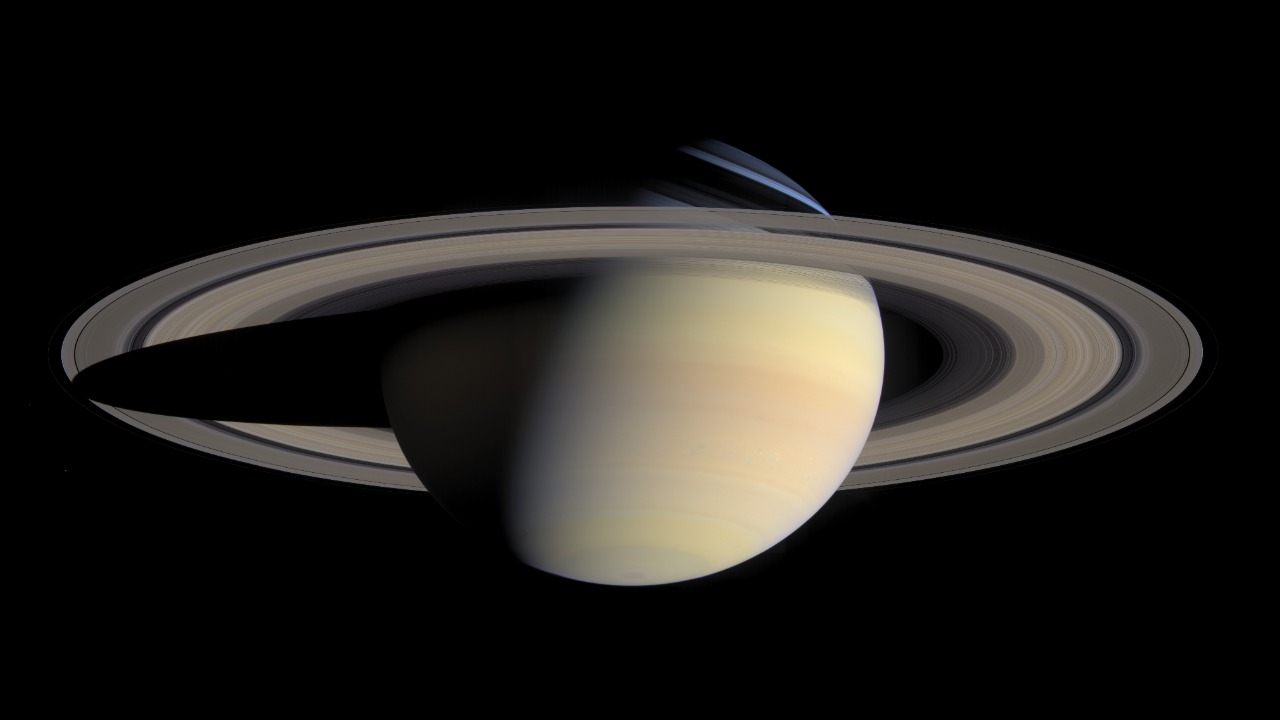

Saturn’s rings are not the permanent fixture they appear to be through a backyard telescope. Planetary scientists now agree that the planet is actively losing ring material, and over astronomical timescales the bright bands that define Saturn in the public imagination could thin out until they are effectively gone. At the same time, a separate orbital alignment is about to make those rings nearly vanish from Earth’s view for a few years, creating a rare overlap of short-term illusion and long-term change.
That double story, of a temporary disappearance layered on top of a slow physical erosion, is what makes Saturn’s current moment so striking. I want to unpack how the rings are being stripped away, why they will soon look like they have blinked out in backyard eyepieces, and what the latest spacecraft data and professional forecasts actually say about how long Saturn will keep its iconic halo.
Why Saturn’s rings are fading in the first place
The core reason Saturn’s rings are fading is simple physics: gravity and sunlight are working together to drag icy particles down into the planet’s atmosphere. The rings are made mostly of water ice, from dust-size grains to chunks as large as mountains, and each piece is constantly bombarded by micrometeoroids and solar radiation that knock off charged particles. Once those particles are electrically charged, Saturn’s magnetic field can funnel them along invisible lines toward the upper atmosphere, where they fall as what researchers now call “ring rain,” a process detailed in recent NASA research.
Measurements from the Cassini spacecraft, which spent more than a decade orbiting Saturn, showed that this rain is not a trickle. Scientists analyzing the data concluded that tens of thousands of kilograms of ring material are being lost every second, a rate that, if sustained, would strip away the most massive parts of the ring system in a timeframe that is short by planetary standards. That “worst case” estimate is still measured in hundreds of millions of years, not human lifetimes, but it is fast enough that the rings cannot be as ancient as Saturn itself, and it means the planet is currently in a relatively brief, visually spectacular phase of its history.
What “worst case scenario” really means for the rings
When scientists describe Saturn as losing its rings at a “worst case scenario” rate, they are not predicting that the planet will suddenly look bare in the next few centuries. Instead, they are comparing Cassini’s measurements of ring rain to models of how much material the rings contain, then asking how quickly that reservoir could be depleted. The analysis behind the recent reporting on Saturn’s disappearing rings explains that if the current loss rate holds, the most luminous parts of the system could be gone in roughly 100 million years, with the more tenuous outer structures fading even sooner.
In planetary science terms, that is a blink of an eye, especially for a world that has existed for more than 4 billion years. The “worst case” label reflects the upper end of the estimated loss rate, derived from Cassini’s final orbits when it flew between the planet and the inner edge of the rings and directly sampled the infalling material. Even if the true rate is somewhat lower, the direction of travel is clear: Saturn is not gaining ring material, it is bleeding it away, and the current bright, sharply defined rings represent a transient stage that future observers elsewhere in the galaxy might miss entirely.
How ring rain works, from Cassini’s view to Earth-based forecasts
To understand why the rings are doomed, it helps to picture the path a single ice grain might take. Over time, collisions and radiation chip away at its surface, releasing tiny fragments and vapor that become ionized. Those charged bits feel the pull of Saturn’s magnetic field, which guides them along curved paths that intersect the planet’s atmosphere, where they finally plunge in and vaporize. Cassini’s instruments detected this inflow as enhanced densities of water-group ions and dust, confirming that the rings are literally feeding the planet, a process that the latest scientific analyses describe as a steady siphoning of mass.
From Earth, astronomers cannot watch individual grains fall, but they can track the overall structure and brightness of the rings over time. Ground-based telescopes and space observatories monitor how sunlight reflects off the icy particles and how starlight dims when it passes behind the rings, building a long-term record of their thickness and opacity. Those observations, combined with Cassini’s close-up measurements, underpin forecasts that the rings will continue to thin and spread, becoming more diffuse and less reflective even before they are fully gone. The erosion is slow enough that no single generation of observers will see a dramatic change, yet the physics points in only one direction.
The 2025 “disappearance” that will fool backyard telescopes
Separate from the physical erosion, Saturn is about to perform a visual trick that will make its rings seem to vanish for casual observers. As the planet and Earth move in their orbits, there are times when we see the rings almost exactly edge-on, so their paper-thin vertical height presents almost no surface area to reflect sunlight toward us. Around the spring of 2025, that alignment will be close enough that the rings will appear to shrink into a narrow line, or even disappear entirely, in small telescopes and binoculars, a change highlighted in detailed graphics explaining the 2025 event.
Professional observatories will still be able to detect the rings with sensitive instruments, but for most skywatchers the planet will look oddly bare, more like a slightly flattened yellowish disk than the iconic ringed world on coffee mugs and science posters. The effect is temporary, lasting months to a few years as the viewing angle slowly shifts, yet it will coincide with growing public awareness that the rings are also fading in a more permanent way. That overlap is likely to fuel confusion, which is why astronomers are already emphasizing that the 2025 disappearance is an illusion of geometry, not a sudden collapse of the ring system.
Why the edge-on illusion happens and how often it returns
The edge-on effect is a consequence of Saturn’s tilt and the fact that its rings lie in the same plane as its equator. The planet’s axis is tilted by about 26.7 degrees, similar to Earth’s, so as Saturn orbits the Sun its north and south poles alternately lean toward and away from us. When the tilt lines up just right, we see the rings wide open, their full elliptical shape on display. Half an orbit later, the rings are turned edge-on, and their vertical thickness, which is only a few tens of meters in some regions, becomes effectively invisible from our vantage point, a cycle that recent observing guides describe in detail.
This alignment repeats roughly every 15 years, tied to Saturn’s 29.5-year journey around the Sun, so the 2025 event is part of a regular pattern rather than a one-off omen. During each crossing, the rings briefly fade from easy view, then gradually open up again as the tilt changes. What makes the upcoming crossing special is the context: it arrives after Cassini’s deep dive into the ring system and amid new public conversations about ring rain and long-term loss. For many people, it will be the first time they look at Saturn through a telescope knowing that the rings they are straining to see are not just temporarily hidden but also slowly evaporating into the planet below.
How social media and viral videos are shaping the story
In the age of viral clips and shareable graphics, Saturn’s changing appearance is not just an astronomical event, it is a social media storyline. Short explainers and animations are already circulating that show the rings thinning to a line and then vanishing from view, often paired with dramatic captions about Saturn “losing its rings.” One widely shared video explainer walks viewers through both the orbital geometry and the long-term erosion, using Cassini imagery and simple diagrams to make the physics accessible to people who may never have looked through a telescope.
Space agencies and science communicators are leaning into that visual storytelling to correct misconceptions before they spread. Animated sequences from official channels show Saturn rotating as the rings tilt from fully open to edge-on, then back again, emphasizing that the 2025 disappearance is reversible. At the same time, they overlay data on ring rain and mass loss to underscore that, over millions of years, the system really is fading. That dual message, amplified through platforms where attention spans are short, is crucial to keeping the public conversation grounded in what the measurements actually show rather than in exaggerated claims that the rings will vanish overnight.
What NASA and observatories are telling the public
Official outreach efforts are trying to strike a balance between wonder and accuracy. Scientists who worked on Cassini and on ground-based observations are using public talks, interviews, and livestreams to explain that Saturn’s rings are both fragile and resilient, depending on the timescale you care about. In one widely viewed video from a mission team, an expert walks through how the rings can “disappear” from view while remaining physically intact, then pivots to the slower process of ring rain that is gradually feeding material into Saturn’s atmosphere.
Planetariums and observatories are also preparing for a surge of interest as the edge-on alignment approaches. Many are planning public viewing nights that will let visitors see the rings at increasingly shallow angles, paired with exhibits that show Cassini’s final images and the data behind the erosion models. The goal is to turn a potentially confusing visual change into a teachable moment about orbital mechanics, planetary evolution, and the way spacecraft measurements can reveal processes that unfold far too slowly for any one person to witness directly.
How 2025’s alignment will look from your backyard
For people with small telescopes or even good binoculars, the next few years will offer a front-row seat to Saturn’s changing face. Earlier in the decade, the rings were wide open, easy to see as a bright, flat oval encircling the planet. As the alignment shifts toward edge-on, that oval will narrow, and the dark gap of the Cassini Division will become harder to pick out. By the time the geometry reaches its tightest point, the rings will resemble a thin line slicing across the planet’s disk, and in low magnification they may vanish entirely, a progression that skywatching guides like recent broadcast segments have already begun to illustrate.
Observers who track Saturn over multiple months will notice that the change is gradual, not a sudden flip. The planet’s brightness will remain roughly the same, but its iconic silhouette will soften, making it a more subtle target for beginners. For many amateur astronomers, that challenge is part of the appeal: it is a chance to test optics, refine observing skills, and appreciate how dynamic the solar system really is. Even a modest 4-inch reflector or a sturdy pair of 10×50 binoculars on a tripod can reveal the changing angle, especially if you compare sketches or smartphone snapshots taken weeks apart.
Why some posts claim the rings “vanish” on specific days
As the alignment tightens, social media posts have begun to circulate with bold claims that Saturn will “lose its rings” on a particular date, often framed as a one-night-only spectacle. One widely shared observing alert plays on that language, then quickly clarifies that the rings will only look nearly invisible, not actually disappear. The reality is that there is no single moment when the rings wink out; instead, there is a window of months when the angle is so shallow that they are extremely difficult to see in small instruments.
Professional forecasts sometimes highlight a particular night when the alignment is mathematically closest to edge-on, which can give the impression of a hard deadline. In practice, atmospheric conditions, telescope quality, and observer experience all matter as much as the exact geometry. A hazy night can erase the rings weeks before the theoretical crossing, while a skilled observer with a larger telescope might still tease out a faint line even at the peak of the alignment. The key is to treat those viral dates as helpful reminders to look up, not as literal on-off switches for one of the solar system’s most famous features.
How news coverage is separating illusion from long-term loss
Recent coverage in mainstream outlets has tried to disentangle the short-term visual effect from the long-term physical erosion. Detailed explainers have walked readers through the orbital mechanics that will make the rings hard to see in 2025, then zoomed out to the millions of years over which ring rain will gradually strip away their mass. One widely circulated news analysis emphasizes that the upcoming disappearance is a matter of perspective, while the erosion is a matter of physics, and that conflating the two only feeds unnecessary alarm.
At the same time, some stories have leaned into the poignancy of knowing that Saturn’s current appearance is temporary on cosmic scales. They point out that the rings themselves may be relatively young, perhaps only tens of millions of years old, and that future civilizations, if they ever look our way, might see a very different planet. That framing does not change the underlying science, but it does help people connect emotionally with the idea that even seemingly timeless celestial landmarks are part of an evolving story, shaped by collisions, radiation, and the slow pull of gravity.
What astronomers will be watching while the public looks up
While casual observers focus on whether they can still spot the rings, professional astronomers will use the edge-on alignment as an opportunity. When the rings are turned sideways, their glare is reduced, making it easier to study faint structures close to the planet, such as small moons, tenuous dust bands, and the upper atmosphere itself. Observing campaigns described in recent planning notes outline how telescopes will monitor changes in Saturn’s brightness and spectrum as the rings contribute less reflected light, refining models of both the planet and its halo.
Researchers are also interested in how the edge-on view might reveal vertical warps or ripples in the rings that are harder to detect when we see them face-on. Subtle bends can betray the gravitational influence of small, embedded moons or the aftermath of impacts that sent waves through the ring plane. By combining those observations with Cassini’s legacy data, scientists hope to build a more complete picture of how the rings respond to disturbances and how quickly they relax back into a smooth, flat disk, clues that feed directly into estimates of their age and remaining lifetime.
Why Saturn’s rings still matter, even if they are temporary
Knowing that Saturn’s rings are both eroding and periodically vanishing from view does not make them less important; if anything, it sharpens their scientific and cultural value. The rings are a natural laboratory for studying how disks of particles behave, from the way they clump and spread to how they interact with embedded moons and magnetic fields. Insights from that laboratory feed into models of how planets form in the disks around young stars, how debris disks evolve, and how other ring systems, such as those around Jupiter, Uranus, and Neptune, might change over time, themes that recent commentary pieces have highlighted.
On a more human level, Saturn’s rings are a reminder that beauty in the cosmos is often fleeting when measured against the age of the universe. For everyone alive today, they will remain a fixture of the night sky, even if they briefly slip from easy view in small telescopes. Yet the knowledge that they are slowly raining into the planet adds a layer of urgency to our curiosity. It encourages us to keep sending spacecraft, to keep refining our instruments, and to keep looking up while this particular chapter in Saturn’s story is still being written in ice and light.
How to make the most of Saturn’s changing face
For anyone who wants to experience Saturn’s evolving appearance firsthand, the next few years offer a rare chance to follow a slow-motion transformation. Start by observing the planet as often as you can when it is well placed in the night sky, noting how wide the rings appear and how sharply they stand out from the disk. As the alignment moves toward edge-on, you will see that width shrink, and if you keep a simple observing log or a series of smartphone photos through the eyepiece, you can build your own record of the change, much like the step-by-step views shared in recent visual explainers.
Pair those personal observations with trusted guides from observatories, space agencies, and experienced skywatchers, many of whom are publishing timelines, diagrams, and tips for seeing as much detail as possible. Some are even organizing coordinated viewing events and online streams that will let people compare what they see from different locations and with different equipment, echoing the collaborative spirit seen in earlier broadcast segments and live Q&A sessions. By engaging with Saturn in this way, you are not just watching a planet; you are watching a process, one that connects the fleeting illusions of orbital geometry with the deep, patient work of gravity reshaping a world over millions of years.
What the long view tells us about Saturn’s future
Stepping back, the story of Saturn’s fading rings is a story about how planetary systems evolve. The same forces that built the rings, likely through the breakup of an icy moon or a captured comet, are now dismantling them, grain by grain. Over tens or hundreds of millions of years, that process will leave Saturn looking more like Jupiter, with only faint, narrow bands of dust instead of the broad, brilliant rings we see today, a trajectory underscored by the “worst case” ring rain estimates in recent mission reports.
For now, though, Saturn remains the showpiece of the solar system, and the coming edge-on alignment is a reminder that even familiar objects can surprise us when the geometry changes. The rings will slip from easy view, then slowly return, even as their mass continues to drain away into the planet’s atmosphere. Watching that play out, with the help of spacecraft data, professional forecasts, and accessible explainers like the recent coverage of the temporary disappearance, gives us a rare sense of living in a universe where even the grandest structures are works in progress.
More from MorningOverview