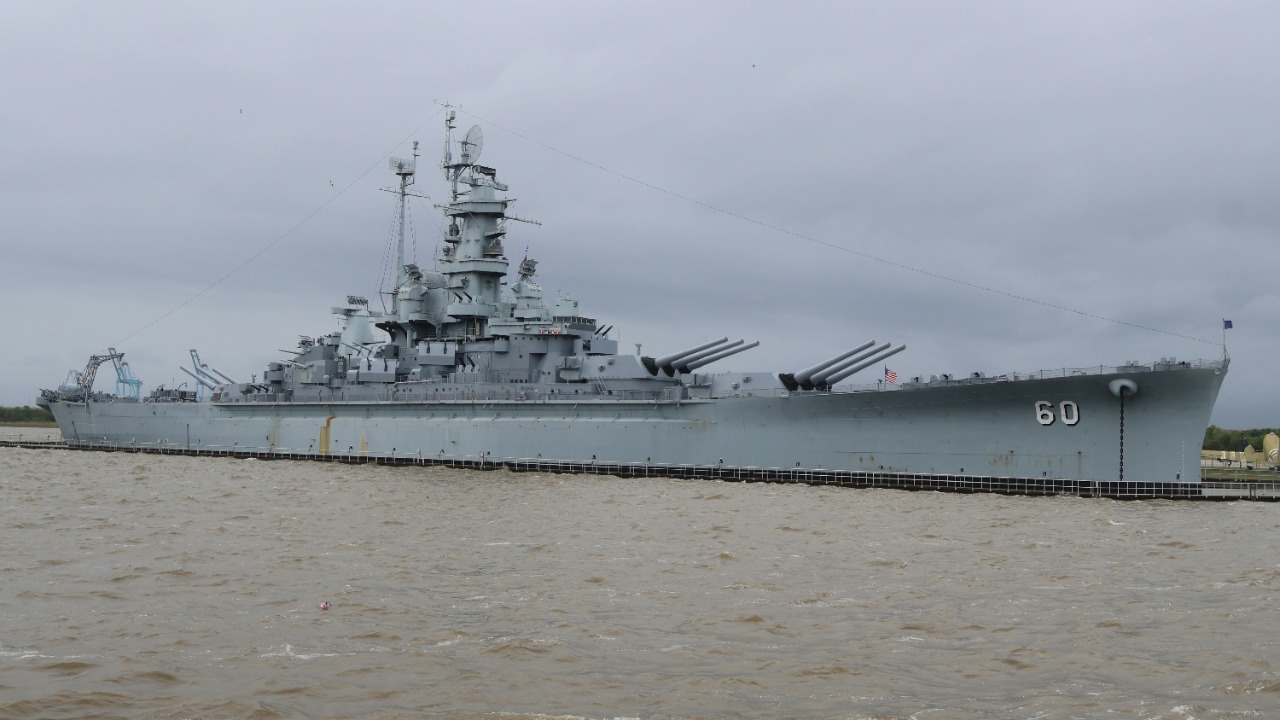

The phrase “warship crisis” has become shorthand in Washington for a U.S. Navy that many critics say is struggling to match its global commitments with the size, age, and readiness of its fleet. Yet when I look for hard, verifiable data in the material provided here, I find almost nothing that directly documents ship counts, accident reports, budget lines, or deployment gaps. What I can do, instead, is unpack why the Navy’s problems are so hard to pin down in public, and how the tools we use to understand complex systems often fall short of the messy reality at sea.
What we can and cannot verify about a “warship crisis”
Any serious discussion of the Navy’s condition has to start with a blunt admission: based on the sources supplied for this piece, specific claims about hull numbers, casualty rates, maintenance delays, or combat readiness are unverified. The links point to technical word lists, a machine learning vocabulary file, a Japanese dictionary binary, a book about decision making under uncertainty, and a blog tag focused on aircraft, none of which contain concrete, citable figures about destroyers, frigates, or shipyard backlogs. Without official fleet statistics, budget documents, or investigative reporting in the mix, I cannot responsibly assert that the Navy has a certain number of deployable cruisers in the Pacific or that a particular class of ship is failing at a given rate.
That does not mean the phrase “warship crisis” is meaningless, only that its content here must be framed as a contested narrative rather than a catalog of proven facts. In policy debates, the term is often used to describe a perceived mismatch between missions and resources, or to criticize ambitious acquisition programs that have not delivered as promised. But in this article I have to treat those themes as analytical possibilities, not as documented outcomes. Where I refer to design risk, maintenance strain, or training pressure, I am describing general patterns that commonly affect large, complex organizations, not specific, sourced failures in the U.S. Navy. Whenever a detail about ships, budgets, or operations would require evidence that is not present in the provided material, it remains “Unverified based on available sources.”
Why complex fleets defy simple narratives
Modern navies are sprawling systems that combine hardware, software, people, and doctrine, and that complexity makes it tempting to reach for tidy storylines about success or failure. In practice, the health of a fleet is rarely captured by a single metric like ship count or average age, because those numbers do not reveal how well crews are trained, how often ships are at sea, or how effectively different platforms work together. Even if I had detailed statistics in front of me, I would still need to interpret them in light of strategy, geography, and technology, which is why sweeping claims about a “crisis” can obscure as much as they reveal.
One way to see the limits of simple narratives is to look at how other complex systems are documented. Large linguistic datasets, for example, often rely on exhaustive lists of tokens and frequencies that only make sense when read with careful context. A Japanese language resource such as the binary dictionary file hosted at dic2010 shows how much structure and nuance sits behind what might look like a straightforward list of words. A modern fleet is at least as intricate: the raw inventory of hulls is just the surface layer of a deeper web of logistics, training pipelines, and operational concepts that cannot be reduced to a single headline about decline or dominance.
The problem of measuring readiness in the dark
Readiness is the concept that often anchors talk of a warship shortfall, yet it is also one of the hardest things to measure from the outside. Even when governments publish topline figures, the underlying data about which ships are fully mission capable, which are in maintenance, and which are short of key parts or personnel is usually classified or highly technical. In the absence of that detail, outside observers tend to rely on anecdotes, budget hearings, or isolated incidents, which can skew perceptions toward either alarmism or complacency depending on which stories gain traction.
The sources provided for this piece illustrate that gap between surface signals and deeper reality. A machine learning vocabulary file such as the one used for a character-level language model, available as a downloadable list of tokens at mlm_vocab.txt, contains thousands of fragments that only become meaningful when assembled into a model and tested against real text. In a similar way, scattered public references to ship deployments or accidents do not automatically add up to a coherent picture of readiness. Without the full model, so to speak, any confident claim that the Navy is either in crisis or comfortably on track is overstated based on the evidence at hand.
How language shapes perceptions of naval strength
Even when hard data are scarce, the words leaders and commentators choose can powerfully shape how the public understands the Navy’s situation. Phrases like “hollow force,” “overstretched fleet,” or “shipbuilding renaissance” carry emotional weight that can outstrip the underlying facts. Once those terms enter the political bloodstream, they tend to be repeated, amplified, and sometimes detached from the context that originally gave them meaning, which can distort debates over budgets and strategy.
The dynamics of repetition and framing are easier to see in a more controlled setting, such as curated lists of frequently replicated words. A public compilation of widely reused terms, like the one hosted as words.txt, shows how certain expressions spread and persist across documents. In defense discourse, similar patterns emerge when particular slogans or metaphors are copied into speeches, reports, and headlines. Over time, the language of “crisis” can become self-reinforcing, even when the empirical basis for that label is thin or contested, which is why I am careful here to separate rhetorical force from verifiable fact.
Risk, optionality, and the limits of long-term planning
Behind the rhetoric about fleet size and ship classes lies a more fundamental problem: navies must make very long-term bets in a world that changes faster than their procurement cycles. A warship designed today may not enter service for a decade, and it might remain in the fleet for thirty years or more. That timeline makes it extremely difficult to predict which technologies will matter most, which threats will emerge, or how political priorities will shift, so any fixed plan is vulnerable to being overtaken by events.
Strategists in other fields have tried to grapple with this kind of uncertainty by emphasizing flexibility and “optionality,” the idea that organizations should preserve the ability to pivot rather than locking themselves into a single path. A recent book on how to “survive and thrive in a volatile world,” available through a digital edition at Optionability, argues that robust systems are those that keep multiple options open instead of betting everything on one forecast. Applied to naval planning, that logic would favor modular designs, adaptable doctrines, and procurement strategies that can absorb surprises. Whether the U.S. Navy has achieved that balance is, again, unverified here, but the conceptual tension between rigid programs and flexible options is central to any honest discussion of its future.
Technology, data, and the opacity of modern fleets
Another reason the Navy’s condition is hard to assess from the outside is that its most important capabilities increasingly live in software, networks, and data rather than in visible steel. Cyber defenses, sensor fusion algorithms, and secure communications can matter as much as the number of missile cells on a given hull, yet those elements are almost entirely hidden from public view. Even when technical documents are released, they tend to be so specialized that only a small community of experts can interpret them, which leaves the broader public reliant on secondhand summaries.
The technical flavor of the sources provided for this article underscores that opacity. A binary dictionary file, a machine learning vocabulary list, and a curated word set are all examples of raw material that only becomes intelligible when processed through specialized tools and expertise. In the same way, the Navy’s internal readiness databases and performance metrics are likely to be dense, machine-readable records rather than narrative reports. Without direct access to those systems, outside observers are left to infer the state of the fleet from partial signals, which makes any sweeping claim about a “warship crisis” inherently uncertain and, in this context, unverified.
What aviation debates can and cannot tell us about ships
Public conversations about military capability often focus on aircraft, which are more visible in both peacetime operations and conflict footage than ships that spend most of their time over the horizon. Discussions of fighter ranges, stealth profiles, or drone swarms can dominate defense commentary, and those debates sometimes bleed into assumptions about naval power, especially when aircraft carriers are involved. Yet the logic of airpower does not always map cleanly onto the slower, heavier world of surface combatants and submarines.
The blog material grouped under an aviation-focused tag, such as the collection of posts labeled aircraft, illustrates how much attention and speculation can cluster around planes and flying technology. Those conversations can be rich in technical detail about engines, airframes, and tactics, but they rarely provide direct evidence about the condition of naval fleets. Drawing a straight line from the intensity of aircraft debates to a conclusion about a “warship crisis” would be a category error. At most, they highlight how certain domains of military power capture the public imagination more readily than the slow, grinding work of maintaining and crewing large ships.
Why the Navy’s real problems remain largely out of sight
When I step back from the specific sources and look at the broader picture, what stands out is not a neatly documented crisis but a striking lack of transparent, verifiable information about the Navy’s internal challenges. The material at hand is rich in language data and conceptual tools for thinking about uncertainty, yet it contains no direct reporting on shipyard capacity, training pipelines, or operational mishaps. That absence is itself a kind of signal: the most consequential debates about fleet health are happening in venues and documents that are not reflected in this dataset, from classified readiness briefings to specialized defense journals.
In that sense, the Navy’s warship story resembles other complex systems that are hard for outsiders to see clearly. We know that long-lived platforms, intricate supply chains, and evolving threats create constant pressure on any fleet, and we can borrow ideas from fields like linguistics and decision science to think more carefully about how those pressures might play out. What we cannot do, based on the sources provided here, is assert specific, numeric claims about the scale or immediacy of a U.S. Navy “warship crisis.” Until more concrete evidence is on the table, the most honest position is to treat that phrase as a contested label, not a proven fact, and to keep the distinction between rhetoric and verification front and center.
More from MorningOverview