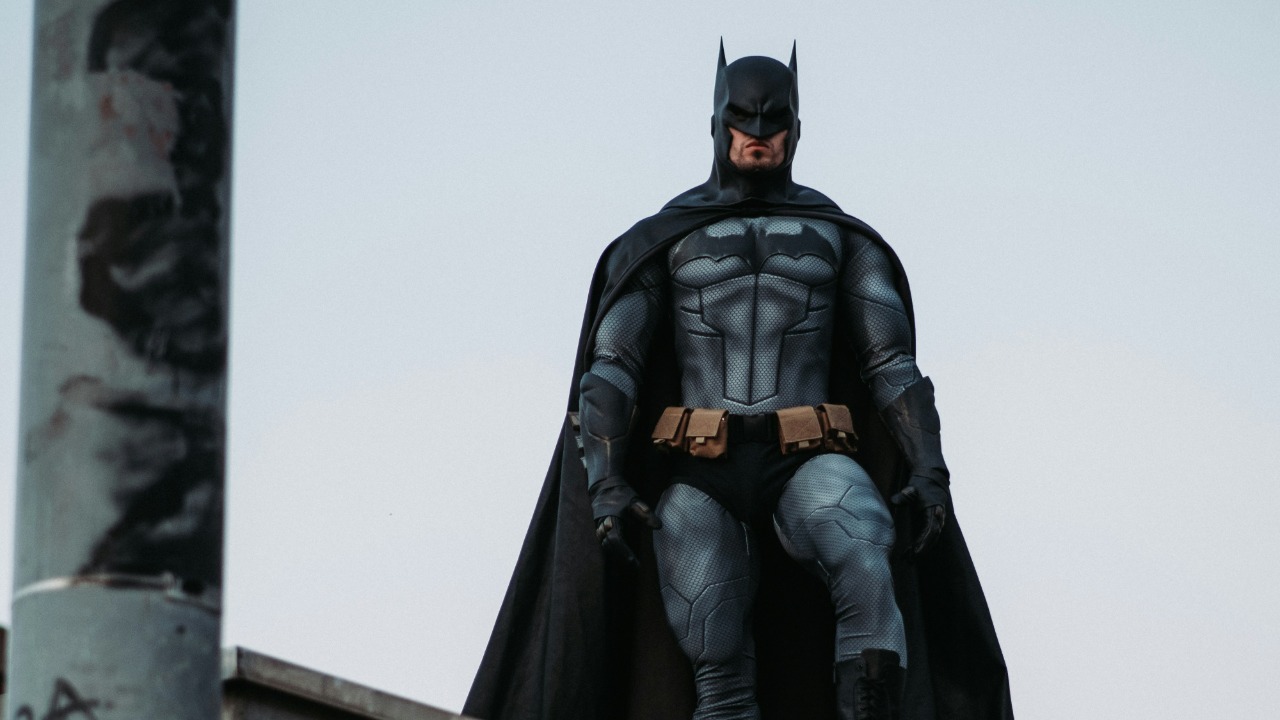

Psychologists are finding that simply spotting Batman in a public space can nudge people toward small acts of generosity, from picking up trash to helping a stranger. The emerging research suggests that the Dark Knight’s silhouette does more than sell movie tickets, it quietly activates social norms that make crowds a little kinder and more cooperative.
Instead of relying on sweeping speeches or moral lessons, these studies point to a subtler effect: a costumed figure, or even a cardboard cutout, can shift how people see themselves in the moment, and that shift shows up in measurable changes in behavior. I see a familiar superhero, I remember what he stands for, and I am slightly more likely to act in line with that ideal.
How the new “Batman effect” study actually worked
The latest wave of research on Batman’s influence did not unfold in a lab with college students pressing buttons, it played out in real public settings where people had no idea they were being observed. Researchers placed a life-sized Batman figure in everyday environments, then tracked how often passersby engaged in prosocial behaviors such as returning dropped items, disposing of litter, or holding doors for others. The key comparison was simple: how people behaved when Batman was present versus when the same space looked completely ordinary.
Across these field experiments, the presence of the caped figure consistently coincided with a noticeable uptick in considerate actions, a pattern detailed in coverage of the so‑called Batman effect. Observers recorded more people going out of their way to help, even though no one was being directly prompted or rewarded. The design was intentionally low key, which makes the findings more striking: a silent, unmoving superhero, seen only in passing, appeared to be enough to shift the social climate of the space.
From cardboard cutout to real-life vigilante in the crowd
In some versions of the experiment, Batman was not just a static prop but a costumed performer blending into the crowd, which added another layer to the effect. When a real person in a Batman suit stood near a busy walkway or public square, onlookers were more likely to intervene in minor situations that called for help, such as someone struggling with a bag or a piece of trash blowing into the path. The researchers were not testing whether people would suddenly become heroes themselves, they were looking for small, observable shifts in everyday courtesy.
Reports on a real-life Batman triggering unexpected kindness describe how the costumed presence seemed to act as a social cue, reminding people that someone is watching and that certain standards of behavior apply. That effect held even when the performer did not speak or interact, suggesting that the costume’s symbolism did most of the work. The character’s reputation for protecting the vulnerable and confronting wrongdoing appeared to spill over into the choices of ordinary bystanders.
Why Batman, of all heroes, changes how people behave
Not every superhero sends the same psychological signal, and the research hints that Batman’s particular image matters. Unlike characters with obvious superpowers, Batman is framed as a human who relies on discipline, training, and a strict personal code. When people see him, they are not just reminded of fantasy strength, they are reminded of a moral stance: stand up for others, do not look away, and act even when it is inconvenient. That framing may make it easier for onlookers to imagine that they, too, can live up to a higher standard in small ways.
Coverage of the experiments notes that the mere sight of this particular superhero was enough to boost altruistic choices, which suggests that the character’s grounded, human identity is part of the appeal. Batman is not an alien or a god, he is a person in a suit who decided to act, and that narrative may resonate more directly with people navigating real-world situations. The costume becomes a mirror for our own potential rather than a reminder of impossible powers.
The psychology behind symbolic role models in public spaces
Psychologists have long known that subtle cues in our environment can shape behavior, from images of eyes near honesty boxes to posters that highlight community norms. The Batman experiments fit into that tradition by showing how a cultural icon can function as a moral prime, activating concepts like fairness, responsibility, and courage in the minds of passersby. When those concepts are top of mind, people are more likely to notice opportunities to help and to see themselves as the kind of person who should step in.
Researchers studying superhero altruism have argued that these characters operate as symbolic role models, especially in ambiguous situations where social rules are not explicit. In a crowded station or a busy sidewalk, no one hands out instructions on how to behave, so people look for cues. A Batman figure, even in the background, can tilt that decision-making process toward prosocial norms by reminding onlookers of stories where doing the right thing is central to the plot.
From kids’ imagination games to adult behavior in the wild
The idea that Batman can change behavior did not start with these public experiments, it has roots in developmental psychology. Earlier work on what became known as the “Batman effect” showed that children who pretended to be a heroic character persisted longer on boring tasks and showed more self-control. When kids asked themselves, “What would Batman do?” they were more likely to stay focused and resist distractions, as highlighted in discussions of the original Batman effect in child behavior.
The new field studies extend that logic into adult life, suggesting that the same kind of imaginative identification can operate without any explicit role-play. Adults walking past a Batman cutout are not consciously pretending to be him, but the character still seems to nudge their self-image in a prosocial direction. The continuity between children’s pretend play and adults’ subtle behavioral shifts underscores how deeply these fictional figures are woven into our sense of who we are and how we should act.
What researchers actually saw people doing differently
When psychologists talk about prosocial behavior, they are not only interested in dramatic rescues, they are tracking everyday actions that benefit others at a small personal cost. In the Batman studies, that meant counting how often people picked up litter that was not theirs, whether they stopped to help someone who appeared to need assistance, and how they responded to minor norm violations in shared spaces. The presence of Batman, whether as a cutout or a performer, was associated with more people choosing the helpful option in these scenarios.
Accounts of the experiments describe how being around Batman increased prosocial behavior in ways that were visible to observers but subtle enough that participants did not feel staged. People were not suddenly transformed into saints, but the baseline of courtesy and cooperation rose. That pattern matters because small shifts in aggregate behavior can change the feel of a public space, making it cleaner, safer, and more welcoming without any formal enforcement.
How media coverage framed the “kinder crowd” effect
As news of the Batman experiments spread, coverage tended to focus on the surprising idea that a comic book character could make real-world crowds nicer. Some reports emphasized the novelty of a “real-life Batman” quietly patrolling public areas, while others highlighted the broader implications for social psychology and urban design. Across these stories, the core message was consistent: symbolic figures can have measurable effects on how strangers treat one another.
One detailed account of the boost in altruism in public spaces underscored that the effect did not depend on fans recognizing specific comic storylines or film references. Instead, it seemed to rest on a shared cultural understanding that Batman stands for protecting others and confronting wrongdoing. That shared understanding allowed the character to function as a kind of shorthand for civic responsibility, even among people who might never pick up a graphic novel.
Why the findings matter for cities, brands, and everyday commuters
The practical implications of this research extend beyond comic conventions and movie promotions. If a simple visual cue like a superhero cutout can nudge behavior in a positive direction, city planners and transit authorities might consider how symbolic imagery could support existing efforts to keep spaces clean and safe. The goal would not be to turn subways into theme parks, but to use familiar icons to reinforce norms that benefit everyone, such as giving up seats, disposing of trash, or watching out for vulnerable passengers.
Commentary on how Batman makes people behave better in public has already sparked speculation about whether other characters could play similar roles, from local sports mascots to national cultural figures. For brands, the findings are a reminder that the stories they tell about their mascots and spokescharacters can have real-world consequences for how customers act in shared environments. For everyday commuters, the research offers a more personal takeaway: the images we surround ourselves with, even in passing, can shape how we show up for one another.
Limits, caveats, and what the Batman effect cannot do
As striking as the Batman findings are, psychologists are careful to note that they come with limits. The experiments captured short-term shifts in behavior in specific contexts, not long-term personality changes. A cardboard vigilante near a train platform might encourage more people to pick up trash or help with a dropped bag, but it is not a cure for deeper social problems like inequality, discrimination, or violent crime. The effect is a nudge, not a transformation.
Analyses of the kinder-people experiments also point out that the novelty of seeing Batman in an unexpected place may be part of the impact. Over time, if such figures became too common, people might start to tune them out, just as they do with many public service posters. That is why researchers stress the importance of continued testing in different settings and with different symbols, to understand when and where these cues are most effective.
From viral posts to broader conversations about everyday heroism
The Batman experiments did not stay confined to academic circles, they quickly spilled into social media feeds where clips and photos of the costumed figure circulated widely. One widely shared post described how a real-life Batman triggered unexpected kindness, prompting thousands of comments about times when people felt inspired to act better because someone, or something, reminded them of a higher standard. That viral attention helped turn a niche research project into a broader cultural conversation about what it means to be a good neighbor.
Some commentators framed the findings as a hopeful counterpoint to stories about declining civility, arguing that if a simple costume can move the needle, then there is more latent goodwill in public life than headlines suggest. Others were more skeptical, warning against overinterpreting a single set of studies. Coverage that highlighted how being around Batman increases prosocial behavior often balanced that optimism with reminders that structural issues still shape how safe and supportive public spaces feel. The common thread was a renewed interest in the small, everyday choices that add up to a community’s character.
What I take away from the Dark Knight’s quiet social experiment
For me, the most revealing part of the Batman research is not that a fictional vigilante can make people slightly more considerate, it is what that says about how we see ourselves. The studies suggest that many of us are already on the fence between acting and looking away, and that a single, well-chosen symbol can tip that balance. When I picture a character who stands for courage and responsibility, I am more likely to notice the moment when those qualities are called for in my own life.
As reports on the Batman effect and related superhero altruism research continue to circulate, they invite a simple experiment that does not require a cape or a cowl. The next time I walk through a crowded station or a busy street, I can ask myself the same question that helped children persist on difficult tasks: what would my favorite hero do right now? The data suggest that even that quiet, private prompt might be enough to turn a passive moment into a small act of help.
More from MorningOverview