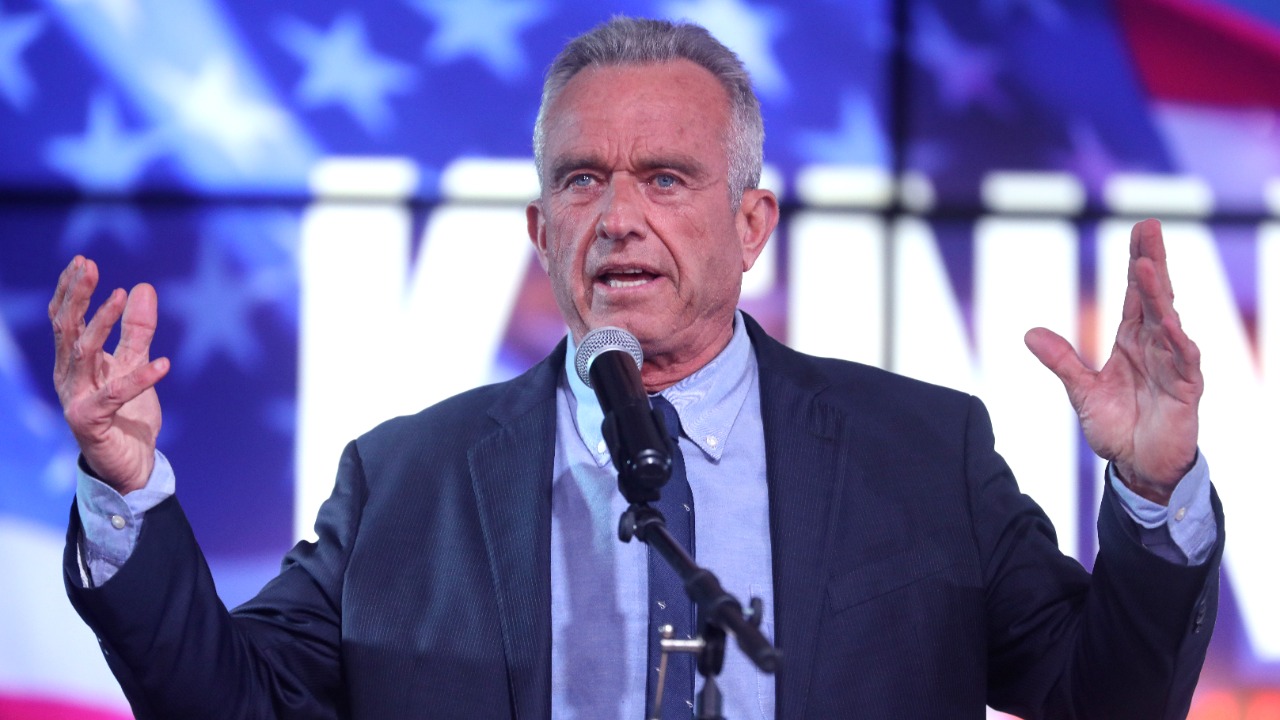

Robert F. Kennedy Jr. has turned aluminum in vaccines into a centerpiece of his campaign against mainstream immunization, arguing that the metal is quietly driving everything from autism to food allergies. His claims have collided with a large body of research that has examined aluminum adjuvants for decades and repeatedly found no credible evidence of the sweeping harms he describes. As scientists respond in journals, interviews, and public statements, the dispute has become a test of how far evidence can push back against a narrative built on suspicion.
RFK Jr.’s aluminum narrative moves from fringe to spotlight
Kennedy has spent years arguing that vaccine ingredients are more dangerous than regulators admit, but his focus on aluminum has sharpened as his political profile has grown. He frames the compound as a stealth toxin that accumulates in children’s bodies, suggesting that regulators and pharmaceutical companies have ignored warning signs and that parents have been misled about what is in routine shots. That framing has helped him connect with voters already skeptical of public health institutions, even as it departs sharply from what toxicologists and immunologists say the data show.
In interviews and campaign appearances, he has described aluminum adjuvants as a kind of Trojan horse, claiming that they cross the blood-brain barrier, trigger chronic inflammation, and sit at the center of a modern epidemic of neurological and immune disorders. He has also highlighted the presence of aluminum in multiple childhood vaccines, casting the ingredient list itself as proof that something is amiss, even though regulators have long required manufacturers to disclose those components in detail. When he tells audiences that “nobody ever tested” these ingredients properly, he is directly contradicting the extensive safety reviews that underlie routine immunization schedules, as documented in coverage of his vaccine-safety rhetoric and the specific focus on aluminum ingredients.
What aluminum adjuvants actually do in vaccines
To understand why scientists are pushing back, it helps to start with what aluminum is doing in a vaccine in the first place. In this context, aluminum salts act as adjuvants, compounds that enhance the immune response so that a smaller amount of antigen can produce lasting protection. The doses involved are tiny, measured in micrograms, and are designed to linger briefly at the injection site and nearby lymph nodes before being cleared by the body’s normal processes. Toxicologists compare those amounts to the aluminum people routinely ingest in food, water, and medications, which are often higher than what a child receives from a full course of aluminum-containing vaccines.
Regulators and independent researchers have repeatedly evaluated how these adjuvants behave in the body, including how much is absorbed into the bloodstream, how quickly it is excreted, and whether it accumulates in organs at levels that could plausibly cause harm. Those studies have informed the limits that agencies set for cumulative aluminum exposure in infants and children, and they underpin the conclusion that the quantities used in vaccines fall well below thresholds of concern. When Kennedy suggests that the presence of aluminum alone is evidence of danger, he is ignoring this context and the long history of pharmacovigilance that has tracked adverse events in populations receiving aluminum-containing vaccines, a history that scientists have been at pains to explain in detailed responses to his aluminum alarm.
Scientists dismantle the peanut allergy and food allergy claims
One of Kennedy’s most attention-grabbing assertions is that aluminum adjuvants in vaccines may be driving the rise in peanut allergies and other food sensitivities. He has floated the idea that when a child receives a shot containing aluminum, any trace amounts of food proteins in their system could be “imprinted” into the immune response, priming the body to overreact later. The theory is intuitively appealing to some parents who have watched allergy rates climb, but it does not match what allergists see in clinical practice or what epidemiologists find when they look at population-level data.
Researchers who specialize in allergy and immunology point out that the timing and geography of rising food allergies do not line up with the introduction or use patterns of aluminum-containing vaccines. They also note that if aluminum were broadly priming children to react to common foods, clinicians would expect to see a much more uniform pattern of allergies across different populations and vaccine schedules than the patchwork that actually exists. Detailed reporting on Kennedy’s attempt to link peanut allergies to aluminum has highlighted how experts have dissected the gaps in his logic and the absence of supporting data, including in analyses that walk through his peanut-allergy hypothesis and the broader claims he makes about aluminum in vaccines.
The contested study at the center of the aluminum fight
The scientific pushback has not been limited to interviews and op-eds; it has also played out in the peer-reviewed literature that Kennedy often cites. Earlier this year, he seized on a large study that examined health outcomes in people who received aluminum-containing vaccines and found no increased risk of neurological or autoimmune disorders. Rather than accept the findings, he demanded that the journal retract the paper, arguing that the methodology was flawed and that the authors were biased. His allies amplified the call, framing the study as part of a broader effort to whitewash aluminum’s dangers.
The journal’s editors reviewed the complaints and declined to retract the article, standing by the methods and conclusions after additional scrutiny. That decision underscored a key tension in the debate: Kennedy is asking scientific institutions to discard research that does not support his narrative, while those institutions are pointing to the same research as evidence that their safety assessments are working as intended. Coverage of his failed retraction campaign has detailed how the editors weighed his objections, how the authors defended their work, and how the episode became a rallying point for researchers who argue that the data show no health risk of aluminum at the levels used in vaccines.
How Kennedy’s broader health agenda leans on the same playbook
Kennedy’s focus on aluminum does not exist in isolation; it is part of a wider pattern in how he approaches biomedical evidence. He has questioned the safety of multiple drug classes and public health interventions, often highlighting outlier studies or preliminary findings while downplaying larger, more rigorous trials that reach different conclusions. That approach has surfaced in his commentary on weight-loss medications and metabolic drugs, where he has suggested that regulators are too quick to embrace new therapies without fully understanding long-term risks, even when large randomized trials are underway or completed.
In the case of vaccines, he applies the same template by elevating small or methodologically weak studies that hint at harm from aluminum while dismissing large cohort analyses that find no such signal. Health reporters who track his statements have noted that this pattern can give audiences the impression that the scientific community is deeply divided when, in reality, the disagreements are often between a small group of critics and a much larger body of researchers who see the evidence as relatively clear. Recent coverage of his interventions in debates over GLP-1 drugs and vaccine ingredients has highlighted how he uses these controversies to argue that the entire regulatory system is compromised, even when the underlying data on aluminum in vaccines point in the opposite direction.
Public health experts warn about real-world fallout
For clinicians on the ground, the concern is not just that Kennedy is wrong on the science, but that his message is landing with parents who are already anxious about what goes into their children’s bodies. Pediatricians report spending more time explaining basic vaccine ingredients and reassuring families that aluminum adjuvants have been studied extensively, even as they try to keep up with routine care. Some describe parents arriving with printouts of Kennedy’s talking points, demanding “aluminum-free” schedules that do not exist or asking to delay shots until they can find alternatives, which can leave children vulnerable to preventable diseases.
Local health departments and hospital systems have also had to respond, updating their public-facing materials to address specific claims about aluminum and clarifying how safety monitoring works. In regions where vaccine hesitancy was already high, officials worry that Kennedy’s rhetoric could push coverage rates below the thresholds needed for herd immunity, particularly for diseases like measles that spread easily. Reporting from communities grappling with these conversations has captured both the frustration of clinicians who feel they are relitigating settled science and the anxiety of parents caught between a charismatic political figure and the quieter voices of their own doctors, as seen in accounts of how his aluminum messaging has filtered into discussions about aluminum-containing vaccines.
The retraction campaign and what it reveals about scientific norms
Kennedy’s push to retract the aluminum safety study has become a case study in how scientific norms collide with political pressure. Retractions are typically reserved for clear cases of fraud, plagiarism, or major methodological errors that invalidate a paper’s conclusions. In this instance, the journal’s editors concluded that none of those criteria were met, even after reviewing Kennedy’s complaints and the responses from the authors. By refusing to pull the paper, they signaled that disagreement over interpretation is not, on its own, grounds to erase peer-reviewed work from the record.
The episode also highlighted how retraction campaigns can be used as political theater, with the act of demanding a retraction serving as a way to cast doubt on a study regardless of the outcome. Kennedy and his supporters were able to tell their audiences that they had “challenged” the paper, reinforcing the idea that the research was suspect, while the journal’s decision to stand by the work received less attention in those same circles. Detailed accounts of the dispute have traced how his team framed the study as part of a broader conspiracy and how the editors responded by reaffirming the evidence that aluminum adjuvants, at vaccine doses, do not pose the systemic risks he alleges, a stance that was echoed in coverage of the vaccine study retraction fight.
Food allergy fears and the legal-policy front
As Kennedy has tried to link aluminum in vaccines to food allergies, the debate has spilled into legal and policy arenas. His arguments have surfaced in discussions about liability, informed consent, and the scope of federal vaccine injury programs, with some allies suggesting that regulators should treat aluminum-related allergy claims as presumptively valid. That would mark a sharp break from current practice, which requires claimants to present evidence that a vaccine caused a specific injury, rather than assuming causation based on temporal proximity or mechanistic speculation.
Attorneys and policy analysts who follow vaccine litigation note that courts have generally been skeptical of broad, untested theories about adjuvants, instead relying on expert testimony grounded in epidemiological data and established immunology. They warn that if speculative links between aluminum and food allergies were to gain traction in legal settings, it could open the door to a wave of claims that are difficult to adjudicate and that may not reflect actual risk. Reporting on Kennedy’s attempts to tie aluminum to food allergies has underscored how these arguments are being deployed not just in public forums but also in legal and regulatory debates, where they intersect with questions about compensation, disclosure, and the evidentiary standards that govern health-law disputes.
Kennedy’s shifting relationship with “gold standard” science
One of the more striking aspects of Kennedy’s campaign is how he talks about scientific rigor. At times, he praises randomized controlled trials and large observational studies as the “gold standard,” especially when he believes they support his skepticism of certain drugs or mandates. At other moments, he dismisses similar types of evidence when they contradict his views on vaccines, suggesting that the studies are corrupted by industry influence or government pressure. That selective embrace of methodology has left many researchers arguing that the dispute is less about what counts as good science and more about which conclusions he is willing to accept.
His relationship with federal health agencies has followed a similar pattern. He has alternated between accusing regulators of ignoring safety signals and, in other contexts, claiming that the Trump administration is finally following rigorous science in ways previous administrations did not. That rhetorical flexibility allows him to align himself with “gold standard” evidence when it suits his narrative while casting doubt on the same standards when they support vaccine safety. Coverage of his comments on how the Trump administration approaches scientific guidance has illustrated this tension, showing how he invokes the language of high-quality research even as he rejects the consensus on vaccine science that those standards produce.
Why the aluminum debate matters beyond vaccines
The clash over aluminum is not just a narrow fight about one vaccine ingredient; it is a window into how scientific authority is contested in an era of polarized politics and fragmented media. When a high-profile figure like Kennedy tells millions of people that a widely used compound is secretly harming their children, it forces scientists to decide how, and how often, to respond. Some worry that engaging too directly risks amplifying fringe ideas, while others argue that silence leaves a vacuum that misinformation will fill. The aluminum debate has pushed many toward the latter view, prompting more researchers to step into public conversations they once avoided.
At the same time, the episode has underscored the limits of data alone in shifting deeply held beliefs. Even when journals, health agencies, and independent experts present detailed evidence that aluminum adjuvants are safe at vaccine doses, a portion of the public remains unconvinced, in part because they see Kennedy as a truth-teller standing up to powerful institutions. That dynamic has been evident in the reaction to the aluminum safety study that he tried to have retracted: for his supporters, the mere fact that he challenged the paper was enough to cast doubt on its findings, regardless of the journal’s decision. Coverage of the journal’s refusal to retract the study has highlighted how this asymmetry plays out, with scientists emphasizing that the research shows no health risk of aluminum at vaccine levels while Kennedy continues to insist that the danger is being covered up.
More from MorningOverview