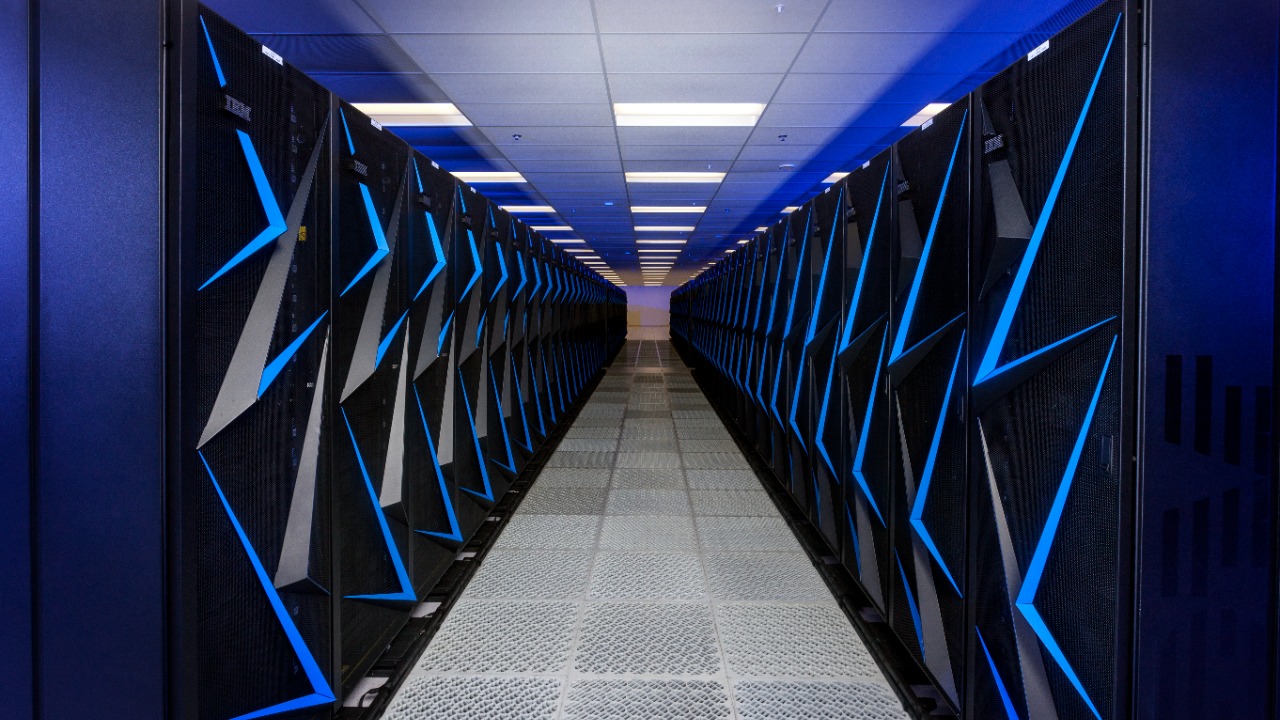

Engineers are preparing to send a new kind of supercomputer-grade chip into orbit, not as a science-fiction prop but as a practical tool that could reshape how satellites, networks, and even everyday devices handle data. The promise is simple and sweeping: if space hardware can process information as quickly and flexibly as a data center, the ripple effects will reach everything from climate forecasting to navigation and emergency response on the ground. I want to trace how this single piece of silicon, hardened for the harshest environment humans use, could quietly alter life on Earth.
The leap from data center to orbit
The core shift is that satellite payloads are starting to look less like fixed-function instruments and more like cloud servers, with a general-purpose chip that can be reprogrammed from the ground. Instead of beaming raw measurements back to Earth for analysis, a space-borne processor can run complex models in real time, compressing, filtering, and interpreting data before it ever hits a ground station. Reporting on the new supercomputer chip emphasizes that it is designed to survive radiation, extreme temperature swings, and power constraints while still delivering performance that, until recently, belonged only in climate labs and AI clusters on Earth, a step that turns orbit into an extension of the terrestrial compute fabric rather than a disconnected frontier.
Coverage of the project highlights how this chip is being treated as a test case for a broader class of space-ready accelerators that can run machine learning, image recognition, and signal processing workloads directly on satellites. One report describes how the hardware is being paired with modular software so operators can upload new algorithms as missions evolve, a departure from the traditional model where a satellite’s capabilities are essentially frozen at launch, and this flexibility is framed as the real breakthrough because it lets the same platform pivot from, for example, crop monitoring to disaster mapping without a new spacecraft. The space-bound chip is presented as a proof of concept for that reconfigurable future.
Why putting serious compute in space matters on Earth
Running heavy computation in orbit is not a vanity project, it is a way to cut latency and bandwidth costs that currently limit what satellite constellations can do for people on the ground. When a satellite can classify images, detect anomalies, or run predictive models locally, it only needs to send down the results, not the entire raw dataset, which is crucial for time-sensitive uses like tracking wildfires, monitoring shipping lanes, or spotting infrastructure failures. Analysts following the chip’s development argue that this shift could make satellite services more responsive and affordable, since operators would not need as many ground stations or as much backhaul capacity to support sophisticated analytics.
There is also a resilience argument that becomes clearer once you look at how dependent modern life is on space infrastructure. Navigation, weather forecasts, financial transactions, and global communications all rely on satellites that are, in many cases, still limited by decades-old processing power. By upgrading those platforms with a supercomputer-class chip, operators can deploy more robust encryption, smarter fault detection, and adaptive routing that keeps services running even when parts of a constellation are degraded. The framing in one detailed feature is that the chip is less about raw speed and more about autonomy, giving satellites the ability to make decisions locally instead of waiting for instructions from Earth, which in turn makes the systems that depend on them more stable and responsive.
From science fiction predictions to grounded engineering
Any time a powerful computer goes into an unusual environment, it tends to attract grandiose claims, and space hardware is no exception. Social media posts have circulated breathless assertions that a “world-first supercomputer” has already predicted the end of human life in 2025, treating computational power as a kind of oracle rather than a tool. One widely shared example presents a dramatic countdown to extinction, attributing it to unnamed scientists and a mysterious machine, but offers no verifiable methodology, peer-reviewed backing, or technical detail about what the system actually computed, which makes it a textbook case of how speculative narratives can outrun the underlying engineering.
When I compare those viral claims with the sober technical reporting on the actual chip heading into orbit, the gap is stark. Engineers are focused on radiation hardening, power budgets, and software toolchains, not apocalyptic forecasts, and the most ambitious promises involve better weather models and more efficient communications rather than existential prophecies. The sensational post about a supercomputer predicting humanity’s demise, shared through a Facebook claim, is unverified based on available sources, while the space chip project is documented through concrete design goals, test plans, and mission profiles. That contrast is a reminder to separate the mythology that often surrounds high-performance computing from the measurable, incremental advances that actually change how we live.
How on-orbit AI could reshape everyday services
The most immediate impact of a space-grade supercomputer chip is likely to show up in services people already use, rather than in flashy new gadgets. Weather apps, for example, depend on models that ingest satellite data, and if those satellites can pre-process imagery and run parts of the forecast pipeline in orbit, updates can arrive faster and with higher resolution for specific regions. Reporting on the chip’s capabilities notes that it is being tested with workloads like image segmentation and pattern recognition, which are exactly the kinds of tasks needed to spot storm fronts, heat waves, or developing cyclones more quickly, and that speed can translate into earlier warnings for communities in harm’s way.
Navigation and connectivity are another area where on-orbit compute could quietly raise the floor for everyday reliability. Satellite internet providers and global positioning systems currently rely on relatively simple onboard logic, with most optimization handled on the ground, but a more capable processor in space can dynamically adjust beam patterns, reroute traffic, and refine positioning signals in response to real-time conditions. One analysis of the chip’s potential applications describes scenarios where a constellation uses onboard AI to prioritize emergency communications during disasters, or to allocate bandwidth to congested regions without waiting for human operators, and those kinds of adaptive behaviors could make services like in-flight Wi-Fi, maritime links, and rural broadband feel less fragile and more consistent.
The software stack behind a space supercomputer
Hardware alone does not deliver intelligence, and the teams behind the space-bound chip are investing heavily in the software ecosystem that will run on top of it. That includes compilers tuned for radiation-hardened architectures, libraries for signal processing and computer vision, and curated datasets that can be used to train and validate models before they are uploaded to a satellite. In technical documentation and interviews, engineers stress that they are borrowing lessons from terrestrial high performance computing, such as containerized workloads and automated deployment pipelines, but adapting them to the constraints of limited bandwidth and the impossibility of physical access once the hardware is in orbit.
One way to understand this stack is to look at how other AI and language technologies manage their vocabularies and training data, even if they are not space-specific. Large language models, for instance, rely on carefully constructed token lists and corpora, such as the extensive vocabulary files used in projects like character-level BERT, to ensure that the system can handle diverse inputs efficiently. Similarly, the satellite chip’s software environment must define which patterns, signals, and features are worth recognizing, and must compress that knowledge into models that fit within tight memory and power budgets. Engineers are effectively building a compact, specialized AI toolkit that can survive in orbit and still deliver meaningful insights back to Earth.
Lessons from earlier waves of computing hype
The excitement around a space-ready supercomputer chip echoes earlier moments when new technology was expected to transform entire industries overnight, only for the reality to be more gradual and uneven. The media business offers a cautionary parallel, as chronicled in detailed accounts of how Canadian newspapers struggled with the shift from print to digital and the rise of paywalls. Those histories show that even when a technology is clearly powerful, such as online distribution and targeted advertising, the institutions that depend on it can take years to adapt their business models, and some never fully make the leap, which is a useful reminder that satellites and ground operators will also need time to reorganize around on-orbit compute.
In that context, the space chip looks less like a magic switch and more like the start of a long transition in how data flows between orbit and Earth. Just as publishers experimented with metered access, freemium content, and bundled subscriptions before settling on sustainable models, satellite operators are likely to test different ways of balancing onboard processing with ground-based analytics. A detailed study of the “great disruption” in Canadian media, preserved as a paywall-era case study, underscores how critical it is to align technology with clear value for end users, and that same discipline will determine whether space-based supercomputing becomes a niche capability or a standard feature of orbital infrastructure.
Hardware evolution and the long arc of performance
To appreciate what it means to send a supercomputer-class chip into space, it helps to remember how quickly performance has scaled on Earth. A decade ago, consumer technology magazines were still marveling at multi-core desktop processors and early GPU acceleration, treating teraflop-level performance as something exotic and largely confined to research labs. Archival issues from that period, such as a January 2016 technology digest, capture the tone of that era, with breathless coverage of gaming rigs and overclocked CPUs that now look modest compared with the capabilities of a modern smartphone, let alone a dedicated AI accelerator.
The chip heading into orbit is a product of that same trajectory, but adapted for an environment where repair is impossible and failure can jeopardize entire missions. Engineers have had to reconcile the hunger for more cores and higher clock speeds with strict limits on heat dissipation and power draw, a balancing act that is documented in technical retrospectives and enthusiast discussions. Looking back at how consumer hardware was framed in sources like the 2016 Digit issue helps illustrate how far mainstream computing has come, and by extension, how significant it is that similar performance levels are now being ruggedized for launch atop a rocket.
Open communities, skepticism, and technical scrutiny
New hardware platforms rarely evolve in isolation, and the space supercomputer chip is already attracting attention from open communities that specialize in dissecting ambitious engineering claims. On forums where developers and hardware enthusiasts gather, contributors are parsing the limited public specifications, comparing the chip’s projected performance to existing radiation-hardened processors, and debating how realistic it is to run complex AI workloads in orbit. That kind of scrutiny can be uncomfortable for vendors, but it often surfaces edge cases and failure modes that internal teams might miss, especially when participants bring experience from adjacent fields like embedded systems and distributed computing.
One discussion thread, hosted on a well-known technology news aggregator, exemplifies this dynamic by combining excitement about the potential for on-orbit inference with pointed questions about model updates, fault tolerance, and the risk of overpromising. Commenters weigh in on whether the chip’s advertised throughput is achievable under real-world thermal constraints, and whether the software ecosystem will be open enough for independent researchers to experiment with their own payloads. The conversation, preserved in a Hacker News thread, shows how community feedback can act as an informal peer review, tempering hype with practical concerns that ultimately make the technology more robust.
Data, dictionaries, and the raw material of orbital intelligence
Behind every AI model and analytics pipeline that might run on the space chip lies a less glamorous layer of structured data, dictionaries, and reference tables that define what the system can recognize. In scientific computing, teams often rely on curated datasets and domain-specific lexicons, such as the detailed Japanese language and technical term lists maintained by university projects, to ensure that algorithms interpret inputs consistently. A radiation-hardened processor in orbit will need its own carefully vetted catalog of patterns, whether they are spectral signatures of crops, characteristic shapes of storm systems, or signal fingerprints of communication interference, and those catalogs must be compact enough to fit within constrained storage while still being rich enough to support nuanced decisions.
Some of the best analogies for this work come from linguistic resources that map words to meanings and usage patterns, like the extensive dictionary files hosted by research groups at institutions such as Hokkaido University. A project that distributes a comprehensive Japanese dictionary dataset illustrates how much effort goes into encoding subtle distinctions and edge cases, and the same meticulous approach is required when defining the “vocabulary” of signals and images that an orbital AI will process. The quality of those underlying tables will determine how reliably the chip can distinguish, for example, between a harmless cloud formation and the early stages of a severe storm, which in turn affects the trust that users on the ground can place in its outputs.
Cultural narratives, buzzwords, and the language of tech revolutions
Every technological shift comes wrapped in a particular language, and the way commentators talk about the space-bound supercomputer chip reveals as much about our expectations as it does about the hardware itself. Bloggers and newsletter writers who track digital culture have already started weaving the chip into broader stories about automation, surveillance, and the creeping abstraction of infrastructure, sometimes treating it as another step toward an opaque, AI-managed world. In one long-running web column that catalogs curiosities from across the internet, the author folds references to orbital computing into a stream of links about social media, advertising, and platform power, highlighting how quickly a specialized engineering project can become a symbol in debates about who controls data and decision-making.
At the same time, the vocabulary of disruption and transformation that surrounds the chip can obscure the more prosaic but important details of implementation. Lists of “most replicated” words and phrases in online writing, such as those compiled in experiments on wiki ecosystems, show how certain buzzwords spread far beyond their original technical context, turning precise concepts into vague slogans. A cultural digest on Web Curios captures this drift by juxtaposing serious engineering news with playful commentary on jargon, and that tension is relevant here: if the chip is framed only as a revolution, without attention to its limits and dependencies, public understanding will lag behind the actual trade-offs engineers are making.
From orbital chips to grounded applications
Ultimately, the value of a supercomputer-grade chip in space will be measured not by its benchmark scores but by the concrete improvements it delivers to systems people rely on every day. That might mean more accurate flood maps for city planners, faster rerouting for cargo ships when storms threaten key ports, or more resilient connectivity for remote clinics that depend on satellite links for telemedicine. The reporting on the chip’s planned missions suggests that early deployments will focus on these kinds of targeted, high-impact applications, where even modest gains in speed or accuracy can translate into lives saved or resources conserved, and where the cost of launching advanced hardware is justified by the stakes on the ground.
As those first use cases mature, the chip’s architecture and software stack are likely to influence a broader ecosystem of tools, from ground-based simulators that mirror orbital workloads to educational resources that help new engineers understand the constraints of space computing. Developers might draw on open word lists and language resources, such as the widely shared replicated word collections used in text experiments, to build better documentation and interfaces that demystify how on-orbit AI makes decisions. In that sense, the chip is not just a piece of hardware but a focal point for rethinking how intelligence is distributed across Earth and space, and how the benefits of that intelligence can be shared more widely.
Keeping expectations realistic while embracing potential
For all the justified excitement, it is important to keep expectations for the space-bound supercomputer chip grounded in what the available reporting actually supports. The hardware is a significant step forward in bringing high performance computing into orbit, but it is still constrained by launch costs, limited opportunities for physical upgrades, and the need for rigorous validation before any model can be trusted with critical decisions. Engineers and mission planners are clear that they will start with tightly scoped tasks, such as specific image analysis routines or communication optimizations, and expand only as they gain confidence in the chip’s behavior under real-world conditions.
At the same time, the project offers a glimpse of a future where the boundary between terrestrial and orbital computing is far more porous, with satellites acting as active participants in global information systems rather than passive sensors. Consumer-focused coverage, including a detailed breakdown of how the chip could affect smart devices and connected cars, frames it as part of a broader trend toward pushing intelligence closer to where data is generated, whether that is a factory floor, a smartphone, or a satellite. One such analysis, published by a technology columnist who specializes in future gadgets, describes how the space supercomputer could eventually support applications like real-time translation for global broadcasts or adaptive routing for autonomous vehicles that rely on satellite data. If those scenarios come to pass, it will be because the chip’s designers managed to balance ambition with discipline, building a platform that is as reliable as it is powerful.
More from MorningOverview