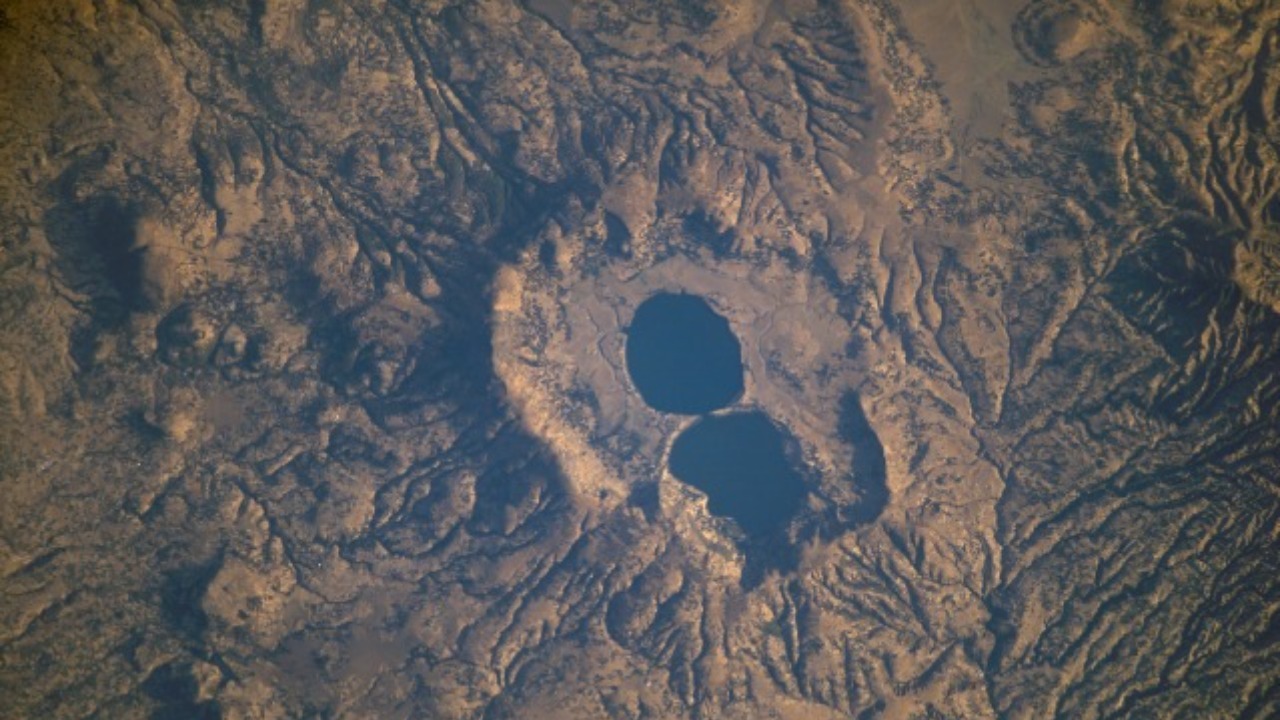

For the first time in roughly 12,000 years, a long‑quiet volcano in Ethiopia has roared back to life, sending fountains of lava and towering ash into the sky and jolting one of the world’s most important tectonic crossroads. The eruption has transformed what had been a largely academic curiosity on ancient activity into a live test of how a rapidly changing planet copes with a rare geological awakening.
As molten rock cuts through the crust in a region already stretched by continental rifting, scientists are racing to understand what this reawakened volcano can tell us about the deep forces reshaping East Africa, while nearby communities confront the immediate risks of ash, gas, and potential lava flows. I am watching a story that spans from microscopic ash grains to satellite views of a continent in motion, and the stakes are as much about people as they are about plate tectonics.
The volcano that woke up after 12,000 years
The volcano at the center of this story had been dormant for so long that its last known activity predates written history, with geologic records pointing to an eruption roughly 12,000 years ago. That long silence ended when magma finally broke through again, producing a fresh eruption that has stunned researchers who had treated the cone as effectively inactive in human terms. The new activity confirms that even volcanoes with deep prehistoric timelines can reawaken on a human timescale, a reminder that dormancy is not the same as extinction, especially in a tectonically active corridor like the East African Rift.
Scientists tracking the region’s volcanic history had cataloged this peak’s ancient lava flows and ash layers, but until now there had been no modern eruption in the span of scientific observation, which is why the event is being described as the first in nearly 12 millennia of records. Early reporting has emphasized that the volcano’s reactivation follows a pattern of slow tectonic stretching that has been underway for millions of years, yet the sudden transition from quiescence to eruption still caught many experts off guard, prompting fresh analysis of the long‑term geologic archives that first documented its last major outburst in the late Pleistocene period, as detailed in coverage of the first eruption in nearly 12,000 years.
How the eruption unfolded on the ground and from space
When the volcano finally broke its silence, the sequence followed a familiar but still dramatic script: seismic tremors intensified, the ground cracked, and a curtain of lava began to pour from new fissures on the flanks of the cone. Witnesses described incandescent fountains lighting up the night sky and a thick column of ash rising above the summit, while glowing rivers of molten rock traced paths downslope. From orbit, satellites captured a bright thermal anomaly at the vent and a spreading plume that drifted with prevailing winds, giving scientists a near real‑time view of how the eruption evolved over its first crucial hours.
On the ground, residents in nearby communities recorded the spectacle on phones, producing clips that show lava jets pulsing rhythmically and ash clouds billowing in the background as people react in a mix of awe and fear. Those images have been amplified by broadcasters and social platforms, including dramatic video of the eruption that highlights the scale of the lava fountains and the dense plume towering above the landscape. Short‑form footage has also circulated widely, with one widely shared eruption clip capturing the moment a fresh burst of lava surges from the vent, underscoring how quickly conditions can shift during an active phase.
Why this volcano matters for the East African Rift
The volcano’s reawakening is not happening in isolation, it is part of the broader story of the East African Rift, where the African continent is slowly tearing apart along a vast network of faults and volcanic centers. This region, which stretches from the Red Sea through Ethiopia and down into Mozambique, is one of the few places on Earth where a new ocean basin is expected to form over geologic time. The Ethiopian volcano that has just erupted sits near the junction of several rift segments, so its behavior offers a rare window into how magma moves and where the crust is weakest as the continent stretches.
Geophysicists have long used seismic swarms and ground deformation in Ethiopia to map the plumbing of the rift, but a full‑scale eruption from a volcano that had been quiet for 12,000 years provides a new calibration point for those models. The event confirms that even long‑dormant structures can still tap deep magma reservoirs feeding the rift system, and it raises questions about how stress is being redistributed along nearby faults. Early analysis shared in coverage of the first eruption in 12,000 years notes that the eruption is being closely watched as a natural experiment in continental breakup, with implications for understanding similar rift zones in places like Iceland and the Basin and Range province in the United States.
Communities living in the volcano’s shadow
For people living around the volcano, the event is less a geologic curiosity than an immediate test of resilience. Villages that had grown up on ancient lava fields and ash‑rich soils suddenly found themselves downwind of a fresh plume, with residents reporting ash fall on roofs, fields, and water sources. Local authorities have had to weigh evacuation orders against the realities of moving families, livestock, and limited possessions along roads that were never designed for a rapid mass departure, all while monitoring whether lava flows might threaten homes or grazing land.
Initial reports indicate that emergency officials have focused on areas closest to the active vents and along likely lava paths, while also warning communities about the health risks of inhaling fine ash and volcanic gases. Coverage shared through regional updates on what we know so far has emphasized that authorities are working to keep people away from unstable ground and potential lahar channels, even as many residents are reluctant to leave ancestral land. The eruption has also disrupted daily routines, from school schedules to market days, as ash and uncertainty settle over the region.
Scientists stunned, but not entirely surprised
Volcanologists who study Ethiopia’s rift system have described the eruption as both astonishing and, in a broader sense, expected. Astonishing, because a volcano with no recorded activity in 12,000 years has suddenly produced a vigorous eruption in the age of smartphones and satellites. Expected, because the underlying tectonic forces that feed magma into the crust have been active for millions of years, and many researchers have warned that the region’s apparent quiet could be misleading. The new eruption validates those concerns and is already prompting calls for more sustained monitoring of other seemingly dormant cones in the area.
Several experts quoted in early coverage have noted that the event challenges the way hazard maps classify long‑quiet volcanoes, especially in developing regions where monitoring networks are sparse. The fact that this volcano could transition from deep dormancy to eruption underscores the need for better seismic arrays, GPS stations, and gas sensors across the rift, not just on the handful of peaks already known for frequent activity. Reports describing how the eruption has stunned experts highlight a broader lesson: in tectonically active zones, the absence of recent eruptions is not a guarantee of future safety, and scientific humility is essential when dealing with incomplete records.
What the eruption reveals about Earth’s deep interior
From a scientific perspective, the eruption is a rare chance to sample and study magma that has traveled from deep within the mantle to the surface in a region where continental crust is being stretched and thinned. Geochemists are eager to analyze fresh lava and ash to determine their composition, which can reveal how long the magma spent in storage, how much it interacted with surrounding rock, and whether it carries signatures of deeper mantle plumes. Those details help refine models of how heat and material move upward through the Earth, particularly in rift zones where the crust is under tension rather than compression.
Seismologists, meanwhile, are combing through records of pre‑eruption earthquakes to reconstruct the path the magma took as it rose, looking for patterns that might serve as early warning signs at other volcanoes. The eruption’s timing and style will be compared with past intrusions and smaller events in the region to see whether there were subtle precursors that were missed or underappreciated. Early summaries of the scientific response, including accounts of how researchers are documenting the first eruption in 12,000 years, suggest that the data set from this event could reshape understanding of how rifting and volcanism interact beneath East Africa.
Global attention and the power of viral imagery
In an era when natural disasters are often experienced first through screens, the Ethiopian eruption has quickly become a global visual event. Short clips of lava fountains and ash clouds have circulated widely on social media platforms, turning a remote volcanic cone into a trending topic in cities thousands of kilometers away. That visibility has helped draw attention to the risks facing local communities and the scientific significance of the eruption, but it has also introduced the usual mix of misinformation, miscaptioned footage, and out‑of‑context comparisons to other famous eruptions.
Traditional broadcasters have tried to ground the conversation in verified imagery and expert commentary, airing segments that show the eruption from multiple angles and explain its context within the East African Rift. One widely shared segment on the first eruption in 12 millennia uses satellite views and on‑the‑ground video to walk viewers through the scale of the event, while other outlets have focused on the human stories of displacement and uncertainty. The result is a layered narrative in which spectacular visuals draw people in, but the deeper understanding depends on careful reporting and scientific interpretation.
Economic stakes: from ash‑covered fields to regional trade
Beyond the immediate hazard zone, the eruption is already rippling through local and regional economies. Ash fall can damage crops, contaminate water supplies, and harm livestock, threatening the livelihoods of farmers who depend on predictable growing seasons and clean grazing land. Even a relatively modest eruption can have outsized effects if it coincides with key planting or harvest windows, and the uncertainty about how long the volcano will remain active complicates planning for the next agricultural cycle.
There are also broader economic considerations, including potential disruptions to transportation corridors that link landlocked regions of Ethiopia to ports and markets. If ash clouds drift into air routes or if lava or ground deformation affects roads, the costs could extend well beyond the immediate vicinity of the volcano. Financial and business reporting on how the volcano has emerged from a 12,000‑year dormancy has underscored that even a single geologic event can test infrastructure resilience and expose gaps in disaster preparedness that have implications for investors, insurers, and policymakers.
Risk, resilience, and what comes next
As the eruption continues to unfold, the central questions are how long the volcano will stay active and what pattern its activity will follow. Some eruptions in rift settings evolve into prolonged episodes with repeated lava effusion and intermittent ash bursts, while others taper off after an initial surge. Emergency planners must prepare for both possibilities, maintaining evacuation routes and shelters while also considering how to support communities if the disruption stretches from days into weeks or months. The experience will likely feed into updated hazard maps and contingency plans for other volcanic centers across Ethiopia.
For scientists and residents alike, the event is a stark reminder that Earth’s deep processes do not operate on human schedules. A volcano that slept through the rise and fall of ancient civilizations has now awakened in a world of satellites, smartphones, and global supply chains, forcing a recalibration of what “dormant” really means in a tectonically active region. Reporting that traces how the volcano erupted after lying dormant for 12,000 years captures that sense of a boundary being crossed, from prehistory into the present. As I follow the data and the human stories emerging from Ethiopia, the lesson is clear: even the quietest corners of the geologic record can still surprise us, and preparation is the only rational response to that uncertainty.
More from MorningOverview