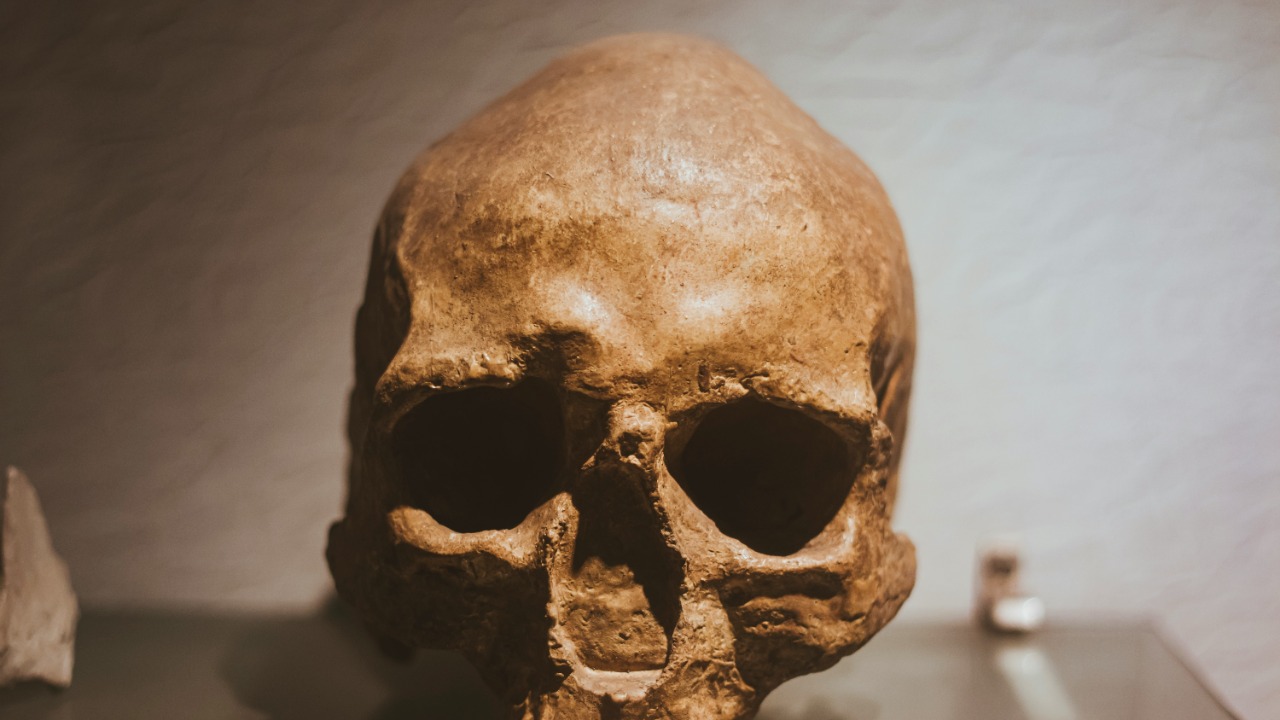

Modern human faces are surprisingly delicate compared with the heavy brow ridges and projecting midfaces of Neanderthals, even though we share a close evolutionary history. The split between our lineages left two very different solutions to the same Ice Age challenges written across our skulls, and those differences still shape how we breathe, bite and communicate today.
To understand why our faces diverged so sharply, I need to trace how growth patterns, climate pressures, diet, and even language demands pulled Neanderthal and modern human anatomy in different directions, then ask what those choices reveal about the kind of species we became.
The deep evolutionary fork in the family tree
Neanderthals were not a rough draft of us, they were a sister lineage that evolved its own distinctive anatomy over hundreds of thousands of years in Eurasia while our ancestors were taking shape in Africa. That shared ancestry explains why Neanderthals and modern humans could interbreed, but it also means that many of the traits we think of as “primitive” or “advanced” are actually parallel experiments rather than a simple ladder of progress. When I look at their skulls next to ours, I see two branches that solved overlapping problems with different combinations of bone, muscle and braincase.
Researchers who reconstruct fossil faces have shown that Neanderthals carried a long, low cranium, a large nose opening and a projecting midface, while modern humans evolved a higher, more rounded braincase and a tucked, flatter face. One detailed anatomical comparison of cranial growth patterns argues that the Neanderthal midface expanded forward through intense childhood bone deposition, whereas in our species the lower face is relatively retracted and the forehead more vertical, a pattern that can be traced in developmental data and fossil series in studies such as comparative craniofacial analyses.
How Neanderthal faces were built for power and cold
When I examine Neanderthal skulls, the first impression is sheer robustness: thick brow ridges, a wide nasal aperture and a midface that juts forward. Several biomechanical reconstructions suggest that this architecture supported powerful biting and chewing, with large attachment areas for facial and jaw muscles that could process tough, fibrous foods and raw meat. That forward-projecting midface also increased internal nasal volume, which many researchers interpret as an adaptation for conditioning cold, dry air before it reached the lungs in Ice Age Europe.
Work that combines fossil measurements with computer modeling has argued that the Neanderthal face functioned as a kind of built-in heat exchanger, with the enlarged nasal cavity and sinuses helping warm and humidify inhaled air more efficiently than in earlier hominins. Reconstructions of airflow and stress patterns in the skull support the idea that their prominent midface and large nose were not random quirks but integrated responses to heavy chewing loads and frigid climates, a view reflected in anatomical overviews such as detailed facial reconstructions.
Why our faces shrank and tucked under the brain
Modern human faces look smaller not because we are generally weaker, but because the lower face has rotated and retracted under an expanded braincase, leaving a flatter profile and reduced brow ridges. Several lines of evidence point to changes in growth timing: our species shows prolonged childhood and slower facial bone deposition, which allows the neurocranium to balloon while the midface remains relatively compact. The result is a high forehead, a chin and a face that sits tucked beneath the skull rather than projecting in front of it.
Some researchers argue that this retraction reflects a shift away from the heavy biting and tearing that shaped earlier hominins, toward a diet that relied more on tools, cooking and food processing. As stone tools, grinding stones and later metal blades took over the hardest work, selection pressure on massive jaws and thick facial bones eased, allowing a more gracile configuration to spread. Discussions among paleoanthropologists often highlight how this “shrunken” face is actually a derived condition, a point that surfaces even in public-facing debates such as comparisons of facial size that emphasize the contrast between our reduced midface and Neanderthal robustness.
Diet, tools and the fading need for a heavy bite
One of the most persuasive explanations for our lighter faces is the technological revolution in how we process food. As early Homo sapiens adopted more sophisticated tools, from finely retouched stone blades to bone points and grinding implements, they could cut, pound and cook meat and plants before they ever reached the mouth. This external processing meant that the jaw no longer had to generate the same crushing forces, which in turn reduced the evolutionary payoff for thick zygomatic arches, massive teeth and a projecting muzzle.
Comparative studies of cranial biomechanics suggest that Neanderthal faces were better suited to high bite forces at the front of the mouth, while modern human skulls are optimized for a more balanced load and lower peak stresses. That shift aligns with archaeological evidence for increased reliance on cooked and processed foods in our lineage, and with arguments that Neanderthals retained a more physically demanding feeding ecology. Even popular explanations of why Neanderthals were “built differently” emphasize that their stocky bodies and strong faces likely conferred advantages in close-range hunting and chewing tough prey, a theme that surfaces in expert discussions such as analyses of Neanderthal build that link facial strength to their broader muscular frame.
Breathing, noses and the Ice Age environment
Facial divergence is not only about chewing, it is also about how different species moved air through their heads. Neanderthals evolved a broad nasal aperture and large internal nasal cavity that many researchers interpret as an adaptation to cold, dry Ice Age climates, where warming and humidifying each breath was critical. The projecting midface increased the distance between the nostrils and the throat, creating more surface area for blood vessels and mucosa to condition incoming air before it reached the lungs.
Modern humans, by contrast, show a narrower nose and a more retracted midface, yet our species also spread into cold regions, which suggests that we relied more on cultural and technological buffers such as clothing, shelters and controlled fire. Reconstructions of Neanderthal and modern human faces that focus on nasal anatomy argue that the Neanderthal configuration was particularly effective at handling high ventilation rates in frigid environments, while our smaller faces reflect a different balance between biology and culture. Public-facing summaries of this work often stress how understanding the differences between Neanderthal and modern human faces helps clarify how each species coped with Ice Age climates, a point highlighted in explanations of facial adaptation to cold that link nasal shape to environmental stress.
Growth patterns and the surprise of “primitive” modern faces
One of the more counterintuitive findings from craniofacial research is that, in some respects, modern human faces can look more “primitive” than Neanderthal ones when you focus on growth trajectories rather than final shape. Detailed developmental studies show that Neanderthal midfaces expand forward through intense bone deposition in childhood, producing their characteristic projection, while modern human faces undergo more remodeling that pulls the midface back under the braincase. That remodeling pattern, which involves resorption in some facial regions, creates our flatter profile even though the underlying developmental toolkit is shared.
When anthropologists compare these growth maps to earlier hominins, they sometimes find that the Neanderthal pattern is highly derived, while aspects of our own facial development resemble older, more generalized conditions. This has led to lively debates about which lineage is truly more “specialized” and whether our flatter faces should be seen as advanced or simply different. That nuance occasionally spills into public discussions, where experts point out that many modern human faces retain ancestral traits and that the Neanderthal midface is not just a scaled-up version of ours, a perspective that appears even in informal venues such as debates over primitive features that challenge the assumption that Neanderthals were always the more archaic-looking species.
Brains, speech and the social demands on our faces
As our faces were shrinking and tucking under a ballooning braincase, our species was also ramping up its reliance on complex language and social signaling. A more vertical forehead and retracted face changed the geometry of the vocal tract and the way soft tissues drape over the skull, which in turn affects how we articulate sounds and display expressions. While Neanderthals likely had some form of spoken communication, several researchers argue that modern humans pushed language into new territory, with dense metaphor, layered symbolism and rapid turn-taking that place fine-grained demands on breath control and facial muscles.
Recent work on fossil ear bones, hyoid bones and brain endocasts suggests that Neanderthals could perceive and produce a range of speech sounds, but comparative analyses of linguistic capacity argue that their communication system probably lacked some of the abstract, metaphor-rich qualities that characterize ours. Those studies propose that modern human language places heavier cognitive and social loads on the brain, which may have coevolved with changes in cranial shape and facial configuration, a line of reasoning laid out in research on differences in Neanderthal language that links our species’ distinctive communication style to anatomical and neural shifts.
Language, cognition and the subtle work of facial expression
Language is not only about sound, it is also about the micro-movements of eyebrows, lips and cheeks that carry emotion and nuance. A flatter, more mobile modern human face may have offered a broader canvas for such expressions, reinforcing group cohesion and cooperation in large, dispersed social networks. As symbolic culture expanded, from body painting to carved figurines, the face itself became a key site for signaling identity and intention, which could have favored configurations that made subtle expressions easier to read.
Scholars who compare Neanderthal and modern human cognition argue that our species’ reliance on metaphor, nested syntax and open-ended storytelling reflects a qualitative shift in how we represent the world, and that this shift likely interacted with changes in brain shape and facial anatomy. Some of this work emphasizes that Neanderthals probably had rich, meaningful communication but did not use metaphor in the same way, which would have shaped how information flowed through their groups. Analyses of these contrasts in cognitive style and communication, such as discussions of metaphor use in language, implicitly highlight how our more gracile faces sit within a broader package of social and symbolic adaptations.
What our divergent faces reveal about survival and identity
By the time Neanderthals disappeared from the fossil record, modern humans had already spread across Africa, Eurasia and eventually into Australia and the Americas, carrying with them a face that was smaller, flatter and more flexible in expression. That divergence does not mean our faces were “better,” but it does suggest that our particular combination of diet, technology, social complexity and language favored a different balance of strength, breathing capacity and communicative nuance. The Neanderthal solution, with its powerful jaws and cold-adapted nose, was exquisitely tuned to their hunting lifestyle and Ice Age environments, yet it was our more gracile configuration that persisted as their lineage faded.
Today, when I look at reconstructions that place Neanderthal and modern human faces side by side, I see not a hierarchy but a record of two successful, if ultimately unequal, experiments in being human. Our own faces continue to evolve as diets soften further and lifestyles change, a trend that some researchers argue is already visible in shrinking jaws and crowded teeth in recent populations. Public-facing explanations of why Neanderthal faces looked so different from ours often stress that understanding these contrasts helps clarify what made our species distinct, a theme that runs through accessible summaries of Neanderthal facial differences and more technical syntheses of craniofacial evolution.
Why the Neanderthal comparison still matters for modern humans
Studying why our faces diverged from Neanderthals is not just an exercise in paleo-curiosity, it also sharpens how I think about variation within our own species. The same developmental processes that produced Neanderthal midfaces and modern human chins are still at work in every embryo, and small tweaks in timing or intensity can yield the wide range of noses, jaws and brow shapes we see today. Understanding those mechanisms helps clinicians interpret craniofacial disorders and orthodontic problems, and it gives anthropologists a framework for reading the fossil record without falling back on simplistic labels like “primitive” and “advanced.”
As new imaging techniques and 3D modeling tools refine our view of ancient skulls, I expect the story of facial divergence to become even more nuanced, with some traits reclassified as shared heritage and others as independent innovations. For now, the contrast between Neanderthal robustness and our own gracility remains a powerful reminder that evolution is not a straight line but a branching process, one in which different combinations of bone, brain and behavior can succeed for long stretches of time. Syntheses that bring together anatomy, climate, diet and cognition, such as integrative discussions of facial evolution and environment alongside technical cranial studies, show that our faces are not accidents of history but the visible outcome of deep, intertwined pressures that shaped what it means to be human.
More from MorningOverview