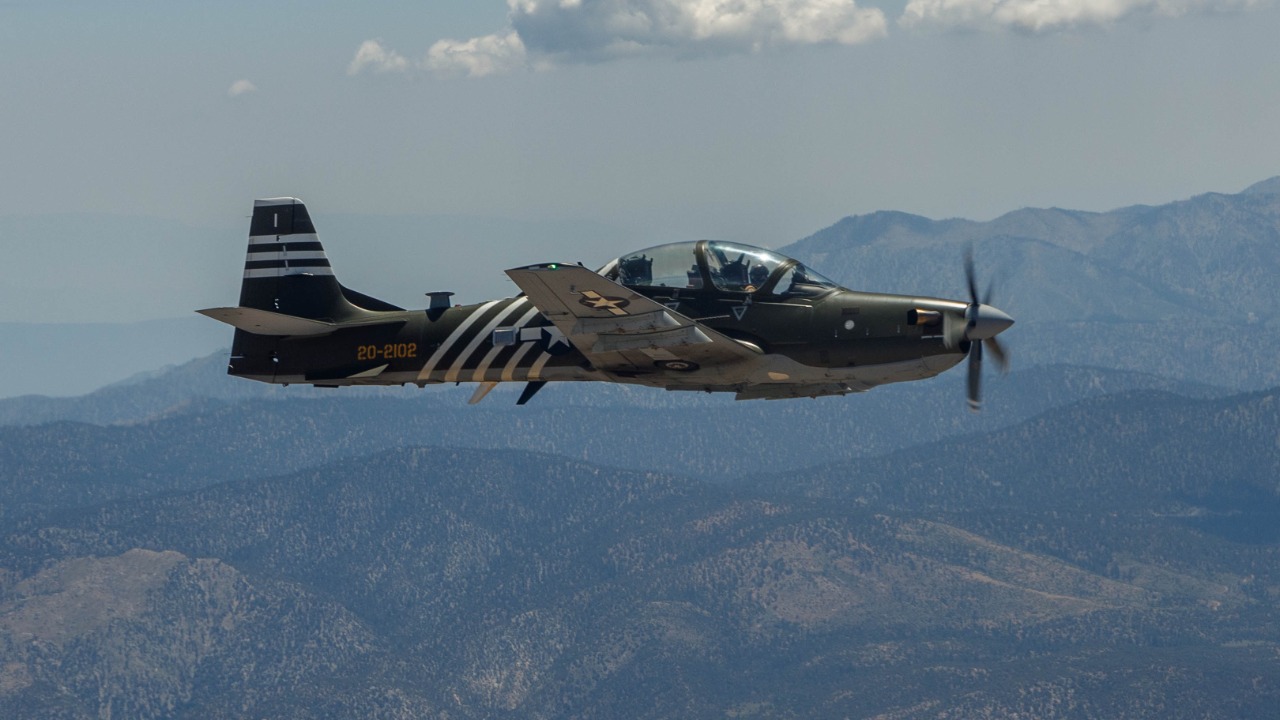

The A-10 Thunderbolt II was built around a gun and a mission: survive over a modern battlefield while shredding tanks and protecting troops under fire. The A-29 Super Tucano, by contrast, grew out of a very different problem set, optimized for low-cost counterinsurgency and training rather than slugging it out with armored divisions and layered air defenses. Both aircraft excel in their own lanes, but the idea that one can simply step into the other’s role ignores how specific and unforgiving close air support really is.
As the U.S. Air Force looks for ways to retire the aging A-10 fleet, the Super Tucano often surfaces in debates as a cheaper, simpler alternative that could keep a gunship presence overhead without the A-10’s maintenance burden. I see that comparison as fundamentally flawed: the A-29 can complement high-end jets in permissive environments, yet it cannot credibly replace the Warthog’s survivability, firepower, or psychological impact on a battlefield saturated with modern threats.
The myth of a one-for-one replacement
The notion that the A-29 could simply take over the A-10’s job rests on a seductive but misleading logic: both are subsonic, both can loiter, and both can carry precision weapons, so why not swap the older, heavier jet for a nimble turboprop. That argument glosses over the fact that the A-10 was engineered from the outset to fly into the teeth of enemy fire, while the Super Tucano was designed for low-intensity conflicts where the main threats are rifles and light machine guns, not radar-guided missiles. Treating them as interchangeable ignores the very design choices that make the A-10 so hard to replace in the first place.
Even within military circles and enthusiast communities, the idea of a direct handoff is increasingly challenged as unrealistic once mission profiles and threat environments are laid out in detail. Discussions of why the U.S. Air Force has not embraced the A-29 as its primary close air support platform often highlight that the aircraft was never intended to survive in the same high-threat envelope as the Warthog, which is why many analysts describe the Super Tucano as a niche solution rather than a true successor. That skepticism is reflected in debates over why the A-29 is not considered a realistic replacement, even by those who admire its performance in counterinsurgency roles.
Different aircraft, different wars
The A-10 emerged from Cold War fears of massed Soviet armor in Europe, which drove designers to prioritize heavy armor, a massive 30 mm cannon, and the ability to absorb punishment while flying low and slow over contested front lines. Its entire airframe, from the titanium “bathtub” around the cockpit to the redundant control systems, reflects an assumption that it would be shot at by serious air defenses and still need to bring its pilot home. The Super Tucano, by contrast, was born out of Latin American and later Afghan counterinsurgency campaigns, where the priority was affordability, endurance, and the ability to operate from austere airstrips against lightly armed insurgents.
That divergence in origin stories matters because it shapes how each aircraft fits into modern doctrine. The A-29 excels in environments where the enemy lacks sophisticated surface-to-air missiles and radar coverage, making it ideal for border patrol, armed reconnaissance, and precision strikes against small, fleeting targets. Analysts who frame the Super Tucano as a potential A-10 successor usually emphasize its low operating cost and flexibility, but even they tend to concede that its strengths lie in counterinsurgency and training rather than high-intensity combined arms warfare, which is still the benchmark for any true A-10 replacement.
Survivability: armor, altitude, and threat envelopes
Survivability is where the comparison between the two aircraft becomes most unforgiving. The A-10 was built to take hits from anti-aircraft artillery and even short-range missiles, with armor plating, self-sealing fuel tanks, and systems redundancy that allow it to limp home with large sections of the airframe damaged. Its engines are mounted high and apart from each other to reduce vulnerability, and its pilots are protected by a titanium shell that has repeatedly proven its worth in combat. The Super Tucano does have armor and defensive systems, but they are scaled for small arms and limited man-portable threats, not the dense air defenses expected around mechanized formations.
Analysts who have examined the A-29’s performance and potential in contested environments consistently point out that it is not designed to survive in the same threat envelope as the A-10, particularly against modern radar-guided systems and integrated air defenses. One detailed assessment of the Super Tucano’s capabilities stresses that while it can be equipped with sensors and countermeasures, its turboprop speed and lighter protection make it far more vulnerable if it strays into medium or high-threat zones. That is why some experts argue that the A-29 is not a worthy one-for-one replacement for the Warthog, even if it can perform parts of the close air support mission under the right conditions.
Firepower and the psychology of the gun run
Firepower is another area where the A-10’s specialization sets it apart. The aircraft is literally built around the GAU-8/A Avenger, a 30 mm rotary cannon capable of shredding tanks, armored vehicles, and fortified positions with a sustained burst. That gun, combined with a large payload of bombs and missiles, gives the Warthog a unique ability to deliver devastating, precise fire at low altitude while remaining on station for extended periods. The Super Tucano can carry a respectable mix of machine guns, rockets, and guided munitions, but it does not bring the same volume or caliber of fire to bear in a single pass.
There is also a psychological dimension to the A-10’s firepower that is hard to quantify but frequently cited by ground troops and pilots alike. The sound of a Warthog diving in for a gun run has become synonymous with reassurance for friendly forces and dread for those on the receiving end, a reputation built on decades of combat use. Video analyses and pilot commentary often highlight how the A-29’s lighter armament is well suited to precision strikes against insurgent targets, yet lacks the sheer destructive presence that the A-10 projects when it arrives over a hot battlefield. That contrast is evident in detailed breakdowns of how each aircraft delivers firepower, which tend to show the Super Tucano as a precise scalpel rather than the Warthog’s sledgehammer.
Cost, efficiency, and the limits of “cheap CAS”
Where the A-29 does shine is in cost and efficiency, which is why it keeps resurfacing in budget debates. Operating a turboprop is significantly cheaper than flying a heavy jet, and the Super Tucano’s maintenance footprint is small enough that partner nations with limited resources can keep it in the air reliably. For missions that involve long hours of loitering over permissive airspace, tracking insurgent movements, or providing overwatch for ground patrols, the economics of the A-29 are compelling. It can deliver precision-guided munitions at a fraction of the cost per flight hour associated with the A-10 or fast jets like the F-16.
However, the drive to find a “cheap CAS” solution runs into hard limits when the mission shifts from counterinsurgency to high-end warfare. Analyses that compare the two platforms often acknowledge that while the Super Tucano can perform many of the tasks associated with close air support in low-threat environments, it cannot do so where the enemy fields serious air defenses or heavy armor. One recent overview of the debate framed the A-29 as a capable light attack aircraft that will never truly replace the A-10, precisely because the cost savings come with trade-offs in survivability and firepower that are unacceptable in the most dangerous scenarios.
Where the A-29 actually fits: permissive skies and partner forces
When I look at how the Super Tucano has been employed by various air forces, a clear pattern emerges: it thrives in permissive or semi-permissive environments where the primary threats are insurgents, smugglers, or lightly armed militias. In those contexts, its ability to take off from rough fields, stay airborne for hours, and deliver accurate strikes with relatively simple logistics makes it a valuable tool. It also doubles as a trainer, helping partner nations build pilot proficiency and tactical experience without the expense of high-performance jets. That dual role is a major reason the aircraft has been exported widely.
Strategic assessments that explore the A-29’s potential often emphasize this niche, arguing that its real value lies in bolstering allied air forces and handling missions that do not justify sending in more advanced aircraft. One such analysis describes the Super Tucano as a warplane that could, in theory, take on some of the Warthog’s tasks in low-threat theaters, particularly where the United States wants to rely more on partners. Yet even that relatively optimistic view frames the A-29 as a complement rather than a direct successor, noting that its strengths are most evident in counterinsurgency and security cooperation rather than in the kind of high-intensity close air support that defined the A-10’s reputation.
Doctrine, training, and the culture of close air support
Replacing the A-10 is not just a hardware question, it is also about doctrine and culture. The Warthog community has spent decades refining tactics, techniques, and procedures for working intimately with ground forces, often flying at low altitude in poor weather to deliver fires within meters of friendly positions. That institutional knowledge is woven into how joint terminal attack controllers, brigade staffs, and pilots think about close air support. Swapping in a different airframe without a comparable investment in training and doctrine would risk hollowing out that capability, regardless of what the new aircraft can do on paper.
Debates among pilots and enthusiasts frequently touch on this cultural dimension, with some arguing that any replacement must preserve the A-10’s ethos of being “down in the weeds” with the troops. Informal discussions in aviation-focused communities often highlight concerns that light attack platforms like the A-29, while useful, might encourage a more detached, standoff approach to supporting ground forces. That tension surfaces in conversations about how close air support culture evolves if the Warthog leaves service, and whether turboprops can realistically sustain the same level of responsiveness and presence that soldiers and Marines have come to expect from A-10s overhead.
The drone era and the Super Tucano’s evolving pitch
As unmanned systems proliferate, advocates for the A-29 have tried to position it not only as a light attack aircraft but also as a potential “drone hunter” that can patrol large areas and intercept slow-moving threats. The logic is straightforward: a turboprop with good endurance and modern sensors can loiter where fast jets would be too expensive to keep on station, then use guns or short-range missiles to knock down hostile drones. In theory, that gives the Super Tucano a new relevance in an era where small unmanned aircraft are reshaping battlefields from Ukraine to the Middle East.
Analysts who have examined this pitch note that the A-29’s speed and operating costs do make it a plausible counter-drone platform in certain scenarios, particularly against low-end threats that do not justify the use of advanced fighters or surface-to-air missiles. However, they also stress that this role does not solve the core problem of replacing the A-10’s heavy close air support in high-threat environments. Detailed reporting on how the Super Tucano is being marketed as a light attack drone hunter underscores that its strengths lie in patrolling and policing the airspace, not in braving dense ground fire to support armored breakthroughs or urban assaults.
Why the Air Force keeps looking elsewhere
Given the A-29’s clear advantages in cost and flexibility, it is fair to ask why the U.S. Air Force has not embraced it more fully as the A-10’s heir. The answer lies in the service’s broader modernization priorities, which emphasize survivability in contested airspace and integration with advanced networks and sensors. Platforms like the F-35, armed drones, and potentially future collaborative combat aircraft are being developed to operate inside or near sophisticated enemy defenses, something the Super Tucano was never designed to do. In that context, a light turboprop is seen as a useful tool for specific missions, but not a cornerstone of future close air support doctrine.
Analytical pieces that revisit the replacement question often conclude that the Super Tucano’s limitations in speed, payload, and survivability make it a poor fit for the Air Force’s long-term vision, even if it could handle some A-10-like tasks in permissive theaters. One such assessment explicitly asks whether the A-29 could replace the Warthog and ultimately answers in the negative, pointing to the gap between what the aircraft can do and what future conflicts are likely to demand. That conclusion, grounded in a close look at mission requirements and threat evolution, reinforces why the A-29 is unlikely to be the chosen successor, regardless of how often it appears in budget-conscious proposals.
Complement, not successor
When I weigh the evidence, the most realistic way to think about the A-29 is as a complement to, not a substitute for, the kind of heavy close air support the A-10 provides. In low-threat environments, the Super Tucano can deliver precise, persistent fire support at a fraction of the cost of a jet, freeing up high-end aircraft for missions where their speed and survivability are essential. It can also help partner nations shoulder more of the security burden, which aligns with broader U.S. strategy to rely more on allies and less on direct American airpower in every conflict zone. Those are meaningful contributions, but they do not erase the need for a platform that can survive and fight in the most dangerous airspace.
Video comparisons and expert commentary often drive this point home by walking through specific mission scenarios, showing where the A-29’s strengths shine and where its vulnerabilities become unacceptable. In detailed breakdowns of potential replacement options, the Super Tucano typically scores well on cost and versatility but falls short on the core attributes that made the A-10 legendary: armor, firepower, and the ability to keep flying under fire. One such analysis of how the A-29 stacks up against the Warthog ultimately reinforces the same conclusion that emerges from written assessments and operational experience alike, that the Super Tucano is a valuable aircraft, but not the one that will take over the Warthog’s mantle on the modern battlefield.
More from MorningOverview