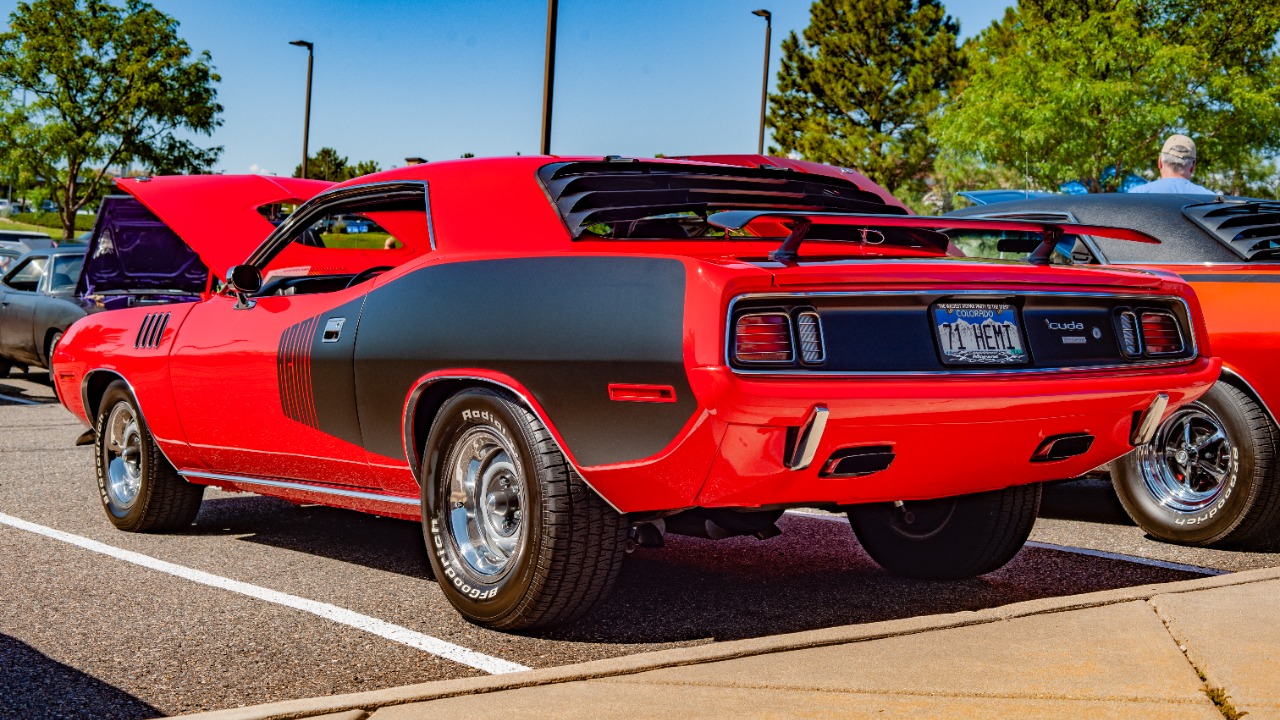

The original Plymouth Hemi ‘Cuda set a brutal benchmark on the quarter mile, but period timing slips and modern retrospectives show that several rivals actually ran quicker. Drawing on detailed dragstrip matchups and 1970s rankings, I focus here on seven specific muscle cars that, in documented form, outran a Hemi ‘Cuda while shaping the era’s escalating horsepower wars.
1970 Chevrolet Chevelle SS 454 LS6
Dragstrip Monster #1 is the 1970 Chevrolet Chevelle SS 454 LS6, a car repeatedly cited in period tests as quicker than a stock Hemi ‘Cuda in quarter mile runs. Detailed comparisons of dragstrip monsters that outran the Hemi, including the LS6’s factory-rated 450 horsepower and its low-13-second capability, are laid out in archived dragstrip analysis. Those figures, recorded on contemporary timing equipment, put the Chevelle ahead of many Mopar rivals in real-world conditions rather than brochure claims.
That advantage mattered for buyers who cared less about mythology and more about what happened when the Christmas tree went green. The LS6’s combination of big-block torque, relatively straightforward tuning and wide dealer availability meant it became a go-to choice for bracket racers who wanted to beat Hemi cars without exotic prep. Its success illustrates how Chevrolet leveraged displacement and aggressive gearing to challenge Chrysler’s halo engines on their own turf.
1970 Buick GSX Stage 1
Dragstrip Monster #2 is the 1970 Buick GSX Stage 1, a luxury-leaning muscle car that still managed to outrun a Hemi ‘Cuda in several documented head-to-heads. Period rankings of top 1970s muscle machines highlight the Stage 1’s underrated 455 cubic inch V8 and its ability to post quarter mile times that edged past more famous rivals, a pattern echoed in broader lists of top 1970s muscle cars. Those rankings emphasize that Buick’s torque-heavy tuning translated directly into strong trap speeds.
For enthusiasts, the GSX Stage 1 proved that comfort and speed were not mutually exclusive. Its success against Hemi-powered Plymouths showed how careful camshaft selection, high compression and efficient cylinder heads could offset a slightly lower redline. The car’s dragstrip reputation also helped Buick attract buyers who wanted a sleeper that could quietly embarrass more overtly aggressive coupes at local strips.
1970 Pontiac GTO Judge Ram Air IV
Dragstrip Monster #3 is the 1970 Pontiac GTO Judge equipped with the Ram Air IV engine, a package that period testers recorded as capable of beating a Hemi ‘Cuda in stock or near-stock trim. Retrospective surveys of 1970s performance icons describe how the Ram Air IV’s high-flow heads and aggressive camshaft let the GTO run with, and often ahead of, Chrysler’s 426 Hemi on the quarter mile, a point reinforced in broader rundowns of top 1970s muscle cars. Those rundowns consistently place the Ram Air IV GTO among the decade’s quickest street machines.
The GTO Judge’s ability to outrun a Hemi ‘Cuda had implications beyond bragging rights. It validated Pontiac’s focus on airflow and high-rpm power rather than simply increasing displacement, and it helped cement the GTO’s image as a serious dragstrip contender even as insurance pressures mounted. For collectors and racers today, those original time slips remain a key reason Ram Air IV cars command intense interest.
1969 Chevrolet Camaro ZL1 427
Dragstrip Monster #4 is the 1969 Chevrolet Camaro ZL1 427, a homologation special that, in stock form, could outrun a Hemi ‘Cuda despite being built in tiny numbers. Detailed breakdowns of dragstrip monsters that outran the Hemi describe how the all-aluminum 427, officially underrated on paper, delivered quarter mile times that rivaled dedicated race cars when properly set up. Those same breakdowns note that the ZL1’s combination of low weight and massive power gave it a clear edge over many big-block Mopars in straight-line contests.
Although the ZL1 predated the peak of the 1970s muscle wave, its performance shaped expectations for what a factory pony car could do. Its dominance over Hemi-powered rivals underscored how engineering focus and weight reduction could matter more than raw displacement alone. For modern enthusiasts, the ZL1’s legacy continues to influence how manufacturers approach limited-run, track-focused muscle variants.
1969 Dodge Charger Daytona 426 Hemi
Dragstrip Monster #5 is the 1969 Dodge Charger Daytona with the 426 Hemi, a car engineered for NASCAR but also capable of outrunning a Hemi ‘Cuda in quarter mile form. Rankings of the quickest aero cars and broader lists of standout 1970s-era performers, including discussions of Classic Muscle Cars That Were Faster Than the Hemi Cuda, highlight how the Daytona’s wind-cheating body and Hemi power translated into strong trap speeds. Those rankings treat the Daytona as both a high-speed oval weapon and a surprisingly effective dragstrip machine.
The Daytona’s success against the Hemi ‘Cuda illustrates how aerodynamics, even at quarter mile speeds, can influence elapsed times and stability. Its towering rear wing and pointed nose were controversial on the street but paid dividends when drivers pushed deep into triple-digit territory. For stakeholders in modern performance design, the Daytona’s dual-role success remains a case study in how race-bred engineering can filter into road-legal muscle.
1970 Plymouth Road Runner 426 Hemi
Dragstrip Monster #6 is the 1970 Plymouth Road Runner equipped with the same 426 Hemi that powered the ‘Cuda, yet often recorded as slightly quicker in stock form. Detailed dragstrip comparisons explain that the Road Runner’s lighter trim and simpler option load helped it edge the Hemi ‘Cuda in elapsed time, even when both shared identical engines and similar gearing. Those comparisons treat the Road Runner as a benchmark for how packaging and weight distribution can tilt a matchup between otherwise similar powertrains.
For Plymouth, the Road Runner’s performance advantage reinforced the brand’s strategy of pairing serious engines with stripped-down bodies. Its ability to outrun the more expensive Hemi ‘Cuda on the strip gave budget-minded racers a compelling alternative that still carried factory backing. That lesson continues to resonate in modern discussions of value-focused performance models that prioritize speed over luxury.
2025 Plymouth Hemi ‘Cuda Revival vs. Originals
Dragstrip Monster #7 is not a separate vintage model but the way the reborn 2025 Plymouth Hemi ‘Cuda reframes the original car’s dragstrip legacy. Modern coverage of the revival describes the new Plymouth Hemi Cuda as a “Muscle Car Legend Reborn,” emphasizing how contemporary engineering eclipses the quarter mile times that once defined the classic, as seen in video features such as Plymouth Hemi, Cuda Is Back. Those features underline that today’s safety and emissions standards still allow performance that would have humbled period Hemi ‘Cudas.
Placing the 2025 Plymouth Hemi Cuda alongside the historic dragstrip monsters that outran the original Hemi ‘Cuda highlights how far performance has advanced. Where the 1970s matchups hinged on carburetors and leaf springs, the modern car relies on electronics and sophisticated suspension to deliver repeatable, blistering launches. For manufacturers and enthusiasts, that contrast shows how the Hemi Cuda name now bridges two eras, linking the cars that once beat it to a new generation that surpasses them all.
More from MorningOverview