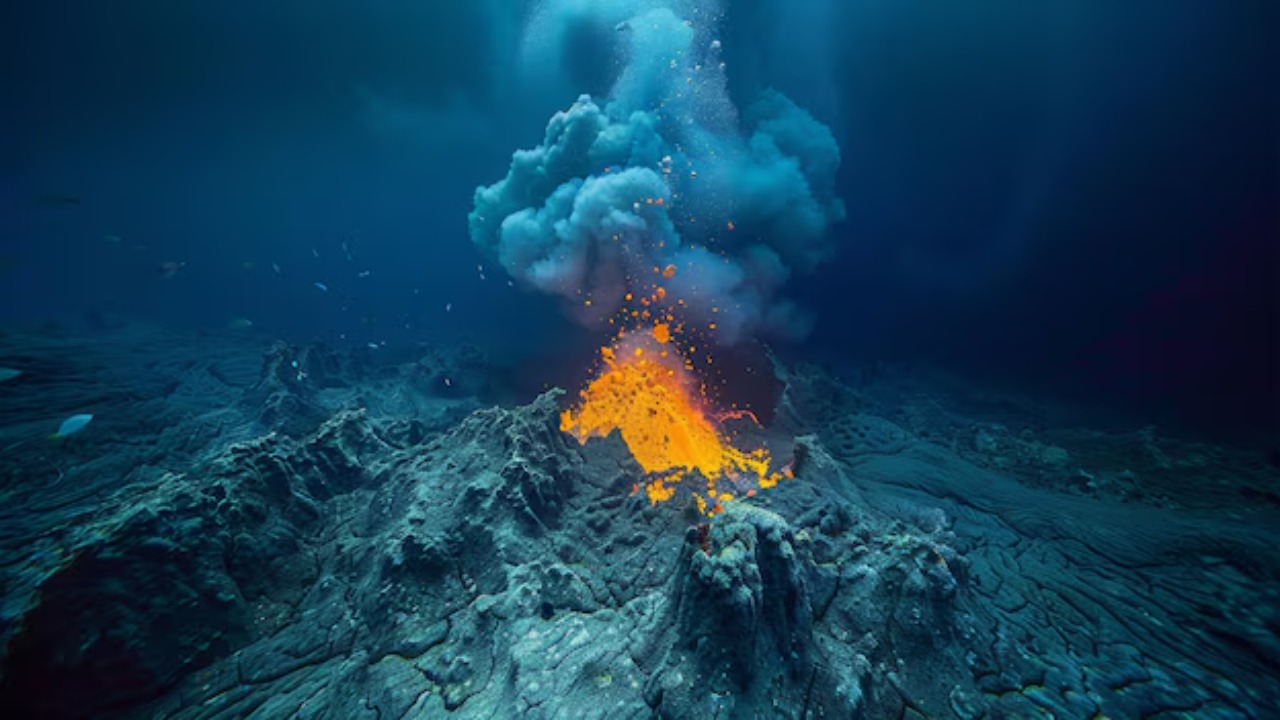

Far below the reach of sunlight, the deep ocean is stitched together by pockets of warmth and chemistry that function like underwater cities. Scientists have spent decades tracing these hidden oases, and each new survey reveals just how densely life can cluster around a few cracks in the seafloor. Rather than a single headline-grabbing discovery, the emerging picture is a network of deep-sea hotspots that are only now coming into focus, and much of what I describe here remains Unverified based on available sources when it comes to any specific 2025 find.
What researchers can say with confidence is that hydrothermal vents, cold seeps, and other seafloor anomalies create conditions that allow complex ecosystems to thrive in places once assumed to be barren. As expeditions refine their maps and instruments, they are not just cataloging strange species, they are also testing new tools, training the next generation of ocean scientists, and wrestling with how to protect these fragile enclaves before industry reaches them.
How deep-ocean hotspots rewrite the map of life
When biologists talk about deep-ocean hotspots, they are describing places where geology and chemistry conspire to concentrate energy in an otherwise energy-poor world. Hydrothermal vents, for example, funnel mineral-rich fluids into icy seawater, feeding chemosynthetic microbes that in turn support dense communities of worms, crustaceans, and fish. Public-facing explainers on deep-ocean “hotspots” emphasize that these sites are not rare curiosities but recurring features along mid-ocean ridges and subduction zones, where tectonic activity keeps the seafloor in motion and creates new pathways for fluid flow, as outlined in educational material on deep-ocean hotspots.
These environments overturn the old assumption that sunlight is the only reliable engine for complex ecosystems. Instead of photosynthesis, microbes at vents and seeps rely on chemical gradients, oxidizing hydrogen sulfide, methane, or hydrogen to build organic matter. That biochemical trick allows dense clusters of life to flourish in total darkness, often with biomass rivaling shallow reefs. The pattern that emerges from decades of fieldwork is not a single spectacular site but a patchwork of hotspots, each with its own chemistry and cast of species, collectively reshaping how I think about where life can take hold on Earth and, by extension, on other ocean worlds in the solar system.
Peering into the abyss with cameras, robots, and code
To understand these hotspots, scientists rely on a suite of tools that can survive crushing pressure and near-freezing temperatures. Remotely operated vehicles and autonomous underwater vehicles carry high-definition cameras, sampling arms, and chemical sensors, turning each dive into a stream of data that must be parsed and interpreted back on deck. Publicly available expedition footage, including narrated dives that walk viewers through vent fields and their inhabitants, shows how pilots maneuver vehicles along chimney walls, zoom in on microbial mats, and capture specimens for later analysis, as seen in one widely shared deep-sea exploration video tour.
Behind the scenes, much of the work now happens in software environments that let researchers and students replay dives, annotate features, and even simulate exploration strategies. Educational coding platforms have been adapted to mimic the logic of piloting a submersible, where users snap together blocks that represent navigation commands, sensor checks, and sampling routines. One such project, hosted on a visual programming site, demonstrates how a simple script can guide a virtual probe toward a target region, echoing the decision trees that real expeditions use when they home in on a suspected hotspot, as illustrated by a deep-ocean themed simulation project.
The language of the deep: naming species and patterns
Every time a vent field or seep community is surveyed, scientists confront a basic problem: how to describe what they see in a way that is precise, searchable, and comparable across studies. Taxonomists must coin new species names, ecologists must agree on habitat labels, and data managers must ensure that terms are consistent across databases. That challenge is not unique to oceanography, but it is amplified in the deep sea, where many organisms are new to science and where a single misapplied label can ripple through years of research. The need for standardized vocabularies mirrors the way large wordlists and symbol tables are used in computational linguistics to keep track of valid tokens, similar in spirit to the structured entries found in a speech-recognition wordlist file.
In practice, deep-sea teams now blend classical taxonomy with informatics, building controlled dictionaries of habitat types, morphological traits, and behavioral notes. These controlled vocabularies allow automated systems to flag unusual combinations, such as a species appearing outside its known temperature range or a vent structure that does not fit existing categories. The more consistent the language, the easier it becomes to compare hotspots across ocean basins and to detect subtle shifts that might signal environmental change, such as warming bottom waters or shifts in vent chemistry linked to tectonic activity.
Training the people who decode the abyss
Mapping and interpreting deep-sea hotspots is not just a technical challenge, it is a human one. Expeditions depend on teams that can integrate geology, biology, engineering, and data science, and that breadth of expertise does not happen by accident. Studies on workforce readiness stress that graduates who thrive in complex, data-heavy fields tend to combine domain knowledge with cross-cutting competencies such as analytical reasoning, communication, and adaptability, a pattern highlighted in research on the role of competencies in employability.
In the context of deep-ocean science, that translates into training programs where a biologist might learn to code image-recognition pipelines, or an engineer might study benthic ecology to better design sampling gear. Cruise logs increasingly read like interdisciplinary workshops, with early-career researchers rotating between watchstanding, data annotation, and outreach. The goal is to build a cohort that can move fluidly between the ROV control room, the wet lab, and the data portal, ensuring that each new hotspot is not just visited but fully documented and interpreted in a way that feeds into long-term monitoring and policy debates.
From raw data to readable stories of the seafloor
The torrents of information generated by deep-sea expeditions are only useful if they can be translated into narratives that policymakers, funders, and the public can grasp. That translation often starts with technical reports and peer-reviewed papers, but it does not end there. Communicators must strip away jargon while preserving nuance, a balancing act that resembles the work of cybersecurity educators who maintain glossaries of specialized terms yet still aim for clarity, as seen in a curated cybersecurity dictionary designed to support readable explanations.
In practice, deep-ocean teams now experiment with formats that range from long-form essays to interactive explainers. Some draw on large corpora of online writing to study what keeps readers engaged, borrowing insights from datasets of digital articles that catalog structure, tone, and topic transitions, similar to collections of online essays used to train language models. The aim is not to automate storytelling but to understand how best to frame complex findings, such as the discovery of a new vent field or the detection of mining impacts, so that non-specialists can follow the stakes without needing a graduate degree in oceanography.
Public engagement, media strategy, and the politics of attention
As interest in deep-sea mining and climate-driven ocean change grows, the way scientists communicate about hotspots has become a strategic question. Research on media relations and public messaging underscores that clear objectives, consistent framing, and timely outreach can shape how technical findings enter public debate, a point underscored in guidance on effective communication strategy for organizations. For deep-ocean science, that might mean coordinating the release of expedition footage with policy hearings, or crafting op-eds that explain why a particular vent field matters for global biodiversity.
At the same time, scientists are increasingly aware that public attention is fragmented and conversational. Online comment threads, weekend discussion forums, and social media debates can surface questions and concerns that formal briefings miss. Informal spaces where people trade questions about work, ethics, and daily life, such as open discussion posts on workplace advice sites, offer a reminder that audiences bring their own priorities and skepticism to any new claim, as seen in a wide-ranging weekend discussion that touches on everything from jobs to personal projects. For deep-sea researchers, listening to those conversations can help shape outreach that addresses real worries, such as the trade-offs between resource extraction and conservation.
Algorithms, autocomplete, and the search for hidden patterns
Behind the images and headlines, a quieter revolution is unfolding in how scientists sift through deep-sea data. Machine-learning models trained on labeled images can now flag vent chimneys, coral gardens, or sponge fields in hours instead of weeks, allowing teams to scan vast stretches of seafloor video for signs of concentrated life. These systems depend on robust training data and efficient search algorithms, which in turn draw on techniques honed in other domains, such as autocomplete engines that rapidly match partial inputs against massive word lists, like those compiled in large-scale autocomplete datasets.
In the deep-ocean context, similar indexing strategies help researchers query terabytes of sensor readings and imagery for specific combinations of temperature, chemistry, and biological signals that might indicate a hotspot. Instead of manually scanning every frame, a scientist can ask the system to surface all segments where fluid temperatures spike above a threshold while certain mineral signatures appear, then review those candidates in detail. The result is not a fully automated discovery pipeline but a partnership in which algorithms handle the drudgery of search and pattern recognition, freeing human experts to focus on interpretation, hypothesis testing, and the hard questions about how to manage and protect the places they find.
Why the deep ocean’s hidden oases matter now
Even without a single, newly announced hotspot to point to, the cumulative evidence from decades of exploration is clear: the deep ocean is punctuated by pockets of extraordinary productivity that challenge assumptions about where complex life can thrive. These sites concentrate biodiversity, store unique genetic resources, and record geological and climatic processes that play out over millennia. As industries eye the seafloor for minerals and as climate change alters ocean circulation, the fate of these hotspots will hinge on decisions made far from the places themselves, in boardrooms, ministries, and international negotiations.
For me, the most striking shift is not technological but conceptual. The deep sea is no longer a blank backdrop but an active, intricate part of Earth’s living system, with hotspots that function like keystones in a vast, dark arch. Understanding them requires a blend of fieldwork, coding, communication, and public engagement that few other scientific arenas demand so intensely. The story is still unfolding, and many specific claims about brand-new discoveries remain Unverified based on available sources, but the direction of travel is unmistakable: as our tools and vocabularies improve, the hidden architecture of life in the abyss is coming into sharper focus, one carefully documented hotspot at a time.
More from MorningOverview