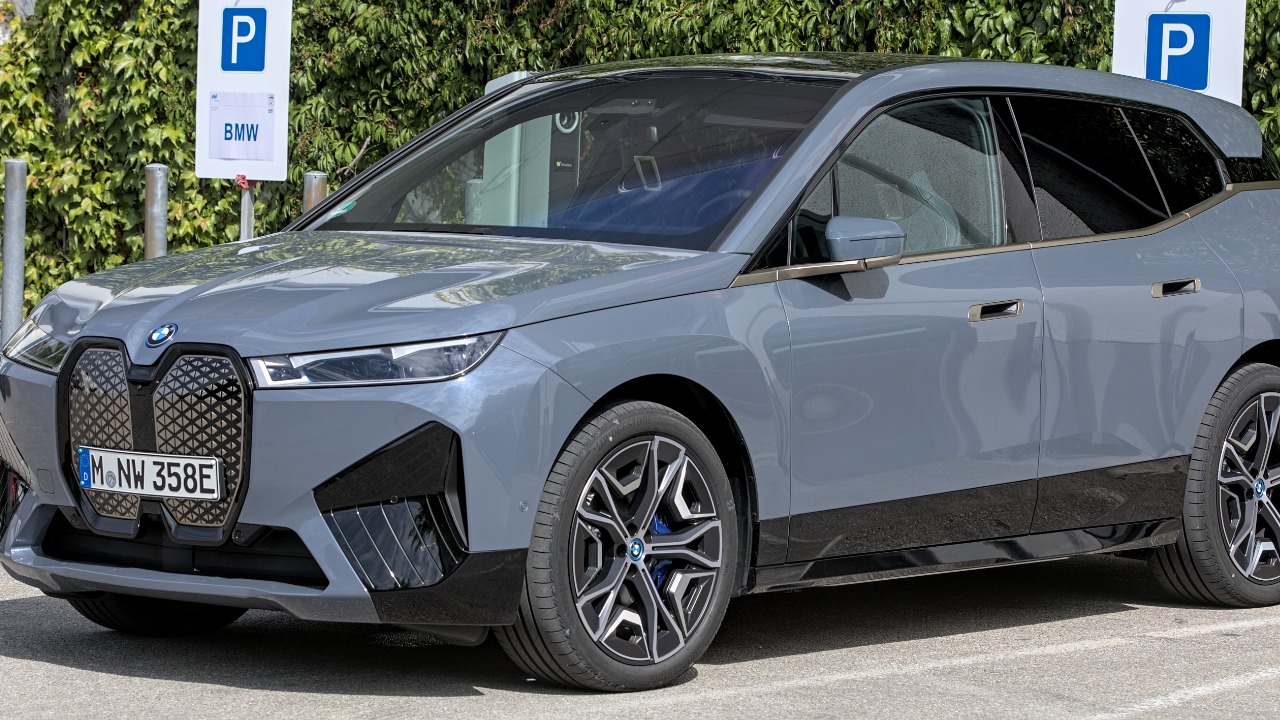

Automakers are racing to redesign the heart of the electric vehicle, the traction motor, so they can cut their dependence on rare earth metals without sacrificing performance. BMW, General Motors and a wave of startups are betting that smarter engineering and new materials can deliver powerful, efficient motors that are cheaper, cleaner and less exposed to geopolitical risk. I see this shift as a pivotal test of whether the EV industry can scale up without importing a new set of supply chain vulnerabilities.
The stakes are high because permanent magnet motors built with rare earth elements have become the default choice for modern EVs, yet the mining and processing of those materials carry environmental damage and heavy concentration in a few countries. As manufacturers push toward mass-market price points and stricter sustainability targets, they are rethinking everything from rotor topology to software control strategies in search of rare-earth-light or rare-earth-free designs that can compete on range, acceleration and cost.
Why rare earth magnets became a problem automakers can no longer ignore
The modern EV boom leaned heavily on permanent magnet motors because they offer high power density and efficiency, but that advantage came with a hidden bill in the form of rare earth dependence. Neodymium, dysprosium and other elements used in these magnets are tied to mining practices that raise serious environmental concerns, and their supply is geographically concentrated in a way that exposes carmakers to price spikes and export controls. As volumes climb into the millions of vehicles per year, the industry’s reliance on these materials has shifted from a technical choice into a strategic liability that companies now feel compelled to address, a trend underscored by engineering analyses that urge manufacturers to steer away from rare earth metals in EV motors and explore alternative architectures that can match performance with fewer critical materials, as detailed in technical guidance on rare earth risks.
For automakers, the rare earth question is not just about ethics or geopolitics, it is also about cost predictability and long term product planning. When a single material category can swing in price or become constrained by policy decisions far from the factory floor, it complicates everything from sourcing contracts to the design of future platforms. That is why the push to redesign motors is happening in parallel with broader corporate strategies that treat critical materials as a core part of innovation management, a mindset that aligns with global business frameworks that emphasize how technology, supply chains and entrepreneurship intersect in complex markets, as explored in management and innovation case studies.
BMW’s bet on rare-earth-free motors and tighter software integration
BMW has emerged as one of the most visible champions of rare-earth-free motor technology, publicly committing to designs that rely on wound rotor or other magnet-free configurations for key platforms. The company’s strategy hinges on using advanced control electronics and precise manufacturing to extract high efficiency from motors that do not depend on permanent magnets, trading some material complexity for smarter software and tighter integration between the inverter and the motor. In my view, that approach reflects a broader shift in automotive engineering, where digital control and data-driven optimization are increasingly used to offset material constraints and unlock new performance envelopes.
To make these magnet-free designs viable at scale, BMW and its suppliers are leaning on sophisticated modeling and simulation tools that can explore thousands of design permutations before a single prototype is built. The same kind of algorithmic experimentation that powers large language model training datasets, such as the curated corpora available in resources like the Qwen3-235B distilled dataset viewer, is mirrored in how engineers iterate through motor geometries, cooling strategies and control maps. By treating the motor as a system that can be optimized through data and computation rather than just materials, BMW is trying to prove that rare-earth-free hardware can deliver the smooth, responsive driving experience premium buyers expect.
GM’s diversified motor roadmap and the push for flexibility
General Motors is taking a more diversified path, developing multiple motor types so it can tailor the mix of rare earth content, cost and performance to each vehicle segment. On its Ultium-based platforms, GM has described a portfolio that includes permanent magnet motors with reduced rare earth content alongside induction or other magnet-free options for applications where packaging and duty cycles allow more flexibility. I read that as a pragmatic recognition that no single architecture will fit every use case, especially when the company is trying to cover everything from compact crossovers to heavy pickup trucks under a unified electrification strategy.
What stands out in GM’s approach is the emphasis on modularity and manufacturing commonality, which lets the company swap motor types without redesigning entire vehicles. That philosophy echoes the way software engineers build reusable components and libraries, a mindset visible even in educational coding projects such as the block-based motor and sensor simulations hosted on platforms like Snap-based engineering demos. By treating motors as configurable modules within a larger system, GM can gradually dial down rare earth usage where it makes the most sense, while still meeting the demanding torque and towing requirements of its most profitable models.
Startups experiment with axial flux, switched reluctance and novel topologies
While legacy automakers refine their existing platforms, startups are attacking the rare earth problem with more radical motor architectures. Some are betting on axial flux designs that promise very high torque density in a compact package, which can be attractive for performance EVs and tight underfloor packaging. Others are revisiting switched reluctance motors, a technology that historically suffered from noise and vibration but has the advantage of using no permanent magnets at all. I see this wave of experimentation as a necessary complement to the incremental improvements at big carmakers, because it broadens the technical toolkit and may surface breakthroughs that established players can later adopt or license.
These younger companies often operate more like software startups than traditional hardware firms, relying on rapid prototyping, simulation and iterative testing to refine their concepts. Their engineers mine large datasets, run optimization loops and even borrow techniques from natural language processing, where frequency statistics and pattern recognition are used to compress and predict complex sequences. The same logic that underpins word frequency tables in corpora such as the Google Books common words collection can be applied to understand how often certain torque demands or temperature profiles occur in real driving, which in turn guides how a novel motor topology should be tuned for everyday use rather than just lab benchmarks.
Supply chains, geopolitics and the new language of materials risk
Behind the engineering story sits a more uncomfortable reality: rare earth supply chains are deeply entangled with geopolitics and environmental trade offs. Policymakers in major EV markets have signaled that they want cleaner, more resilient sources of critical minerals, but building new mines and processing facilities is slow, capital intensive and often controversial with local communities. Automakers that depend heavily on rare earth magnets are therefore exposed to policy swings and export controls that can arrive faster than new supply can be brought online, which is why many are treating material substitution as a form of insurance against future shocks.
To manage that risk, companies are building increasingly sophisticated internal taxonomies of materials, suppliers and geopolitical exposure, almost like a dictionary of vulnerabilities that can be queried and updated as conditions change. The structure of these internal databases resembles classic word lists and lexicons used in computer science, such as the large autocomplete-oriented vocabulary files maintained in resources like the Princeton autocomplete word list. By tagging each component and material with attributes like origin, processing route and substitution options, procurement teams can quickly see where rare earths are embedded in their products and which redesigns would yield the biggest resilience gains.
Software, data and the “dictionary” of motor optimization
As BMW, GM and startups refine their rare-earth-light motors, software is becoming as important as metallurgy. Engineers now treat every driving cycle, from city commutes to highway road trips, as a stream of data that can be analyzed to understand how motors are actually used in the field. That data is then fed into control algorithms that adjust current, voltage and switching patterns in real time, squeezing more efficiency out of the same hardware. In practice, this means the same physical motor can behave very differently depending on the firmware it runs, a dynamic that mirrors how language models can generate varied outputs from the same underlying parameters.
The analytical tools behind this optimization often rely on statistical techniques that were first honed on text corpora, where counting how often words appear and in what combinations reveals deeper structure. Frequency tables of English words, such as those compiled in datasets like the morphological neural language model word list, provide a template for how to think about recurring patterns in any complex sequence. In the EV context, the “vocabulary” might be torque requests, temperatures or state-of-charge levels, and the goal is to build a dictionary of typical usage patterns so the motor control software can anticipate what the driver will ask for next and respond with minimal energy waste.
How language-style analytics help decode driver behavior and motor wear
One of the more intriguing crossovers between data science and EV engineering is the use of language-style analytics to study driver behavior and motor degradation. By treating each trip as a string of events, engineers can apply techniques similar to those used in corpus linguistics to identify common “phrases” of acceleration, braking and cruising. Over large fleets, these patterns reveal which duty cycles are most stressful for motors that use fewer rare earths, and where design tweaks or software limits might be needed to preserve durability. I find that this approach turns the messy variability of real-world driving into something that can be quantified and fed back into the design loop.
The raw material for this analysis is often simple counts and rankings, not unlike the classic lists of high frequency English words that have long been used to benchmark algorithms. Resources such as the Udel dictionary word file or the ranked English topwords compiled in projects like the LangStats frequency table show how much insight can be extracted from straightforward tallies. In the EV world, similar tables of how often certain torque levels or temperatures occur help engineers decide where to focus cooling improvements, which operating points deserve the most optimization effort, and how much safety margin is needed when rare earth content is reduced.
What a rare-earth-light future means for EV buyers
For drivers, the shift away from rare earth magnets will be felt less in spec sheets and more in the long term availability and pricing of electric models. If BMW, GM and their startup counterparts succeed, buyers will see a wider range of EVs that are less exposed to commodity price spikes and supply disruptions, which should translate into more stable sticker prices and fewer production delays. There may be subtle differences in how various motor types feel on the road, particularly in low speed refinement or high load scenarios, but most of that will be smoothed out by increasingly sophisticated control software that masks hardware quirks.
Over time, I expect the language used to market EVs to shift as well, with more emphasis on transparency about material sourcing and lifecycle impact. Just as linguists rely on corpora like the count_1w word frequency dataset to ground their claims about how people actually write and speak, automakers will need hard data to back up statements about reduced rare earth usage and cleaner supply chains. The industry is effectively writing a new dictionary of what “sustainable performance” means, and the choices BMW, GM and today’s EV startups make on motor design will define the entries for years to come.
More from MorningOverview