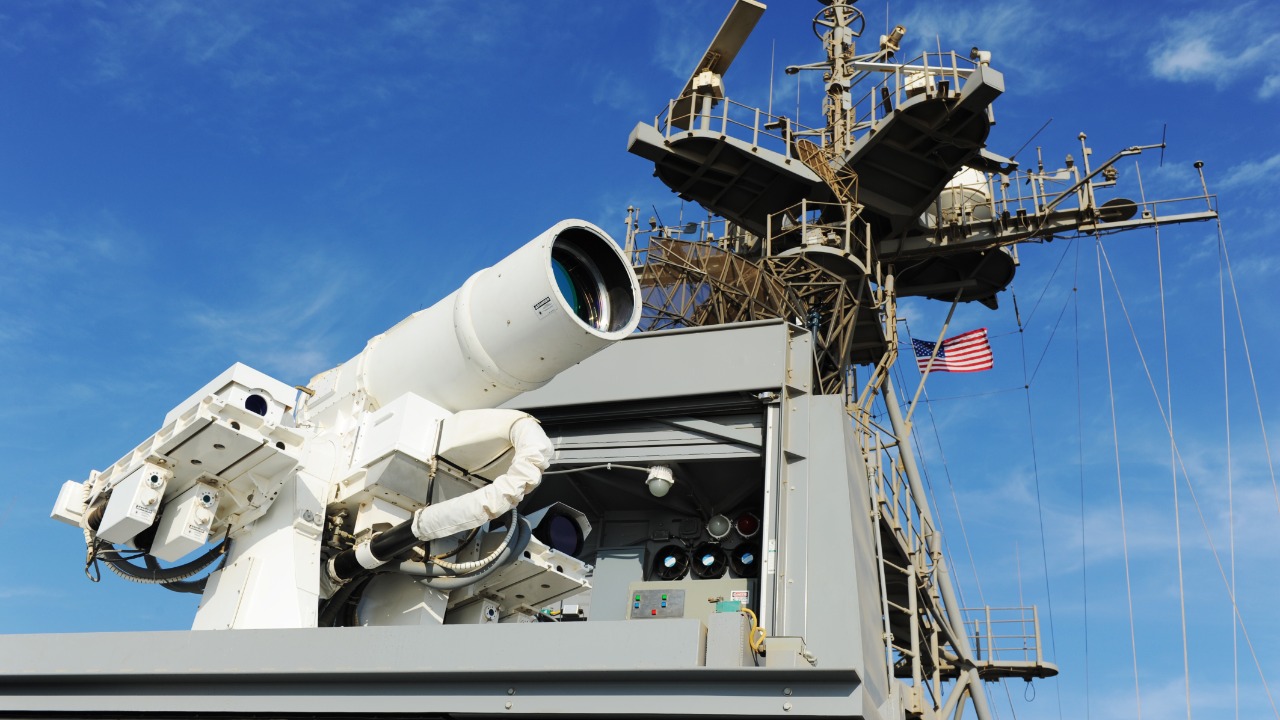

The United Kingdom has quietly brought a piece of science fiction into operational reality, field‑testing a high‑energy laser that can burn a fast‑moving drone out of the sky in seconds. The DragonFire system, developed for the British military, has now demonstrated that it can track and destroy an unmanned aircraft flying at roughly 600 kilometers per hour, turning concentrated light into a precision weapon.
What makes this test more than a flashy video clip is the combination of speed, accuracy, and cost: a directed‑energy weapon that can hit a small, agile target at long range without expending a single missile, and at a price per shot that undercuts almost every conventional interceptor on the market. As drone warfare spreads from battlefields to shipping lanes and critical infrastructure, that shift could reshape how countries defend their skies.
DragonFire’s leap from lab demo to live-fire reality
The DragonFire program has been in development for years, but the latest trials mark a clear break from earlier, more tentative experiments. Instead of static targets or slow, predictable drones, the British military has now used the laser to engage high‑speed unmanned aircraft that mimic the kind of threats seen over Ukraine, the Red Sea, and other contested airspaces. Reporting on the trials describes the system locking onto a drone traveling at about 600 kilometers per hour and holding the beam long enough to burn through its structure, a performance level that moves DragonFire from theoretical promise to practical air defense tool, as detailed in coverage of the 600-kilometer-per-hour intercept.
What stands out in the official footage and descriptions is how controlled the engagement looks compared with a traditional missile launch. Instead of a plume of smoke and a visible projectile arcing into the sky, the laser system operates almost silently, with the only drama visible in the target drone as it suddenly fails and falls. The British Ministry of Defence has framed these tests as a step toward integrating DragonFire on Royal Navy ships and potentially on land platforms, a trajectory that aligns with reports that the weapon has already been trialed in a NATO context against realistic aerial targets, including the high‑speed drones showcased in a widely shared NATO laser test video.
How a beam of light becomes a battlefield weapon
At its core, DragonFire is a high‑energy laser directed‑energy weapon, but the engineering challenge is less about generating light and more about keeping that light precisely focused on a small, fast‑moving target. The system combines a powerful laser source with advanced optics and tracking software that can stabilize and steer the beam in fractions of a second, even as the drone maneuvers or environmental conditions shift. Reports on the trials emphasize that the weapon must hold its aim on a specific point of the target long enough to deliver concentrated heat, effectively drilling through the airframe or critical components, a process that is explained in technical breakdowns of the UK laser’s tracking and focusing system.
From a physics standpoint, the destructive effect comes from energy density rather than explosive force. Instead of shrapnel or blast waves, the laser delivers a narrow column of intense heat that can melt metal, ignite fuel, or fry electronics. That makes it particularly well suited to drones, which often rely on lightweight materials and exposed sensors. Analysts who have examined the DragonFire footage note that the drone’s failure appears sudden and catastrophic once the beam has done its work, consistent with a high‑energy laser burning through a key structural or control element, a pattern that matches the behavior seen in the British military’s own test footage of the laser strike.
The economics of a $13 shot in an era of cheap drones
The most disruptive aspect of DragonFire may not be its raw power but its price tag per engagement. Conventional air defense systems often rely on missiles that can cost hundreds of thousands, or even millions, of dollars per shot, a painful mismatch when the incoming threat is a small quadcopter or a relatively cheap loitering munition. By contrast, reporting on the British laser program highlights that each firing of the beam costs on the order of £10, or roughly $13, primarily covering the electricity required to power the system, a figure that has been widely cited in analyses of the $13-per-shot laser intercept.
That cost curve matters because drone warfare is inherently about volume and persistence. Adversaries can launch swarms of unmanned aircraft, saturating defenses that rely on expensive interceptors and finite missile stocks. A laser that can fire repeatedly without reloading, limited mainly by its power supply and cooling system, changes the calculus for defending air bases, ships, or critical infrastructure. Instead of choosing which threats justify a missile, commanders could, in principle, engage every incoming drone with a beam that costs less than a fast‑food meal, a shift that underpins the British military’s interest in pairing DragonFire with existing kinetic defenses, as described in broader coverage of how the DragonFire laser reshapes engagement costs.
From test range to Royal Navy decks and beyond
For now, DragonFire remains in the trial phase, but the direction of travel is clear: the British government is openly positioning the system as a future fixture on Royal Navy warships and potentially on land‑based air defense units. Officials have described plans to integrate the laser on surface vessels to protect against drones and, eventually, fast attack craft or incoming missiles, using the weapon as a close‑in shield that complements existing guns and missile systems. Reporting on the program notes that the Ministry of Defence has already conducted sea‑focused evaluations and is working through the engineering steps needed to mount the laser on operational platforms, a roadmap outlined in detail in coverage of the UK’s DragonFire deployment plans.
Translating a test‑range success into a shipboard or fielded system is not trivial. The laser must be ruggedized to handle vibration, salt spray, and temperature swings, while the power and cooling demands have to be balanced against everything else a warship or ground vehicle carries. Yet the British military’s willingness to showcase DragonFire in NATO exercises and public videos suggests confidence that these integration challenges are solvable on a realistic timeline. Analysts point out that once a single class of Royal Navy ships is equipped with the laser, the technology could spread quickly across the fleet and into joint projects with allies, a prospect that has been highlighted in reporting on how the British laser program fits into NATO air defense.
What the test videos reveal about real-world performance
The public’s first real sense of DragonFire’s capabilities has come through carefully curated video clips released by the British military and amplified across social media. In these sequences, viewers see a drone flying over the sea or a test range, followed by a brief flash or plume as the target suddenly fails and drops, with the laser platform itself often shown only in cutaway shots. Analysts who have slowed and examined the footage note that the time between beam engagement and drone destruction appears to be measured in seconds, consistent with a high‑energy laser delivering focused heat to a vulnerable point, a pattern that matches the engagements shown in the British military’s released laser test clips.
Independent observers have also dissected these videos to understand the system’s tracking and stabilization performance. The smoothness with which the beam appears to stay on target, even as the drone moves at high speed, suggests a mature fire‑control solution rather than a fragile prototype. Some defense commentators have pointed out that the tests, while impressive, are still conducted under controlled conditions, with known target profiles and limited clutter, so real‑world performance against swarms or in bad weather remains unverified based on available sources. Even so, the visual evidence has been compelling enough that NATO partners and rival powers alike are paying close attention to the circulating DragonFire test footage as a sign of where Western air defense technology is heading.
Limits, countermeasures, and the next phase of drone warfare
As transformative as DragonFire appears, it is not a magic shield. High‑energy lasers are line‑of‑sight weapons, which means they cannot hit targets behind terrain or solid obstacles, and their effectiveness can be degraded by heavy rain, fog, smoke, or dust that scatter or absorb the beam. There are also physical limits to how quickly the system can shift between targets and how long it can sustain continuous fire before its optics and power systems need to cool. Defense analysts have warned that adversaries will adapt by hardening drones, using reflective coatings, or flying complex attack patterns, all of which could blunt the laser’s impact, a set of caveats that surface in more cautious assessments of the British laser’s operational constraints.
Even with those limitations, the arrival of a working, cost‑effective laser interceptor forces a rethink of how air defense networks are designed. Instead of relying solely on layered missiles and guns, future systems are likely to mix kinetic and directed‑energy weapons, using lasers to handle the bulk of cheap, small drones while reserving missiles for larger or more distant threats. That shift could, in turn, drive changes in how drones are built and deployed, pushing designers toward faster, more resilient platforms or tactics that overwhelm even a laser’s rapid engagement cycle. The British DragonFire tests are an early glimpse of that next phase, and as more footage and data emerge from NATO exercises and national trials, I expect the debate over how to counter and copy this technology to intensify, a trend already visible in the growing body of analysis around the strategic impact of laser-based air defense.
More from MorningOverview